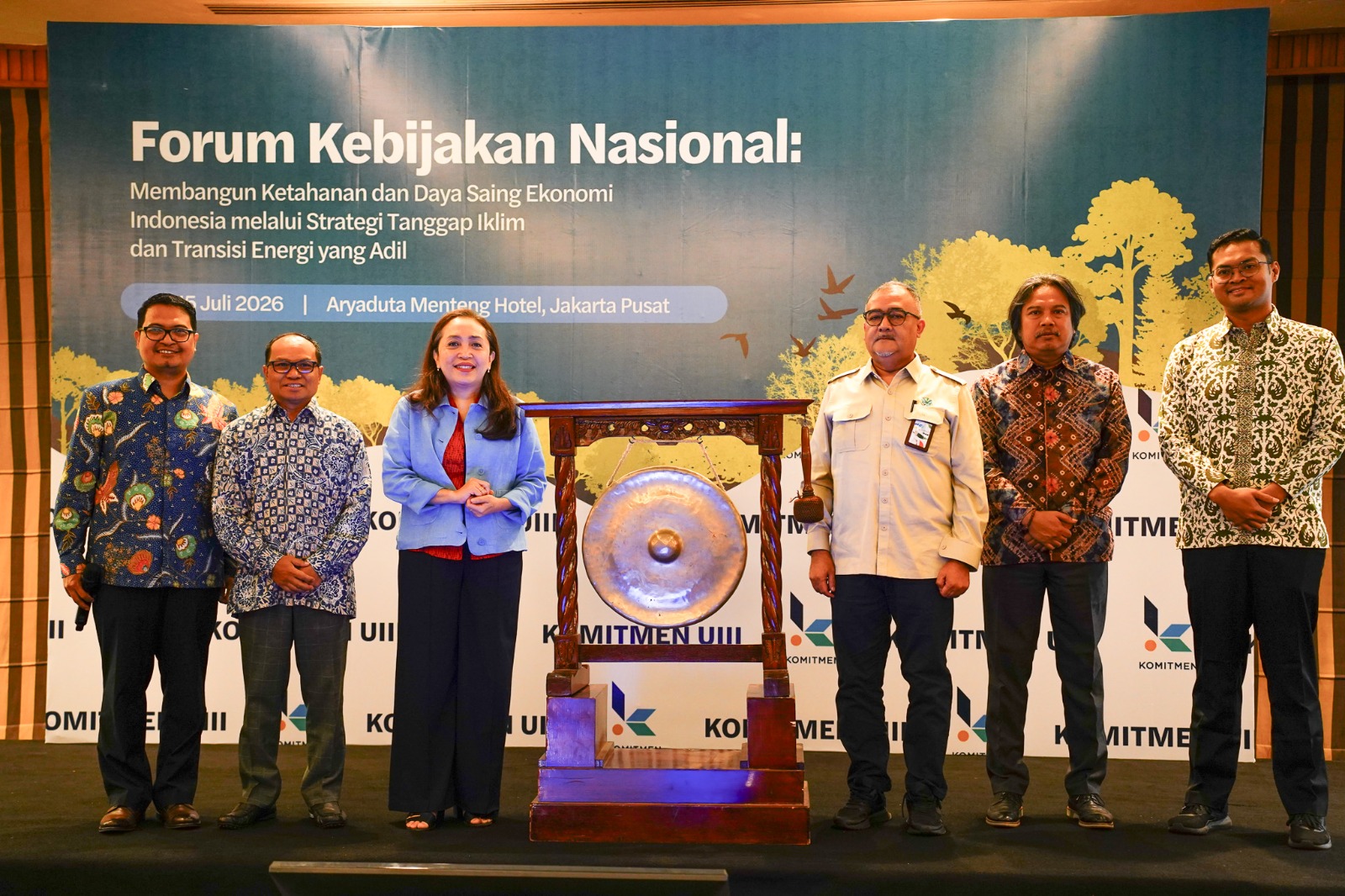
A national policy forum in Jakarta marked one year of UIII’s KOMITMEN Program while affirming that the road to net-zero emissions by 2060 must be grounded in the economic and fiscal character of each region.
JAKARTA, 15 July 2026. The Indonesian International Islamic University (UIII) launched the Strategy for a Just Regional Economic and Energy Transition (SETARA) Program at a national policy forum held at the Aryaduta Menteng Hotel, Jakarta, on Wednesday (15/7). The launch also marked one year of the KOMITMEN Program, a climate-economics research initiative developed by UIII’s Faculty of Economics and Business together with the Faculty of Social Sciences, with support from ViriyaENB.
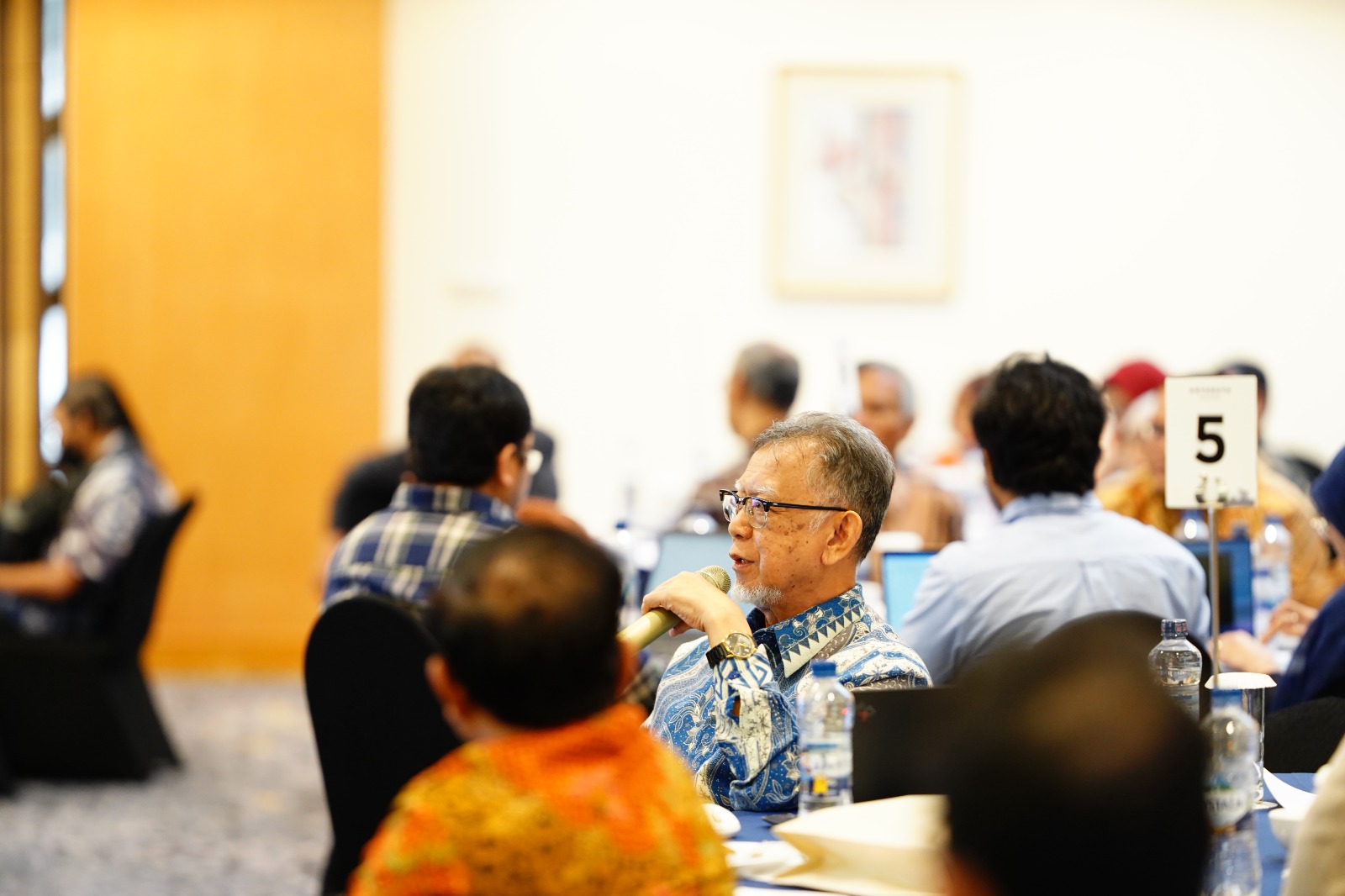
The forum brought together the Ministry of Environment, the Ministry of National Development Planning/Bappenas, the Ministry of Energy and Mineral Resources, the Ministry of Home Affairs, the Financial Services Authority, academics, think tanks, NGOs, and the private sector. All shared a single conviction: that the road to net-zero emissions by 2060 cannot be travelled with a single recipe for every region.
KOMITMEN Program Lead and Dean of UIII’s Faculty of Economics and Business, Teguh Yudo Wicaksono, said that every region has a different economic structure, fiscal capacity, and clean-energy potential, and therefore requires a transition strategy suited to its local context.
Dr. Teguh Yudo Wicaksono (KOMITMEN Program Lead/Dean of UIII’s FEB) explained that inequality, employment, and decarbonization do not wear the same face in every region. SETARA was created to address these three challenges from the regional level, ensuring that Indonesia’s energy transition is just and well-targeted according to local context through a place-based research approach.
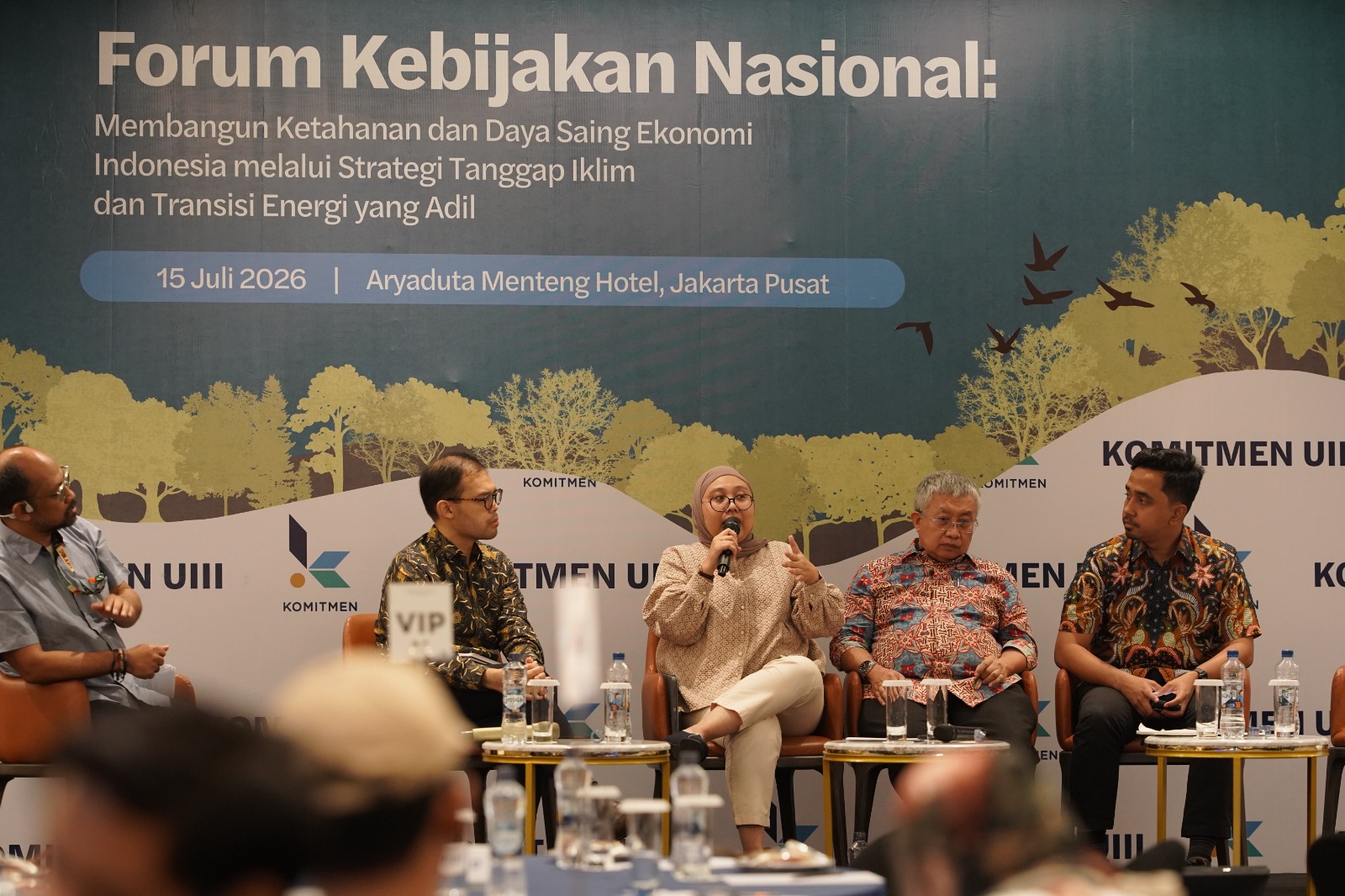
The KOMITMEN study presented at the forum showed that the success of climate policy depends heavily on its design. Using a Hybrid Energy-CGE model, the research team simulated a carbon tax of IDR 100,000 per ton of CO2 equivalent through three revenue-recycling schemes. The scheme that channeled the revenue into renewable-energy subsidies delivered the best results: the highest growth, the largest emissions reduction, and the lowest inequality.
Furthermore, a review of 60 regional medium-term development plans found that most still view climate change as a matter of physical disasters such as floods and droughts, rather than as a risk that demands changes in spatial planning and economic direction. The governance gap between the central and regional governments is a greater challenge.
Fiscal dependence is the most vulnerable point. Revenue-sharing funds from non-renewable natural resources still support a large share of the revenue of fossil-energy-producing regions, reaching 66 percent in East Kalimantan and 49 percent in South Kalimantan. KOMITMEN Senior Researcher Rachmat Reksa Samudra cautioned that decarbonization could erode regional revenue bases over the next ten to twenty years if it is not accompanied by planned fiscal diversification.
SETARA rests on four agendas: region-based transition policy, inclusive and equitable growth, productive workers with resilient households, and competitive industry. Its initial studies are focused on three provinces of differing character, namely East Nusa Tenggara, West Java, and South Sumatra.
The launch of SETARA was also marked by ViriyaENB Executive Director Suzanty Sitorus and UIII Rector Prof. Jamhari Makruf. ViriyaENB Executive Director Dr. Suzanty Sitorus explained that ViriyaENB supports UIII because of the alignment between ViriyaENB’s vision and the goal of creating an evidence-based net-zero-emissions society. In pursuit of that dream, KOMITMEN, through SETARA, responds to Indonesia’s need to provide evidence-based analysis that supports the regional energy-transition agenda. Prof. Jamhari Makruf, Rector of the Indonesian International Islamic University, stressed that the University exists so that every major decision of the nation stands on evidence, not conjecture. The UIII Rector also invited every stakeholder, including ministries and agencies, regional governments, universities, research institutions, and the business world, to invest in something that does not burn.
Through this forum, UIII calls on the central government, regional governments, and development partners to strengthen collaboration so that Indonesia’s energy transition remains just, inclusive, and supportive of the regions.