August 3, 2026
By Achmad Jatnika | Editor: Dr. Ridwan Al-Makassary
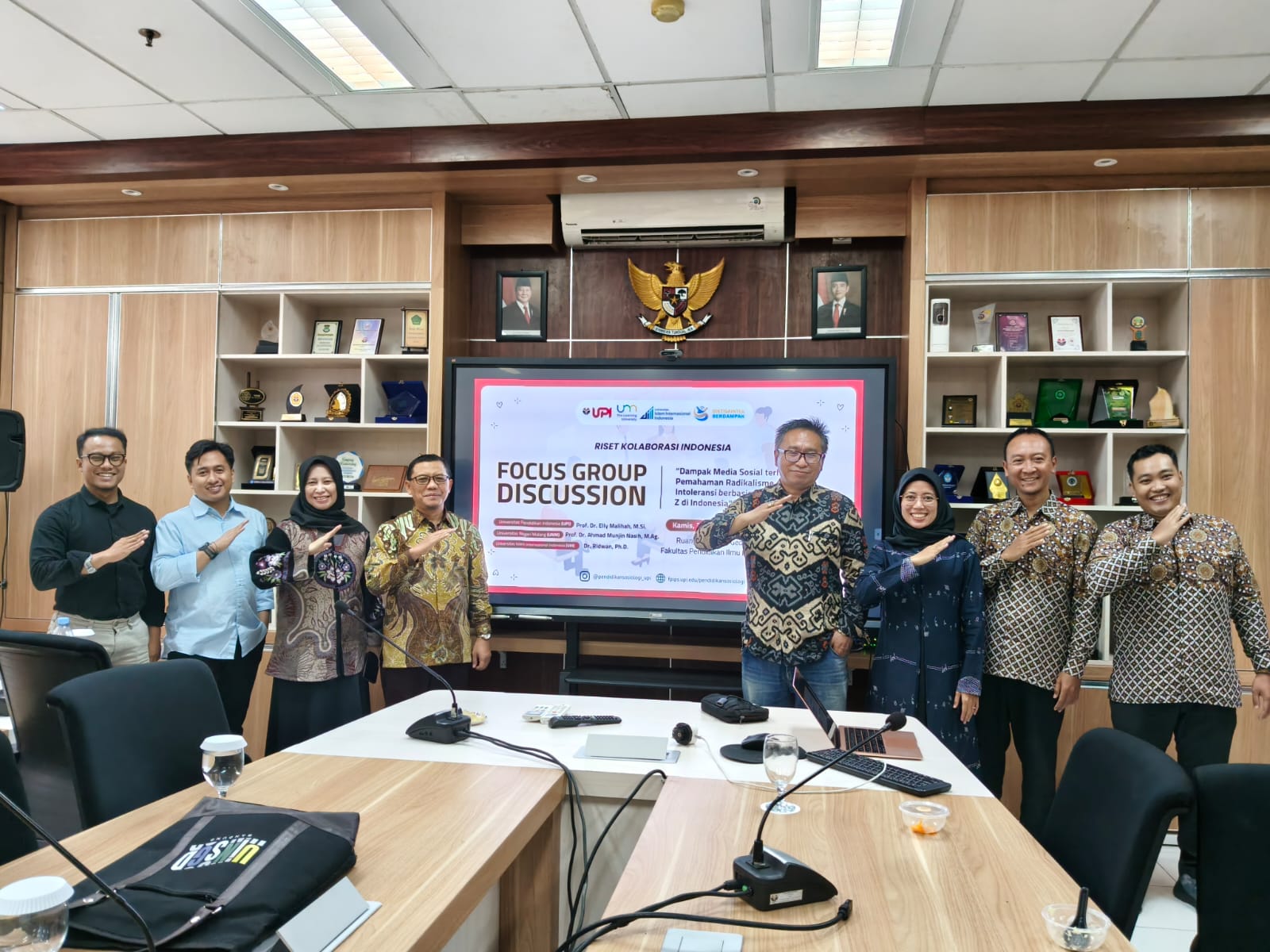
JAKARTA – A national survey has found that most young Indonesians from Generation Z hold positive views toward diversity and reject violence in the name of religion. At the same time, frequent exposure to hoaxes and hate-based content on social media highlights the need for stronger digital literacy and wider collaboration among educators, communities, religious leaders, and digital platforms.
The findings were presented by Elly Malihah, head of the research team from Universitas Pendidikan Indonesia, during the release of a National Telephone Survey conducted by the Indonesia Collaboration Research Team (RKI). The team includes Universitas Pendidikan Indonesia (UPI), Universitas Negeri Malang (UM), and Universitas Islam Internasional Indonesia (UIII), in cooperation with Lembaga Survei Indonesia (LSI). The survey was carried out from July 14 to 16, 2026, involving 403 respondents aged 17 to 30 from various regions across Indonesia.
Elly said the survey showed that 86 percent of respondents agreed that Indonesia’s ethnic, religious, and cultural diversity is a national asset that should be protected. In addition, 83 percent believed that differences in religious views should be resolved through dialogue rather than violence. The findings were further supported by 77 percent of respondents who rejected the use of violence in response to injustice, while 69 percent said they opposed hostility toward others because of religious differences.
“The survey suggests that the foundation of tolerance among young people is relatively strong. The challenge today is not only about attitude, but also about how they navigate an increasingly complex digital information landscape,” Elly said.
The survey also found that misleading information remains common in digital spaces. Forty-eight percent of respondents said they had often encountered hoaxes in the past three months. Hate-based content related to ethnicity, religion, race, and intergroup issues was most frequently found on TikTok, Facebook, and Instagram. However, only 7.5 percent of respondents said they reported such content to social media platforms.
Ridwan Al-Makassary, a partner researcher from Universitas Islam Internasional Indonesia (UIII), noted that a significant share of young respondents had yet to take a firm position on several national issues. Around 34 to 41 percent of respondents chose neutral answers on questions related to the relationship between religion and the state. According to Ridwan, this group represents an important space for strengthening civic understanding and preventing narratives that place religion and the state in opposition to one another.
The ability to recognize radical content also remains an area for improvement. Only 39 percent of respondents said they felt able to identify information containing radical messages, while 41 percent chose a neutral response. On the other hand, 53 percent of respondents said strong criticism of government policy should not automatically be categorized as radicalism, indicating a fairly good understanding of democratic principles.
Based on the findings, Ridwan recommended more substantive digital literacy programs, greater involvement of religious figures in spreading peaceful messages on social media, stronger civic education for young people who remain undecided, simpler reporting mechanisms for hate-based content on digital platforms, and continued support for formal education and community organizations as foundations for young people’s social resilience.
“Generation Z has strong social capital in the form of tolerance and rejection of violence. The next challenge is to ensure that young people have adequate digital literacy skills so they are less vulnerable to hoaxes, hate speech, and radical narratives in digital spaces,” Ridwan said. (*)