October 20, 2026
By Dadi Darmadi
Ministry of Religious Affairs cites gains in education, health, economic empowerment and social harmony, offering a policy context for UIII’s research and human-capital mission
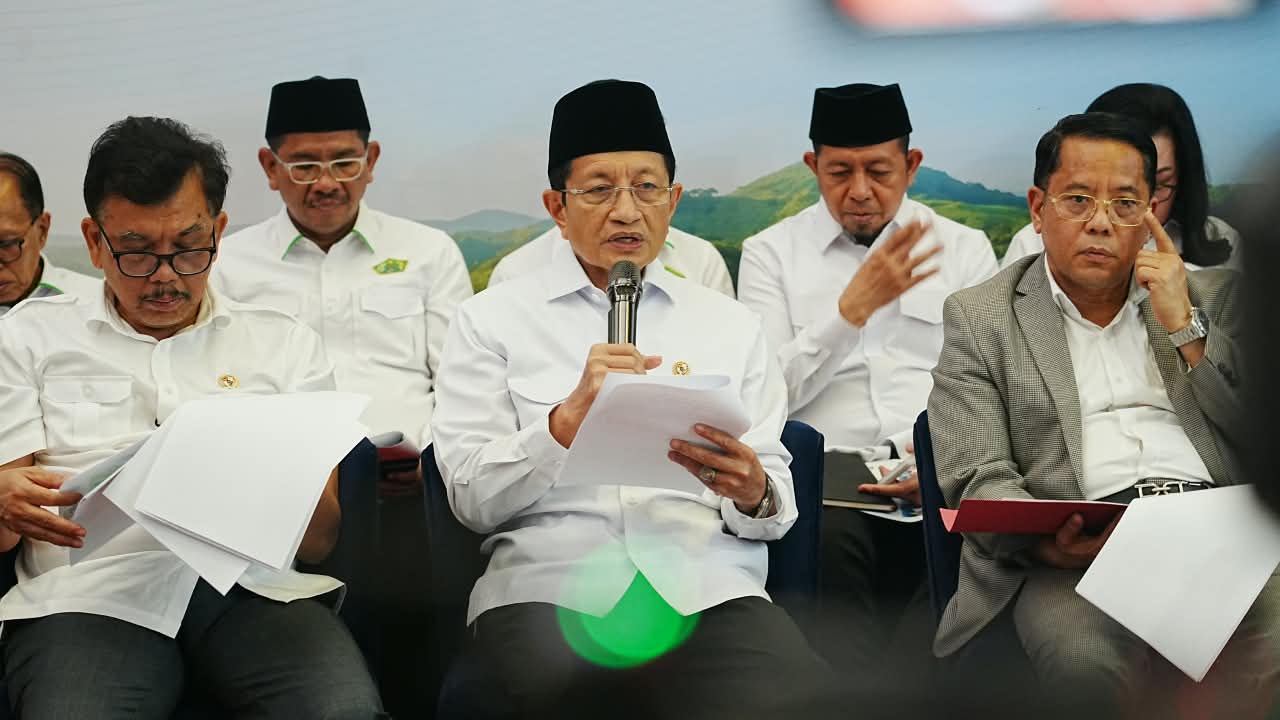
JAKARTA — Two years into the Asta Cita development agenda, Indonesia’s Ministry of Religious Affairs (Kemenag) has reported that its priority programs are delivering measurable benefits to millions of people, from students and teachers to religious communities and economically vulnerable groups.
According to Kemenag’s two-year Asta Cita report, delivered by the Minister of Religious Affairs, Prof Dr Nasaruddin Umar, the ministry has translated the national agenda into its own “Asta Protas” — eight priority programs covering religious services, pesantren empowerment, the people’s economy, religious moderation and the “Kurikulum Cinta” (Curriculum of Love). The ministry said these programs directly support Asta Cita pillars on human-resource development, economic strengthening and social harmony.
The report highlighted a series of large-scale outcomes. In education, the Smart Indonesia Program (PIP) reached 5.2 million students with Rp4.07 trillion in support, while KIP Kuliah assisted 289,255 university students with Rp3.03 trillion. Teacher welfare also received a major boost, with professional allowances for 671,704 teachers in 2026 totaling nearly Rp26 trillion.
In health and nutrition, the Free Nutritious Meals (Makan Bergizi Gratis) program reached 6.3 million students and santri, while the Free Health Check (Cek Kesehatan Gratis) initiative served 3.2 million people. Kemenag framed these figures as direct investments in the quality of Indonesia’s future generation.
The ministry also reported significant progress in mobilizing religious social funds. Zakat collection reached Rp44.6 trillion and cash waqf reached Rp4.7 trillion, with the funds channeled into community empowerment programs. “The figures suggest a growing model of using religious philanthropy to support social and economic development,” said Prof. Kamaruddin Amin, the Ministry’s Secretary General.
Beyond material benefits, Kemenag underlined its role in strengthening social cohesion. The ministry said its programs have helped position religion as a tool for national unity and for eradicating a culture of corruption, emphasizing integrity and religious moderation. The “Kurikulum Cinta” was presented as part of efforts to foster tolerance and harmony across religious communities.
For Universitas Islam Internasional Indonesia (UIII), the report provides a relevant policy backdrop. “As part of Kemenag’s higher-education ecosystem, UIII is positioned to contribute through evidence-based research, policy analysis and the development of human capital in Islamic studies, education and social development,” Dr Chaider Bamualim, the University Secretary noted. The data also offers material for campus discussions on how religious institutions can support inclusive and sustainable development.
The ministry’s two-year report presents the Asta Cita milestone as evidence that the agenda is not merely administrative but is producing concrete benefits across education, health, economic welfare and social harmony. []