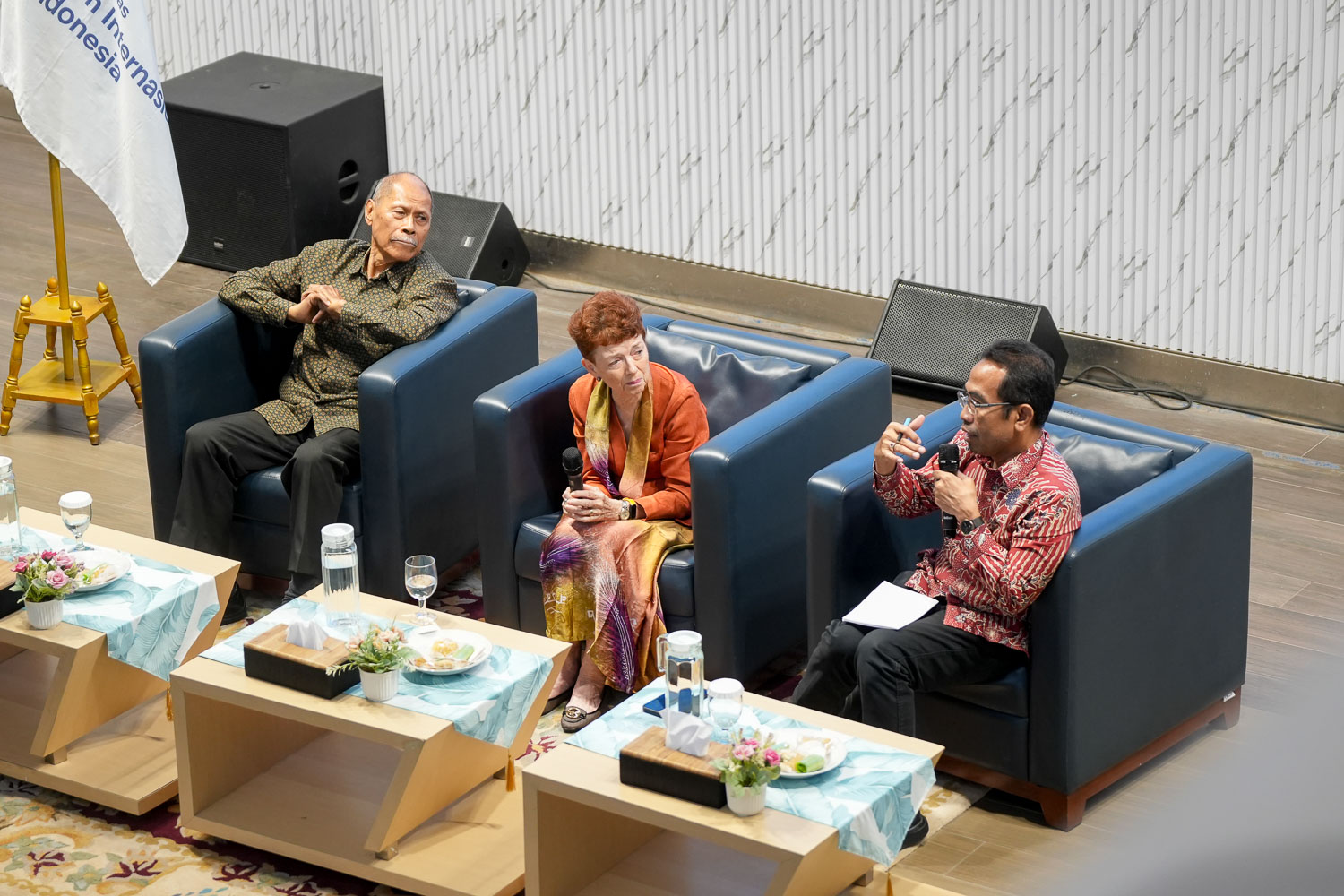
DEPOK — Universitas Islam Internasional Indonesia (UIII) held a public lecture titled “Writing the History of Southeast Asia in the 21st Century” on Tuesday, November 11, 2026.
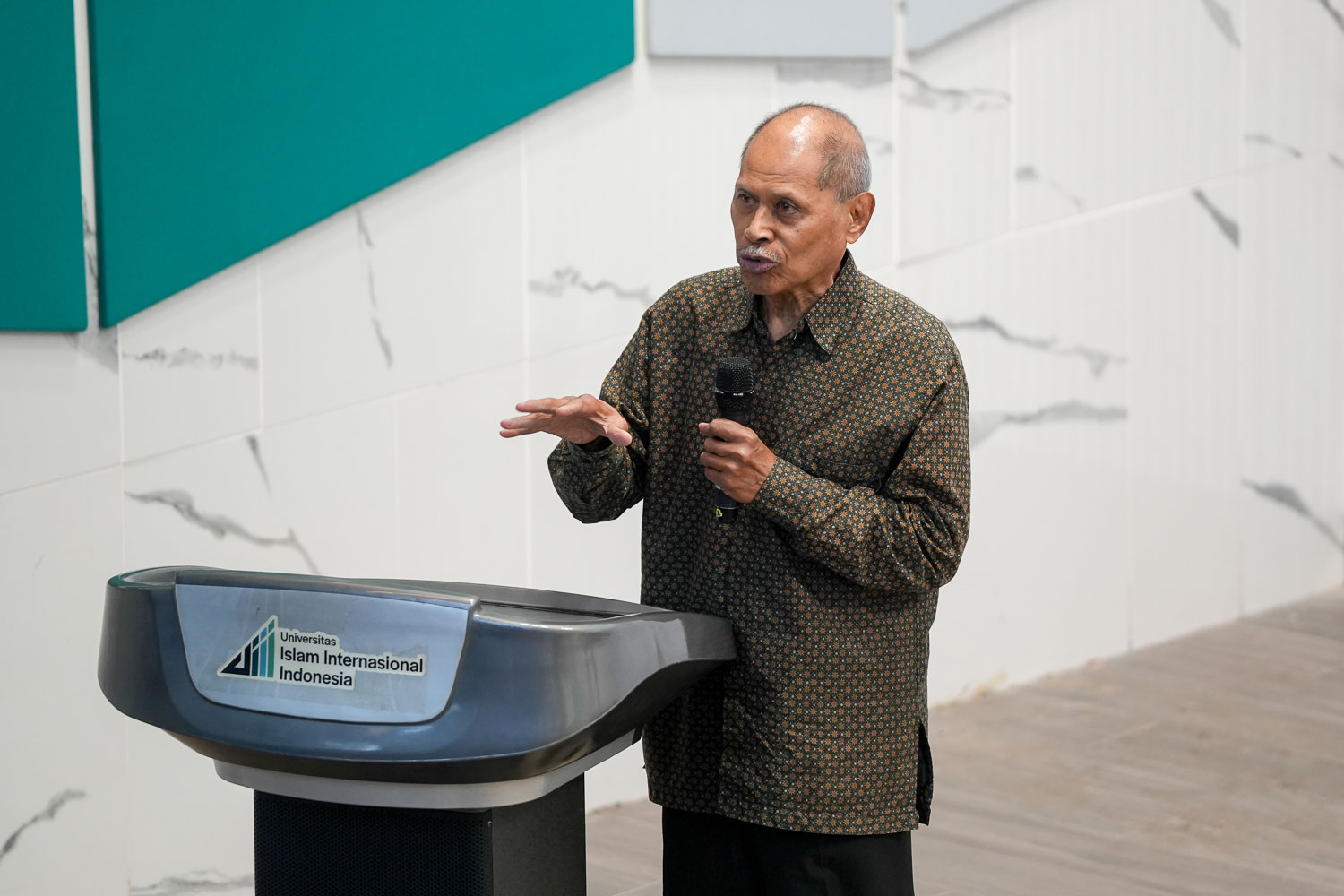
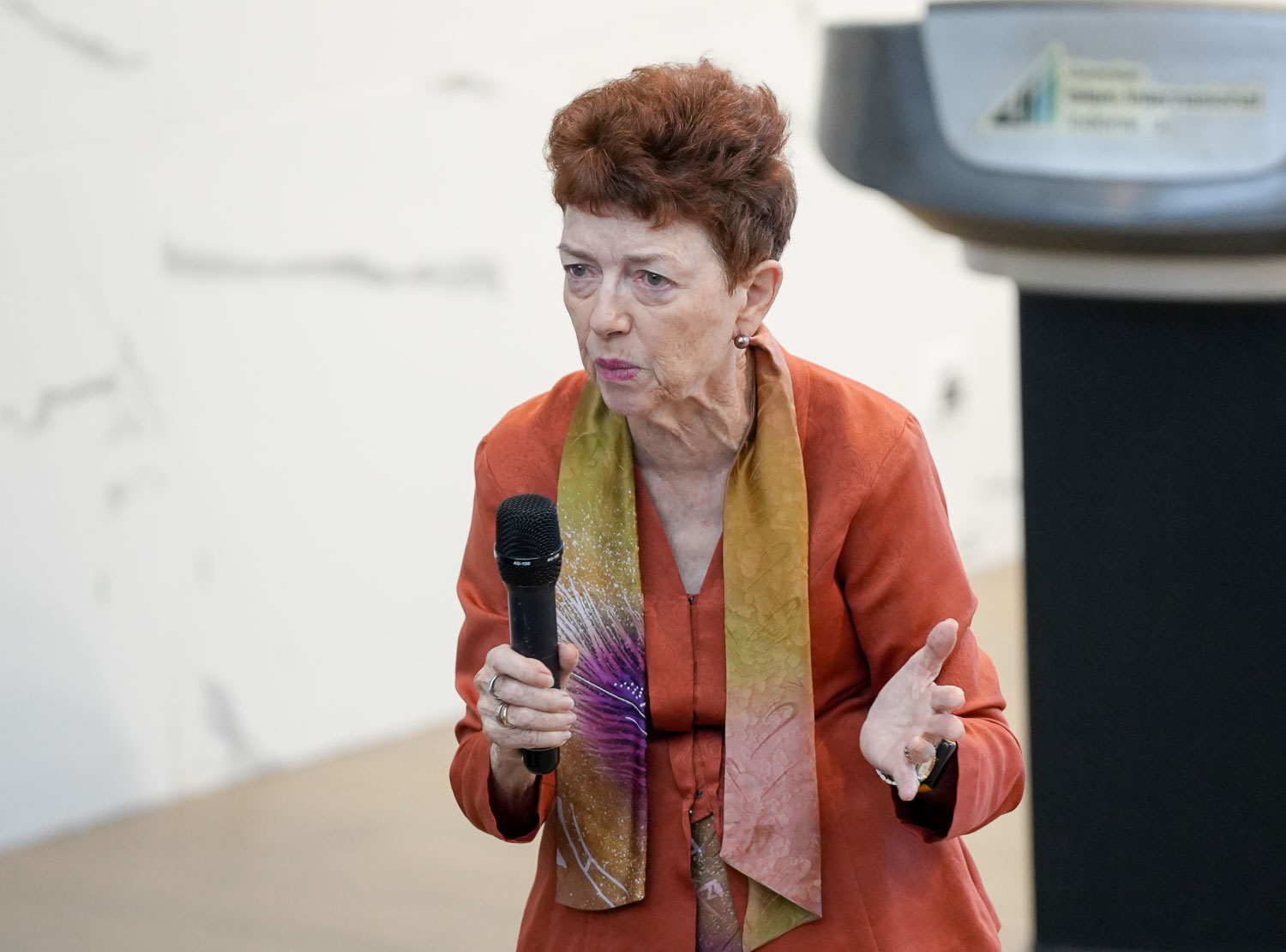
The lecture featured Prof. Leonard Y. Andaya and Prof. Barbara W. Andaya, both Professors Emeritus at the University of Hawai‘i at Mānoa. It was moderated by Dr. Saiful Umam, Director of Research and Partnerships at UIII.
Prof. Leonard Andaya presented on “A Functioning Maritime Entity in the Eastern Indonesian Seas,” while Prof. Barbara Andaya presented on “Inserting Men into the History of Indonesian Textiles.”
Inserting Men into the History of Indonesian Textiles
In her presentation, Prof. Barbara Andaya argued that the history of Indonesian textiles has often been told as women’s history — and that this framing, while rooted in fact, is now incomplete.
Traditionally, textile production in Indonesia was women’s work, she said, and women still provide the majority of labour as weavers and batik-makers.
However, Andaya noted a broader pattern: when a form of work gains greater economic reward, men tend to become more dominant in it. At the same time, women are also beginning to enter positions previously held by men.
These shifts, she argued, require historians to rethink how gender roles are understood in the 21st century. Gender divisions of labour are not fixed; they change with markets, prestige, and power.
The Development of “Herstory” in Southeast Asia
Andaya placed her argument within the development of women’s history, or “herstory,” in Southeast Asia.
She referred to George Coedès in 1944, who noted the importance of the role given to women and maternal lineage in the cultural unity of “Farther India,” and to Anthony Reid in 1988, who argued that the relative autonomy of women in marketing, agriculture, and ritual was one of the most distinctive features of Southeast Asian social systems.
While many questions remain, Andaya said scholars now know more about differences and similarities in women’s positions across the region — shaped by class and ethnicity — and how gender relations have changed over time.
Why Women Were Left Out of History
Andaya also traced why women had to be recovered by historians in the first place.
In the 1960s, a new social history began to pay attention to non-elite and marginalized groups. In the United States, the formation of the National Organization of Women in October 1966 helped push feminist concerns into academia.
Feminist academics, she said, criticized how gender hierarchies had shaped historical writing. Labor history, for example, tended to focus on men, because work was defined as wages earned in the public sphere — ignoring unpaid domestic work, caregiving, and informal labour, realms predominantly occupied by women.
“In 1969 it was a radical notion to argue that women should be studied; by 1977 women’s studies was beginning its phenomenal academic growth,” Andaya said.
Andaya concluded that textile history will become more accurate when both women and men are seen in it. By inserting men into the story — without erasing women’s central role — historians can better understand how work, value, and gender have shaped each other in Indonesia. []