November 11, 2026
By Dadi Darmadi

Depok — The political landscape of early modern Southeast Asia (c. 1400–c. 1800) cannot be understood solely through the lens of centralized “states,” according to Prof. Leonard Y. Andaya, who argued that numerous small island communities in eastern Indonesia functioned as successful political entities through interlocking trade networks—without any centralized administrative structure.
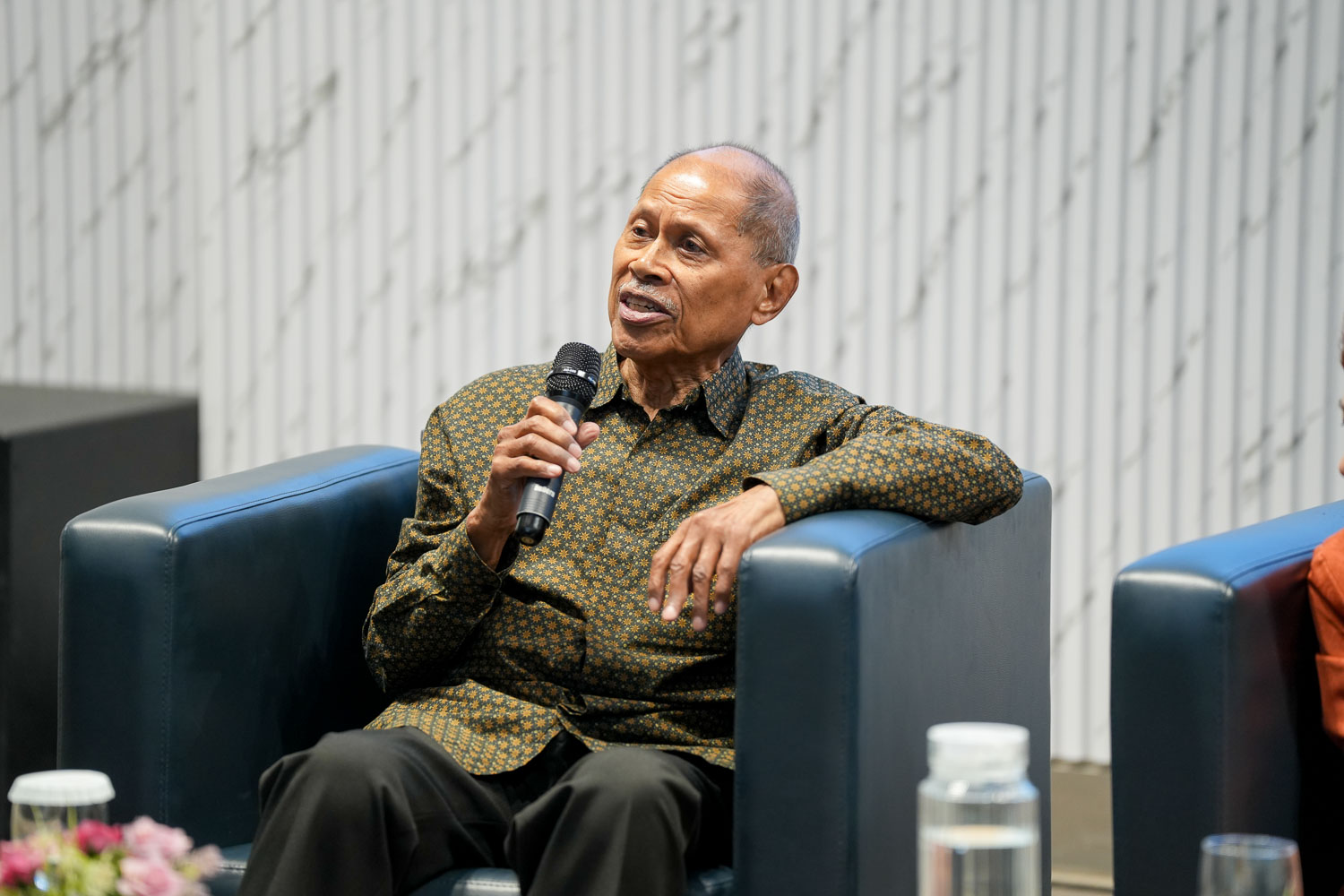
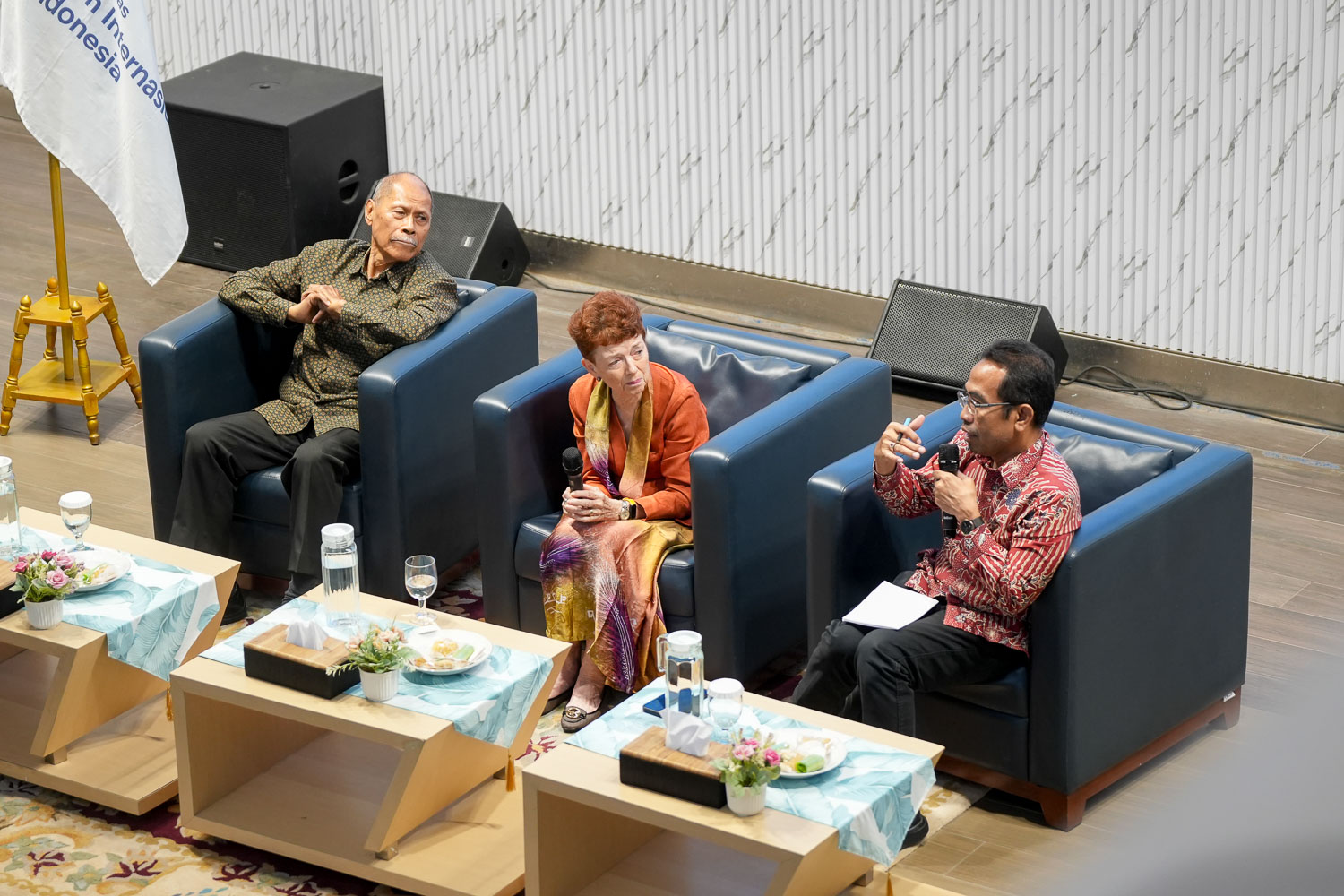
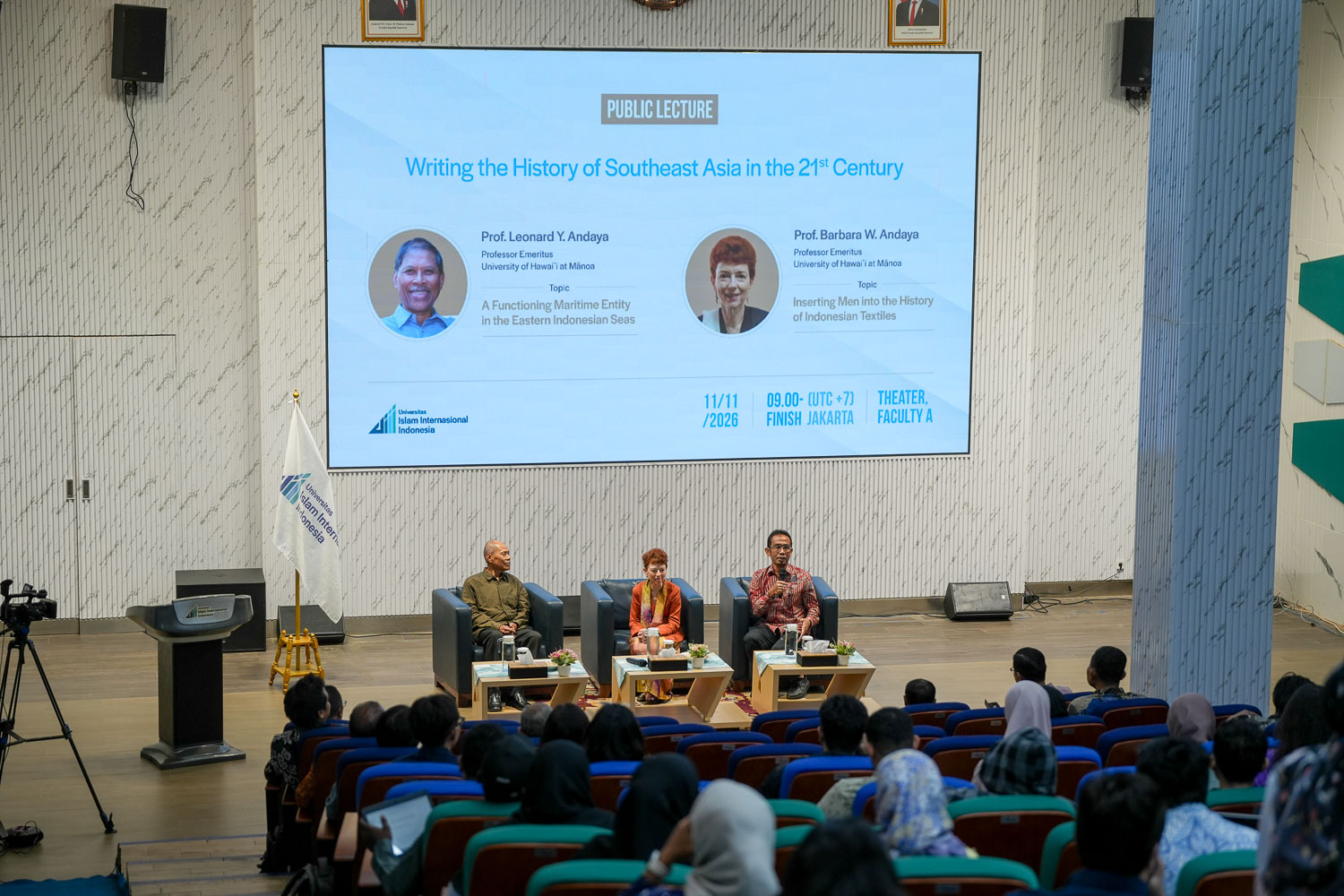
Andaya, Professor of Southeast Asian History at the University of Hawai’i at Mānoa, delivered his public lecture, “Interlocking Trade Networks as a Unique Polity: A Case Study from Eastern Indonesia,” on Wednesday, 11 November 2026, at the UIII Theater Room, Faculty A Building.
The event drew more than 50 participants from UIII’s student and faculty communities. UIII Rector Prof. Jamhari Makruf warmly welcomed Leonard Y. Andaya and Barbara Watson Andaya to the UIII campus. Also present were Dr. Rifqi Muna, Chair of the Academic Senate; Dr. Chaider Bamualim, University Secretary; and Dr. Phil. Syafiq Hasyim, Vice Rector for Academic Affairs. The lecture was moderated by Dr. Saiful Umam, Director of Research and Partnerships at UIII.
Rethinking the “State” in Southeast Asia
Andaya’s central argument challenged conventional historiography that equates political organization in early modern Southeast Asia with centralized states. Instead, he proposed that scholars have overlooked other forms of political organization—particularly maritime communities in the Maluku seas—that survived and prospered without traditional administrative hierarchies.
The Maluku seas, he argued, constituted a “functioning entity” based on interlocking trade networks rather than a central political authority.
Why Eastern Indonesia?
The lecture traced how eastern Indonesia first became known to the outside world through the global quest for spices. Andaya illustrated this with an image of the Victoria, the sole ship from Magellan’s expedition to complete the circumnavigation, underscoring how European interest in the region was driven by cloves and mace—spices indigenous to eastern Indonesia.
He referenced coastal villages such as Weda in Southeast Halmahera, and the Sultanates of Tidore and Ternate, as examples of communities embedded in these networks.
The Role of Environment
A key element of Andaya’s argument was the role of geography and ocean currents. The movement of the Indonesian Throughflow—the system of ocean currents flowing through the archipelago—determined which islands and communities forged trade links to acquire vital subsistence goods and items necessary for socio-cultural practices.
Participating communities, he noted, adapted to accommodate and preserve trade partners. He gave the example of two communities exchanging water to maintain their supply link in emergencies—illustrating how interdependence, rather than hierarchy, sustained these networks.
Implications Beyond Maluku
In his conclusion, Andaya extended the argument beyond maritime Southeast Asia. He suggested that similar areas often ignored in mainstream historical narratives—uplands, large forests, and extensive grasslands—also formed trade networks that established functioning entities without traditional administrative structures.
By adopting this methodological approach, he argued, geographic and ecological areas often marginalized in historical accounts can be recognized as legitimate political entities in early modern Southeast Asian history.
“More People Are Interested in Looking at the Margins”
Andaya situated this methodological shift within a broader trend in the field. “More people are interested in looking at the margins,” he said. “People in the margin—much more detail and new ways of looking at things.”
The remark underscored his call for historians to move beyond center-focused narratives and pay closer attention to communities that have traditionally been left out of the main historical account.
The lecture drew on Andaya’s decades of scholarship on eastern Indonesia and the Malay Archipelago, including A History of Early Modern Southeast Asia, 1400–1830 (co-authored with Barbara Watson Andaya, Cambridge University Press, 2015), which emphasizes localization, local agency, and the role of geography in shaping the region’s history. []