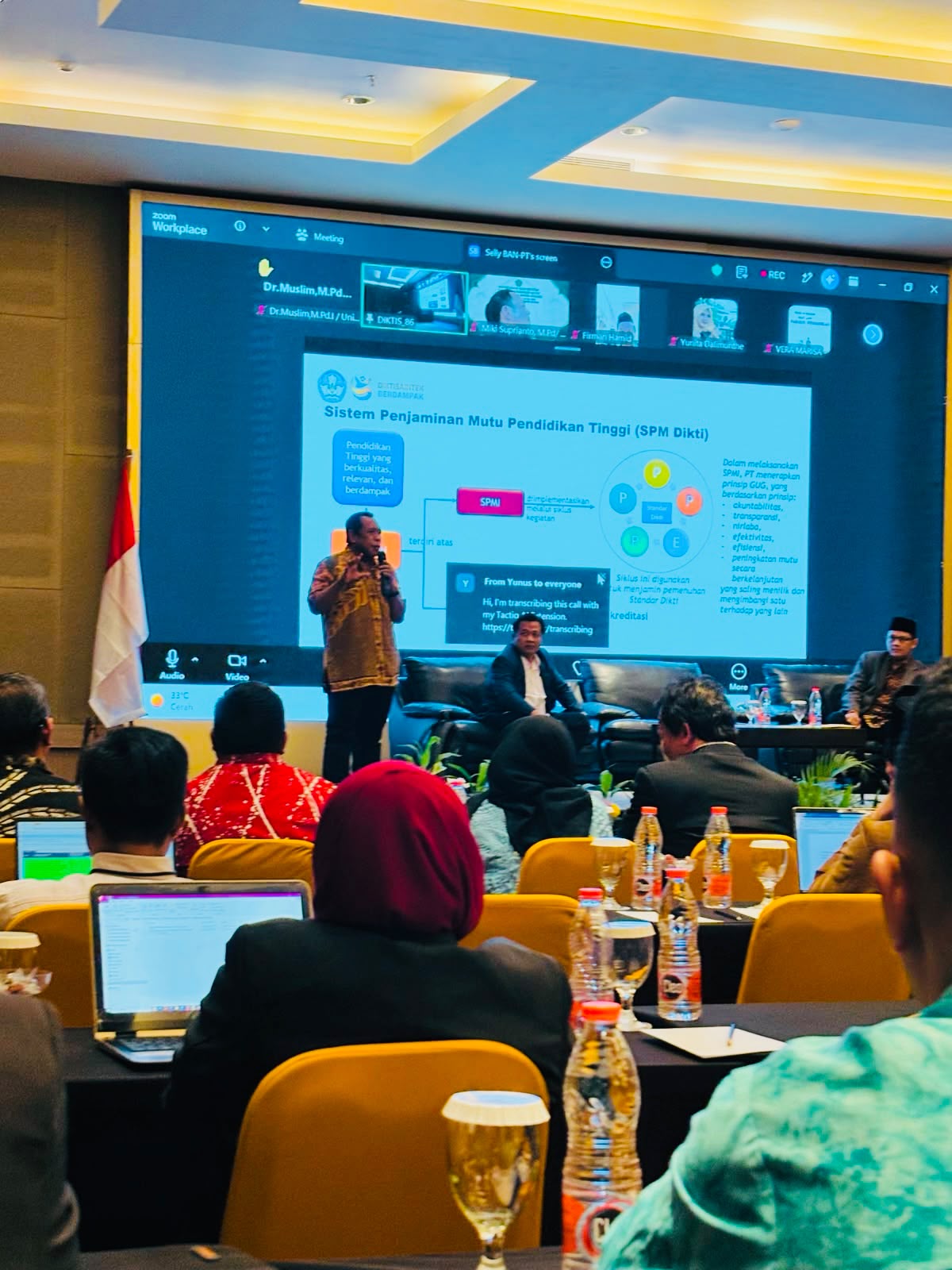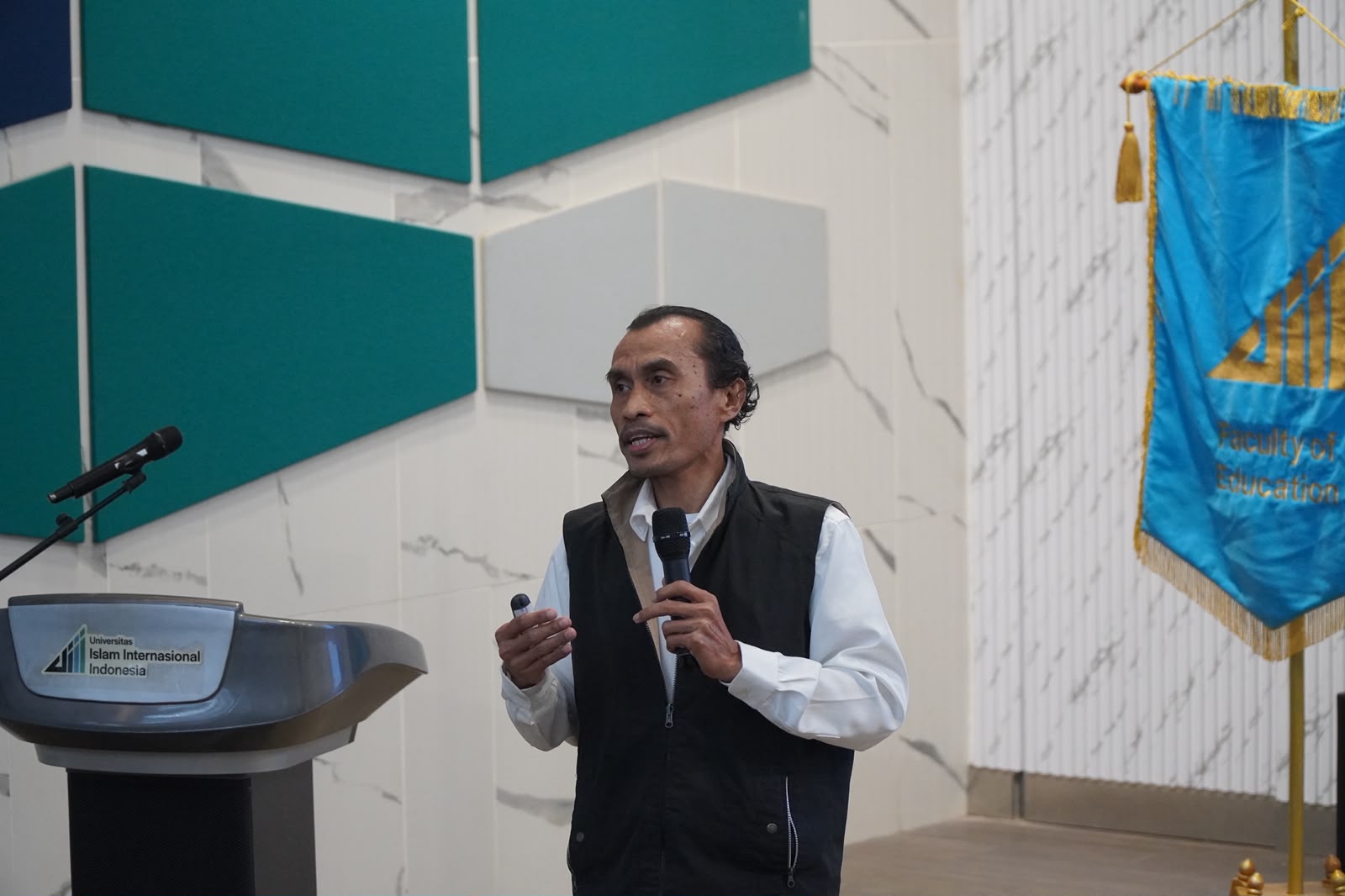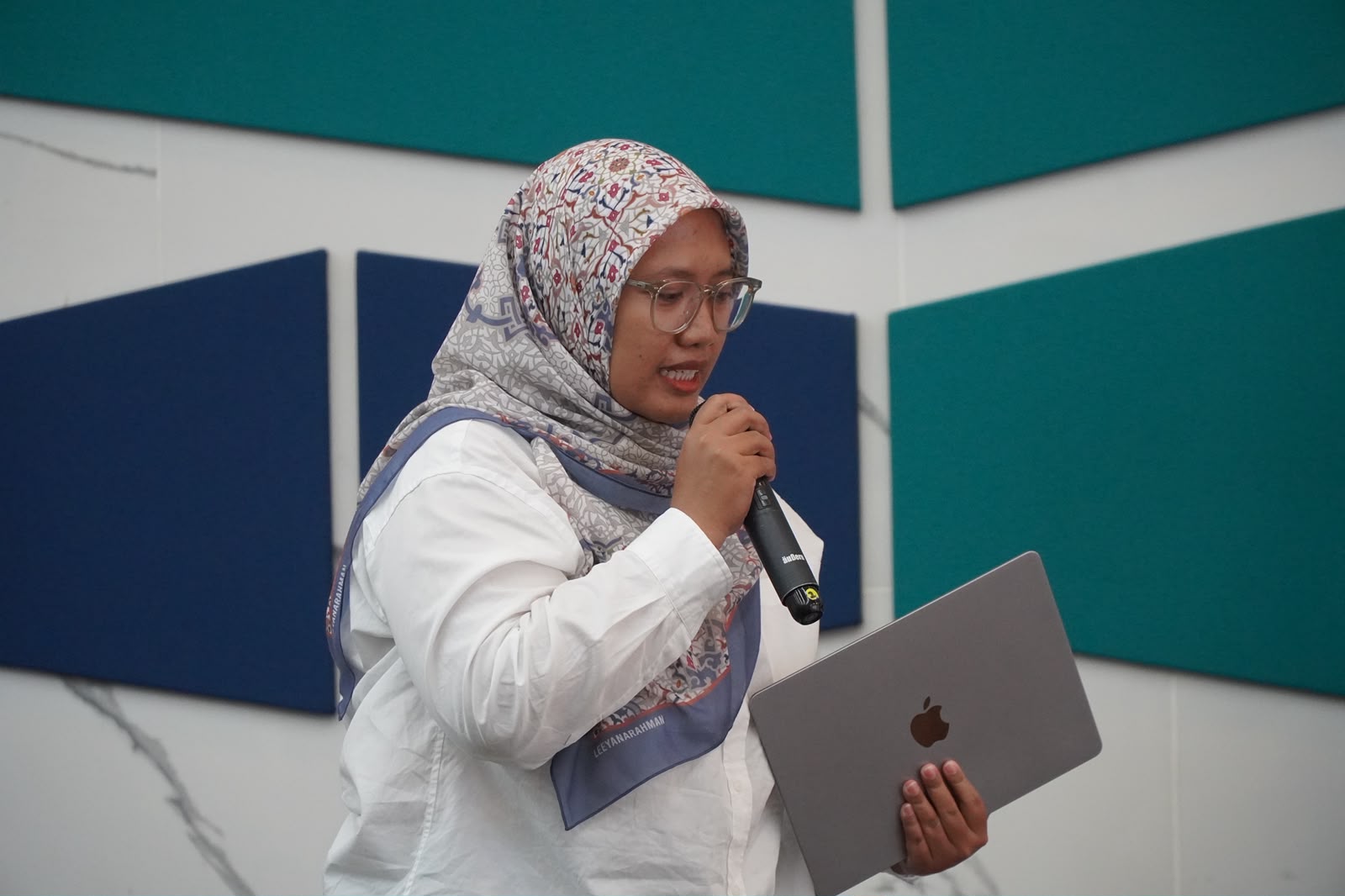
Jakarta — Universitas Islam Internasional Indonesia (UIII) participated in the Coordination and Review of Quality Assurance Systems for Islamic Higher Education Institutions (PTKI), organized by the Directorate of Islamic Higher Education, Ministry of Religious Affairs, from July 13 to 15, 2026 at Luminor Hotel Pecenongan, Jakarta. The forum brought together vice rectors for academic affairs and heads of quality assurance units from state Islamic universities, institutes, and colleges across Indonesia.
UIII was represented by R. Alpha Amirrachman, M.Phil., Ph.D., Head of the UIII Quality Assurance Center, who attended on behalf of the University. His attendance reflected UIII’s commitment to strengthening institutional quality assurance, ensuring regulatory compliance, and preparing the University for the evolving national accreditation framework.
The event was officially opened by Prof. Phil. Sahiron, Director of Islamic Higher Education at the Ministry of Religious Affairs. In his remarks, he welcomed the participants and expressed appreciation for their presence. He emphasized that quality development among Islamic higher education institutions should not be pursued in isolation. Institutions that have progressed further, he said, should share their experience and practices with other PTKIs so that institutions can learn from one another, complement their respective strengths, and collectively reinforce the quality of Islamic higher education in Indonesia.
A major focus of the forum was the transition toward the new accreditation instruments and digital systems introduced by the National Accreditation Board for Higher Education, or BAN-PT. Prof. Slamet Wahyudi, a member of the BAN-PT Executive Board, explained the main changes under the Higher Education Accreditation Instrument version 4.1, or IAPT 4.1, in reference to Ministerial Regulation No. 39 of 2025. He underlined that accreditation is not merely an administrative requirement, but an external quality assurance mechanism intended to assess institutional eligibility, protect students and the public, and encourage continuous quality improvement.
The new framework recognizes three accreditation statuses: Accredited, Excellent Accreditation, and Not Accredited. Institutions that meet the National Higher Education Standards may obtain Accredited status, while those demonstrating performance beyond the national standards may pursue Excellent Accreditation. The forum also highlighted that applications for excellent status and its renewal are financed by the respective higher education institutions.
Another session introduced SAPTO 2.0, BAN-PT’s updated online accreditation system. Ahmad Nur Rohman, M.Si., explained that SAPTO 2.0 differs significantly from the previous platform. It is web-based, allows several team members to work simultaneously, and supports the synchronization of quantitative data from national databases. This transition requires institutions to improve the accuracy, consistency, and integration of their internal data. Participants were reminded that accreditation readiness now depends not only on the quality of narrative documents, but also on the reliability of information recorded in PDDikti and other national systems.
Sudirman Hasan presented practical guidance on completing and assessing APT 4.1. He explained that the instrument is structured around four major criteria: Quality Culture, Relevance, Accountability, and Mission Differentiation. These criteria assess institutional inputs, processes, outputs, and impacts. Particular attention is given to the effectiveness of internal quality assurance systems, the implementation of the PPEPP cycle, the relevance of education, research, and community engagement, good university governance, academic integrity, and the consistency of an institution’s mission.
Prof. Dr. Syamsun Ni’am, M.Ag., further emphasized the organizational discipline required to achieve excellent accreditation. He highlighted the importance of leadership commitment, a competent accreditation task force, reliable evidence, accurate data, internal review, coordination across units, and thorough preparation for assessment. His central message was straightforward: institutions must document what they do and consistently implement what they have formally planned.
For UIII, the forum provided important guidance for consolidating its internal quality assurance system and aligning institutional policies, academic data, governance documents, and performance evidence with IAPT 4.1 and SAPTO 2.0. The discussions also reinforced the need for stronger coordination between the Quality Assurance Center, academic faculties, research and community engagement units, human resources, finance, information technology, and PDDikti management.
Following the forum, the UIII Quality Assurance Center will use the insights gained to review institutional readiness, map the required evidence, strengthen the implementation of the PPEPP cycle, and improve data integration. These steps are expected to support UIII’s long-term objective of building a robust quality culture and achieving stronger national and international recognition. []