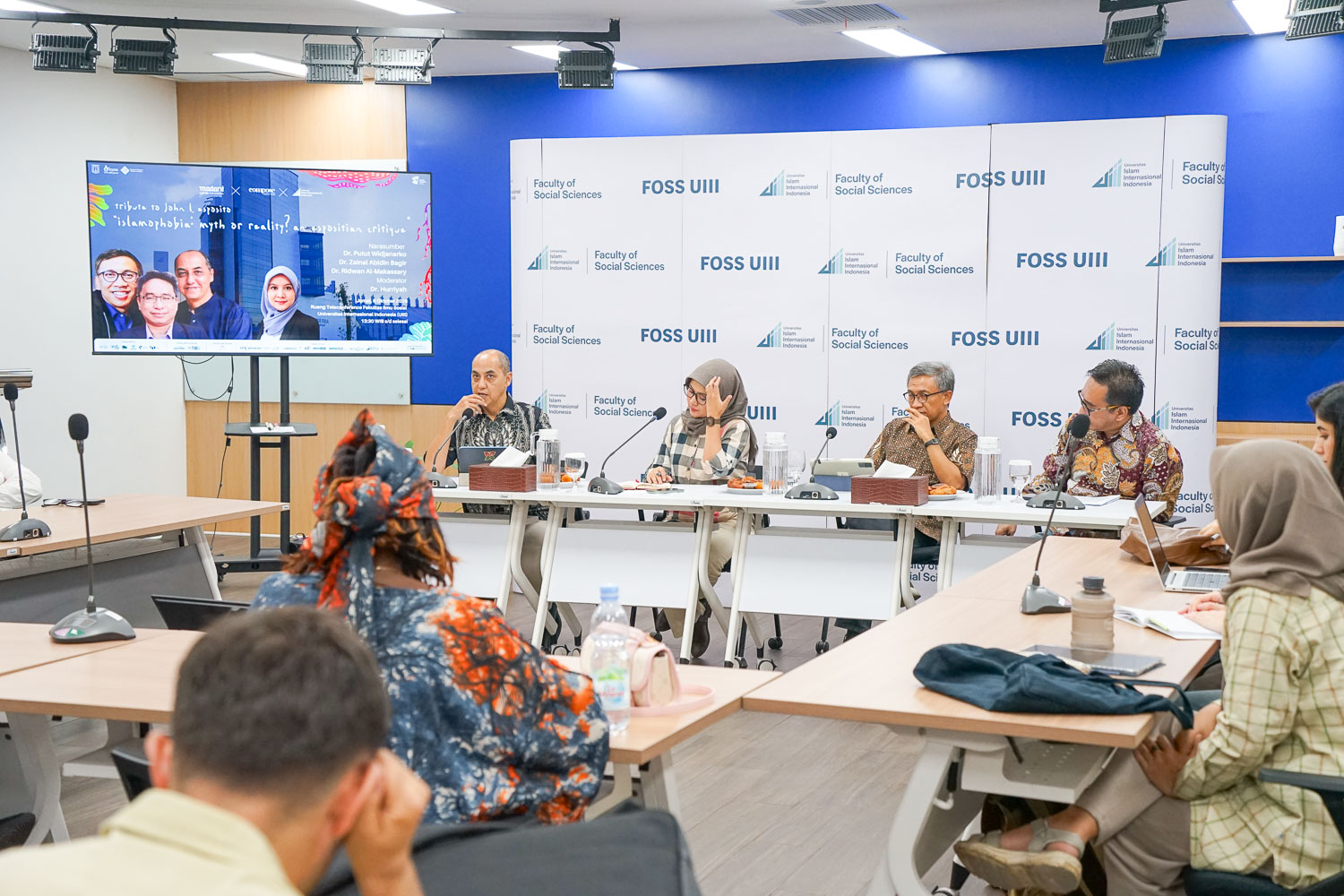
Depok – On 15 September 2026, the Faculty of Economics and Business of UIII held the 5th International Conference on Muslim World Economy and Business (ICMWEB) 2026. The event featured two panel sessions with invited, well-known scholars.
In the first session, three speakers discussed the main theme, “Muslim Economies in the New Geoeconomic and Geopolitical Realities“. They were Dr. Lili Yan Ing, Secretary General of the International Economic Association (IEA); Dr. Anas Iqtait, Lecturer at the Centre for Arab and Islamic Studies, The Australian National University; and Prof. Dato’ Dr. Ahamed Kameel Mydin Meera, Professor at the Faculty of Economics and Management Sciences, IIUM. The session was moderated by Ugi Suharto, PhD.
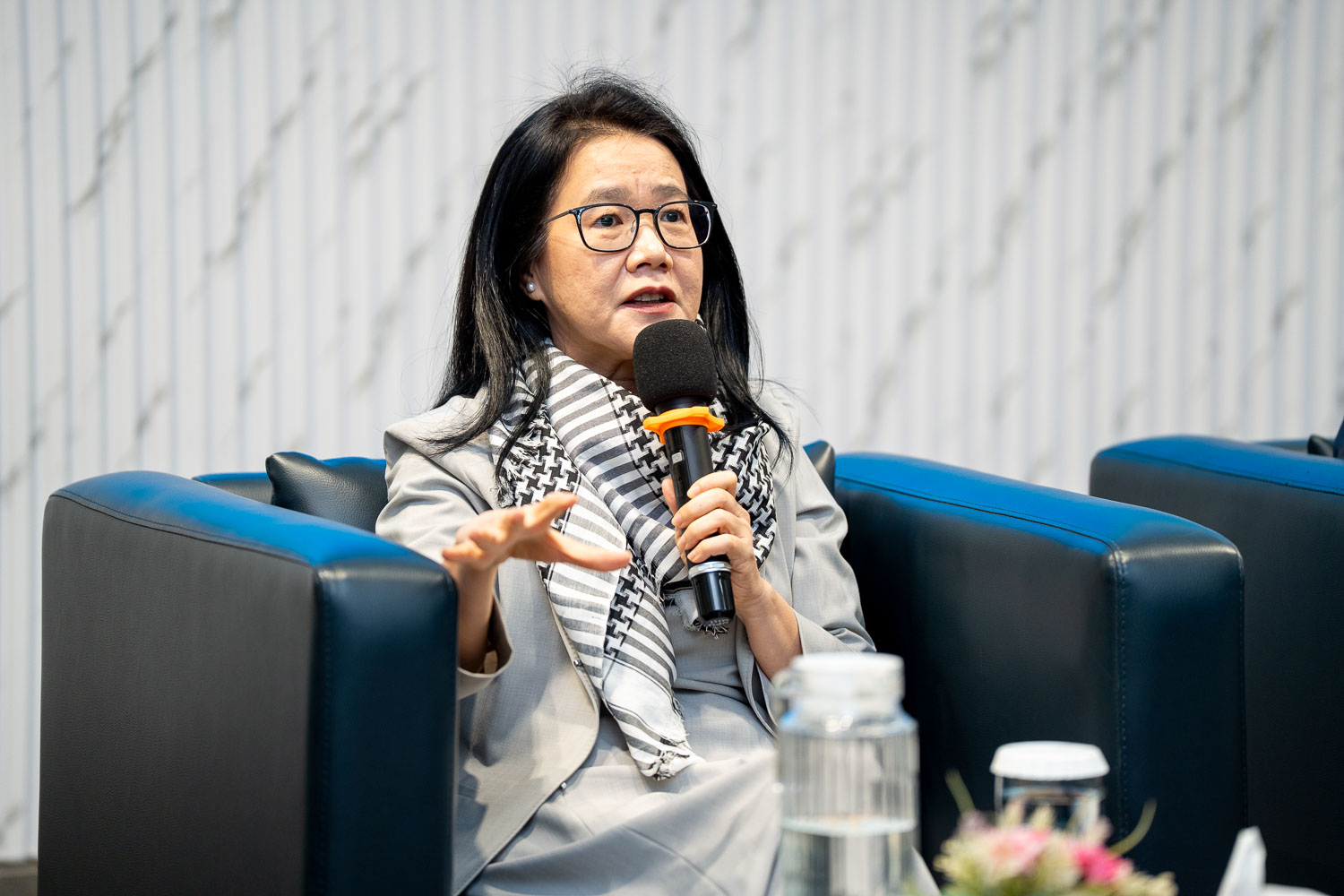
In this session, Lili Yan Ing presented seven strategic recommendations, described as her “Way Forward” blueprint, to address deep-seated structural bottlenecks, policy distortions, and global economic pressures that have kept Indonesia at a 5% GDP growth plateau without delivering high-quality jobs or significant poverty reduction.
One of her main recommendations was to cap the Makan Bergizi Gratis (MBG) budget at IDR 8 trillion for targeted low-income beneficiaries and reallocate APBN funds toward education, health, and infrastructure to ensure public spending creates long-term value. “That will basically increase the quality of human capital,” she said.
She also advocated limiting state intervention by focusing Danantara strictly on restructuring state-owned enterprises (BUMN), halting or reassessing Koperasi Merah Putih (KDMP), and streamlining licensing to restore private-sector dynamism and create quality jobs.
She noted that BUMN dominance and new state entities such as Danantara risk crowding out the private sector. This concern is reflected in Indonesia’s FDI, which fell to 1.61% of GDP in 2025, placing Indonesia near the bottom among ASEAN peers. “So this is really something that we need to think about: what is really going on in Indonesia’s investment environment? Why is investment not coming into Indonesia?” she said.
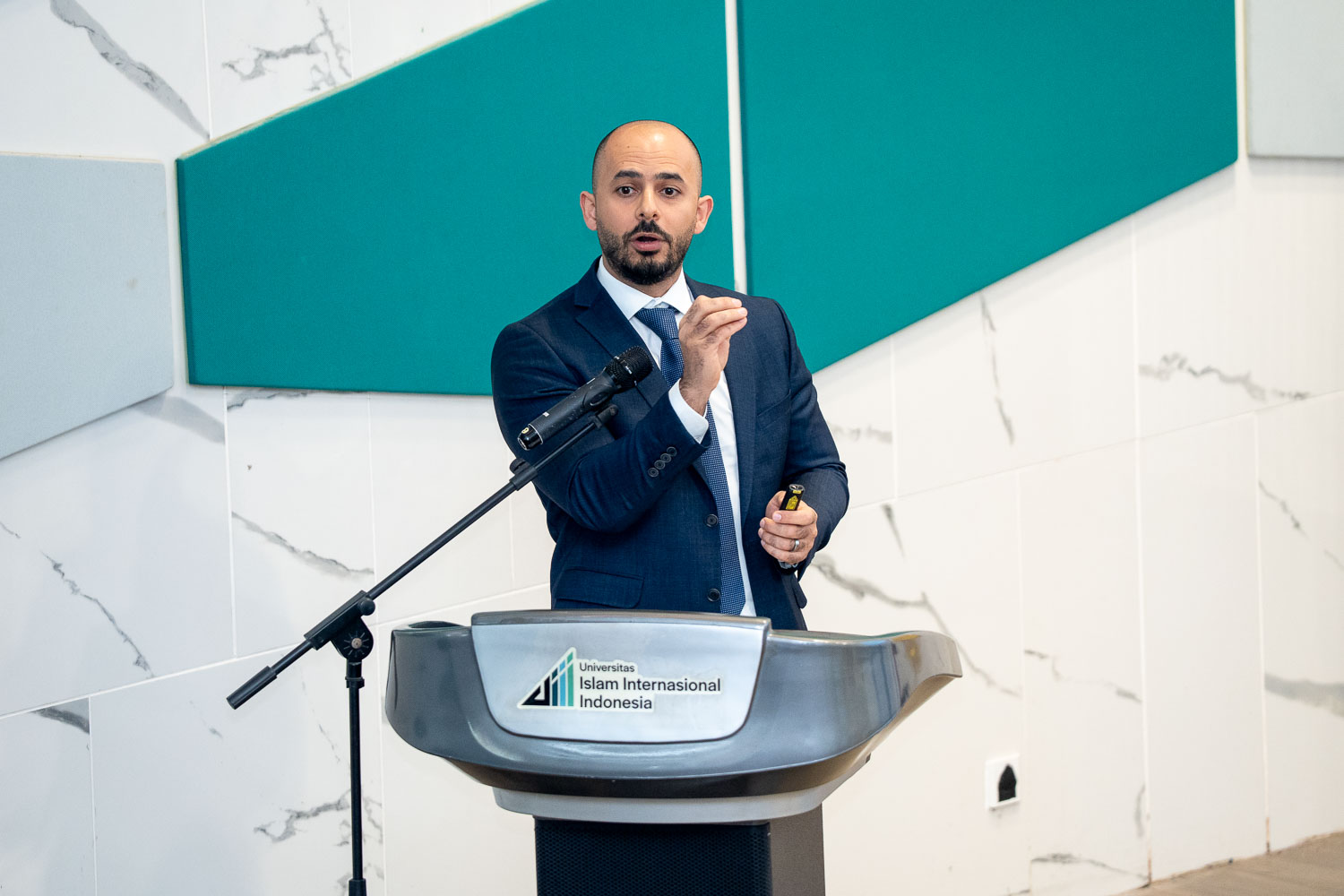
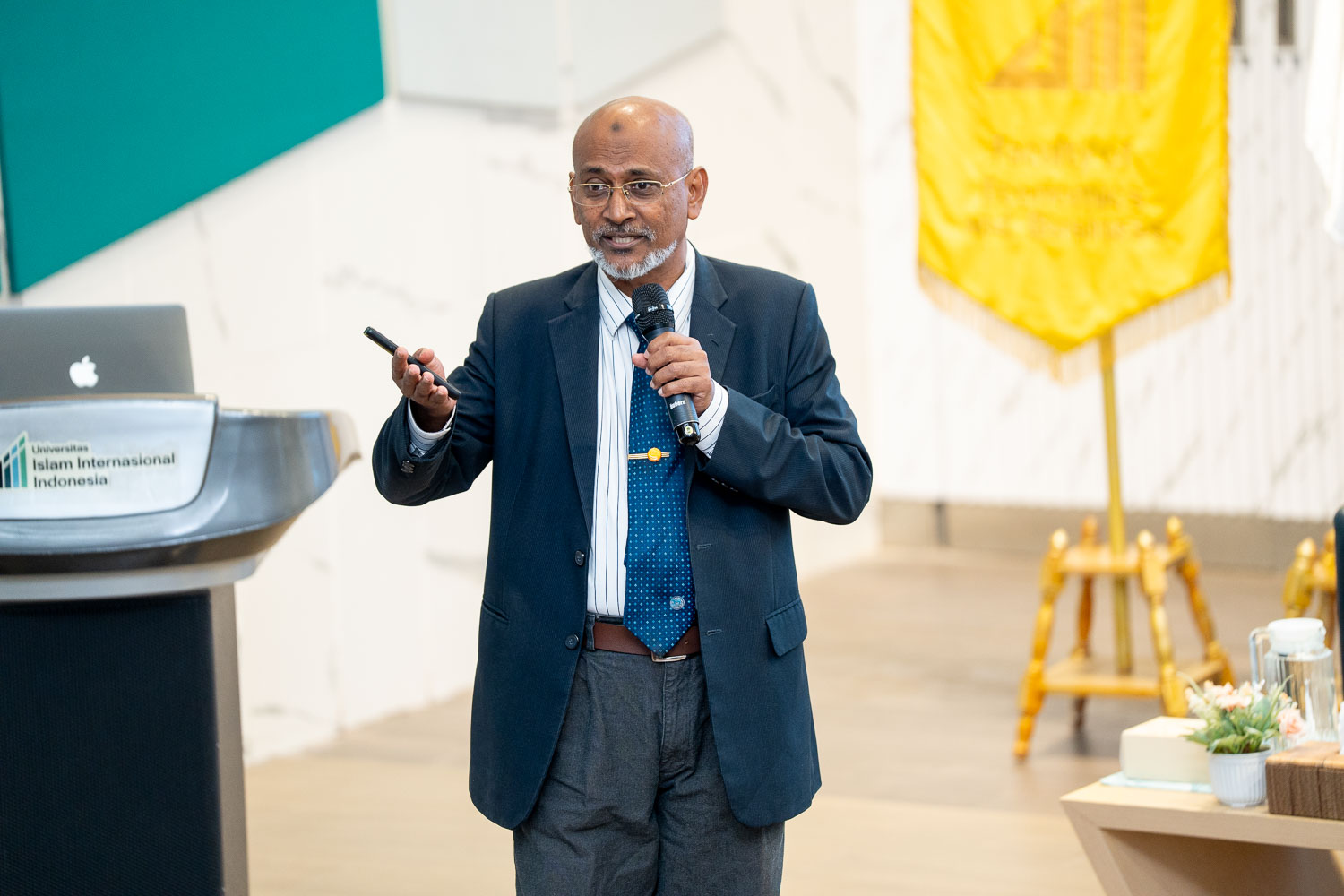
The next speaker, Dr. Anas Iqtait, delivered a presentation titled “Beyond the Energy Divide: Structural Dependence and Economic Sovereignty in OIC Economies.” He noted that six of the eight major global chokepoints border OIC member states.
He observed that middle powers are sandwiched between US financial hegemony (controlling 88% of FX transactions and 58% of SWIFT payments) and Chinese industrial hegemony (controlling 53% of global steel, 70% of battery cell capacity, and 80% of solar PV capacity). Iqtait urged nations to build strategic “outside options” in local-currency settlement systems, downstream mineral processing, and regional compute infrastructure.
Regarding Indonesia’s role in the Middle East and the OIC, he said Middle Eastern nations view Indonesia as a relative industrial and manufacturing powerhouse, as only a few countries in the MENA region, including Iran, Türkiye, and Israel, are industrialized. He added that Indonesia enjoys deep religious and diplomatic respect.
“First of all, Indonesia is viewed across Middle Eastern states as a manufacturing powerhouse… I think we need to look at this through relative terms. The vast majority of the Middle East hasn’t reached the stage of industrialization yet,” he said.
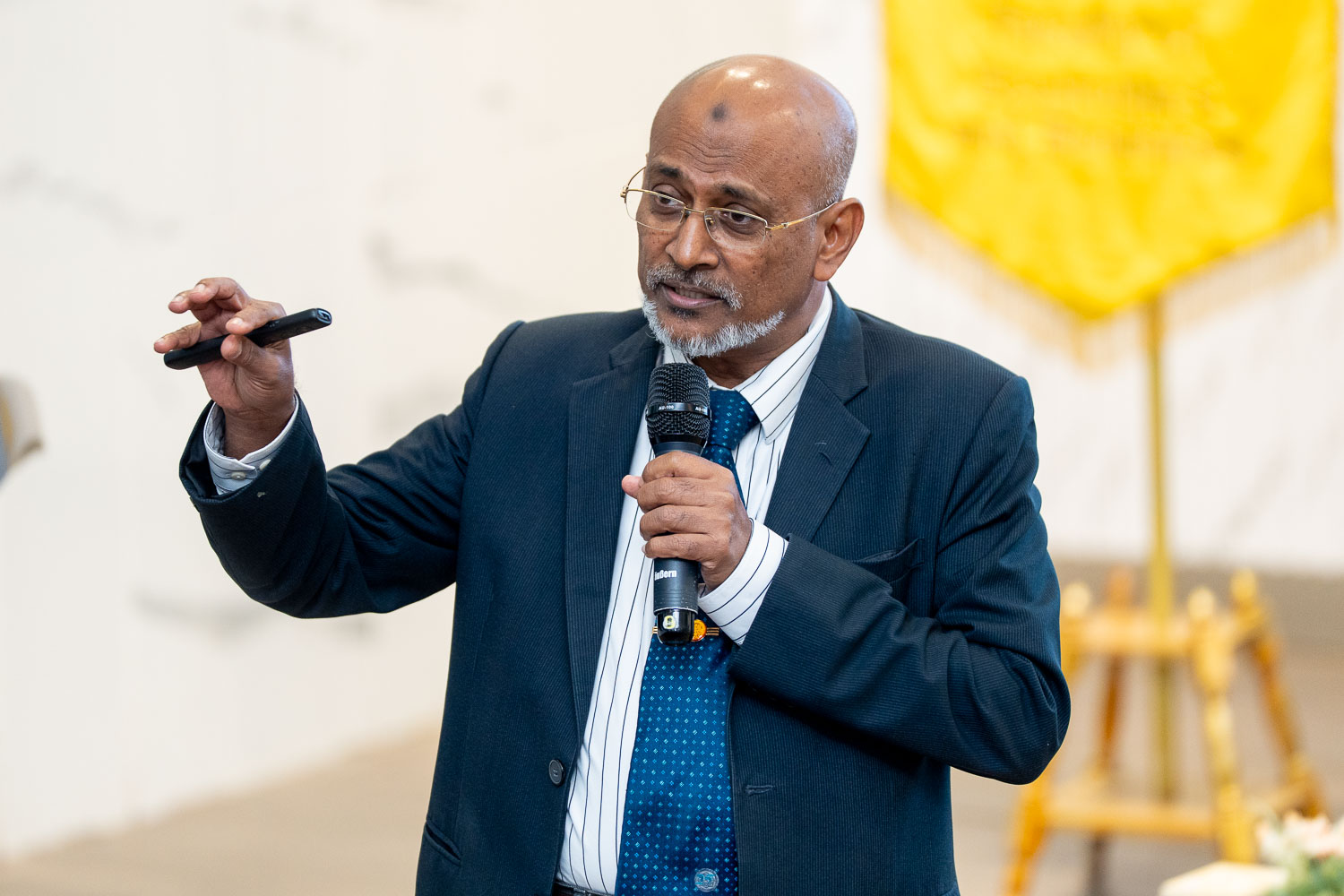
The final speaker in Panel 1 was Prof. Dato’ Dr. Ahamed Kameel Mydin Meera, who delivered a presentation titled “The Impact of the Middle East Crisis on Muslim Economies.” He highlighted that the ongoing conflict in the Middle East has kept Brent crude above $100 per barrel, severely affecting net energy importers through double-digit inflation and debt stress.
Prof. Kameel recommended aligning with BRICS, pricing international trade in national currencies, gold, or petroleum, establishing commercial barter netting systems, and expanding interest-free (riba-free) waqf-based social finance.