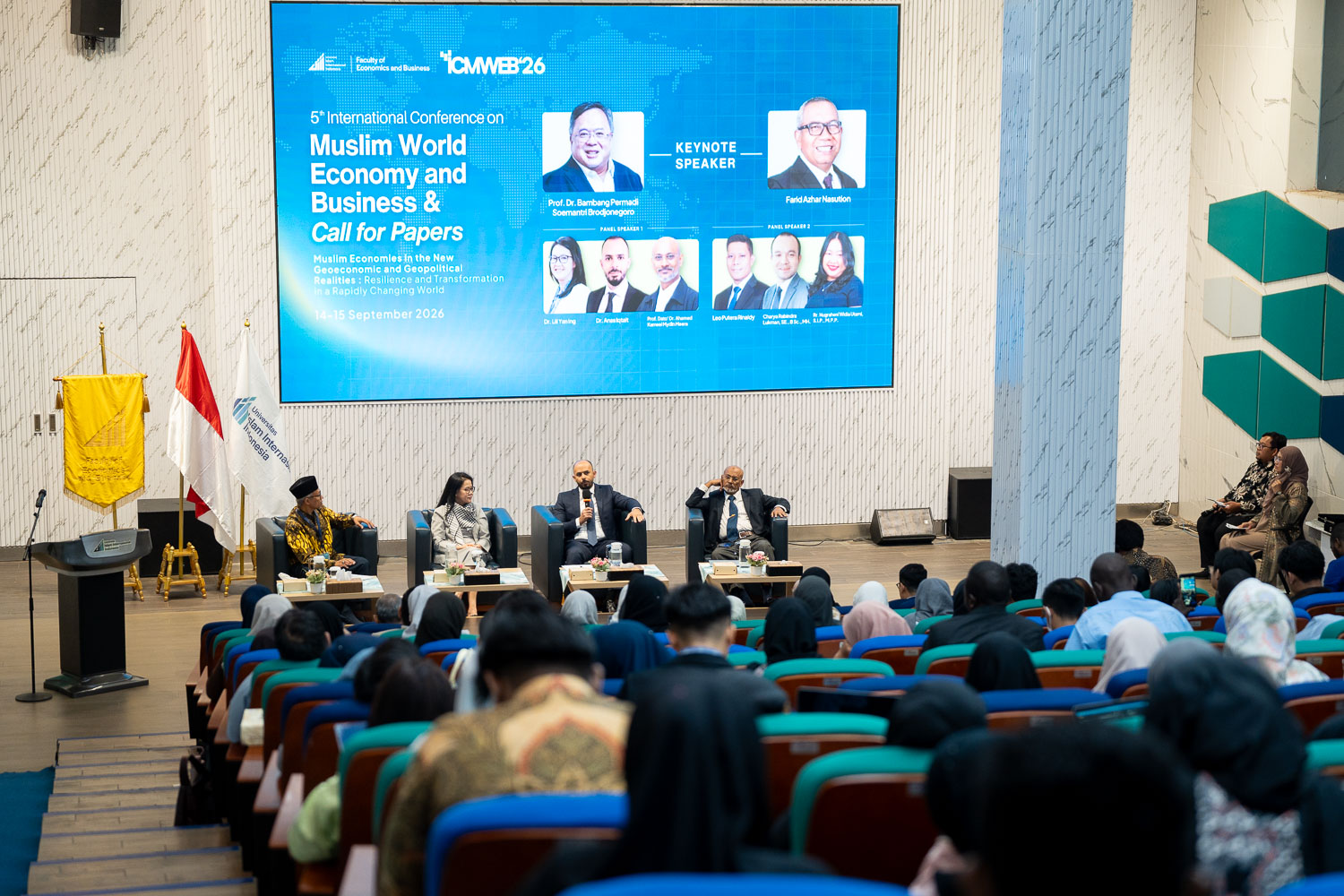
Depok – On 15 September 2026, the Faculty of Economics and Business of UIII held the 5th International Conference on Muslim World Economy and Business (ICMWEB) 2026. This year’s event was entitled “Muslim Economies in the New Geoeconomics and Geopolitical Realities: Resilience and Transformation in a Rapidly Changing World.”
This two-day program featured a call for papers, and the conference invited scholars from all over the world. There were two keynote speakers, including Prof. Dr. Bambang Permadi Soemantri Brodjonegoro, Dean and CEO of the Asian Development Bank Institute (ADBI), and Farid Azhar Nasution, Vice Chairman of the LPS Board of Commissioners.
Also, there are two panel sessions with two themes, “Muslim Economies in the New Geoeconomic and Geopolitical Realities” and “Geopolitical Realities, ESG Integration, and Indonesian Business Transformation”.
This event also invites scholars, policymakers, industry leaders, and practitioners to examine how Muslim economies are responding to a new geoeconomic and geopolitical landscape. The conference focused on the economic consequences of regional conflict, energy-market disruption, trade fragmentation, major-power rivalry, tighter global financial conditions, and rapidly changing technology cycles.
Dean of the Faculty of Economics and Business, Teguh Yudo Wicaksono, PhD, said that this conference reflects the faculty’s commitment to research that addresses pressing economic questions and contributes to informed public discussion.
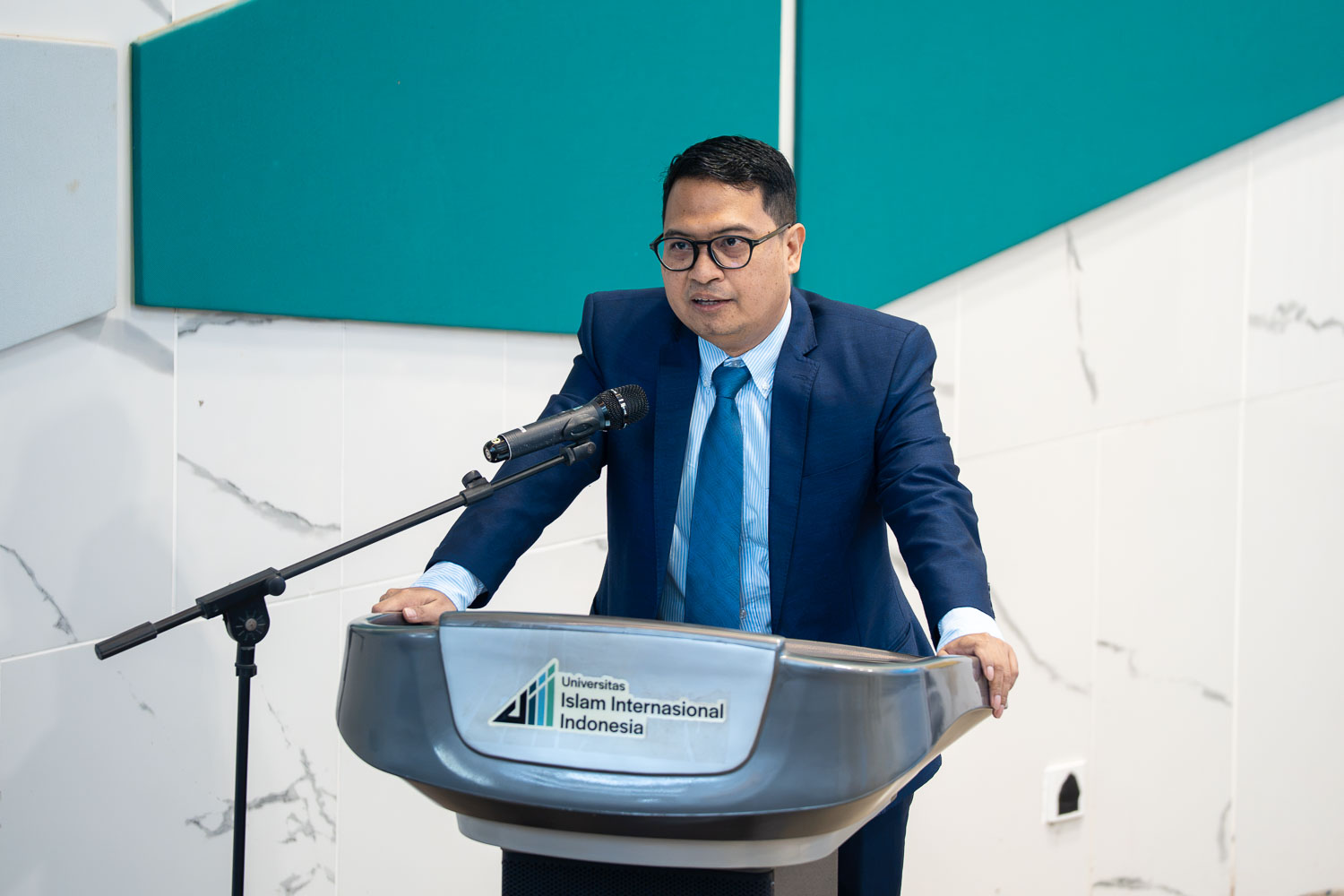
The theme of this conference carried particular urgency in light of the continuing repercussions of the US-Iran war. The discussion also addressed how disruptions to energy supplies and maritime trade, together with the risk of further escalation, continue to threaten global economic stability.
Teguh Yudo also said that, for Muslim economies, this situation raises important questions about how to protect livelihoods, maintain financial stability, and strengthen economic resilience. It also reinforces the need to diversify economic activity, develop reliable trading relationships, and advance regional and international cooperation. “Our discussions must therefore consider immediate responses alongside the institutional and structural changes needed for long-term prosperity,” he said.
Meanwhile, Rininta Nurrachmi, PhD, Chair of the 5th ICMWEB and Call for Papers 2026 Committee, said these themes are particularly crucial as Muslim economies navigate a complex landscape of global uncertainty, technological disruption, and the urgent need for a just and inclusive transition to a sustainable future. “ICMWEB serves as a crucial platform to forge a collective path forward, grounded in the principles of our faith and the best of modern economic thought,” she said.
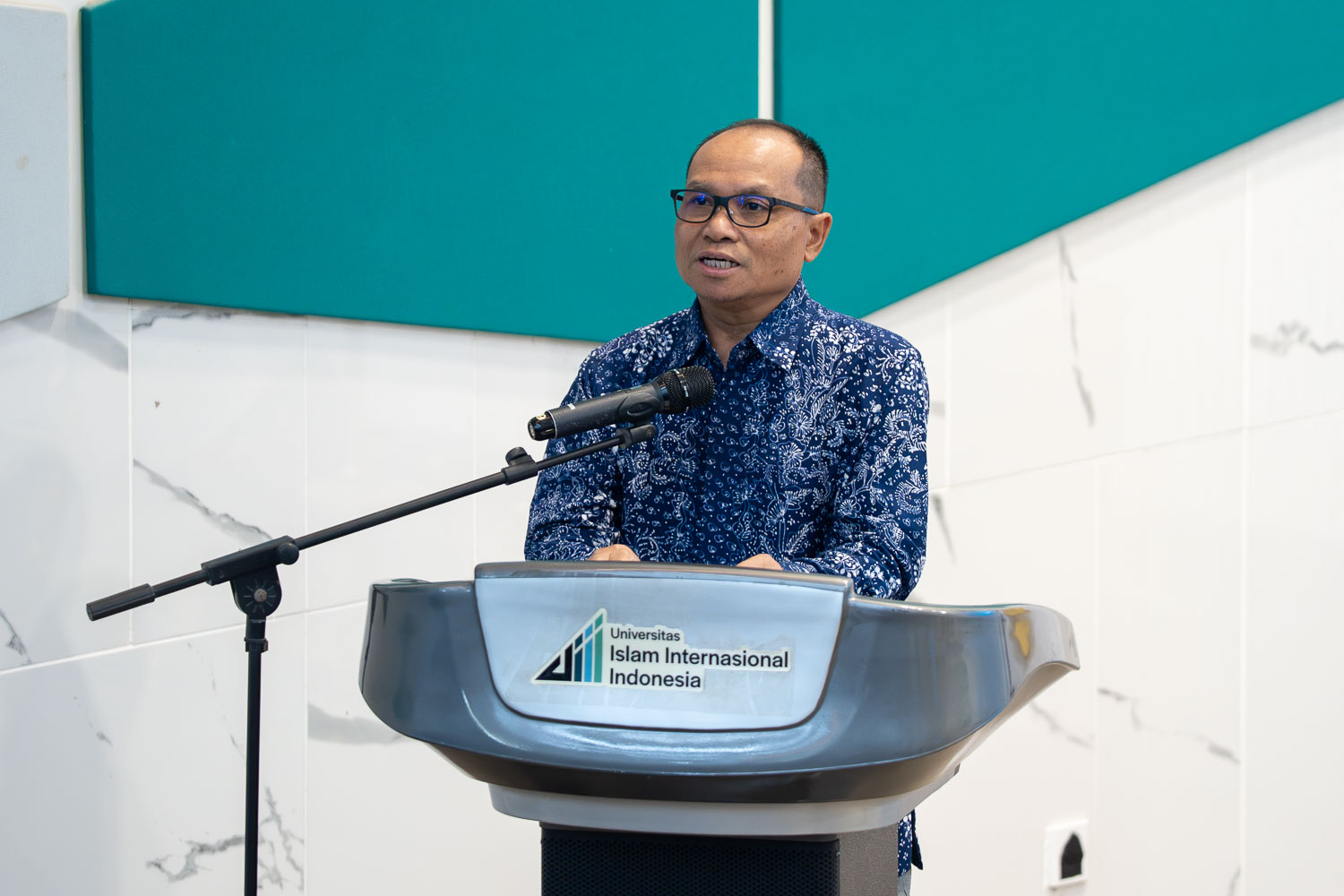
Rector of UIII, Prof. Jamhari, also said that the ICMWEB conference asks important questions about the economic consequences of geopolitical tensions, changing trade relationships, and uncertainty in the international order. “For Muslim economies, these questions concern family livelihoods, opportunities for young people, the security of essential supplies, and businesses’ ability to invest with confidence,” he said in his speech.
He thinks that there are three areas of ICMWEB call for papers that reflect this broader responsibility. “Alongside geopolitical and geoeconomic change, we examine structural reform and the transition towards environmentally sustainable economies. We also explore digital and technological transformation, including the opportunities and ethical questions associated with artificial intelligence and Islamic financial technology,” he said.
“At UIII, our commitment to connecting Islamic values with global scholarship gives these discussions particular significance. Justice, responsibility, and care for future generations should inform how we understand economic development,” he adds.