September 25, 2026
By Raihan Riffa Nadhifa
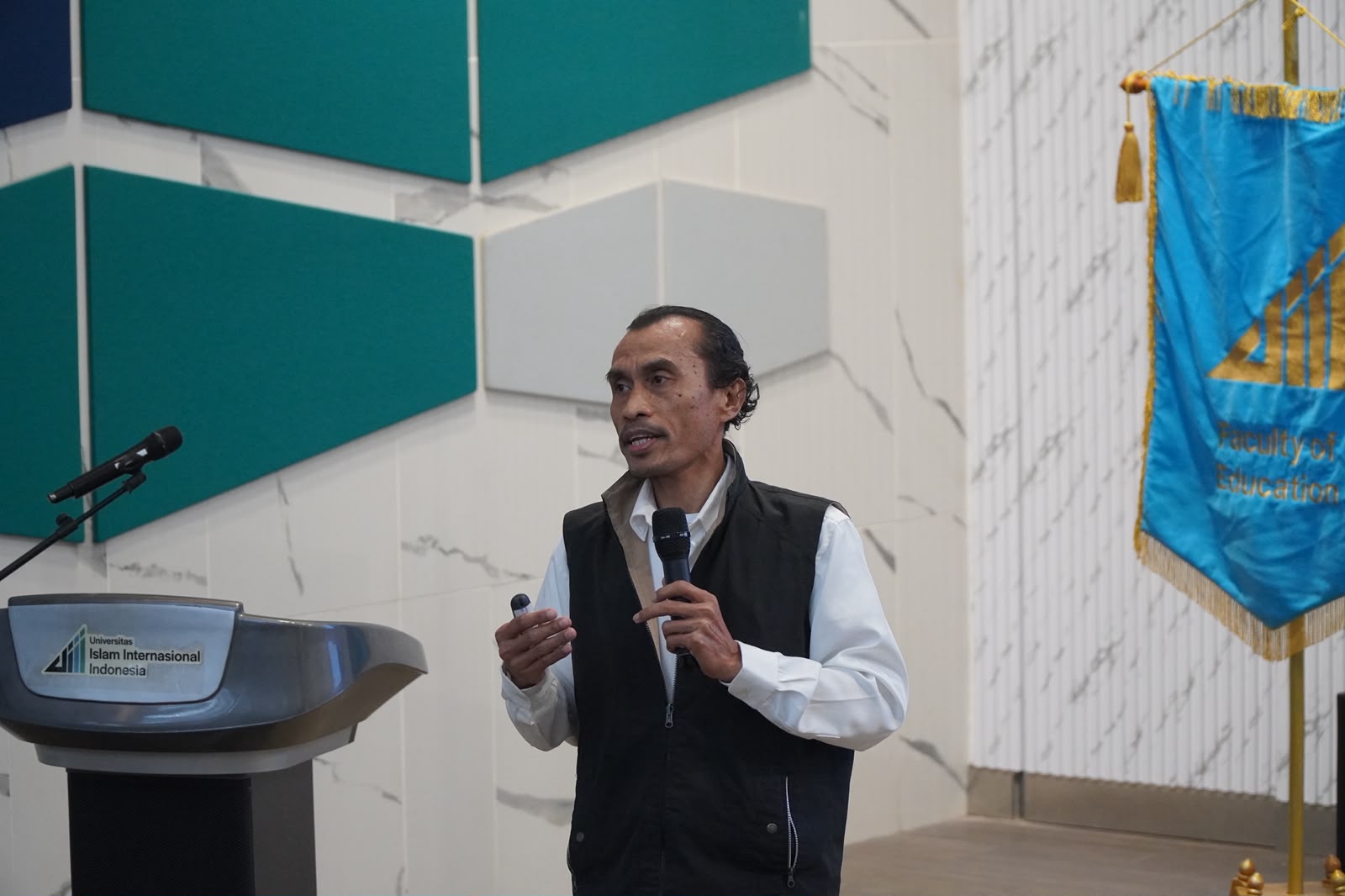
Depok – Religious learning is often associated with classrooms, textbooks, and teachers. However, students’ understanding of Islam is shaped by a more complex process that extends beyond formal education. During the UIII Lunchtalk session titled “Who Teaches Students Islam?”, Dr. Hayadin, S.Ag., M.Pd., Researcher at the National Research and Innovation Agency (BRIN), highlighted that religious understanding develops through interactions among various actors, including teachers, families, religious communities, schools, and wider society.
Dr. Hayadin explained that religious education involves different forms of authority, as each actor possesses different forms of capital and legitimacy that influence how religious knowledge is interpreted and practiced. The interaction among these actors creates a continuous process of negotiation in shaping students’ understanding of Islam.
Within schools, teachers play an important role beyond delivering curriculum content. They interpret religious concepts and connect them with students’ social realities, making them mediators between educational objectives, religious traditions, and students’ everyday experiences. At the same time, the state and religious communities also contribute to religious education through policies, curriculum, traditions, and interpretations.
This perspective challenges the assumption that religious teachers are solely responsible for students’ moral and religious development. Instead, students’ religious formation is influenced by various environments, including families, communities, and social interactions. Religious education, therefore, should be understood not only as a classroom activity but also as a broader social process.
Reflecting on the discussion, Dr. Hayadin encouraged students and academics to conduct further research on religious education. “There are many actors involved in religious education, and each actor has different forms of capital and legitimacy. How these actors interact and compete over legitimacy becomes an interesting area of research,” he said.
He added that continued research could provide deeper insights into how Islamic education is practiced in Indonesian schools and society. “The more research we conduct about this issue, the more explanations we can find about how religious education is practiced in schools and in Indonesian society,” he said.
The discussion invites a broader reflection on religious learning in Indonesia: understanding Islam is not only about what students learn in classrooms, but also how they encounter, interpret, and engage with religious knowledge across different spaces of life.