DEPOK — What happens to the study of Islam when the archive is no longer only a manuscript, a library, or a field site, but also a YouTube channel, an algorithm, a social-media feed, or an image generated by artificial intelligence?
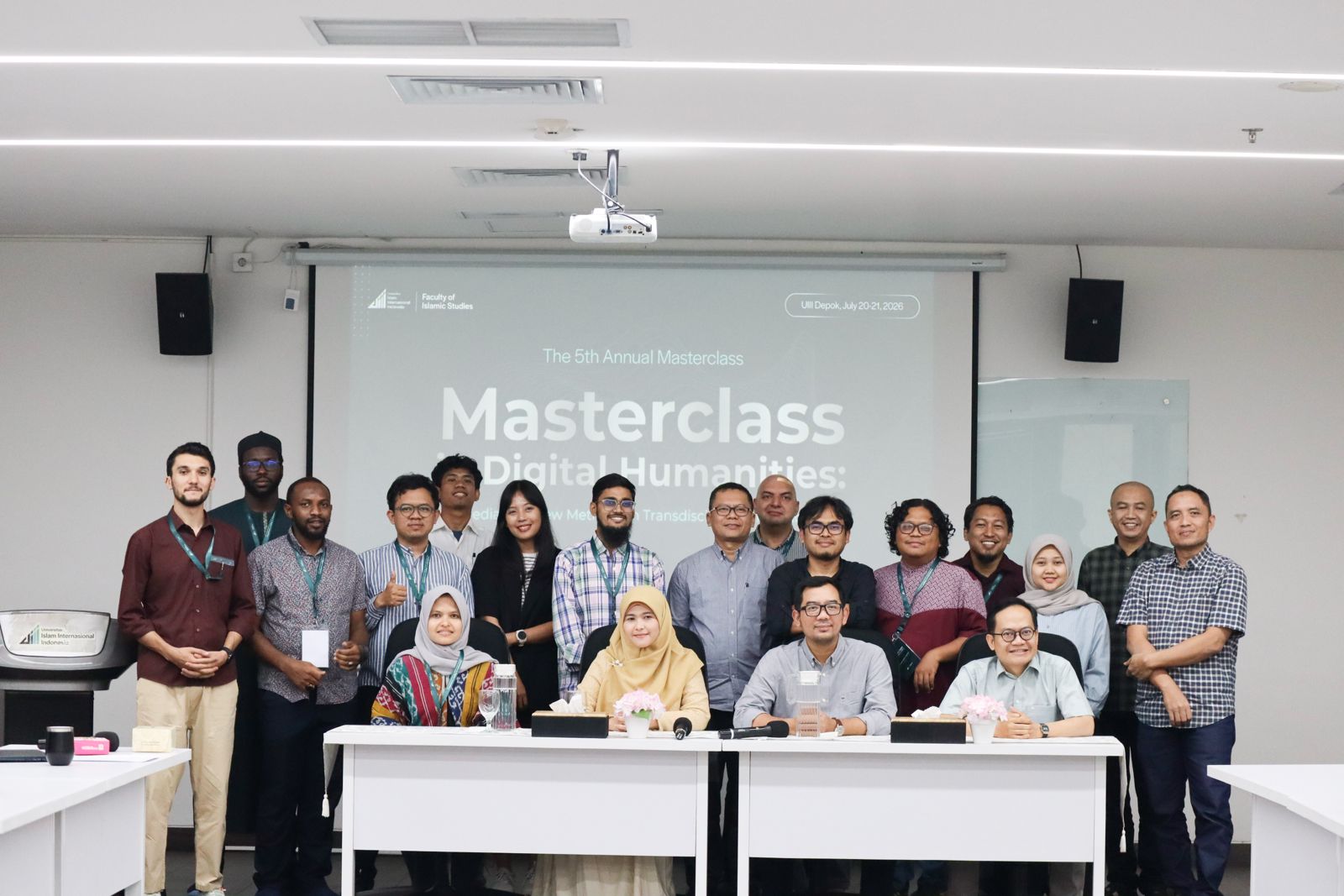
That question was at the heart of the 2026 Masterclass in Digital Humanities: “New Media and New Methods in Transdisciplinary Islamic Studies,” held at Universitas Islam Internasional Indonesia (UIII) on July 20–21.
Organized by the Faculty of Islamic Studies (FIS), the fifth annual masterclass brought together around 25 participants from diverse institutional and disciplinary backgrounds for two days of discussion, methodological training, and hands-on exploration of digital research. Across four sessions, scholars examined how digital platforms, computational tools, and artificial intelligence are changing both the sources and methods through which Islam and Muslim societies are studied.
The program opened with a welcoming address by Prof. Yanwar Pribadi, Dean of the Faculty of Islamic Studies, followed by an introduction to the program by Bhirawa Anoraga, Ph.D.
In his opening remarks, Prof. Yanwar emphasized the growing importance of Digital Humanities as a transdisciplinary space in which Islamic Studies must engage seriously with new media, new forms of data, and new methods of inquiry.
The message was clear from the outset that digital technologies are not simply providing Islamic Studies with new research tools. They are changing the environment in which religious knowledge, authority, identity, and public discourse are produced and circulated.
Letting Indonesia Speak for Itself
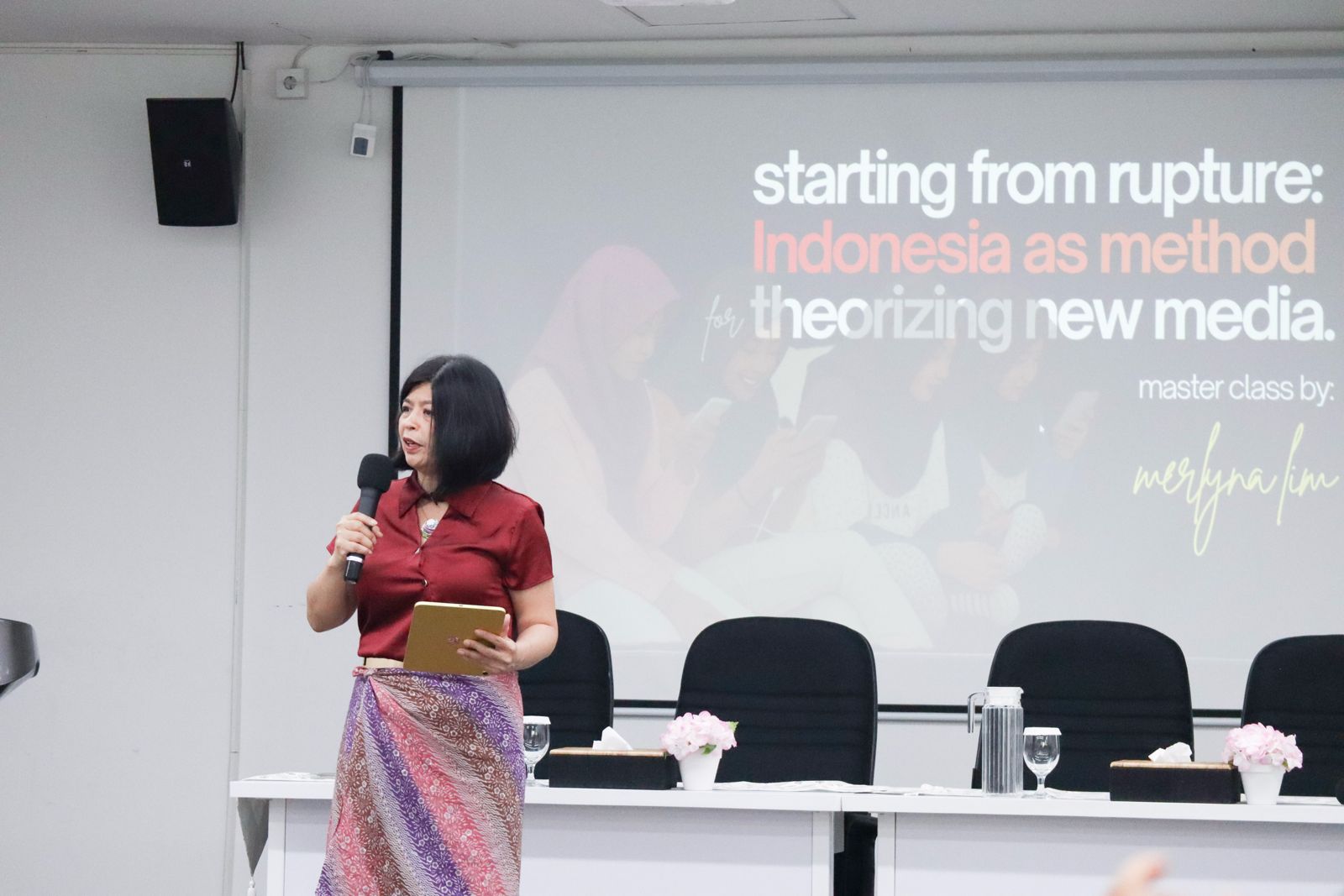
The intellectual tone of the masterclass was set by its opening session, led by Prof. Merlyna Lim, Canada Research Professor in Digital Media and Global Network Society at Carleton University.
In her presentation, “Starting from Rupture: Indonesia as Method for Theorizing New Media,” Lim challenged the tendency to treat Indonesia as a peripheral research site where theories developed elsewhere are simply tested.
Instead, she argued, Indonesia can be a place from which new theories of the digital world are developed.
“If internet theory could rise from a small cluster of companies in Silicon Valley,” Lim argued, “Indonesia is more than qualified to speak on its own terms.”
Drawing on more than a decade of longitudinal ethnographic research across the Indonesian archipelago, Lim used the archipelago itself as a conceptual starting point. She introduced the ideas of “platform islandization” and “computational archipelagos” to describe the fragmented, relational, and uneven ways people inhabit digital space.
For Lim, fragmentation should not automatically be understood as a problem or an exception to an otherwise universal model of digital connectivity. It can instead be a condition from which theory itself emerges.
The argument generated an unusually engaged response from participants, with questions and reflections continuing throughout the discussion period.
But perhaps the most lasting point from the session was methodological rather than theoretical.
Researchers, Lim reminded the audience, should not simply begin with concepts they have already decided to prove. Their concepts should emerge through sustained engagement with empirical reality. Researchers, in other words, have an obligation to let their data speak—and to remain honest about what the evidence actually reveals.
From Theory to the Digital Field
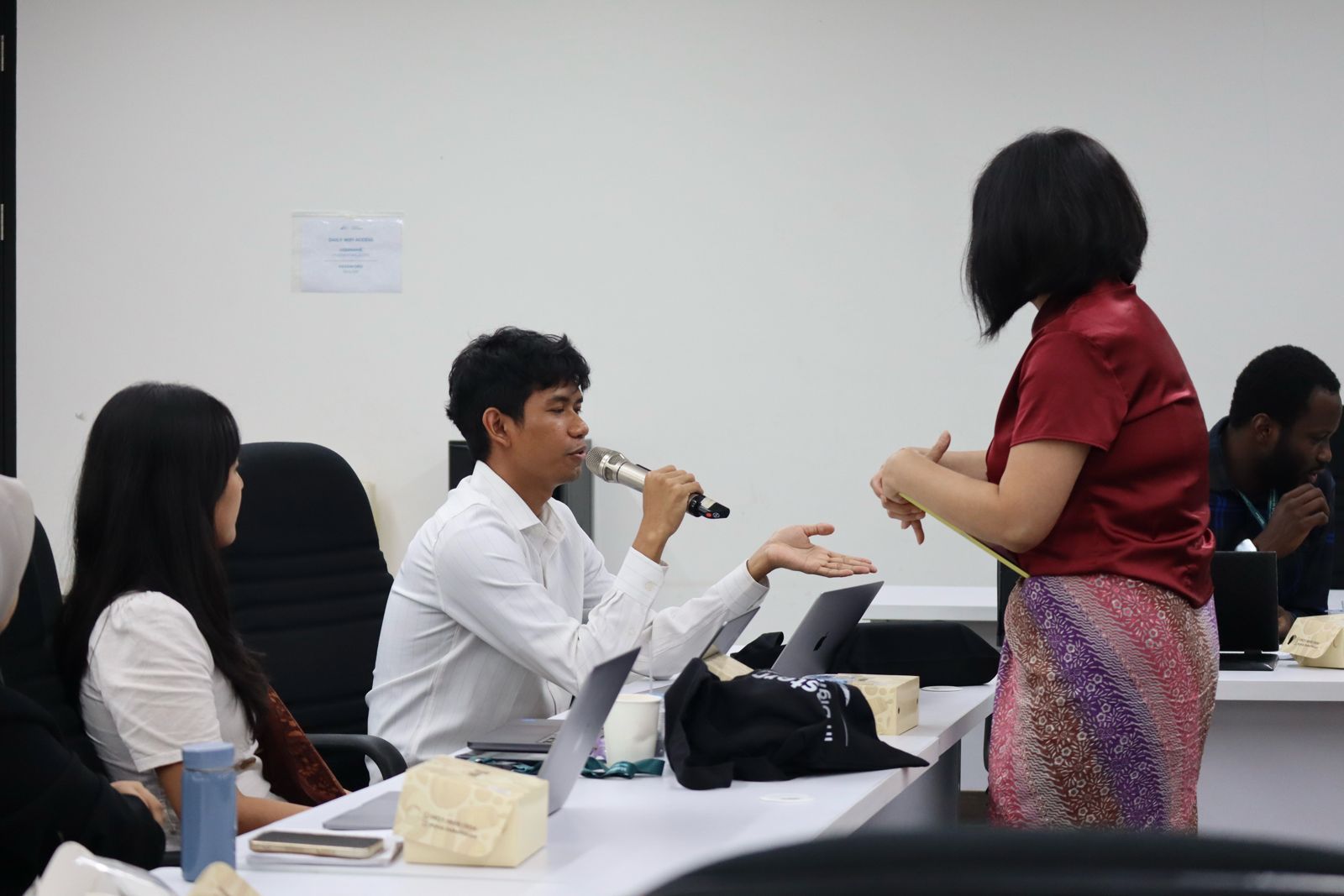
The second session shifted the conversation from theory to practice.
Ade Jaya Suryani of UIN Sultan Maulana Hasanuddin Banten introduced Archi, a beta-stage digital humanities application designed to support data scraping, text analysis, and visualization of Islamic discourse online.
His research project, Islam Indonesia di Ruang Digital: Kajian Komputasional atas Aktor, Wacana, dan Orientasi Keagamaan Publik, demonstrates how computational approaches can be used to examine Indonesia’s Islamic digital sphere. The project draws on a corpus of 500 Indonesian-language YouTube videos related to Islam and combines topic modelling, sentiment analysis, and social-network analysis with in-depth interviews.
But the session was not simply a demonstration.
Participants were given the opportunity to work through aspects of the research process themselves, including collecting digital material, scraping YouTube content, and exploring AI-supported tools for analyzing online Islamic discourse.
The hands-on format offered participants a practical sense of how computational methods can complement more established forms of qualitative research and fieldwork.
It also underscored a broader point: the digital sphere has become a substantial site of contemporary religious life. YouTube videos, online conversations, digital communities, and platform interactions can provide researchers with large bodies of evidence through which to examine changing forms of Islamic expression, authority, and interaction.
From Digital Text to Digital Archives
The second day extended the methodological conversation into two further areas: corpus linguistics and AI-generated imagery.
Mohammad Aboomar, an affiliated fellow at UIII’s Center of Islam and Global Challenges, introduced participants to corpus-based Islamic Studies. His session demonstrated how large collections of authentic digital texts can be systematically analyzed using methods including concordance, frequency analysis, n-grams, collocation, and keyness. Participants were also introduced to AntConc, a freely available tool for corpus analysis.
The approach offers Islamic Studies a way to work with digital discourse at a scale that conventional close reading alone cannot easily accommodate.
The final session, led by Myra Mentari Abubakar, Visiting Fellow at the National University of Singapore and Postdoctoral Fellow at BRIN, moved from words to images.
In “Reading AI Images as Archival Objects: A Method for Studying Generative Iconography,” Abubakar examined how generative AI is reshaping representations of Indonesian historical and religious figures, using the Acehnese independence leader Cut Nyak Dien as a case study.
The premise is deceptively simple but increasingly consequential: an AI-generated image may look like an illustration, but it can also tell researchers something about contemporary memory, religious imagination, technology, and the communities that create and circulate such images.
Participants were introduced to practical approaches for identifying AI-generated images, examining the accounts that produce them, and analyzing captions and surrounding online discussions.
A New Research Imagination for Islamic Studies
The four sessions above offered a common message that Digital Humanities is not simply about putting old research questions onto new technologies.
It is about reconsidering what counts as data, where the archive is located, how evidence can be analyzed, and even where theory itself comes from.
A YouTube video can become a corpus. An algorithm can become an object of inquiry. A social-media platform can become a field site. An AI-generated image can become an archive of contemporary memory.
And Indonesia itself can become more than a place where theories are applied, it can become a place from which theories of digital life are generated.
This combination of conceptual reflection and practical training was central to the UIII masterclass. Participants left the first day with not only a richer vocabulary for understanding Islam in digital environments, but also practical tools for investigating the rapidly changing forms of religious expression and interaction taking place online.
For FIS-UIII, the masterclass reflects a broader commitment to developing transdisciplinary approaches to Islamic Studies, bringing together established humanities and social-science traditions with emerging computational and digital methodologies. This commitment is also reflected in the introduction of a new program at FIS-UIII, called MA in Islamic Studies specializing in Digital Islam, creating a dedicated academic space for exploring the intersection of Islamic Studies, digital technologies, and emerging forms of knowledge production.
Ultimately, the most important question raised by the two-day program may not be how Islamic Studies can use new technologies, but what Islamic Studies might become when scholars take the digital world seriously, as data, as an archive, as a field of social life, and as a source of theory.
The challenge, as the opening session suggested, begins with a simple scholarly discipline: let the data speak.