September 21, 2026
By Achmad Nurjaman Jatnika
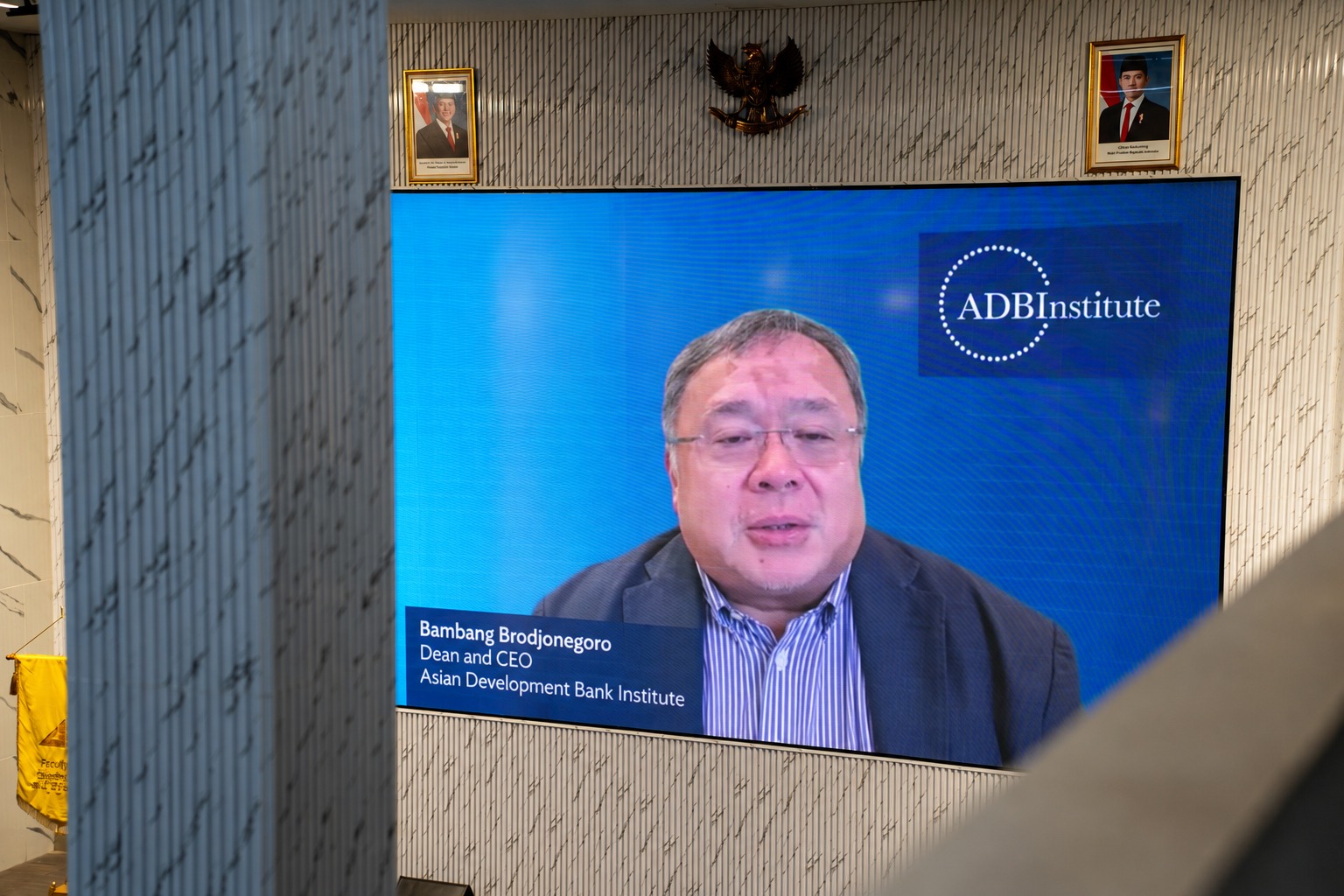
Depok – The 5th ICMWEB, organized by the Faculty of Economics and Business, featured Prof. Dr. Bambang Permadi Soemantri Brodjonegoro, Dean and CEO of the Asian Development Bank Institute (ADBI). In a recorded session, Prof. Dr. Bambang delivered a presentation titled “Geopolitical Realities and Indonesia’s Economic Trajectory.”
He noted that Indonesia is performing relatively well economically compared with several countries in Asia and Southeast Asia. ADBI’s July forecast puts Indonesia’s growth at 5.2% in both 2026 and 2027, above the forecast for developing Southeast Asia (4.6%) and developing Asia and the Pacific (4.9%). ADBI also expects Indonesia’s inflation rate to be 3% this year, below the regional average of 4.3%.
“The forecasts have been revised upward as energy costs have risen. Even so, Indonesia has been able to maintain growth above 5%, with lower inflation than the region as a whole,” he said.
At the same time, he noted that Indonesia’s economic activity has continued to expand across most industries. Households are still spending, while investment and business activity continue to grow, even during a difficult period. “We should recognize that performance,” he said.
However, maintaining growth will become more expensive, especially as higher energy prices increase Indonesia’s energy import costs. Additionally, the Indonesian rupiah remains under pressure, and interest rates have risen. “So we need to look at how disruptions abroad have affected the cost of production and investment here,” he said.
At the end of his speech, he also underlined that Indonesia’s above-5% growth needs to be maintained. “We should use that position to address the pressures we have discussed today. The widening current account deficit and higher interest rates show that we need a stronger export base. Manufacturing has to grow alongside domestic demand so that more of what our economy needs can be produced competitively here. Our energy import bill also needs attention,” he said.
As the energy bill continues to fluctuate, it needs greater attention. The government needs better-targeted subsidies to help protect the budget and support more efficient energy use.