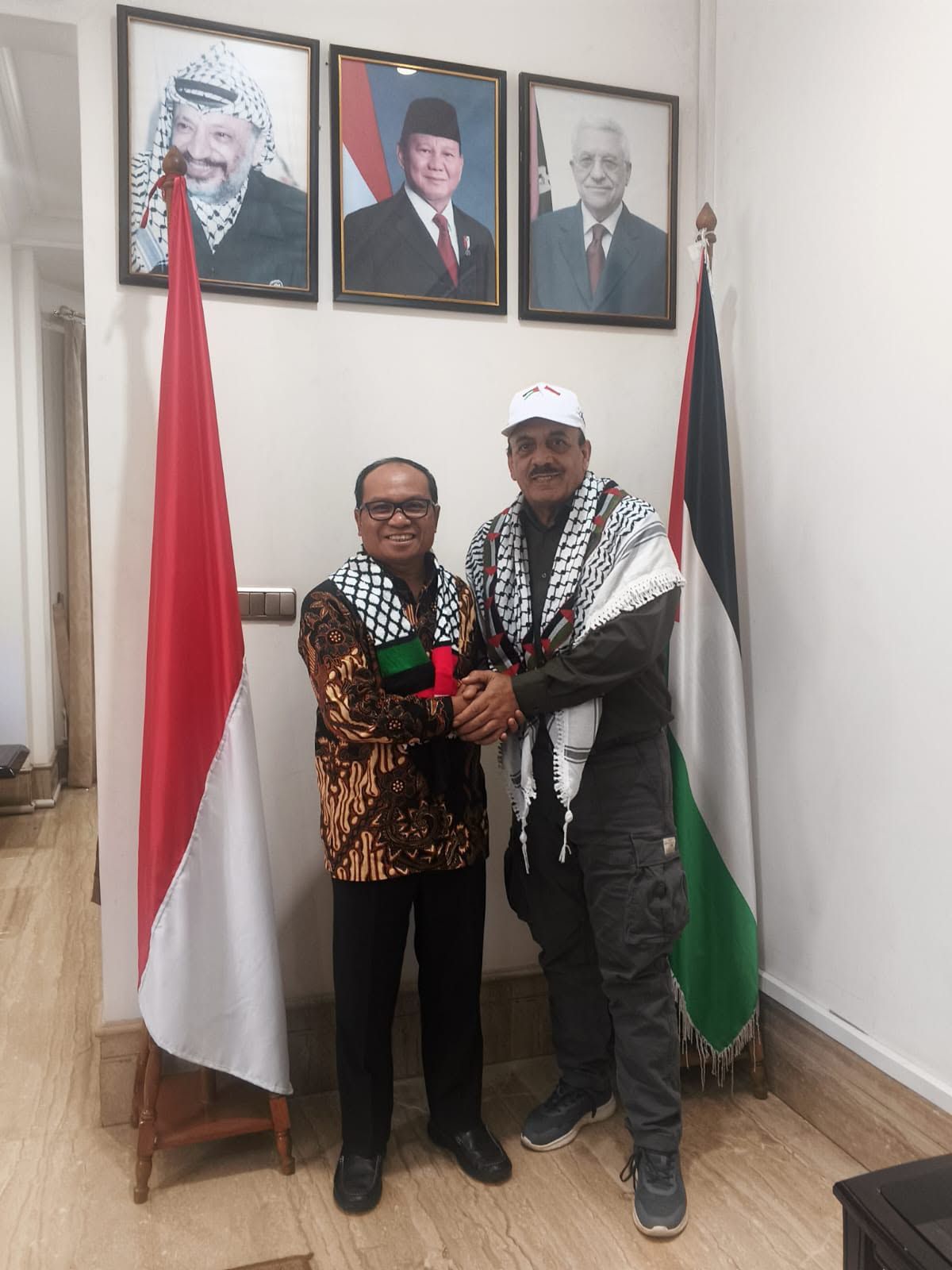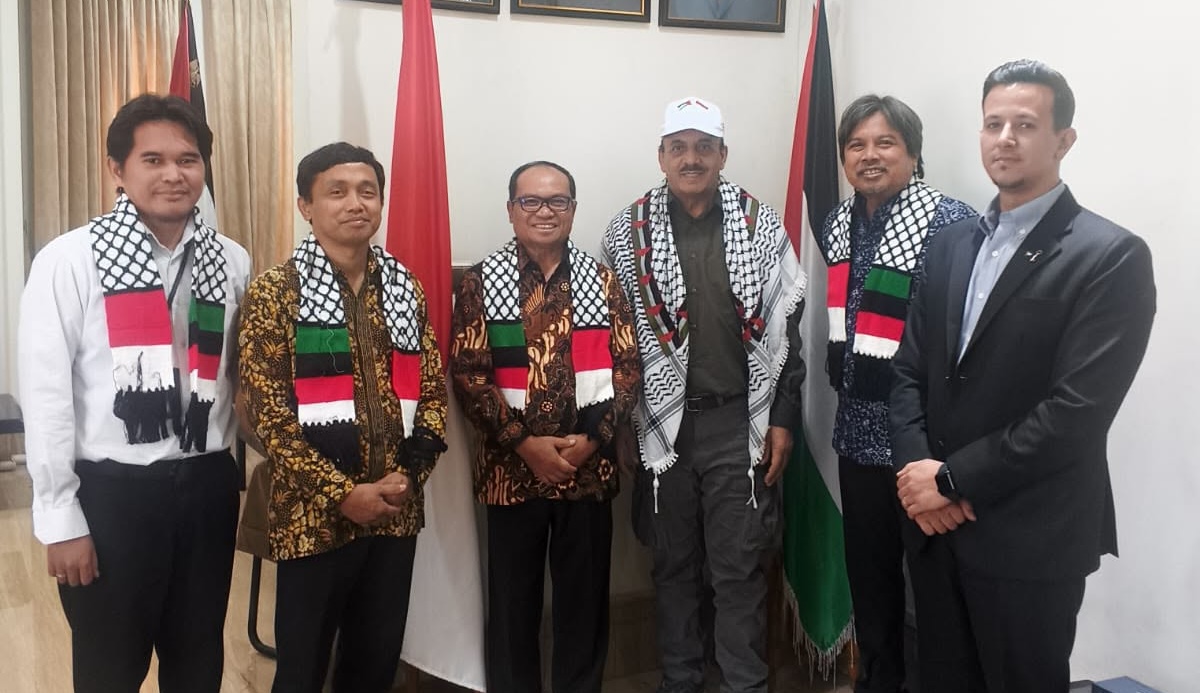
Jakarta – Rector of UIII, Prof. Jamhari, conducted a courtesy visit to the Ambassador of the State of Palestine to the Republic of Indonesia, H.E. Ambassador Abdalfatah A. K. Alsattari, on September 15 at the Embassy of the State of Palestine in Jakarta. Prof. Jamhari, accompanied by the UIII delegation, consists of the Vice Rector for Academic and Student Affairs, Dr. Phil Syafiq Hasyim, and the international and academic office, M. Yazid and M. Kadafi.
The discussion focused on educational cooperation, particularly the opportunity provided through the INSANI Scholarship Program sponsored by Indonesian Aid, which enables palestinian students to pursue master’s and doctoral programs at UIII across various faculties, as well as the challenges faced by Palestinian students in accessing higher education opportunities in Indonesia.
The meeting reflected UIII’s commitment to strengthening academic cooperation and providing educational opportunities for Palestinian students. Both parties discussed the importance of ensuring access to higher education for students affected by challenging circumstances, particularly those from Palestine.
During the meeting, the Rector highlighted UIII’s support for Palestinian students through the INSANI Scholarship Program. This year, three Palestinian students have been selected as recipients of the scholarship, with one of them currently still residing in Gaza.
Challenges Faced by Students in Gaza
Regarding the situation of Palestinian students who remain in Gaza, the Ambassador explained the severe difficulties and restrictions preventing them from traveling to Indonesia. He expressed his appreciation for Indonesia’s commitment to providing educational opportunities and financial support for Palestinian students, particularly through UIII.
However, he noted that students currently in Gaza face significant obstacles in leaving the territory due to the prevailing conditions and complex procedures involved. Even in cases of medical emergencies requiring major operations, the process requires extensive procedures and security screening, making travel opportunities extremely limited.
The Ambassador further explained that the issue of facilitating the departure of Palestinian citizens from Gaza is highly sensitive. Any effort to assist relocation may face criticism, pressure, or allegations related to attempts to empty Gaza of its population. As a result, Palestinian students who remain in Gaza encounter challenges from multiple sides, both in terms of mobility and broader political sensitivities.
Recommendation for Future Scholarship Applicants
In response to these challenges, the Ambassador suggested that Indonesian institutions, including universities providing educational opportunities for Palestinian students, prioritize applicants who are already outside Gaza, including those currently residing in Egypt or other accessible locations. According to him, selecting students who remain in Gaza may create considerable difficulties in ensuring their ability to continue their studies in Indonesia.
The Ambassador expressed his gratitude and appreciation for Indonesia’s continuous support for Palestine, particularly in the field of education. After spending some years in Indonesia, he shared his appreciation for the strong solidarity and support shown by Indonesian society toward Palestine.
During the meeting, the Rector also highlighted that UIII currently has Palestinian members within its academic community, including students, staff members, and international faculty. Among them are Palestinian lecturers who contribute to UIII’s diverse and global academic environment.
The meeting reaffirmed UIII’s commitment to supporting international education opportunities and strengthening academic collaboration with Palestine. Through initiatives such as the INSANI Scholarship Program, UIII continues to contribute to expanding access to higher education for students from various backgrounds, including those affected by humanitarian challenges.