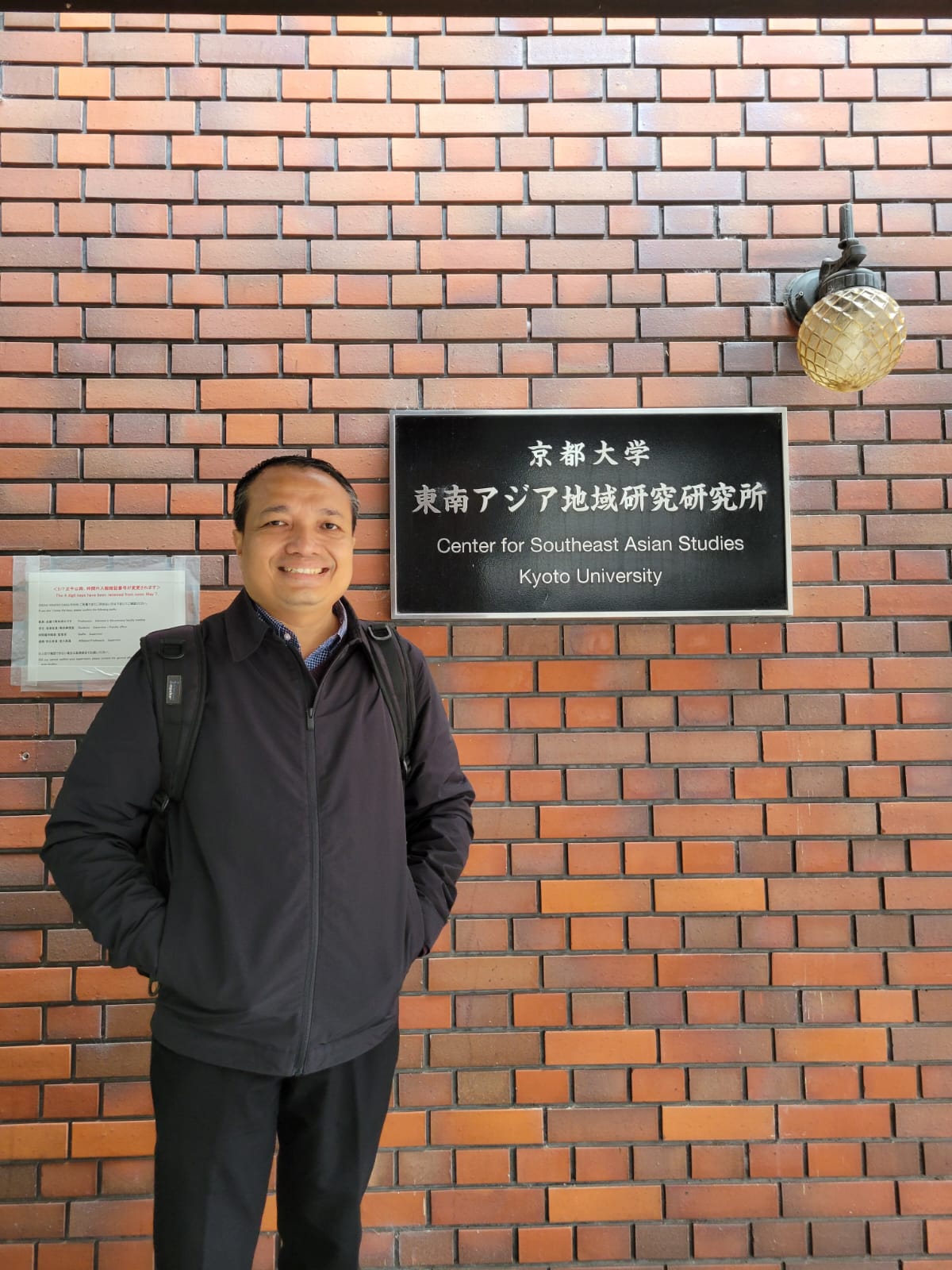
Depok/Kyoto — Testriono, Lecturer at the Faculty of Social Sciences, Universitas Islam Internasional Indonesia (UIII), represented the university on the international stage this April, delivering a research presentation at a seminar on Indonesian politics hosted by the Center for Southeast Asian Studies (CSEAS), Kyoto University.
The seminar, held on April 20, 2026, at Kyoto University’s Inamori Center, brought together Indonesian and Southeast Asian politics specialists to examine the state of Indonesian democracy nearly three decades after its transition began.
A Comparative Look at Two Presidencies
Testriono opened the seminar’s panel of three presentations with a paper examining why Indonesian presidents facing broadly similar institutional and budgetary constraints have pursued strikingly different infrastructure strategies. Comparing the administrations of Susilo Bambang Yudhoyono (2004–2014) and Joko Widodo (2014–2024), his research argues that the gap between Yudhoyono’s incremental approach and Widodo’s rapid expansion of toll roads, ports, and dams cannot be explained by technical or leadership factors alone. Instead, Testriono contends that each president’s political standing shaped how concentrated or diversified their development priorities became, a stronger position allowed Yudhoyono to spread policy attention across sectors, while Widodo’s greater vulnerability pushed him toward concentrating resources on infrastructure as a signature achievement.
The paper situates Indonesia’s infrastructure story within a broader argument about how political survival strategies, not just technocratic planning, drive sector-specific development outcomes.
Panel and Discussion
Testriono’s presentation was followed by two others: Irendra Radjawali (Universitas Harkat Negeri, CSEAS Fellow) on the role of image and political spectacle in Indonesia’s 2024 presidential election, and Kuskridho Ambardi (Universitas Gadjah Mada) on elite power consolidation under President Prabowo Subianto. The session was moderated by Okamoto Masaaki of CSEAS, with Prajak Kongkirati (Thammasat University) and Honna Jun (Ritsumeikan University) serving as discussants in the concluding roundtable.
The seminar reflects Testriono’s current appointment as an Inaugural Lentera Studi Fellow at CSEAS, Kyoto University, part of an ongoing exchange between UIII and the center. He is also a Senior Researcher at PPIM UIN Jakarta and co-editor of the forthcoming volume Decentralization, Democracy and Local Politics in Indonesia (Routledge, 2026).
Representing UIII Abroad
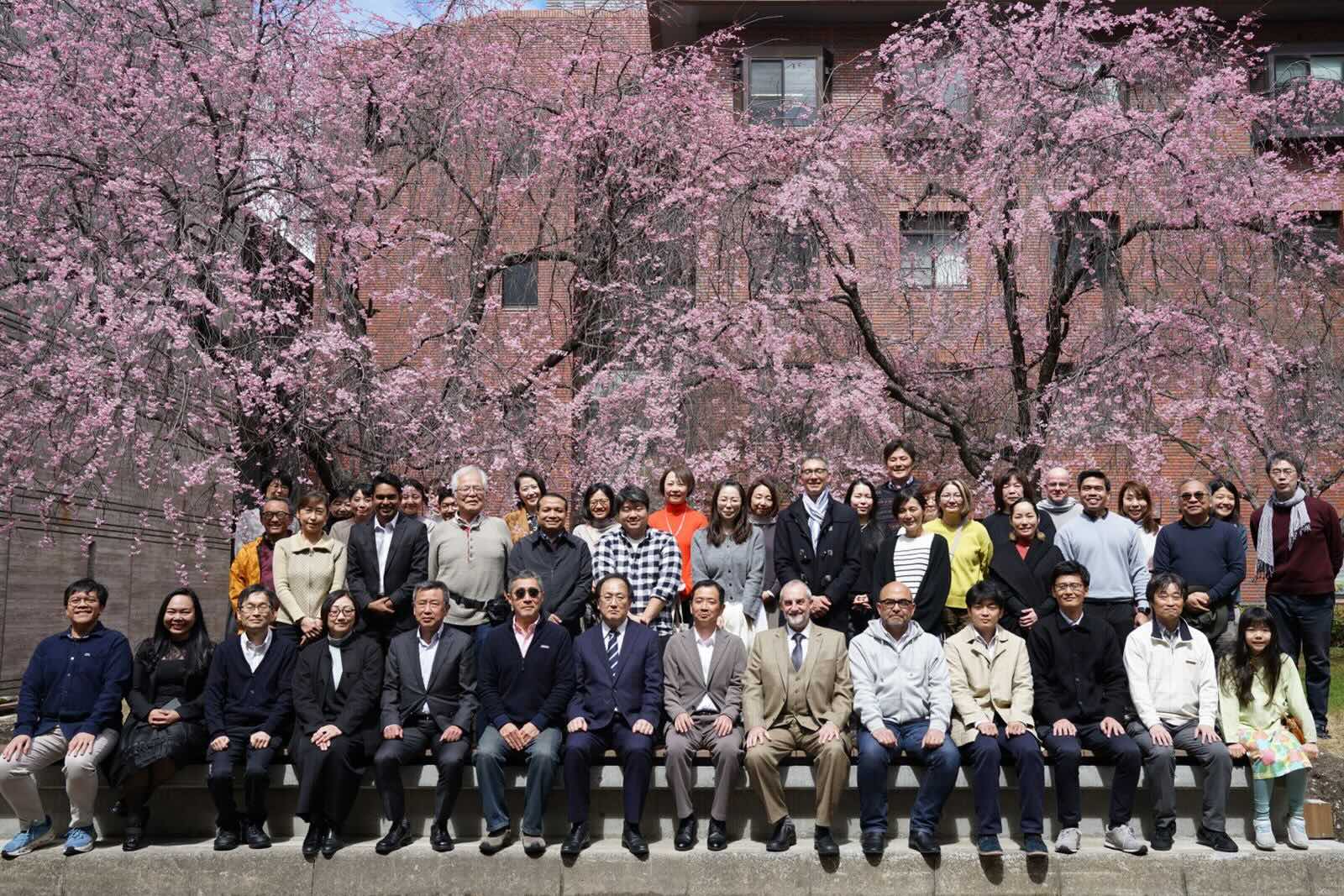
Testriono’s presence at the seminar underscores UIII’s growing footprint in international area-studies networks, with faculty contributing Indonesia-focused scholarship to leading regional studies centers in Asia. A group photograph taken with fellow presenters and CSEAS colleagues during Kyoto’s spring cherry blossom season captured the collegial spirit of the exchange, marking another milestone in UIII’s expanding academic partnerships in Japan.
The seminar was organized by the Center for Southeast Asian Studies, Kyoto University. More information is available on the CSEAS event page.