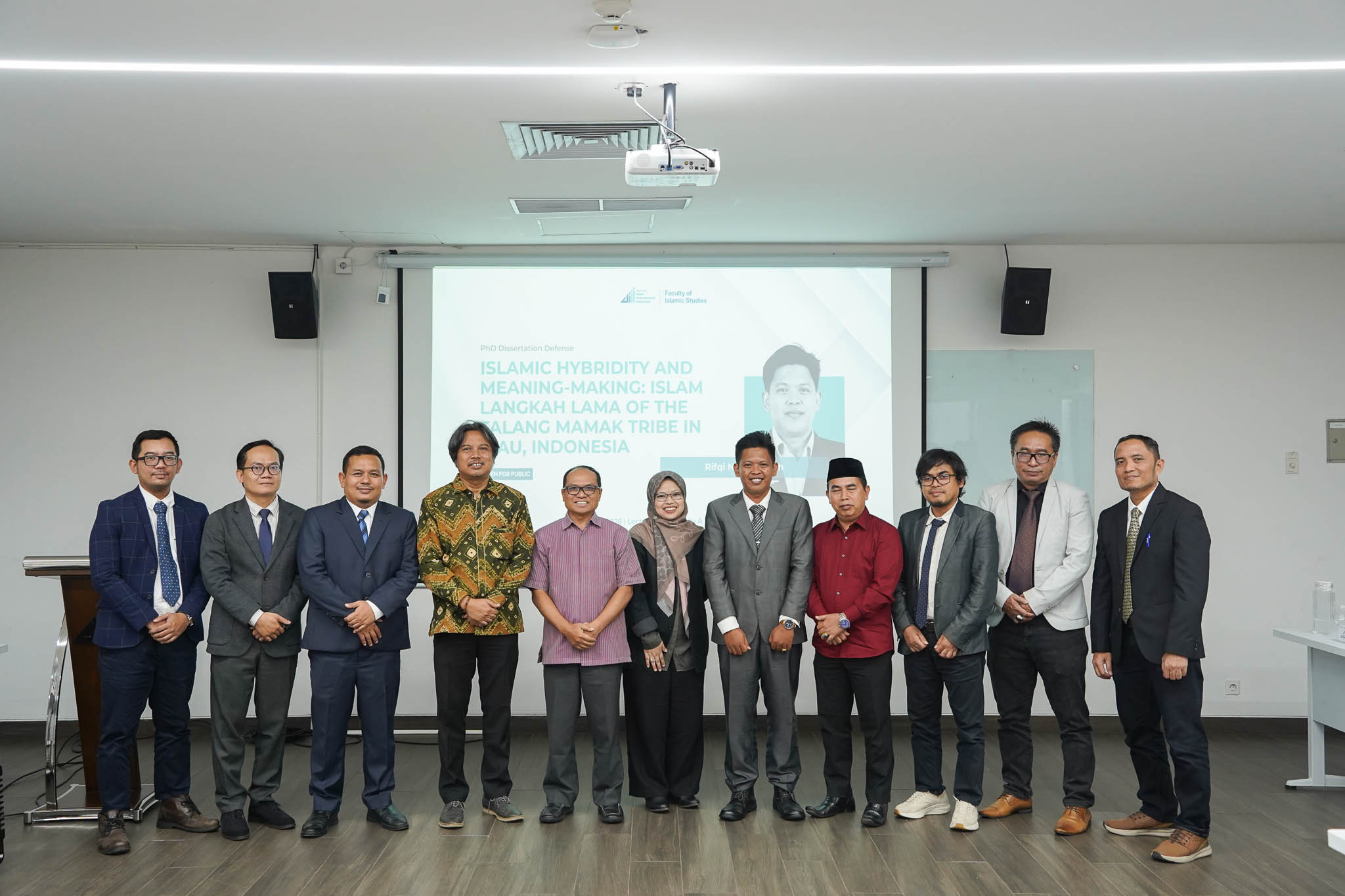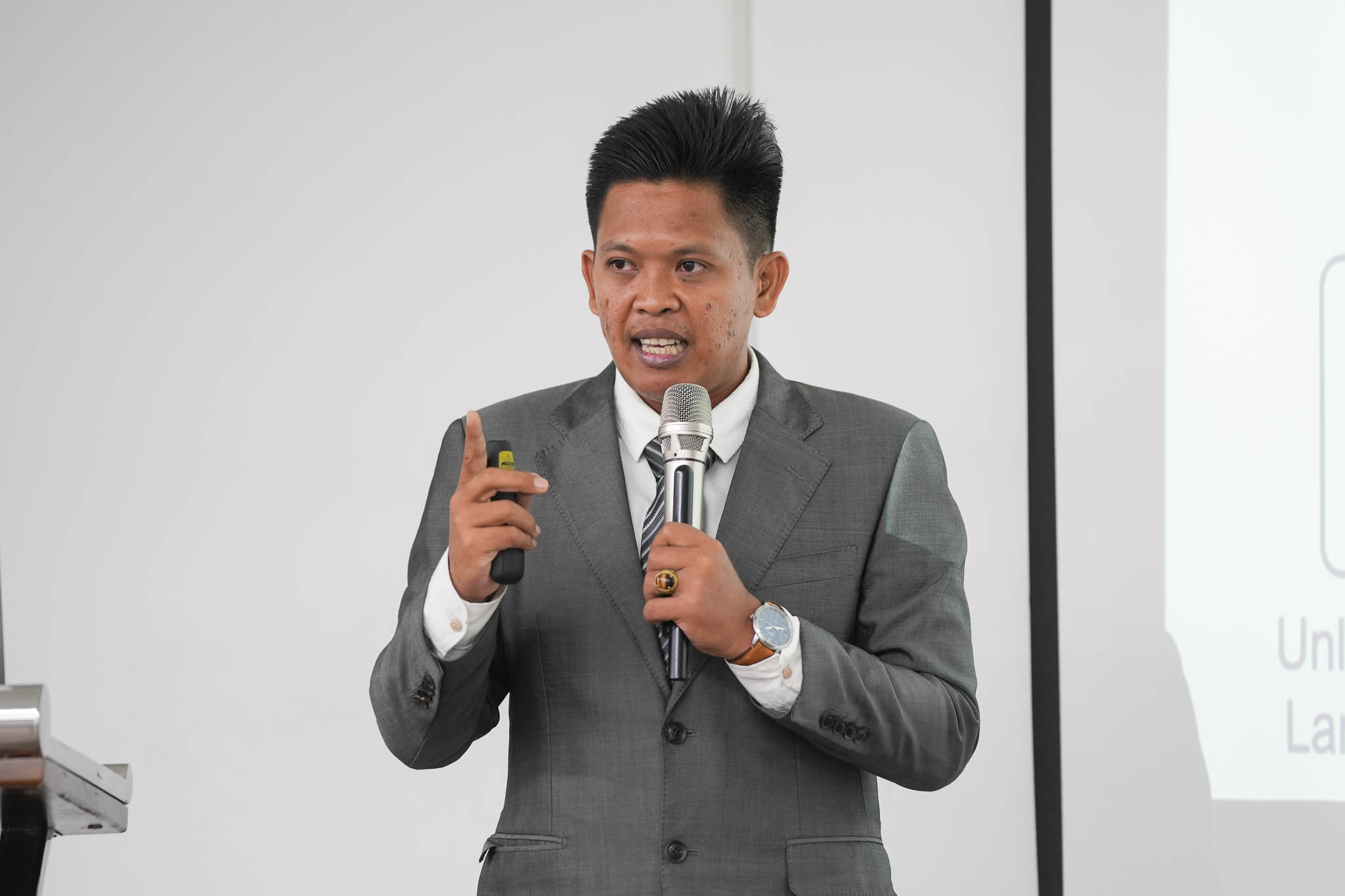
Universitas Islam Internasional Indonesia (UIII) marked another proud academic achievement as Rifqi Nurdiansyah, a doctoral candidate from the Faculty of Islamic Studies, successfully defended his dissertation before an examination committee on May 20, 2026. Also, with this defense, Rifqi marked the first PhD in Islamic Studies in the Faculty of Islamic Studies.
Rifqi defended his dissertation entitled “Islamic Hybridity and Meaning-Making: Islam Langkah Lama of the Talang Mamak Tribe in Riau, Indonesia.” In this work, he examines the distinctive form of Islamic practice observed among the Talang Mamak, an indigenous community in the province of Riau.
The study explores how the community negotiates and constructs religious meaning through a hybridized form of Islam — locally known as Islam Langkah Lama — that blends Islamic teachings with indigenous beliefs, rituals, and cosmological frameworks.
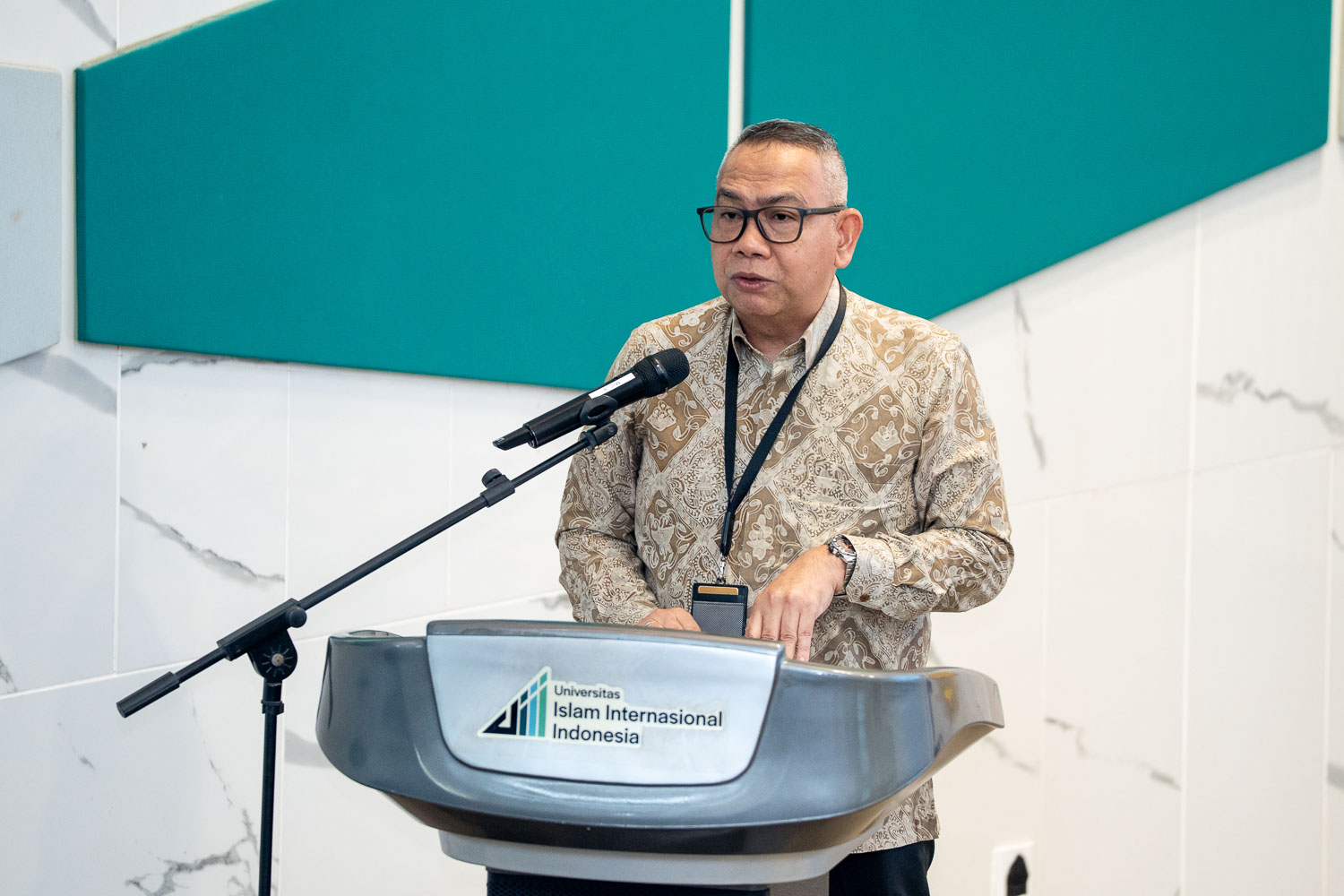
The Rector of UIII, Prof. Jamhari, shows gratitude on this occasion. He is proud that Rifqi is marked as the first graduate of the PhD program in Islamic Studies, and he wants Rifqi to continue to contribute to UIII in the future.
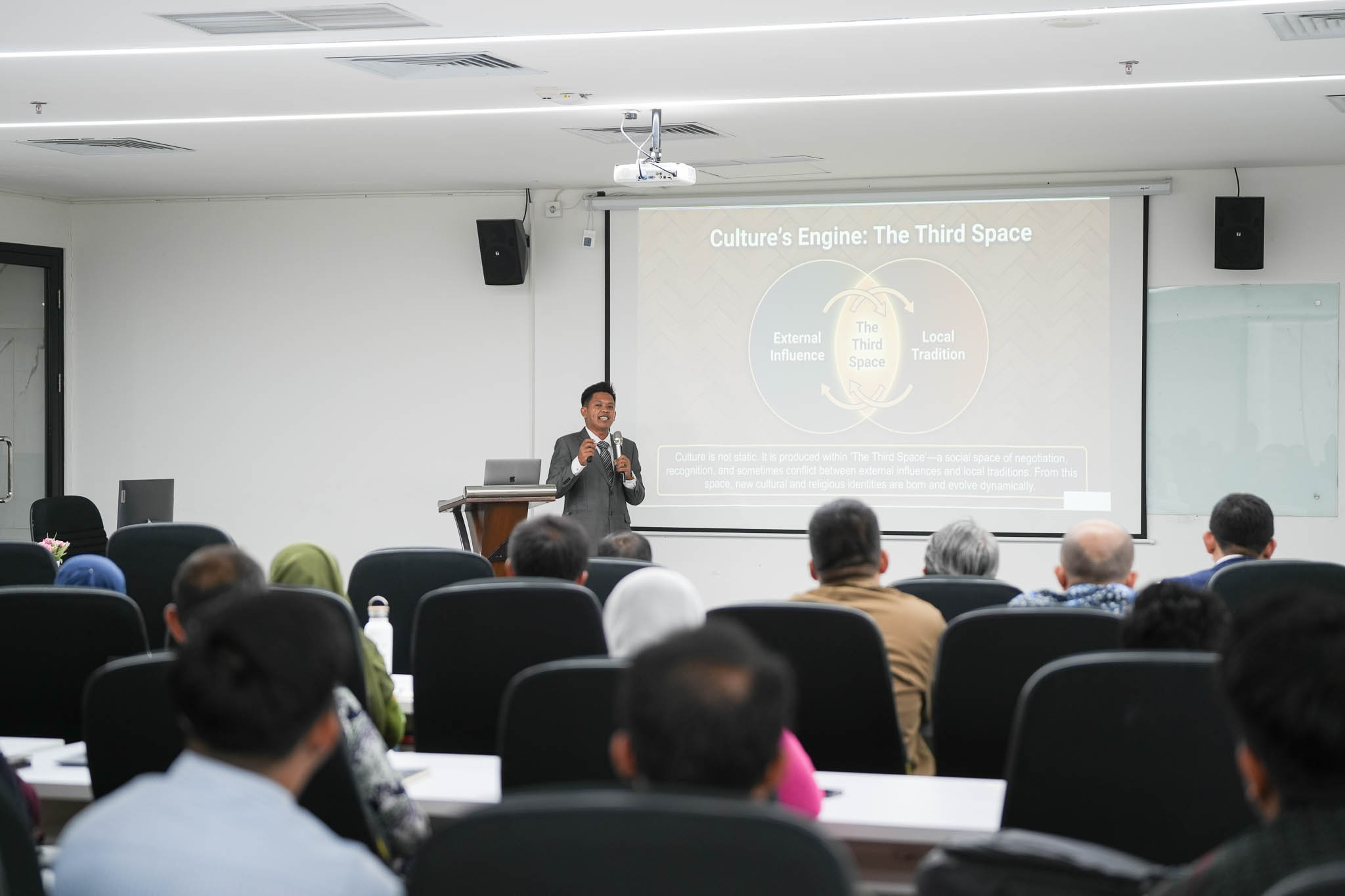
The dissertation defense was chaired by Haula Noor, Ph.D., with Bhirawa Anoraga, Ph.D., serving as Secretary. The examination committee included Dr. Ade Jaya Suryani as External Examiner, and Prof. Syamsul Rijal, Ph.D., and Ridwan, Ph.D. as Internal Examiners.
The candidate was guided through his doctoral journey by a supervisory team led by Prof. Yanwar Pribadi, Ph.D. (Promotor), with Dr. Phil. Zacky Khairul Umam serving as Co-Promotor.
Following deliberation, the committee declared Rifqi to have passed.
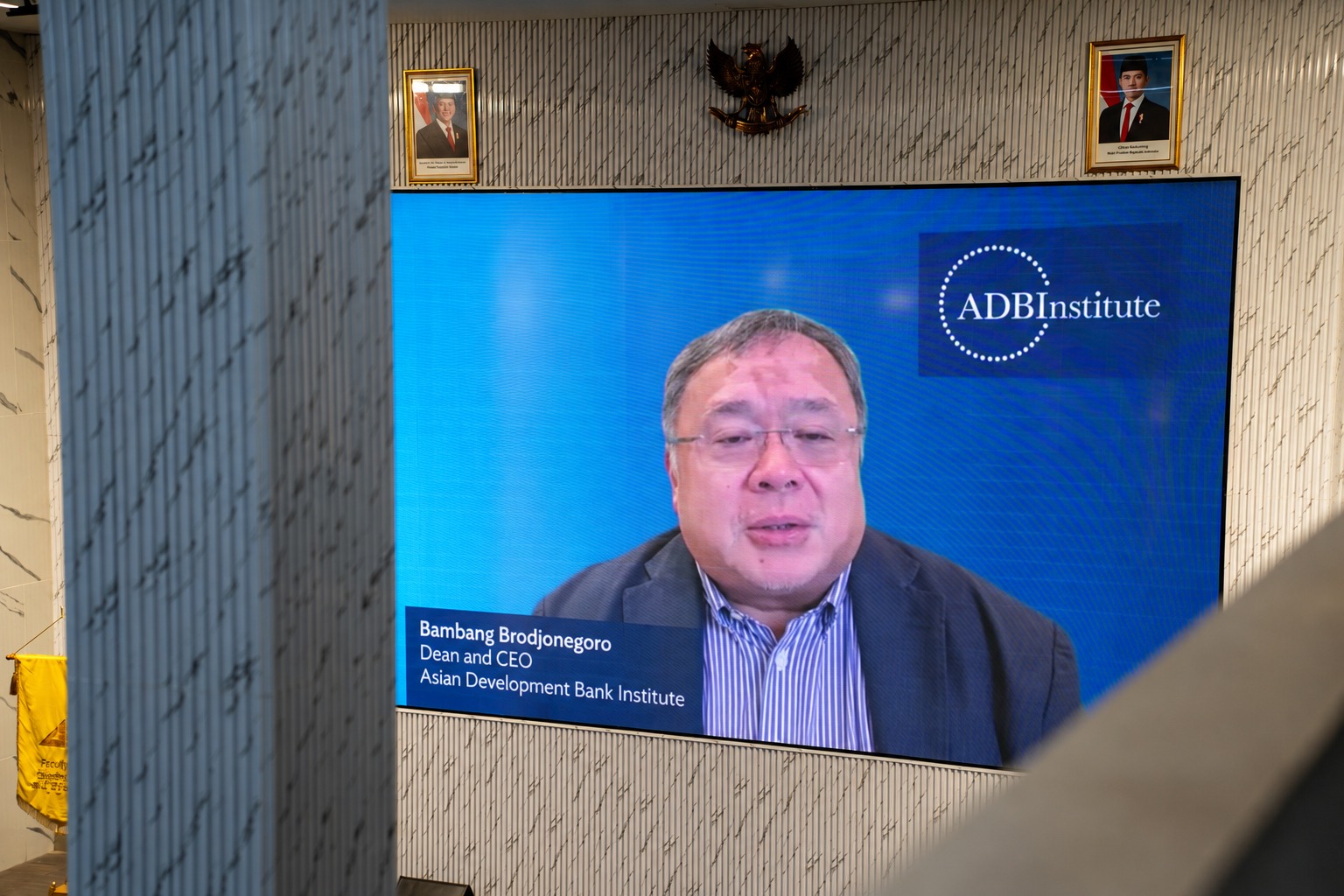
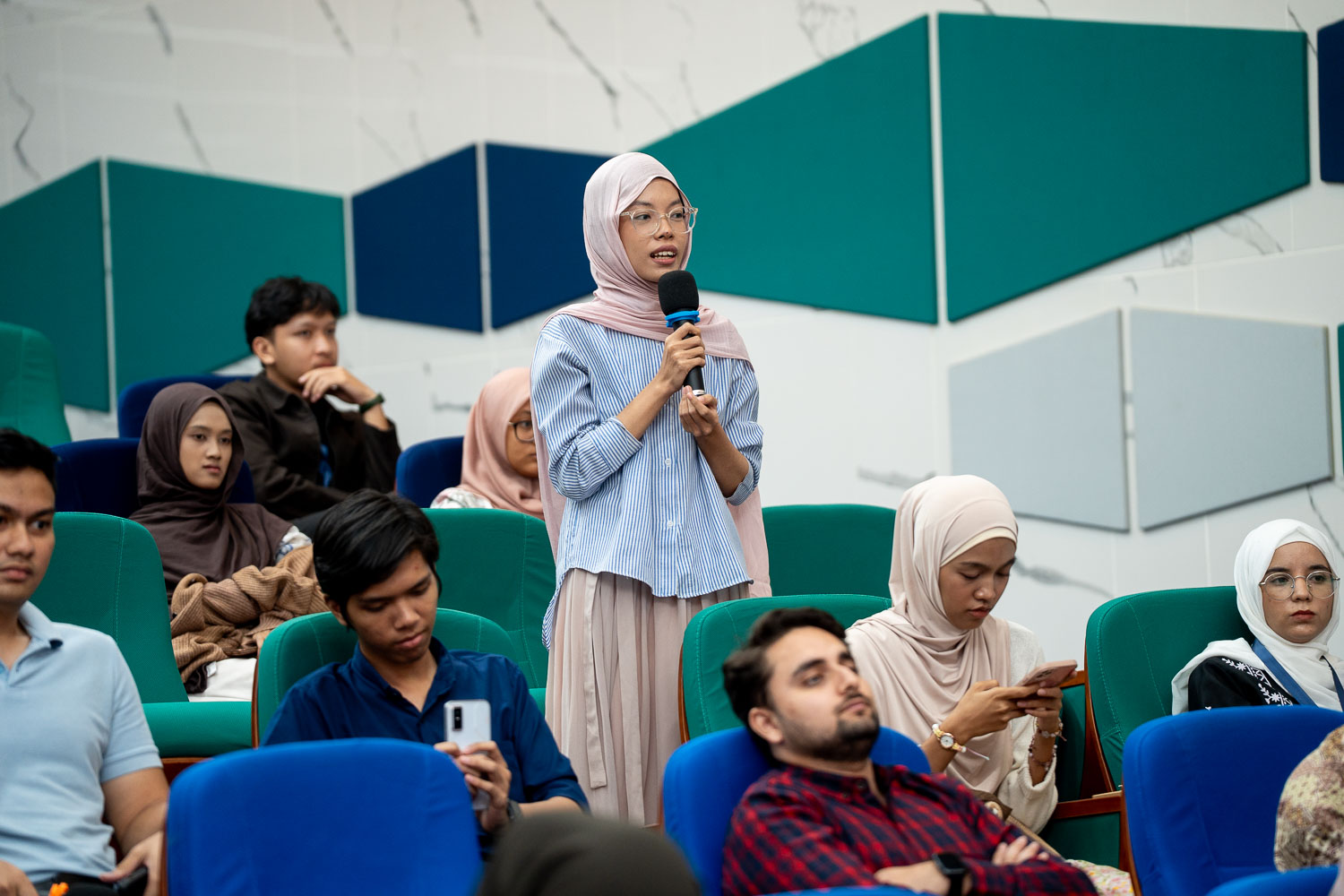
The defense was attended by faculty members, fellow doctoral candidates, and guests who came to witness this scholarly achievement. University leaders expressed their pride in seeing UIII’s doctoral program produce research of this depth and cultural significance.
Rifqi’s research is particularly timely given growing academic and policy interest in indigenous Muslim communities across the Indonesian archipelago. By centering the Talang Mamak’s lived religious experience, his work opens new avenues for understanding religious pluralism, local wisdom, and the diversity of Islamic expression in Indonesia and beyond.