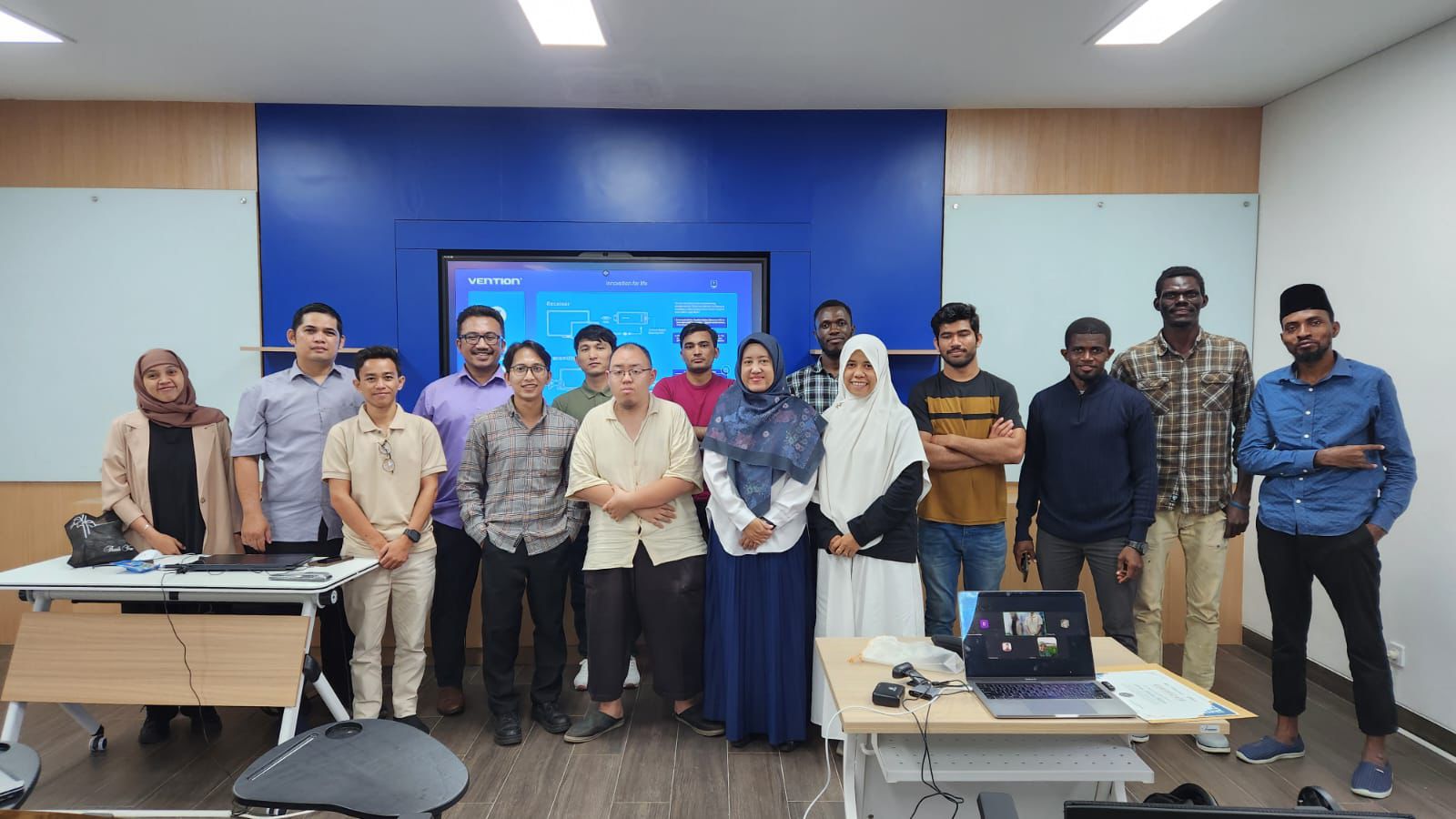
On April 13, 2025, The Research Community of Economics Student Association (ESA) at Universitas Islam Internasional Indonesia (UIII) organized a successful session dubbed “Google Colab Utilization for Data Analysis” on April 13, 2025, in the Smart Meeting Room of Faculty Building B.
The event was a huge step toward the Research Community’s ongoing goal of generating data-based scholarship and teaching students the computer skills they need to achieve well in a world that is getting more digitalized. The session was organized because there are many demands from economics students and early-career researchers to equip themselves with new analytical tools and quantitative methodologies.
As data literacy becomes an essential skill in almost every sector, ESA UIII’s Research Community has taken the lead in closing the gap between what students learn in the university and what the industry requires.
Devin Halim Wijaya, a PhD student in the Economic batch of 2025, led the session. He conveyed the topic enthusiastically to the participants in order to overcome issues on how economics and technology work together. Hence, every student, no matter what kind of device they have, works with data in a powerful, collaborative, and free space. During his presentation, Devin said, “I hope that today’s session sparks a curiosity that goes far beyond this room.”
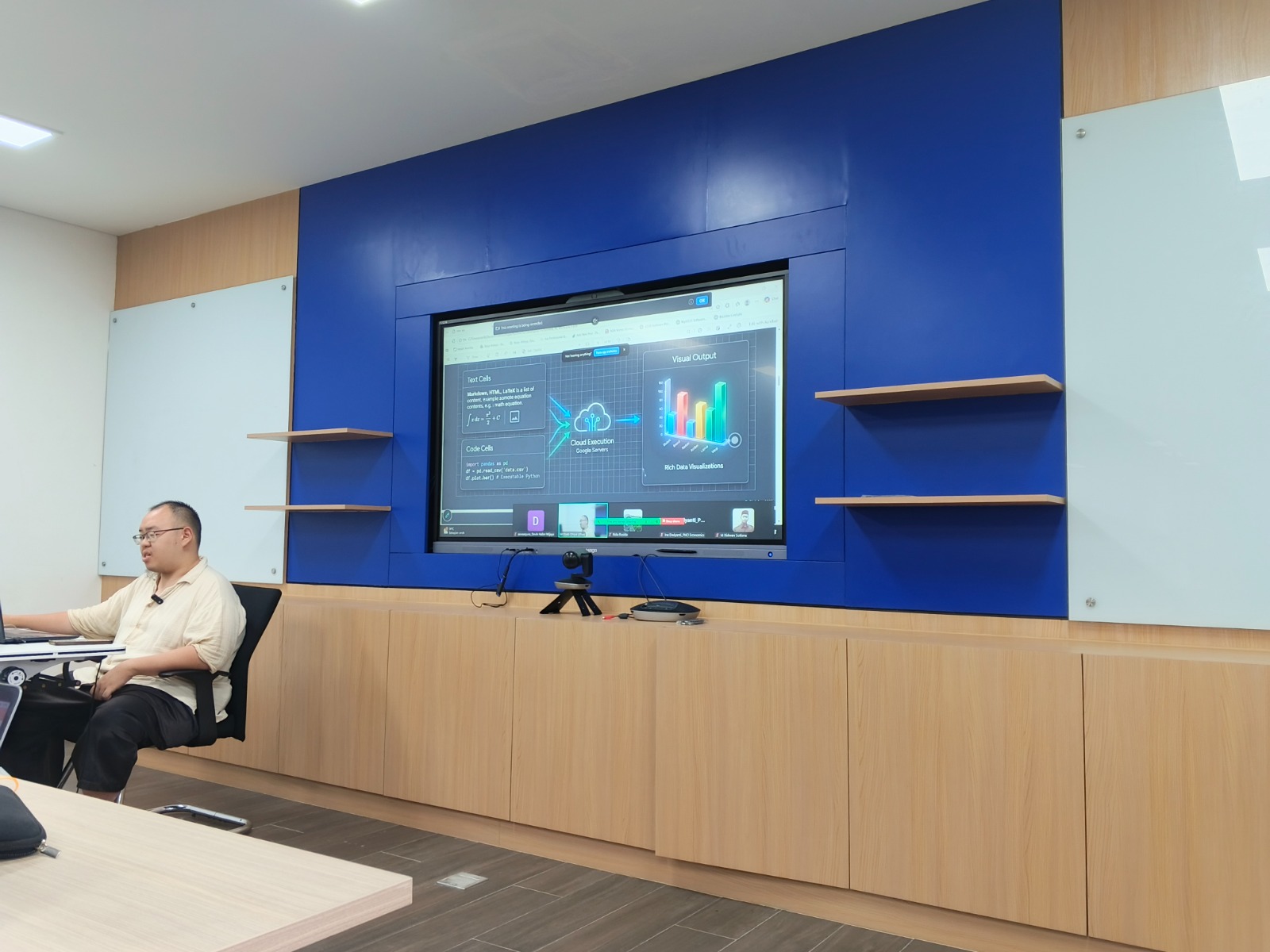
During the session, participants learned the basics of Google Colab, a cloud-based platform that can be accessed through a web browser and lets you run Python code without having to install any software on their laptop. Devin showed attendees how to use the platform’s interface, how to import and clean datasets, and how to write simple Python scripts that are specific to analyzing economic data. We also talked about important libraries like Pandas for working with data, Matplotlib and Seaborn for showing data, and Scikit-learn for making predictions.
The workshop was different because it was very interactive. Instead of a normal lecture, the session was set up as a live coding experience where people followed along in real time and tried out the tools as they were introduced. This hands-on method not only sped up understanding, but it also gave people the confidence to use what they learned on their own. A lively question-and-answer session made the experience even better by giving participants a chance to talk about problems they had faced in their own academic work.
Devin talked about more than just the technical aspects of using data in academic research. He also talked about the ethical aspects, such as how to properly cite data, privacy issues, and how important it is for scientific studies to be reproducible. These talks made it clearer that serious research isn’t just about getting results; it’s also about making sure that those results can be trusted, checked, and built on by the rest of the academic community.
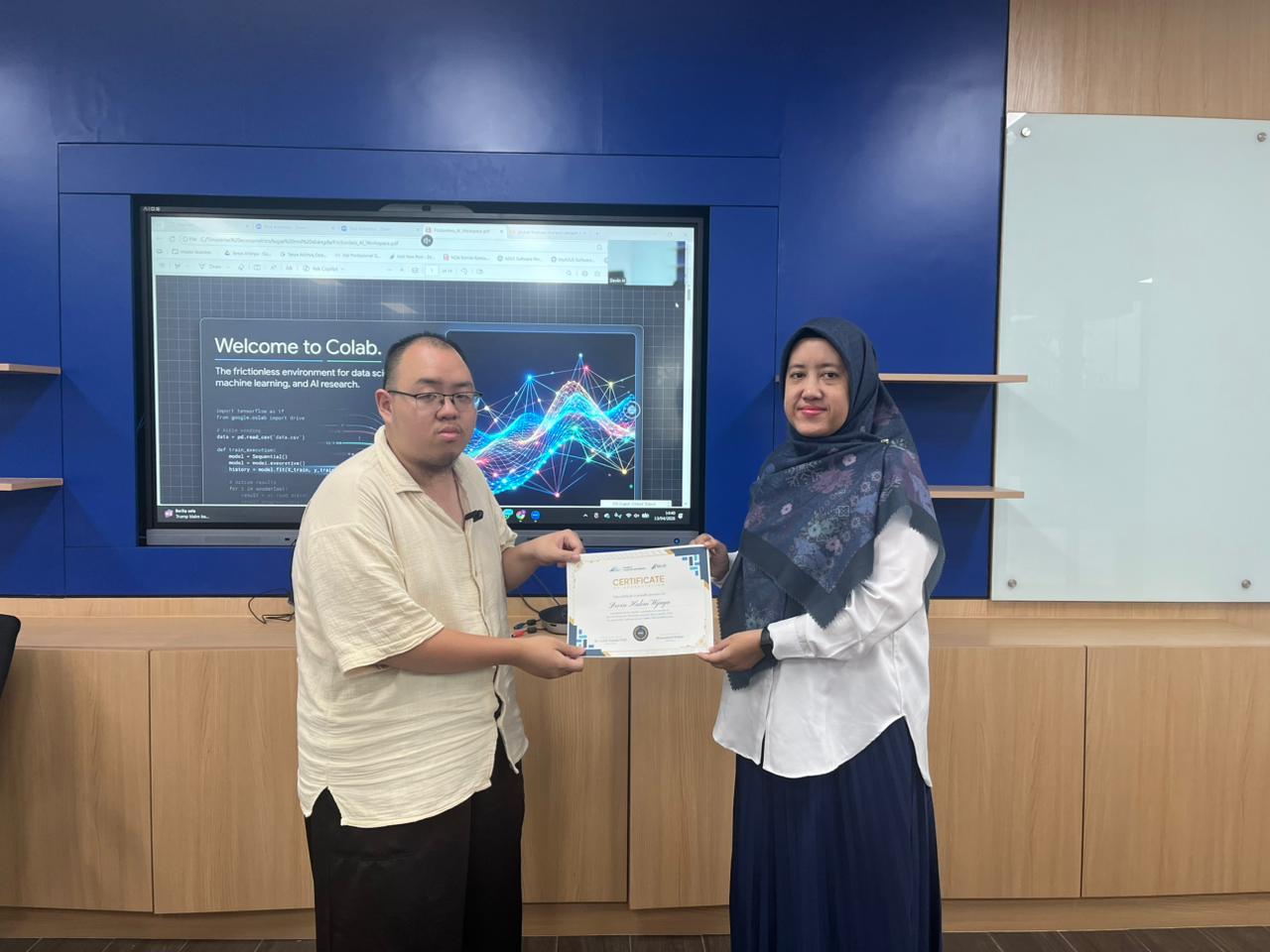
Rininta Nurrachmi, as the supervisor of ESA and a lecturer at UIII, highlighted how important it is to learn how to use new digital tools in today’s fast-changing academic world. She said that nowadays, students and researchers should be able to use a variety of analytical tools because they make data analysis much faster and better. She said that knowing how to use these kinds of technologies is no longer a choice; it’s a basic skill that everyone needs to have in order to stay relevant and competitive in school and at work.
This workshop is part of UIII’s larger goal of getting its students ready for the realities of a world driven by data. As an international university with a global perspective, UIII works hard to incorporate new skills into the academic experience of its students. This way, graduates will have not only strong theoretical foundations but also the practical skills they need to make a real difference in research and professional settings around the world. The Research Community has been leading the way in this effort by putting together a number of programs that help students improve their analytical thinking, learn about modern research methods, and work together with other young scholars. This workshop is one of many steps toward making the Faculty of Economics and Business of UIII a lively center for intellectual inquiry and innovation.
People who took part in the session learned new skills, got their motivation back, and learned more about how technology can help with high-quality research. The Research Community is still dedicated to putting on more programs that build on this success. For example, there will be workshops coming up on academic writing, research methods, and publishing in well-known scientific journals. With this workshop, UIII shows that it is still committed to raising a generation of scholars who are not just consumers of knowledge but also active participants in the global academic conversation, ready to make a difference that will last.