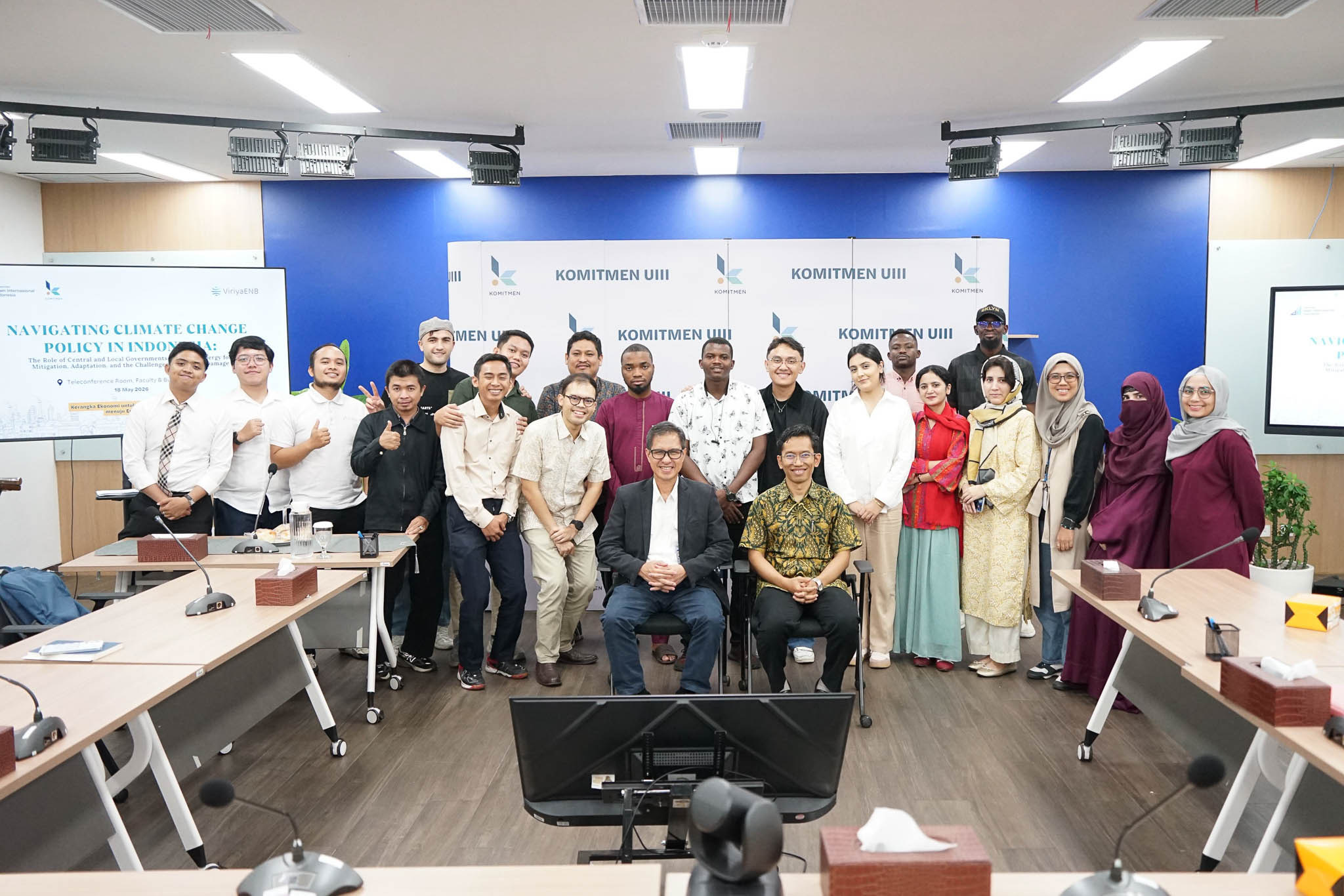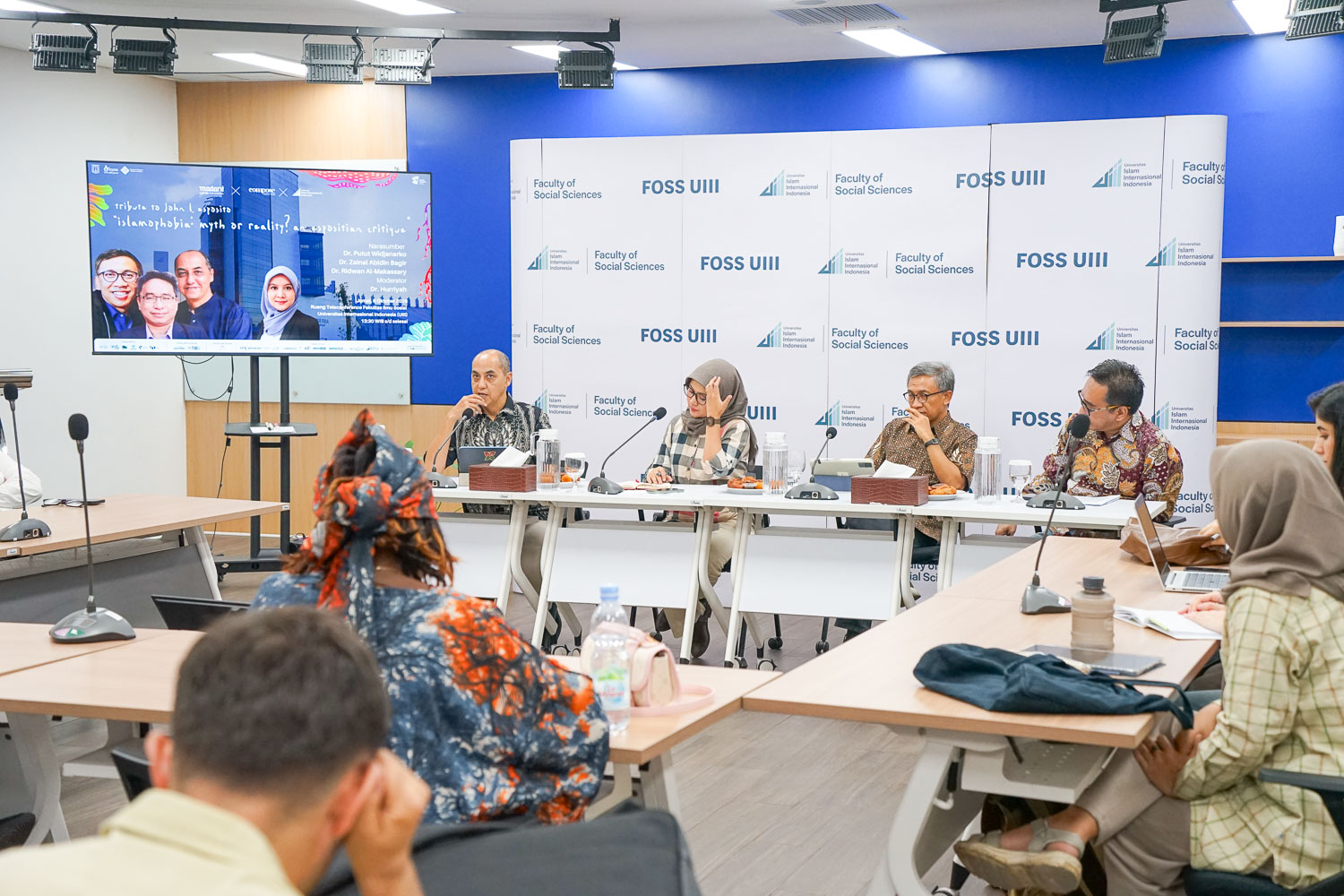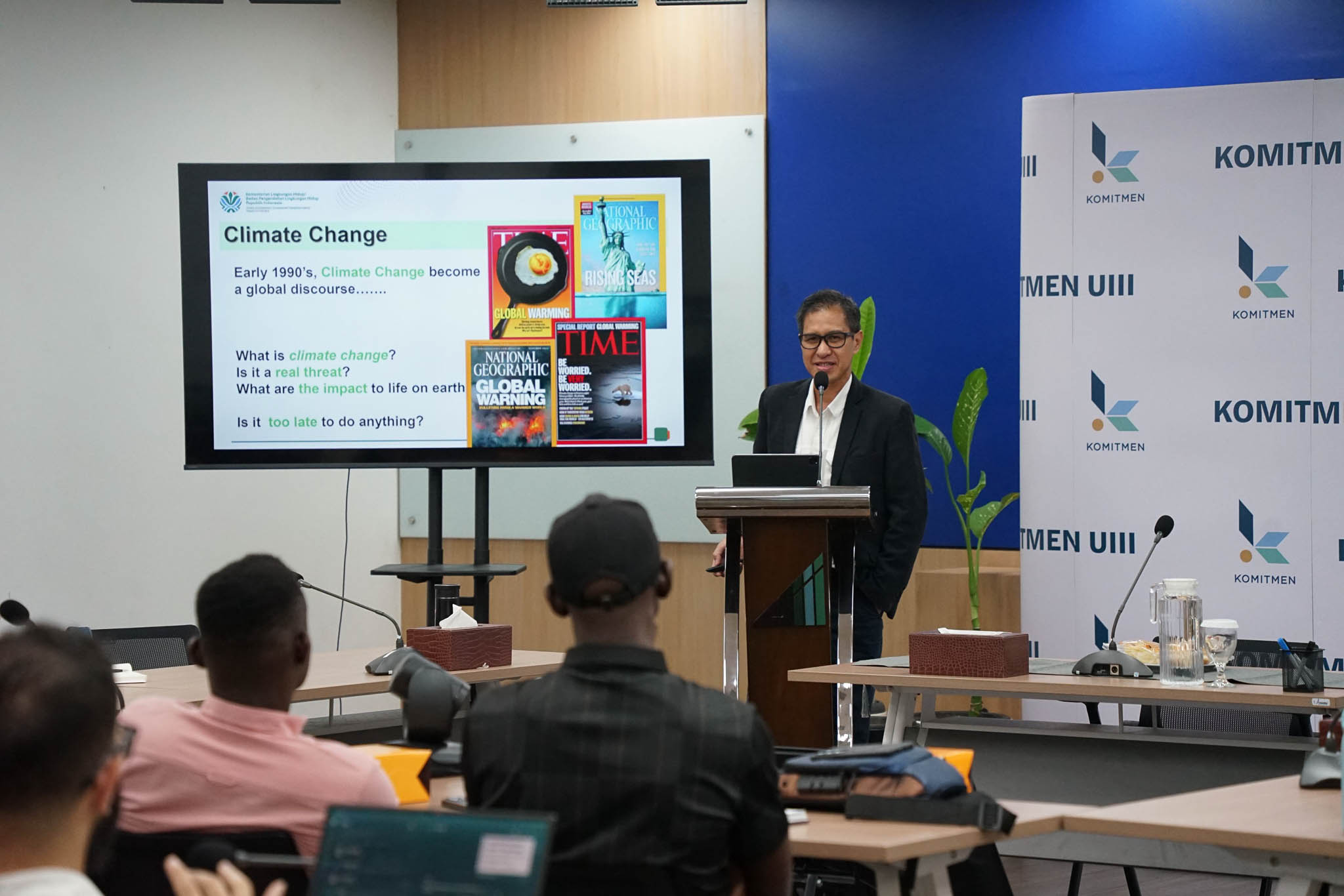
Depok, 18 May 2026 — Universitas Islam Internasional Indonesia (UIII) hosted a General Lecture titled Navigating Climate Change Policy in Indonesia: The Role of Central and Local Governments in Policy Synergy for Mitigation, Adaptation, and the Challenges of Loss and Damage, bringing together KOMITMEN researchers, graduate and doctoral students, and Dr. Irawan Asaad, Director of Climate Change Control Resource Mobilization at the Ministry of Environment (KLH).
The event was organized as part of KOMITMEN’s ongoing effort to bridge research and policymaking, bringing together researchers, think tanks, and government partners to translate national climate ambitions into effective, contextually grounded policy at all levels of government.
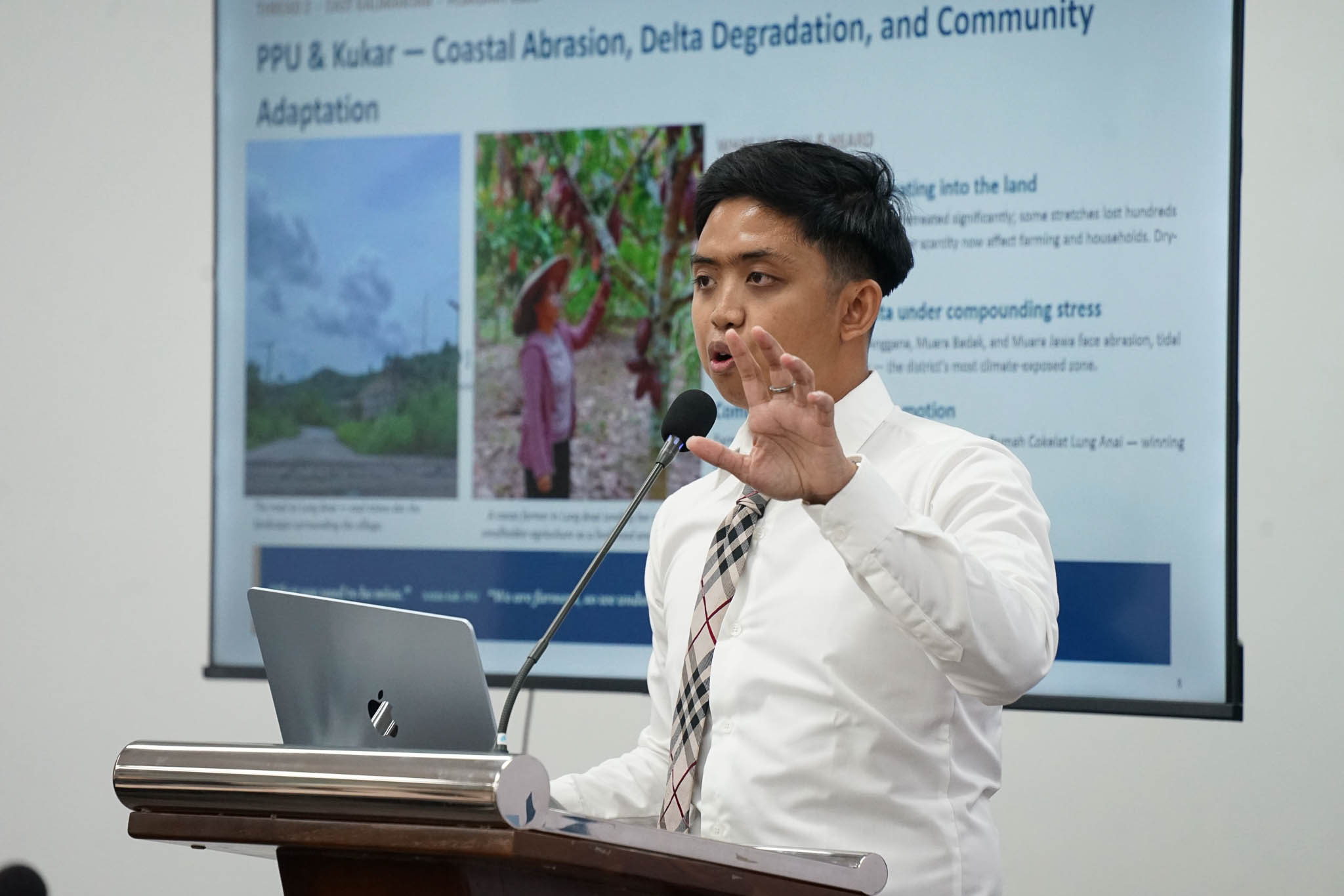
Ahead of the main lecture, Muhammad Maulidan, a researcher at KOMITMEN, presented the initiative’s current research agenda, highlighting that climate impacts are unevenly distributed across Indonesia’s regions and often go unaddressed in sub-national planning documents. To map this governance gap, KOMITMEN applied computational text analysis to Regional Medium-Term Development Plans (RPJMD) across provinces and districts, generating evidence on where climate considerations are embedded in local policy and where gaps persist.
In line with this research agenda, Dr. Irawan Asaad, Director of the Directorate of Climate Change Control Resource Mobilization at the Ministry of Environment (KLH), delivered the main public lecture to an internationally diverse group of master’s and doctoral students from Africa, East Asia, and Southeast Asia. His presentation covered four interconnected themes: the science of climate change, Indonesia’s policy architecture, the country’s international commitments, and the role of the academic community in supporting evidence-based governance.
Irawan opened by situating Indonesia within the global climate vulnerability landscape, underscoring that the country already faces compounded risks across food security, water, public health, and energy infrastructure, and that the window for effective action is narrowing.
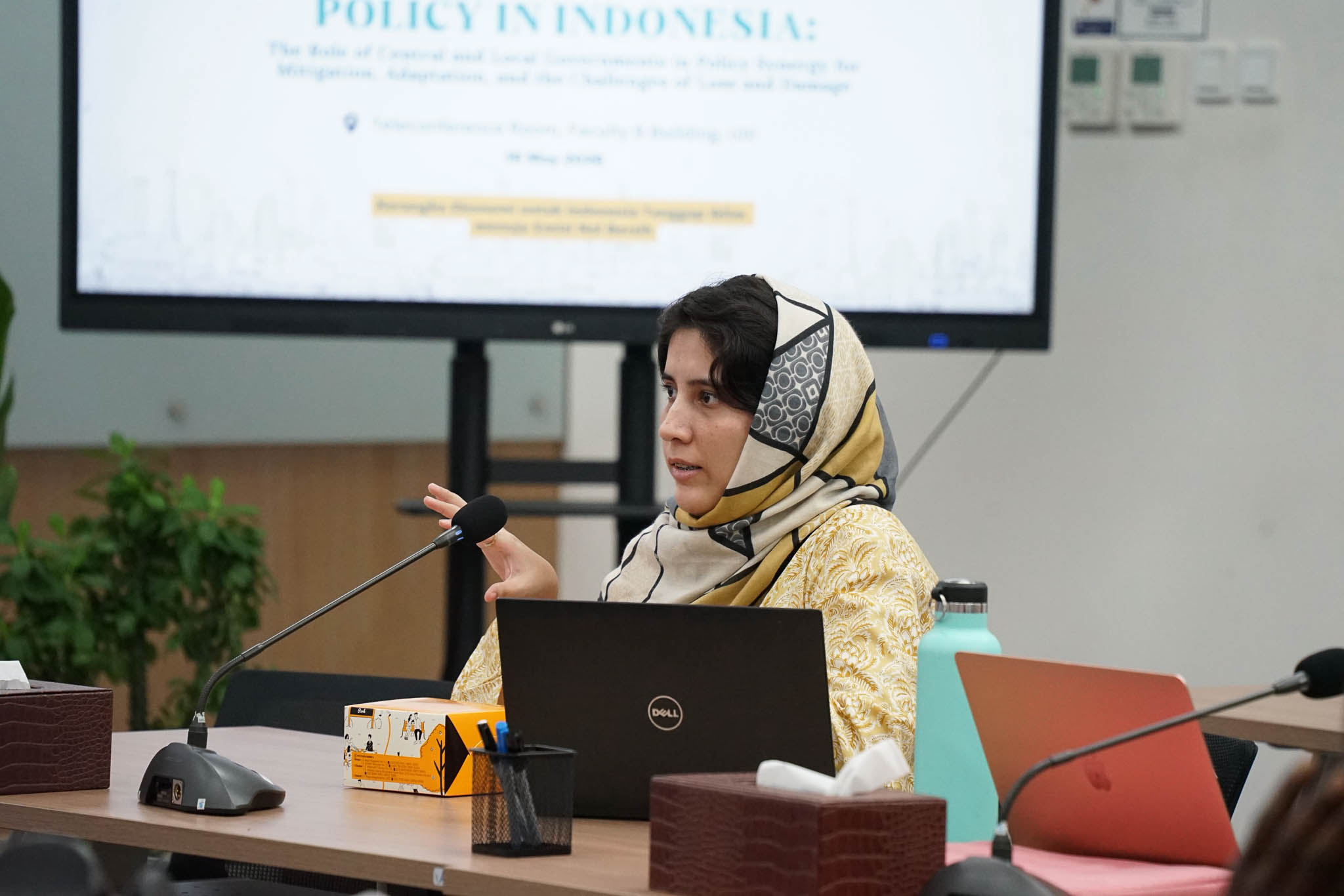
On the policy front, Irawan outlined Indonesia’s climate governance architecture, from the Long-Term Strategy for Low Carbon and Climate Resilience 2050 through to the updated Second NDC submitted to the UNFCCC in October 2025. He emphasised that Indonesia’s approach insists on pursuing climate ambition and economic development together, and that translating national targets into effective sub-national action remains the central implementation challenge.
Irawan closed by addressing the audience directly as future policymakers and researchers, arguing that academia is a strategic partner in climate governance, not a peripheral actor.
The discussion session that followed gave students the opportunity to probe the practical dimensions of Indonesia’s climate commitments. On the question of financing, a student raised the scale of the funding gap required to meet NDC 3.0 targets, estimated at IDR 7,000 trillion. Irawan acknowledged the challenge, explaining that Indonesia has developed fiscal scenarios integrating domestic resource capacity with international climate finance pathways as a framework for progressively closing that gap.