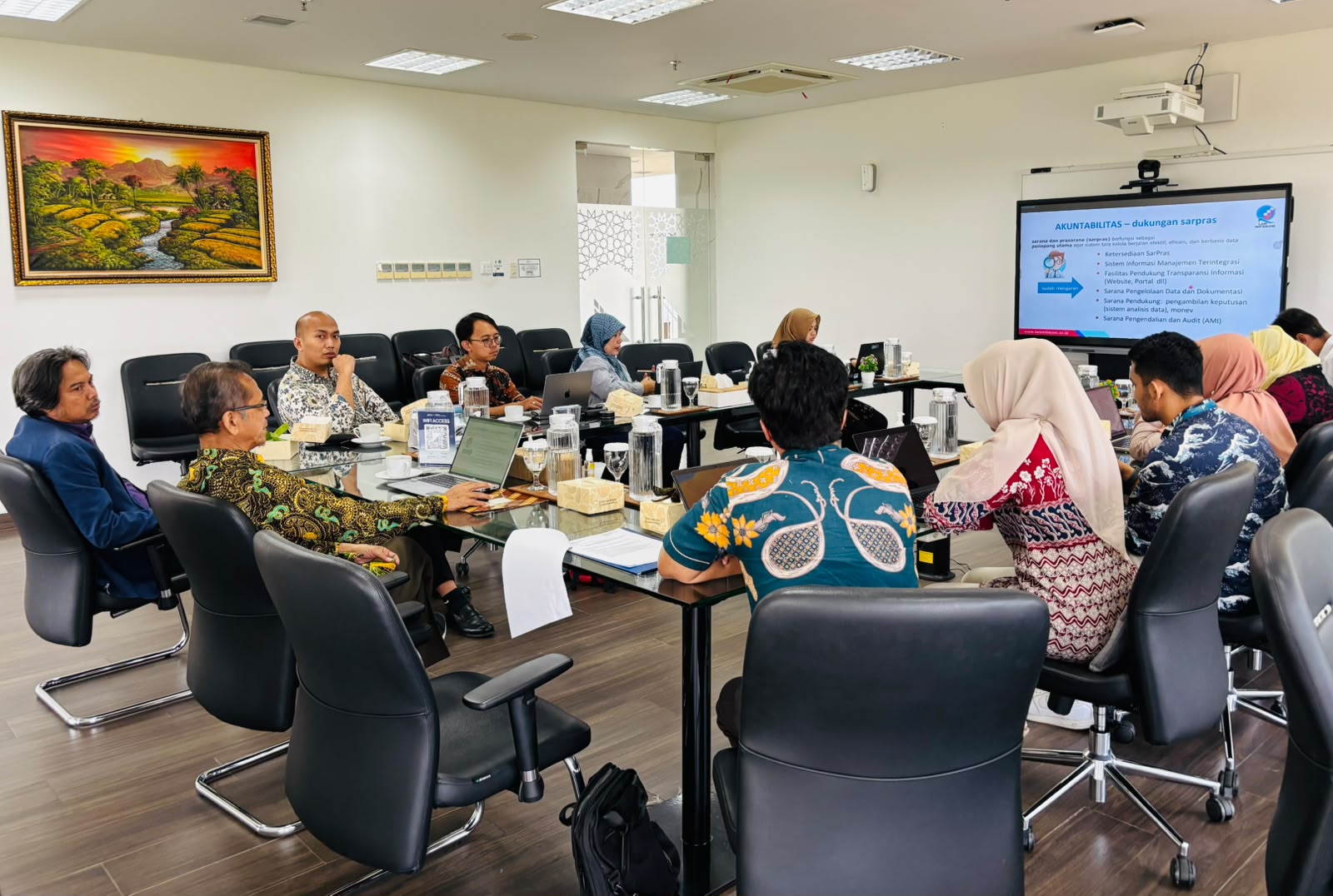
DEPOK — Universitas Islam Internasional Indonesia (UIII) held a strategic coordination meeting today to strengthen preparations for the first accreditation of its newly opened Master of Data Science program. The meeting took place at the Leadership Meeting Room, 4th Floor of the UIII Rectorate Building, under the theme “Strategy and Best Practice for Preparing the First Accreditation of New Study Programs within the Framework of Permendiktisaintek No. 39 of 2025.”
The session featured Prof. Drs. Agus Harjoko, M.Sc., Ph.D., Professor at the Department of Computer Science and Electronics, Universitas Gadjah Mada (UGM), and an assessor of LAMINFOKOM, as the main resource person. The meeting was attended by members of the academic community of the Master of Data Science program, including its lecturers, as well as staff from UIII’s Quality Assurance Center and the Directorate of Academic and Student Affairs.
In his opening remarks, Assoc. Prof. Syafiq Hasyim, Acting Vice Rector for Academic and Student Affairs, expressed appreciation to Prof. Agus for sharing his expertise with UIII. He underlined that the Master of Data Science program, as a new program, needs careful guidance in preparing for its first accreditation process after successfully obtaining a recommendation from LAMINFOKOM.
“This program is highly strategic because it is timely and relevant to current developments,” he said. He added that data science has become increasingly important not only for the technology sector but also for public policy, governance, business, education, and social transformation.
R. Alpha Amirrachman, Ph.D., Head of UIII’s Quality Assurance Center, said that the meeting was designed not merely as a technical discussion on accreditation documents, but also as a broader reflection on the future development of the program. “We hope Prof. Agus can provide guidance not only on the process of submitting the first accreditation, but also on the program’s future development, including relevant concentrations aligned with industry needs,” he said.
Muhammad Al-Atiqi, Ph.D., Head of the Master of Data Science Program, emphasized the interdisciplinary orientation of the program. He explained that the program is expected to welcome not only graduates of computer science or computer engineering, but also those from other fields, such as political science, while maintaining the academic rigor and disciplinary foundations of data science. This approach, he noted, reflects the demand for professionals who can combine computational skills, analytical reasoning, and contextual understanding.
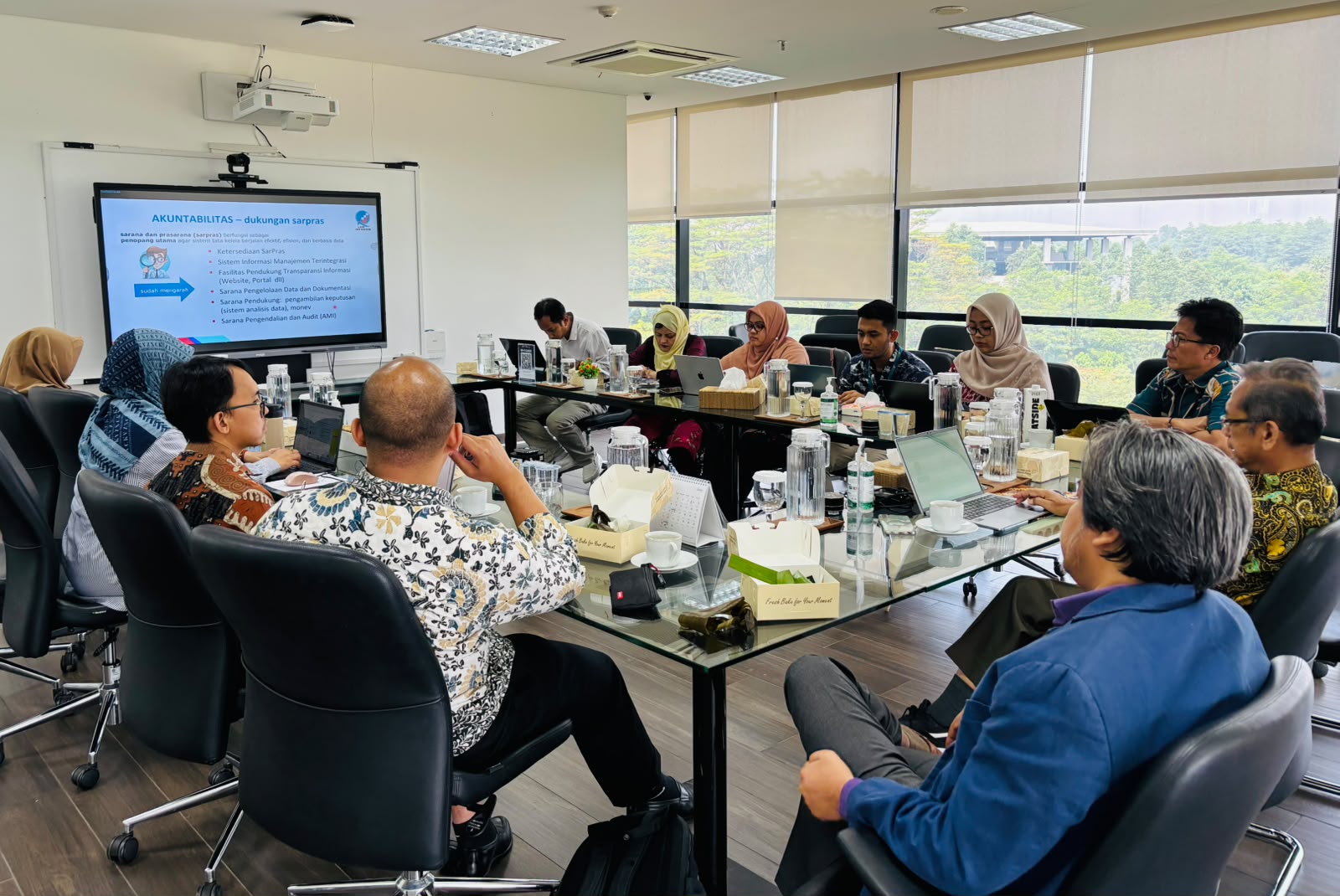
In his presentation, Prof. Agus provided an overview of the latest LAMINFOKOM Accreditation Instrument 2.1 for master’s programs. He explained that accreditation should be understood as part of a continuous quality improvement cycle, rather than as a one-time administrative requirement. He highlighted the importance of preparing two central documents: the Laporan Evaluasi Diri (LED), or Self-Evaluation Report, and the Laporan Kinerja Program Studi (LKPS), or Study Program Performance Report.
According to Prof. Agus, the LED must present a comprehensive and evidence-based self-evaluation. It should not simply list activities, but should analyze achievements, challenges, strengths, weaknesses, and plans for improvement. The LKPS, meanwhile, must provide reliable quantitative and descriptive data on the performance of both the Study Program Management Unit and the study program itself. He stressed that consistency between narrative analysis, performance data, and supporting evidence is essential.
Prof. Agus further explained that the LAMINFOKOM framework assesses several important aspects, including external conditions, the profile of the study program management unit, quality culture, educational relevance, research relevance, community engagement, accountability, mission differentiation, and program supplements. Strong accreditation preparation requires valid documentation, clear governance, curriculum relevance, qualified academic staff, research roadmaps, stakeholder engagement, and measurable outputs and outcomes.
For a Master of Data Science program, he encouraged UIII to identify its distinctive academic positioning. Possible future concentrations, he suggested, could be developed in line with institutional strengths and societal needs, including artificial intelligence, data analytics, computational social science, governance analytics, and industry-based data applications.
The discussion that followed was warm, dynamic, and filled with optimism. Lecturers and staff actively raised questions on curriculum design, evidence management, data readiness, accreditation timelines, industry relevance, and the long-term identity of the program. The exchange reflected a shared commitment to build the program not only as a compliant academic unit, but also as a competitive and socially responsive master’s program.
The meeting concluded with a common understanding that the first accreditation of the Master of Data Science program is both a regulatory milestone and a strategic opportunity. For UIII, the process will serve as an important foundation for strengthening quality assurance, sharpening academic direction, and positioning the program in the rapidly evolving data-driven world.