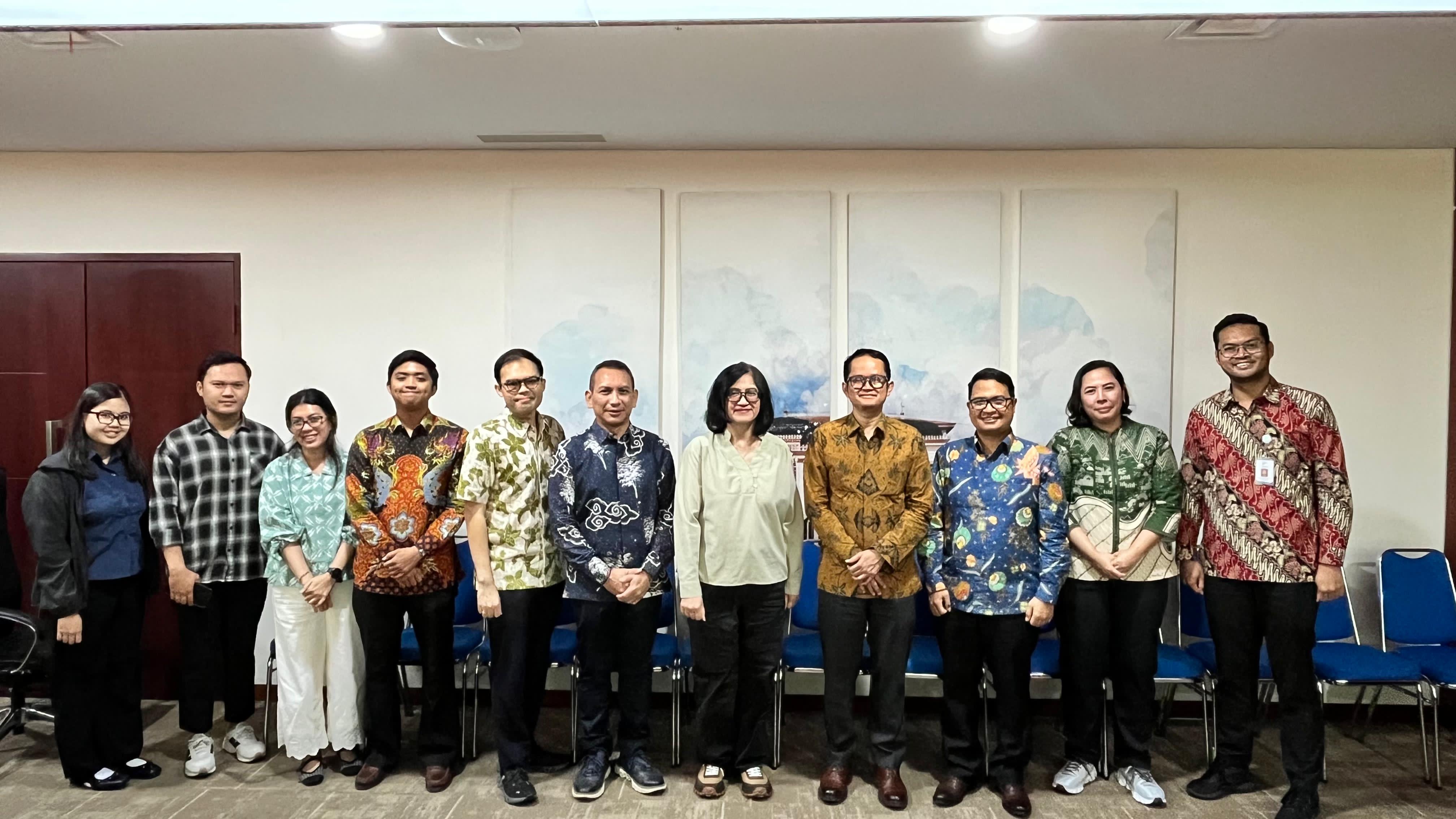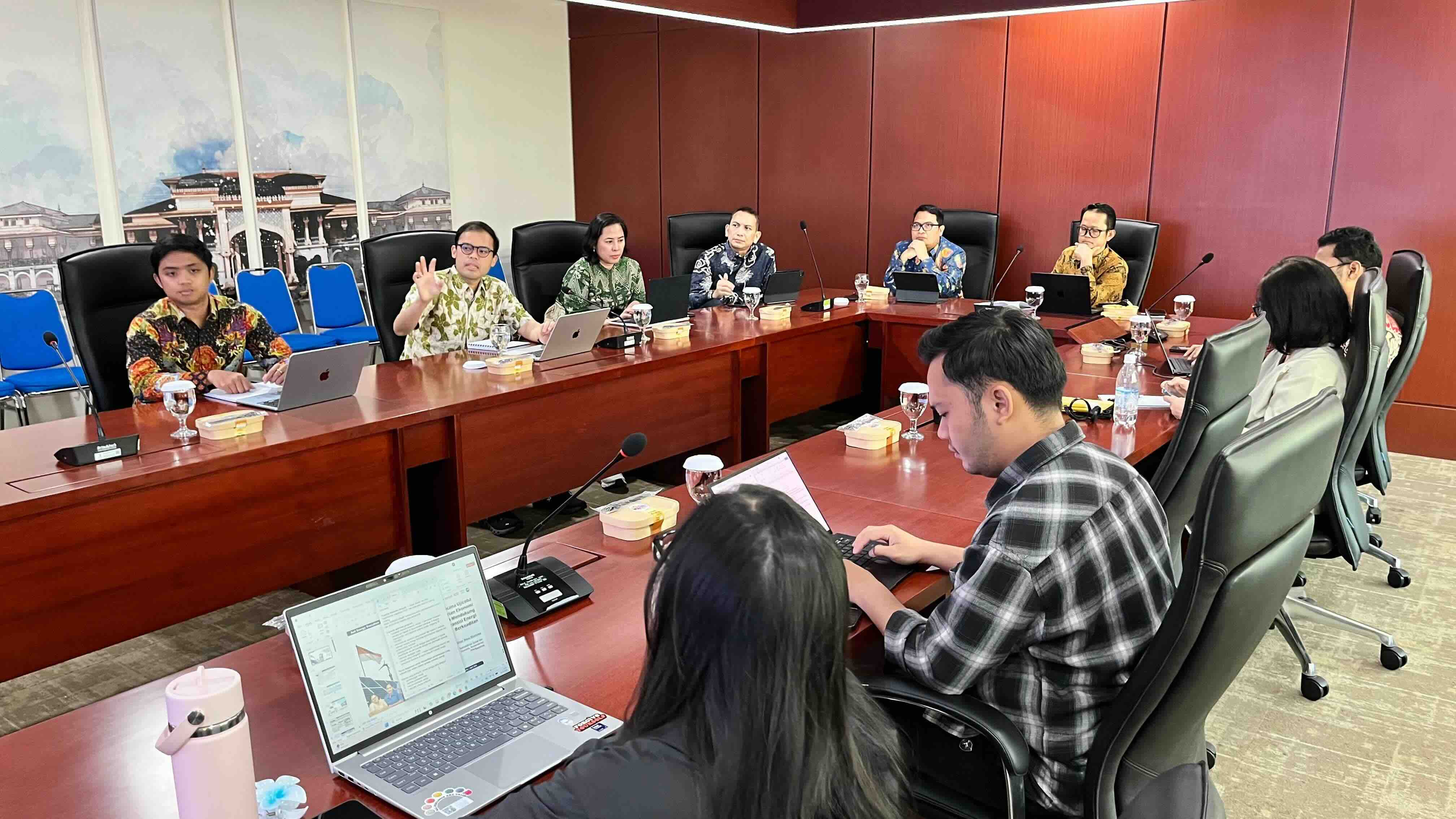
Jakarta, 30 April 2026 — A delegation from Universitas Islam Internasional Indonesia (UIII), led by Teguh Yudo Wicaksono, PhD, Dean of the Faculty of Economics and Business at UIII, held discussions with Maliki, ST, MSIE, PhD, Deputy for Community Empowerment, Population, and Employment at Bappenas, and Bappenas officials in Jakarta on 30 April 2026.
The meeting presented the research agenda of SETARA (Strategi Transisi Ekonomi dan Energi Regional yang Adil/Strategy for an Equitable Regional Economic and Energy Transition), a flagship initiative under the KOMITMEN UIII program, and explored opportunities for strategic collaboration with Bappenas as Indonesia’s national development planning institution.
At the meeting, the delegation has an opportunity to present SETARA’s three key dimensions of Indonesia’s energy transition. First, it addresses regional inequalities emerging from shifts in the structure of the energy economy. Second, it focuses on workforce skills development and the creation of green jobs. Third, it explores the challenge of strengthening national industrial competitiveness under different transition scenarios.
Using a place-based approach in three pilot provinces—South Sumatra, West Java, and East Nusa Tenggara—the program brings together four core research components to generate contextual, evidence-based policy recommendations for decision-makers at both national and regional levels.
The Deputy for Community Empowerment, Population, and Employment was selected as a dialogue partner because their portfolio closely aligns with SETARA’s agenda, particularly on social protection, labour transition, and community empowerment. As the institution that coordinates national development planning, Bappenas also plays a strategic role in translating the principles of an equitable energy transition into planning documents at both national and regional levels.
Through a structured partnership under the SETARA framework, UIII aims to ensure that the programme’s findings inform Bappenas’s national and regional planning processes. The collaboration is expected to translate research into practical policy options—such as recommendations on social protection, labour reskilling, and regional development priorities—so that communities in transition-affected regions can benefit directly.
The Deputy’s office offered input to help shape the programme’s next research priorities. Deputy Maliki highlighted the alignment between the Deputy’s agenda and SETARA’s mission, especially in advancing a just and fair energy transition alongside economic transformation.
He emphasized that regional development planning documents should incorporate equitable energy transition considerations and adaptive social protection measures. In his view, climate change transforms the nature of jobs rather than eliminating them, making workforce readiness an urgent priority.
Mahatmi Parwitasari Saronto, ST, MSIE, Director of Cooperatives and MSMEs, acknowledged that while regional empowerment and energy transition initiatives are already active across multiple actors, SETARA fills a critical gap, “SETARA’s evidence-based research approach can address important analytical gaps that existing programmes have yet to tackle, and strengthen their overall impact,” she added.
Similarly, Dinar Danar Kharisma, SE, MAID, PhD, Director of Social and Economic Self-Reliance, said that pilot experiences and programme implementation in several provinces have shown the need for a stronger research foundation to guide action.
He added that SETARA’s analysis could strengthen the evidence base for the Deputy’s ongoing programmes and help refine future interventions. The Deputy’s office also expressed openness to formalizing the partnership with UIII to ensure research findings are more closely linked to policy decisions.
As follow-up, both parties agreed on two strategic next steps. First, the SETARA team will prepare and submit a formal partnership proposal to establish Bappenas as a knowledge partner in the program.
Second, the inaugural Steering Committee meeting and National Dialogue will be convened as the first step of collaborative implementation, with a target date before the third quarter of 2026. The forum will set shared priorities, coordination mechanisms, and an initial workplan for joint activities.
More importantly, it reaffirms UIII’s commitment to contributing to public policy through rigorous, relevant, and socially grounded research. Through this partnership, UIII and Bappenas are laying the groundwork for inclusive and evidence-based energy transition policies that support sustainable development across all regions of Indonesia.