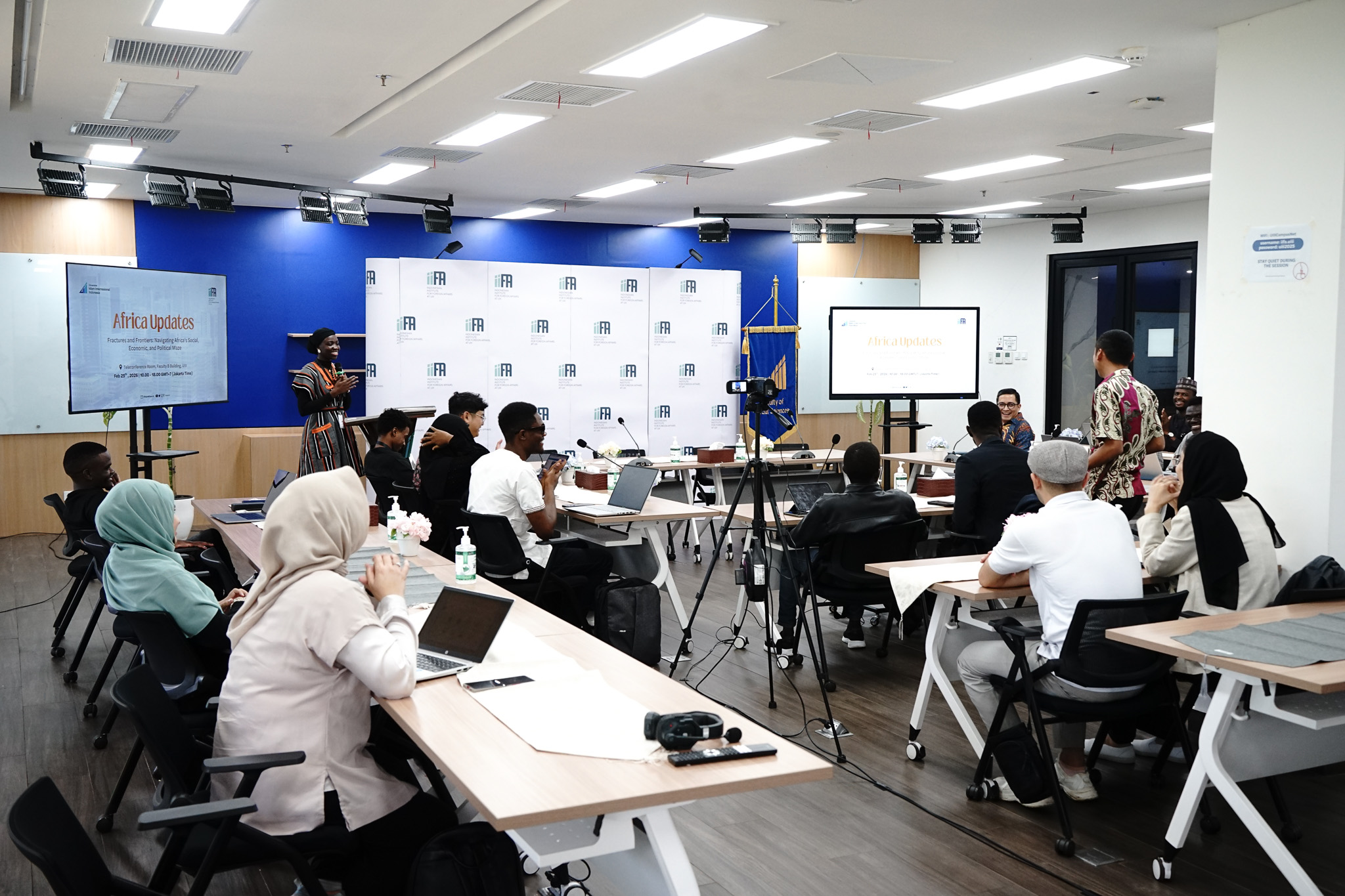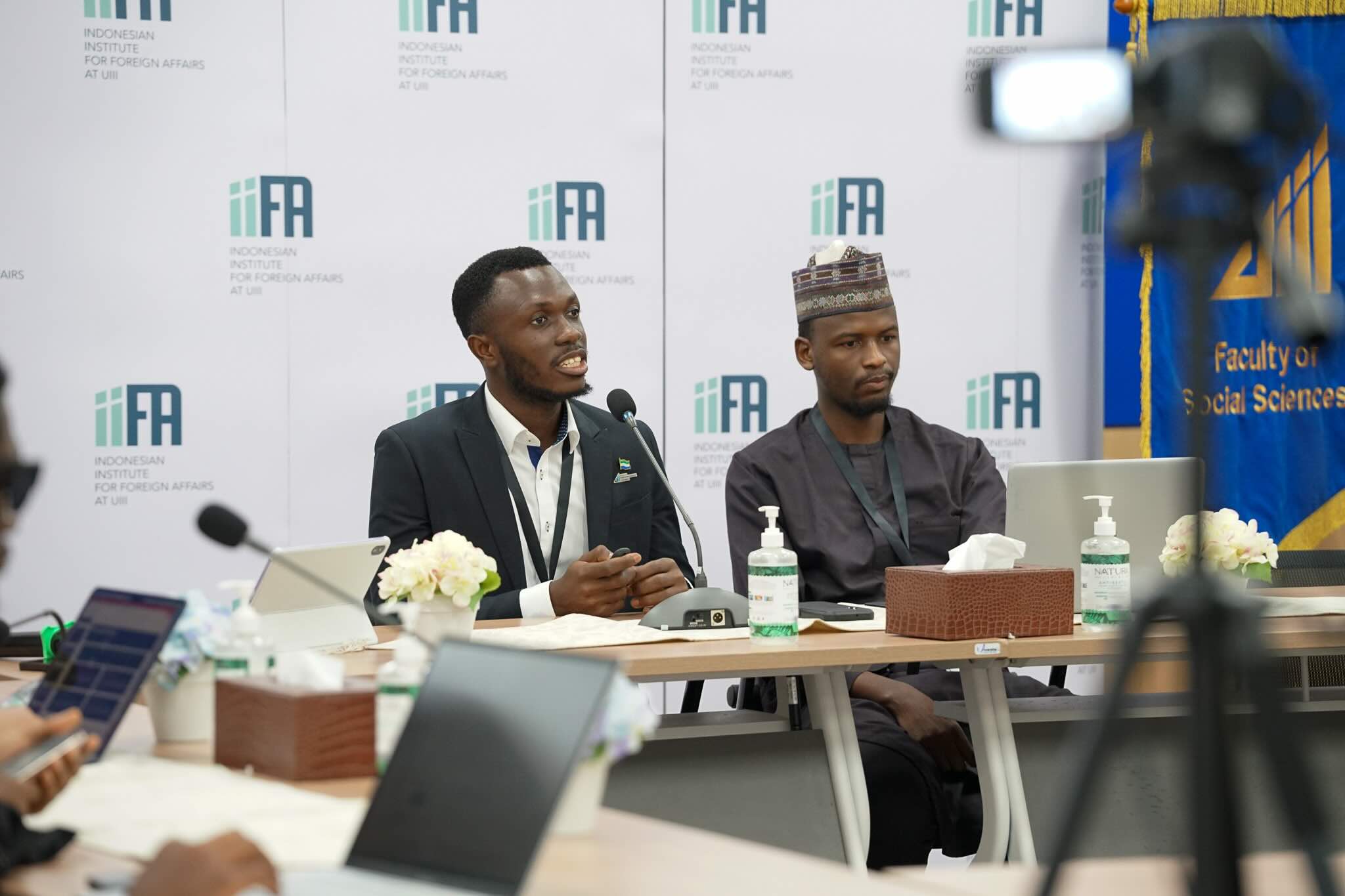
Depok, Indonesia – For too long, the global discourse on Africa has been a symphony of simplifications, a chorus of crisis narratives and one-dimensional headlines. But on a sweltering February afternoon on the campus of Universitas Islam Internasional Indonesia (UIII), a different kind of conversation was unfolding. In a packed lecture hall, the continent was not a problem to be solved, but a complex reality to be understood.
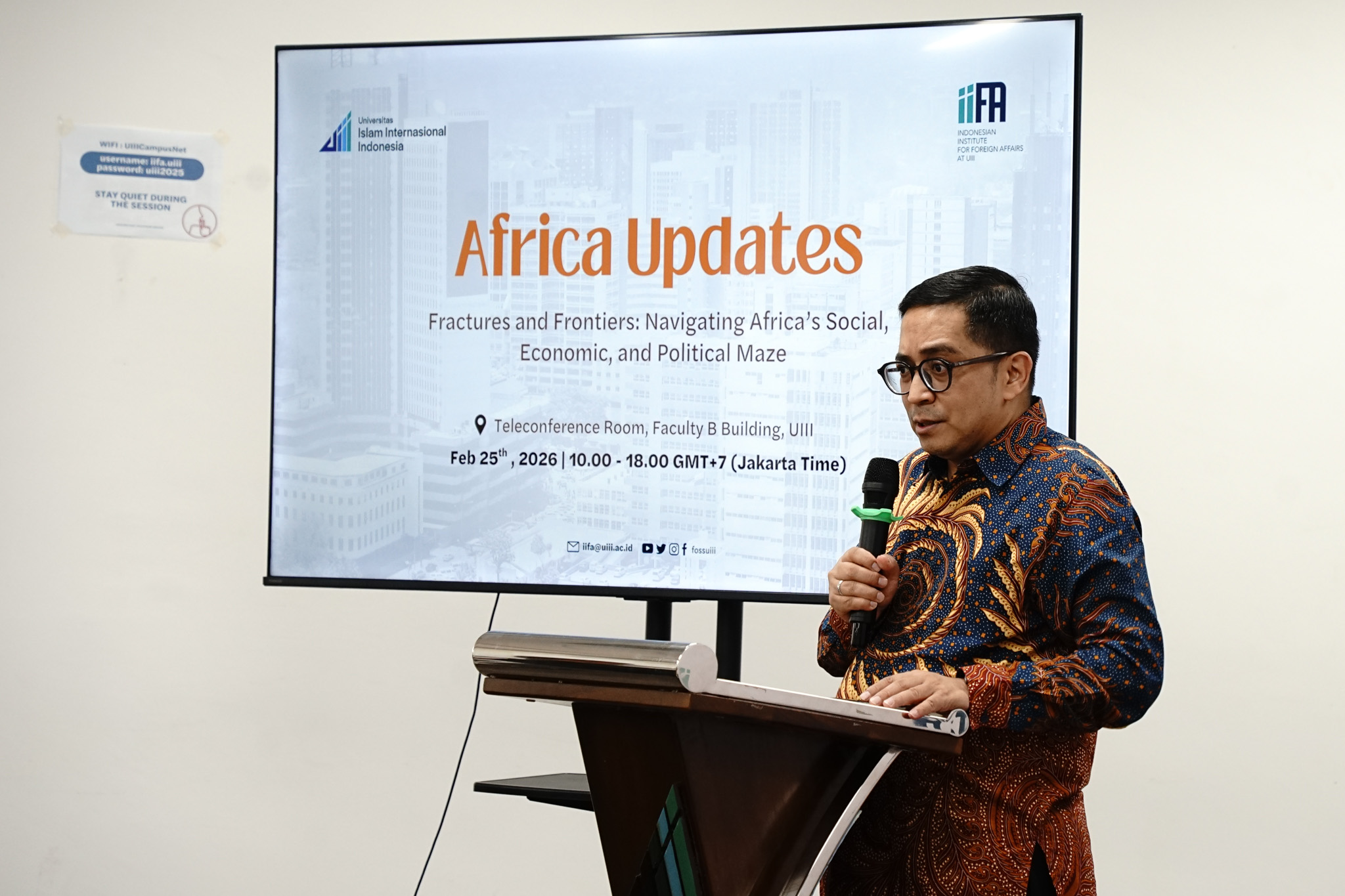
On 25th February 2026, the Faculty of Social Sciences (FOSS) launched the inaugural Africa Updates 2026, a student-led initiative with an ambitious goal: to move beyond the surface-level analysis and grapple with the continent’s intricate social, economic, and political tapestry. The theme, “Fractures and Frontiers: Navigating Africa’s Social, Economic, and Political Maze,” was not chosen lightly. It was an acknowledgement that the Africa of today, shaped by a pivotal 2025, is a continent of profound contradictions, a place where immense potential and persistent fragility are locked in a constant, dynamic tension.
Convened by a passionate group of master’s and Ph.D. students, the event transformed the faculty into a bustling agora of ideas. Philips J. Vermonte, PhD, the Dean of FOSS, said that students and scholars from across UIII gathered not just to present papers, but to engage in rigorous debate. The central question was as challenging as it was essential: Where do our existing academic theories illuminate the path forward, and where do they fall short, rendered obsolete by the sheer velocity of change?
The day’s journey through the “maze” was mapped across four critical sub-themes, each a labyrinth in its own right.
Rethinking Resource Governance
The first session delved into the bedrock of many African economies: natural resources. But the conversation quickly moved beyond the familiar tropes of the “resource curse.” Instead, speakers highlighted a new frontier in economic sovereignty. The spotlight fell on the Pan-African Payment and Settlement System (PAPSS), a nascent but powerful tool designed to facilitate intra-African trade by bypassing expensive and opaque external financial systems.
The discussion painted a picture of a continent at a crossroads. The path forward, it was argued, requires a twin-track approach: aggressively bridging the technological divide that hinders seamless trade, while simultaneously ensuring that the extraction of minerals, so vital for the global green transition, directly fuels sustainable and equitable development at home. The question was no longer just about owning the resources, but about controlling the systems that give them value.
The Fight for Justice
The second session moved from physical resources to the digital realm, exploring the new frontiers of power and marginalization. The conversation took a sobering turn as speakers examined the rise of digital authoritarianism. In a continent with the world’s youngest population, the promise of the digital public square is increasingly shadowed by the threat of sophisticated surveillance and online repression, posing a significant challenge to democratic freedoms.
This digital dilemma was juxtaposed with the struggles of regional governance. The case of ECOWAS served as a powerful example of an institution caught in a tug-of-war between security imperatives and democratic integrity. Presenters argued that a reactive approach, sanctions after a coup, is no longer sufficient. The real work, they contended, lies in preventive diplomacy and the consistent application of targeted measures that protect vulnerable populations while fostering the conditions for genuine democratic practice to take root.
The Resilience of Hope
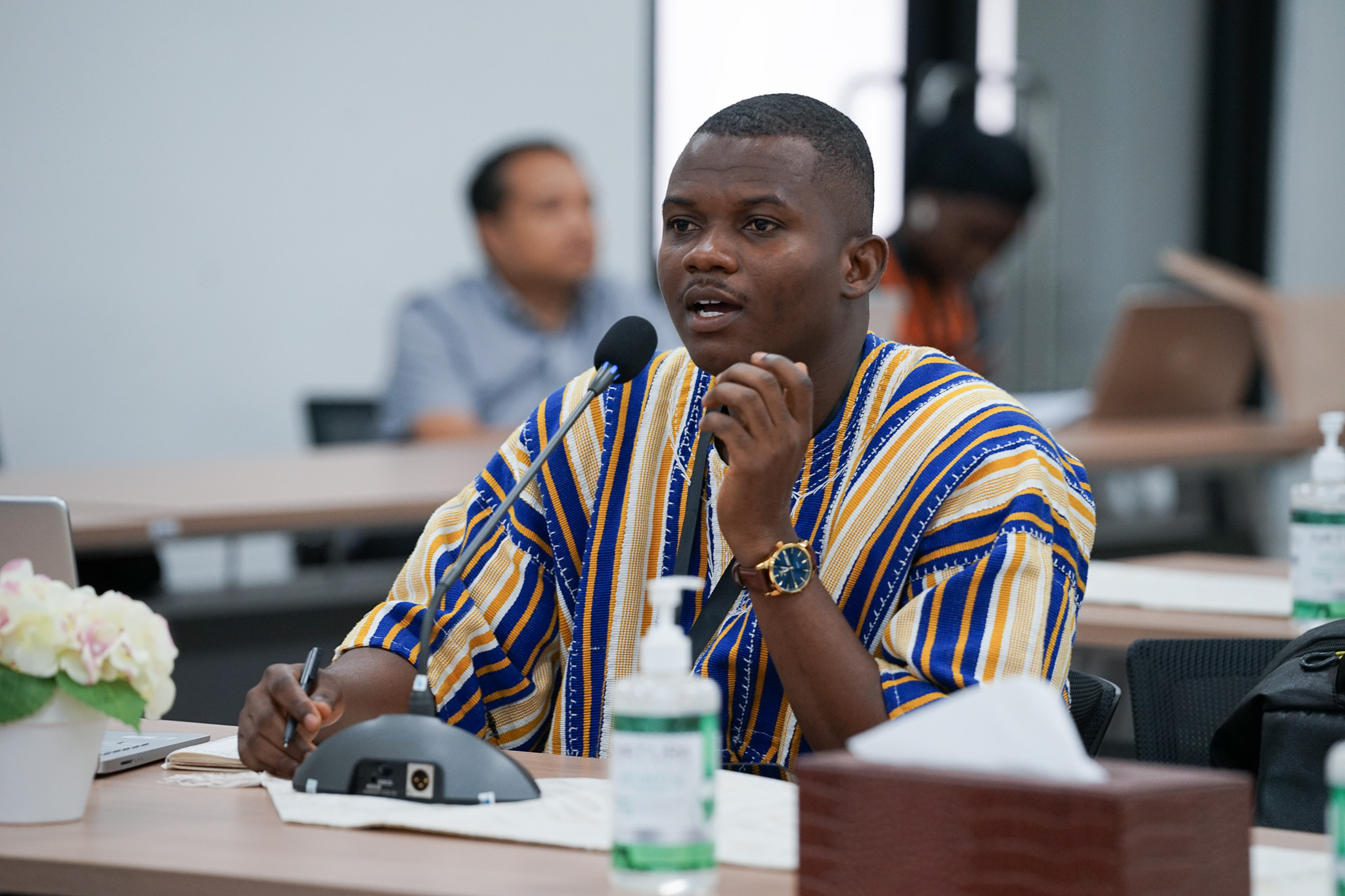
Perhaps the most visceral session tackled the resurgence of military coups in the Sahel. The conversation moved past simple condemnation to explore the complex drivers of these takeovers: state fragility, chronic insecurity, and a deep-seated disillusionment with governance. Yet, the discussion was not one of despair. By analyzing the varying levels of democratic resilience across the continent, scholars pointed to a crucial insight: the antidote to the “coup contagion” is not external pressure, but the unglamorous, painstaking work of strengthening domestic institutions and championing transparent, accountable governance from within.
The New Geopolitics
The final session broadened the lens to the global stage, examining Africa’s place in an era of intensifying great-power competition. The conversation was framed not by what outside actors are doing to Africa, but by what Africa can do for itself. The emphasis was firmly on agency.
Speakers argued that true sovereignty in the 21st century is inextricably linked to data sovereignty. As global powers vie for influence, the ability of African nations to control their own information flow and manage their data will define their autonomy. The path forward, they concluded, requires forging strategic partnerships that are truly mutual, respecting Africa’s right to navigate the geopolitical maze on its own terms.
A Foundation for the Future
By the day’s end, one thing was clear: the inaugural Africa Updates was far more than a successful academic event. It was a powerful statement of intent. For the student conveners and the faculty, it marked the beginning of a sustained commitment.
As the sun set over Depok, the conversations continued in small groups, the “maze” still complex but perhaps a little less daunting. The Faculty of Social Sciences at UIII has not only provided a vital platform for scholarly exchange but has also laid the cornerstone for an annual tradition. With plans already in place for the next edition, Africa Updates is poised to ensure that the continent’s diverse and dynamic trajectory remains a central, and deeply nuanced, part of the academic dialogue for years to come. []