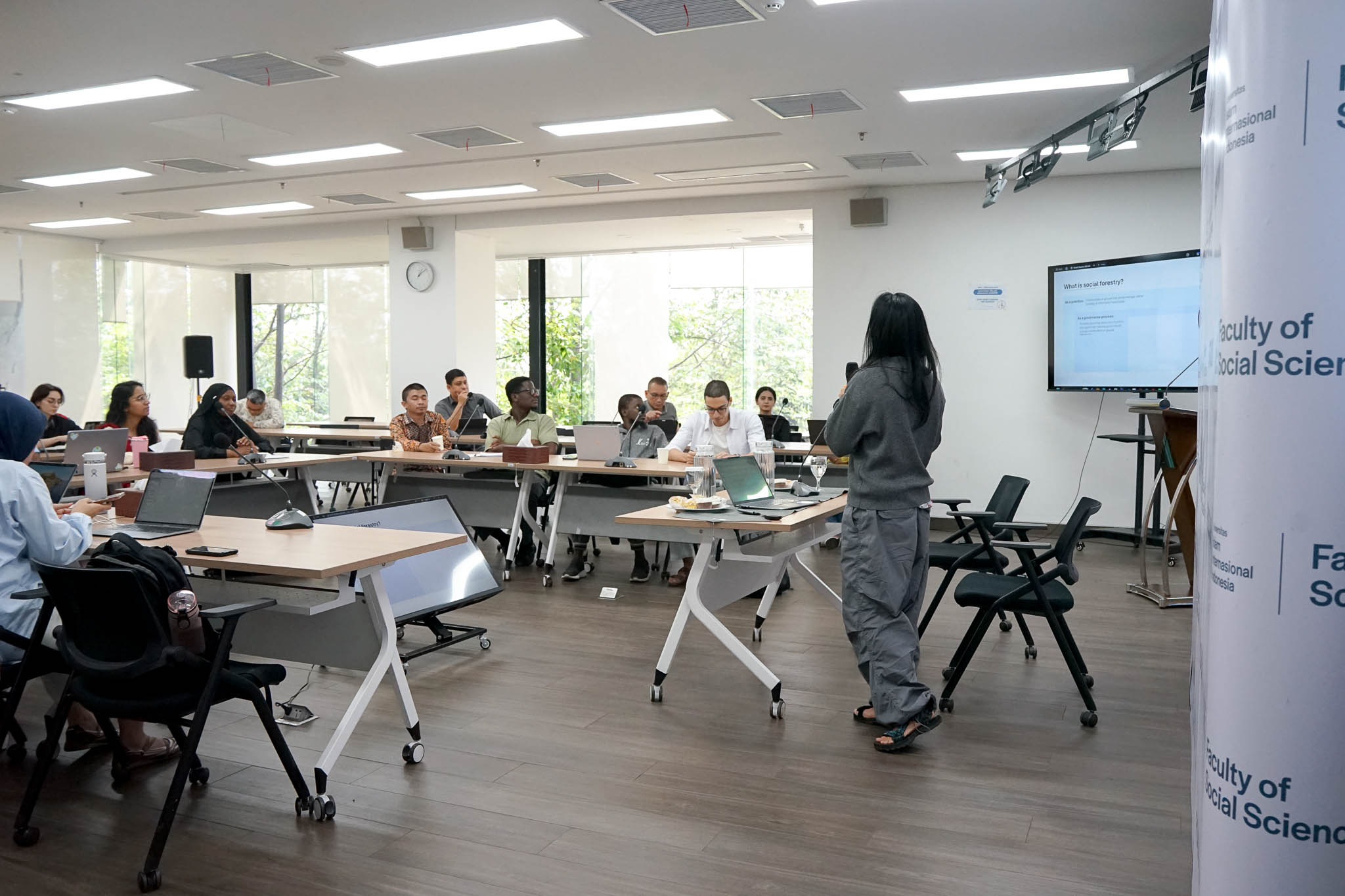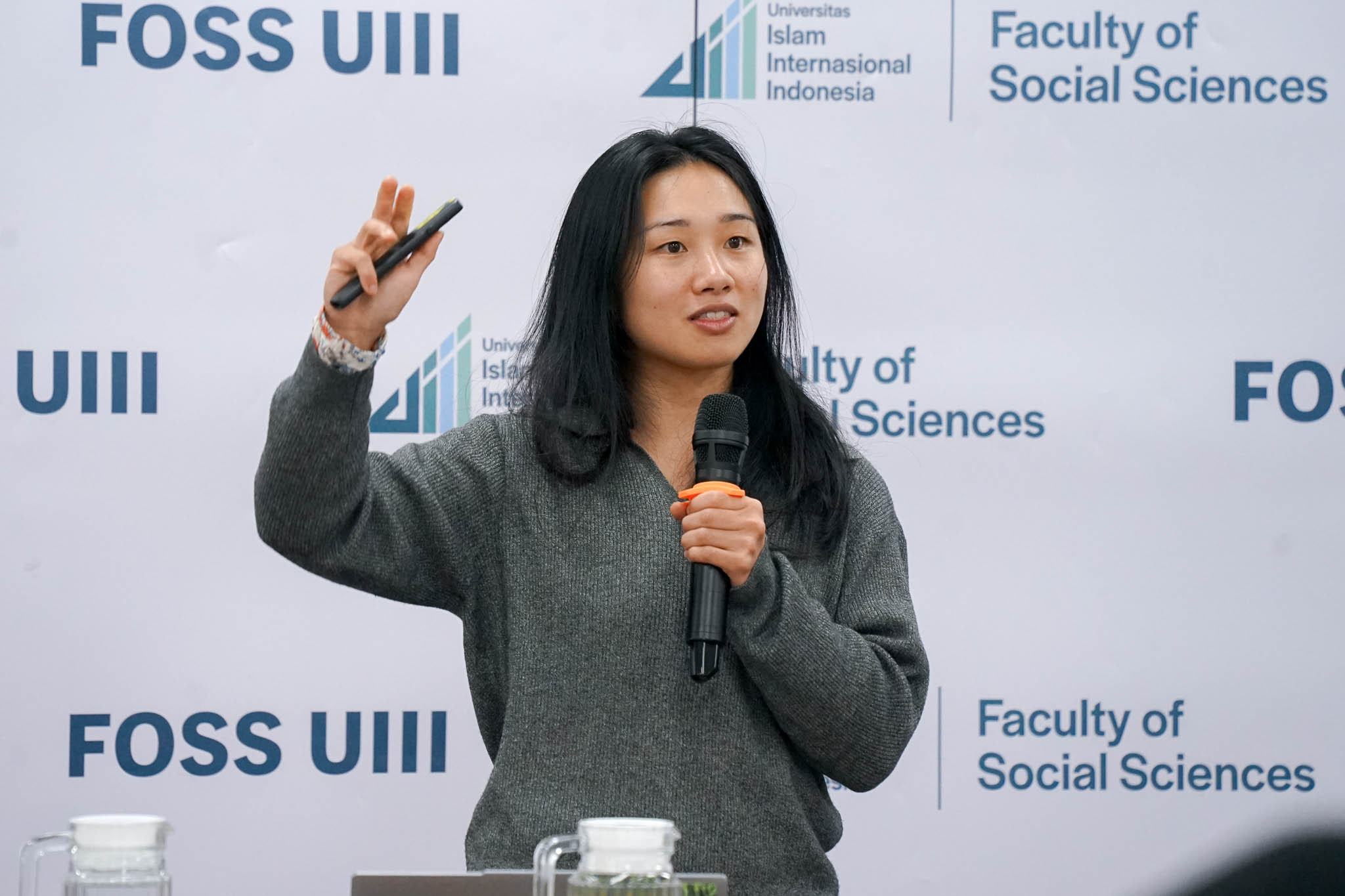
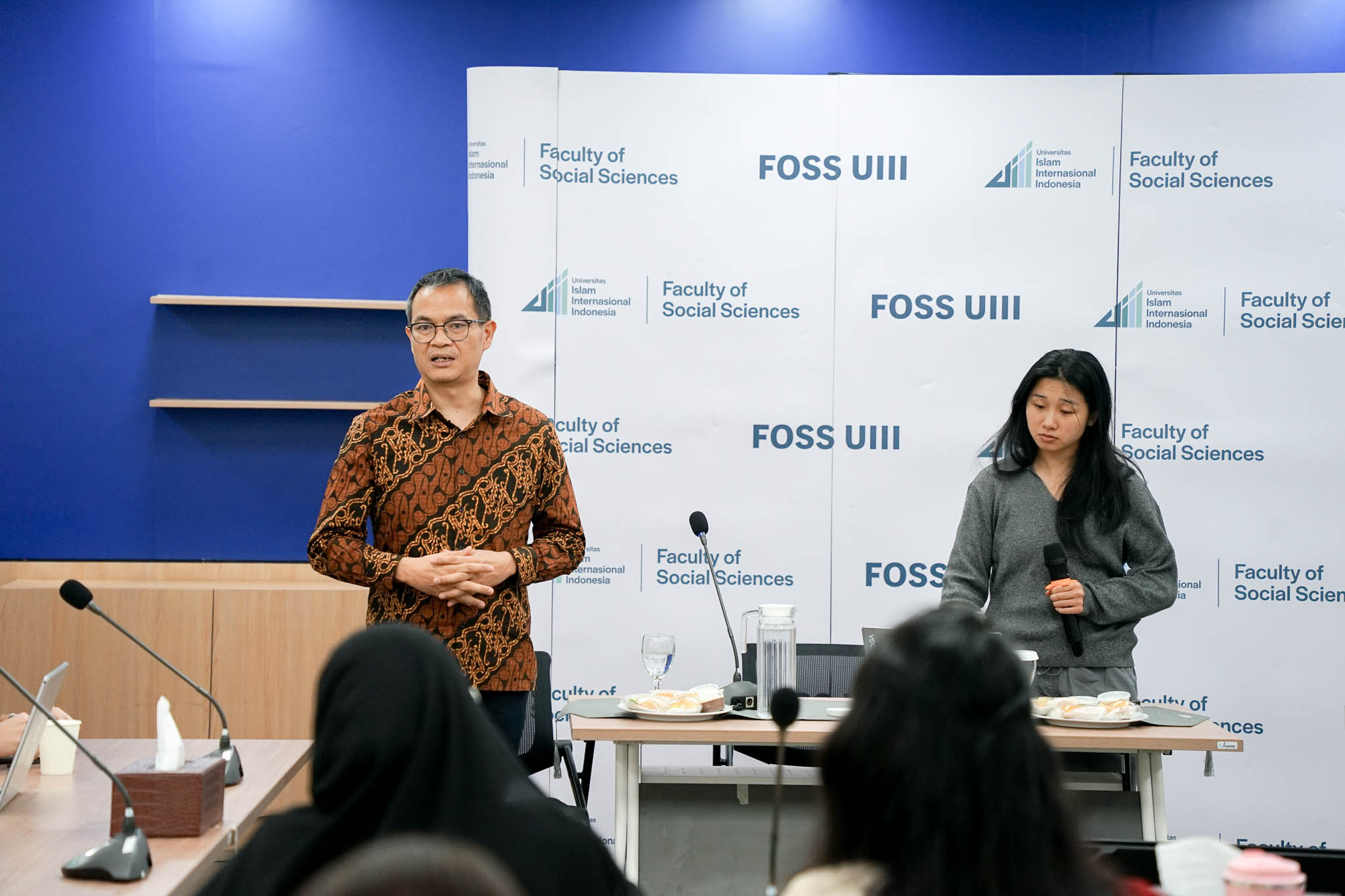
Depok, April 22, 2026 — The Climate Policy Lab at the Faculty of Social Sciences, Universitas Islam Internasional Indonesia (UIII) hosted an academic discussion titled “How to Evaluate the Impacts of Social Forestry on Deforestation and Poverty?” on Wednesday (April 22) at the Teleconference Room, Faculty B Building. Organized in collaboration with the Durrell Institute of Conservation and Ecology (DICE), the event featured Michaela Guo Ying Lo as the keynote speaker, presenting a rigorous framework to assess the environmental and socio-economic impacts of social forestry in Indonesia.
In her presentation, Michaela emphasized that Indonesia’s social forestry program is not a single, uniform intervention, but a collection of five distinct schemes—Hutan Desa (HD), Hutan Kemasyarakatan (HKm), Hutan Tanaman Rakyat (HTR), Kemitraan Kehutanan (KKHR), and Hutan Adat (HA). Each differs in tenure arrangements, governance structures, and target beneficiaries. As such, she argued that evaluating their impacts requires a disaggregated and context-sensitive approach, rather than relying on aggregate national-level conclusions that may obscure important variations.
Methodologically, the study adopts a counterfactual, quasi-experimental design to identify causal impacts. By comparing villages with and without social forestry interventions, and tracking outcomes across pre-implementation, implementation, and post-implementation phases, the approach isolates the specific contribution of these programs to changes in deforestation and poverty outcomes.
The findings reveal a nuanced and uneven pattern of impacts. In terms of deforestation, only the Hutan Adat (HA) scheme shows a meaningful effect, reducing deforestation by approximately 1.6 percentage points. Other schemes—including HD, HKm, and HTR—display minimal and statistically insignificant effects, suggesting that variations in tenure security and local institutional legitimacy play a decisive role in shaping conservation outcomes.
In relation to poverty, measured using the Multidimensional Poverty Index (MPI), all schemes are associated with reductions in deprivation levels. However, these improvements are modest and not statistically significant. When broken down into specific dimensions—such as education, health, environment, infrastructure, living standards, and social indicators—the findings remain inconsistent, with no single domain showing robust gains across contexts. This indicates that the welfare impacts of social forestry are neither immediate nor uniformly distributed.
A key takeaway from the presentation is the high degree of heterogeneity in outcomes. The effectiveness of social forestry varies significantly depending on local governance capacity, ecological conditions, and implementation quality. In some areas, the program contributes positively to both conservation and community well-being, but also in others, its impacts remain limited or unclear. This reinforces the importance of moving beyond national averages and adopting more context-sensitive evaluation frameworks.
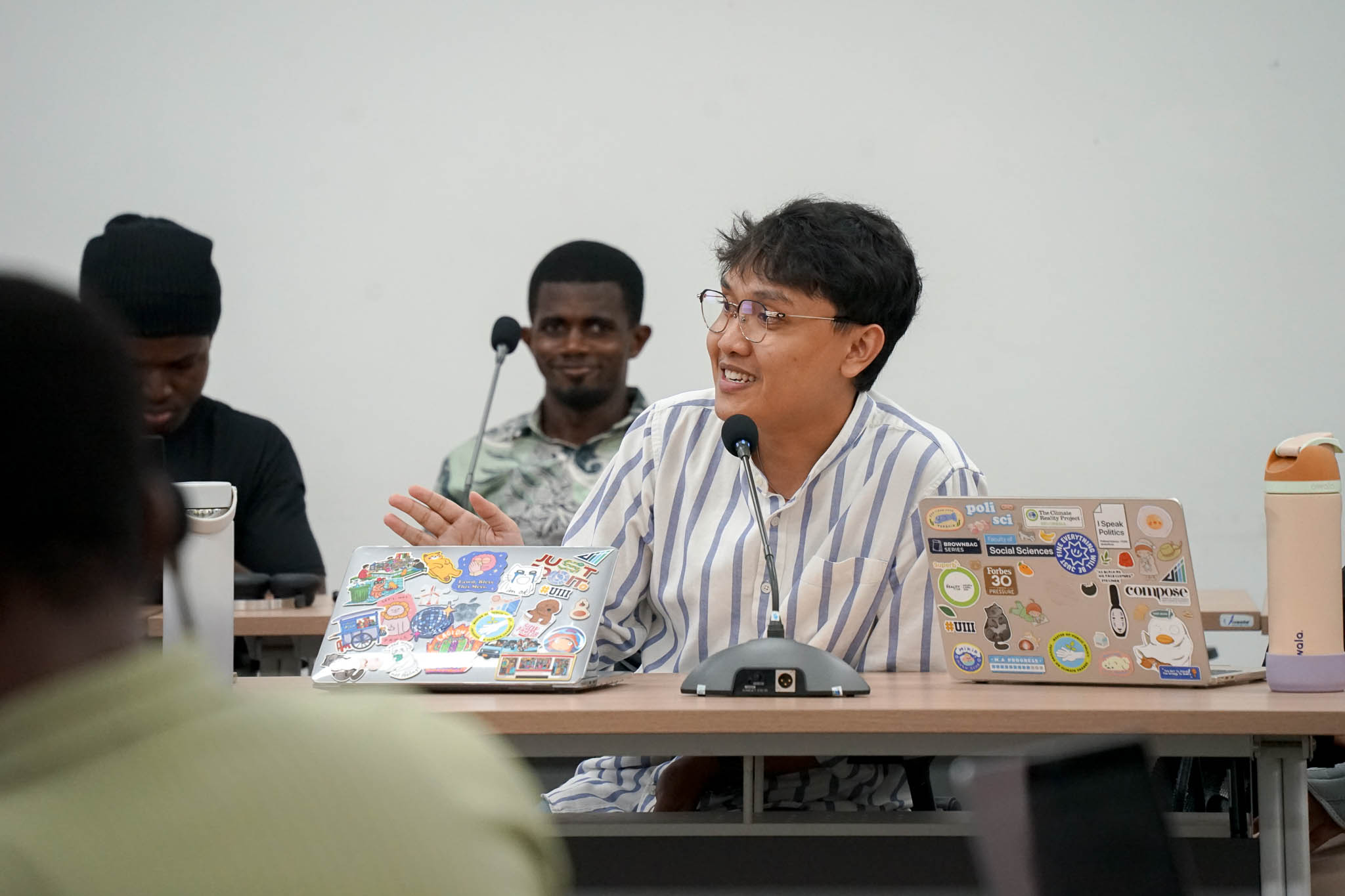
The discussion session reflected strong enthusiasm from both students and lecturers, who actively engaged with the presentation. Participants raised a diverse set of critical questions, including concerns about the recentralization of social forestry governance and its implications for local autonomy, as well as the positioning of social forestry within Indonesia’s conservation commitments in global climate negotiations. Some also explored more normative and conceptual issues, such as the role of spiritual values in shaping community-based forest management. Other audience members expressed curiosity about the long-term sustainability of these programs, the distribution of benefits among local communities, and how evaluation frameworks can better capture the complex interaction between environmental and socio-economic outcomes.
Through this event, the Climate Policy Lab UIII reaffirmed its commitment to fostering evidence-based dialogue on environmental governance, natural resource management, and sustainable development. The discussion not only highlighted the complexity of evaluating social forestry policies, but also underscored the need for integrating institutional analysis, local context, and multidimensional indicators into future policy design and assessment.