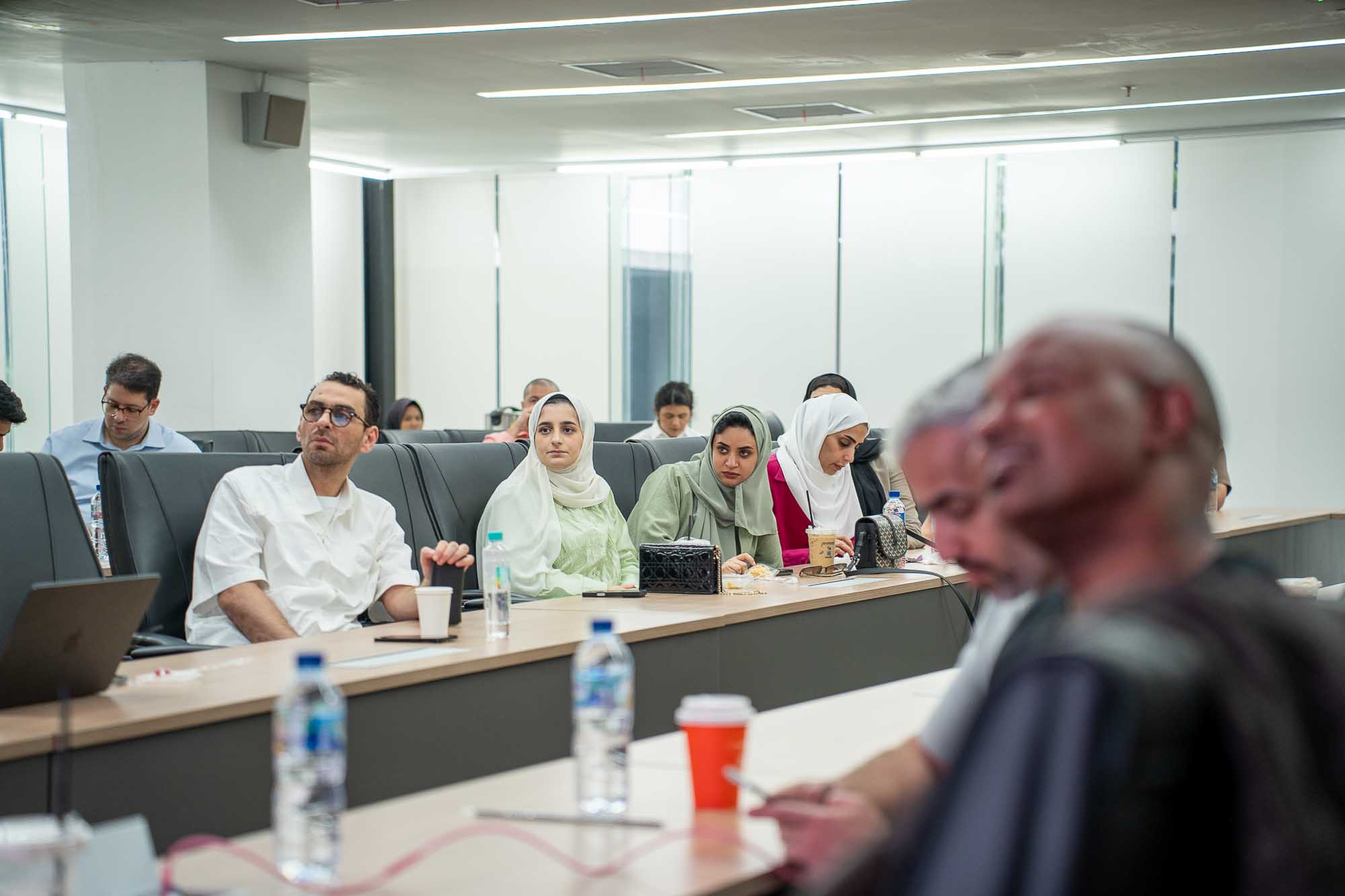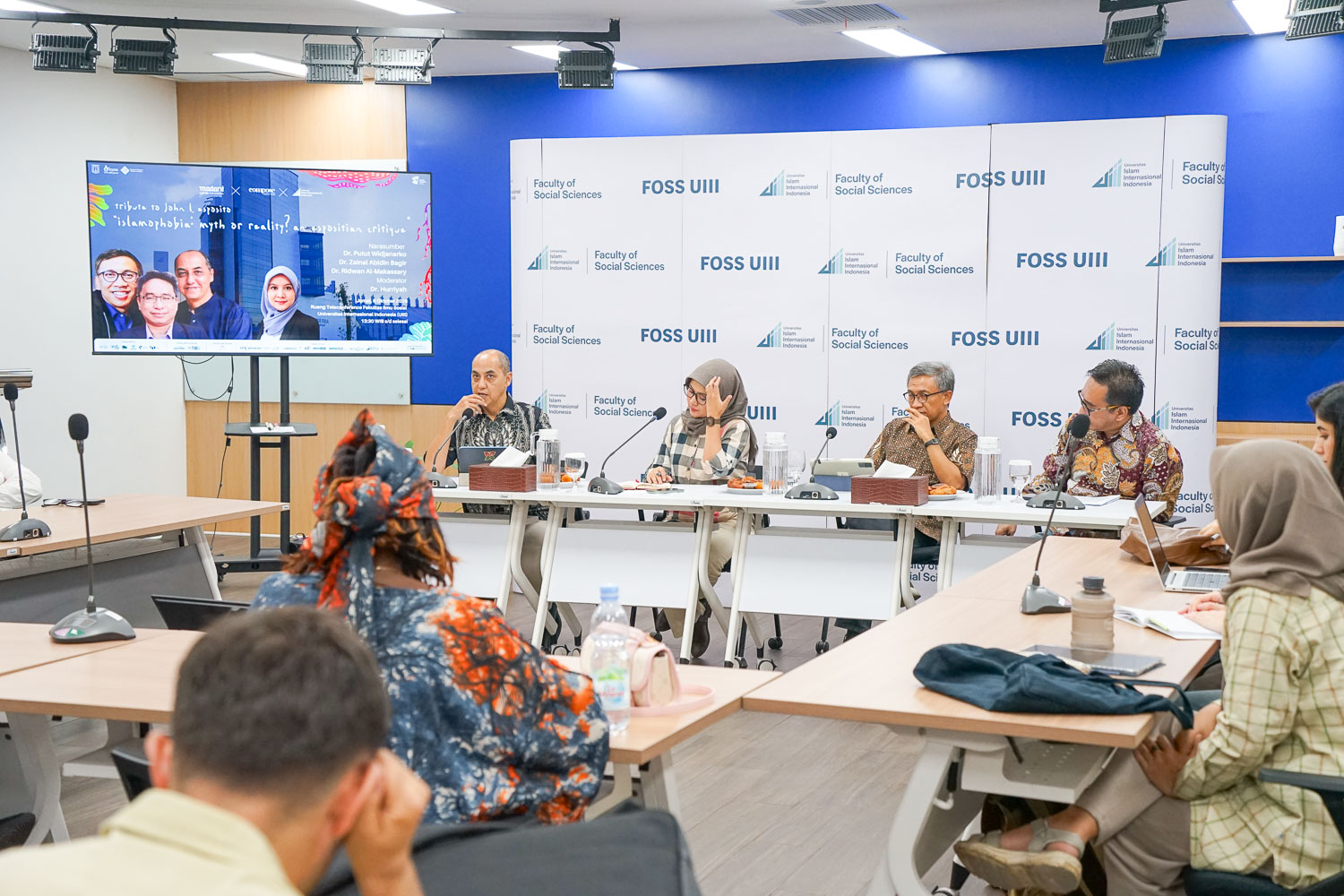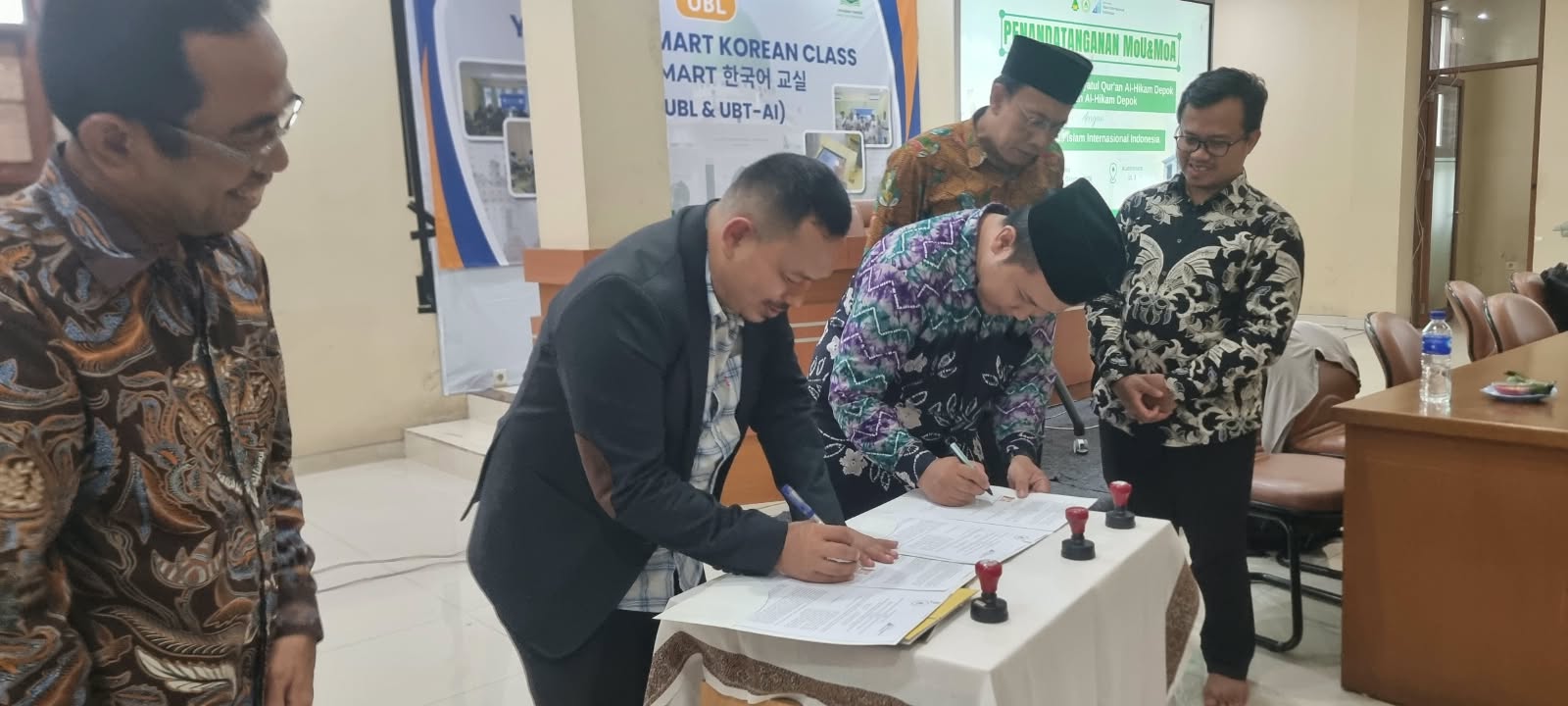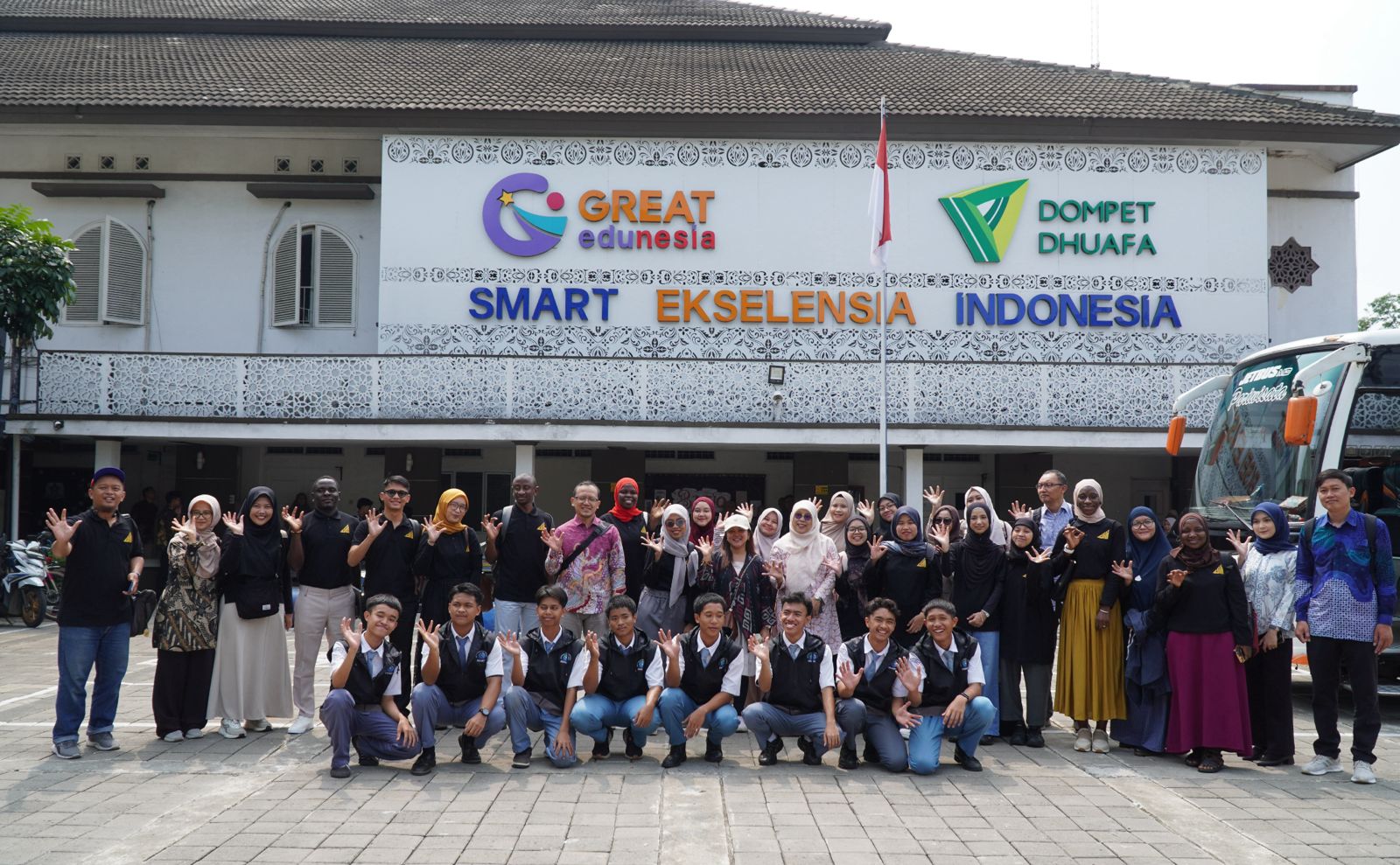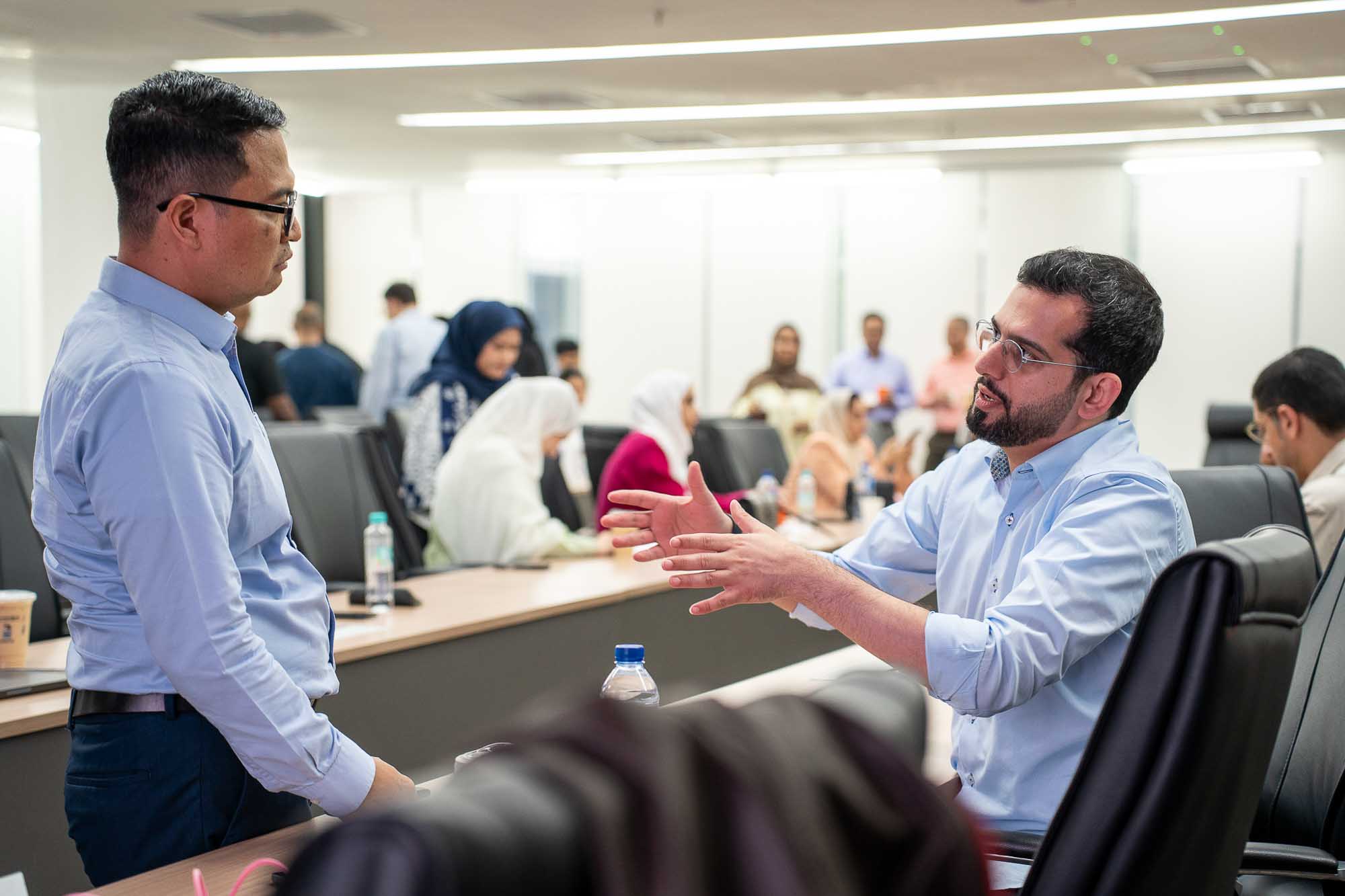
Depok, 7 May 2026. On Thursday afternoon, the Faculty of Economics and Business (FEB) at Universitas Islam Internasional Indonesia (UIII) hosted a delegation of professors and students from the Executive MA International Business and Policy (IBP) Program, McDonough School of Business, Georgetown University, at Lecture Hall Faculty B. The Executive IBP program is delivered in Dubai, United Arab Emirates, with the visiting cohort drawn largely from senior professionals and C-level executives based in the region. Their stop at UIII formed part of a three-day visit to several Indonesian companies, designed to give participants a direct view of Indonesia’s industrial landscape.
The first day brought the delegation to two Indonesian digital firms, WIR and Anantarupa Studio, developer of the locally produced mobile game Lokapala. On the second day, the group visited Panasonic, located near the UIII campus, before arriving at UIII for an academic session. The third day brought them to Great Giant Foods (GGF), producer of Sunpride bananas and pineapples and the Rejuve beverage line, whose Lampung plantation operates with drones and artificial intelligence to monitor crop quality.
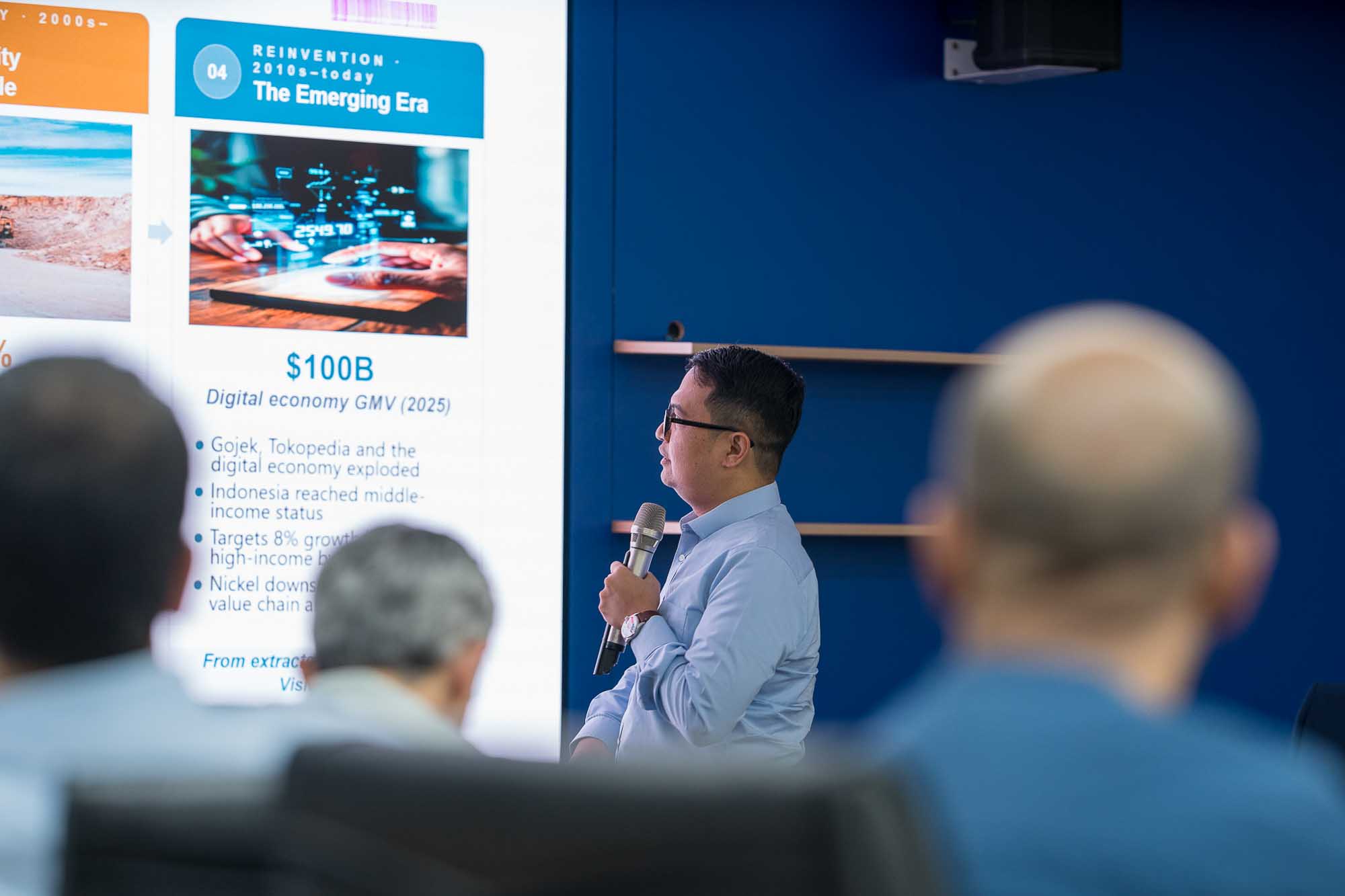
Reflecting on the three days, Teguh Yudo Wicaksono, PhD, Dean of FEB UIII, who accompanied the delegation throughout, observed that the firms visited mapped onto distinct phases of Indonesia’s economic trajectory. Panasonic represented the industrial peak of the early 1990s, when manufacturing absorbed labor on such a scale that Indonesia briefly faced labor shortages, while Anantarupa and GGF point to where Indonesia’s emerging sectors, gaming and smart farming, may lie. Today, the industrial sector contributes only around 19 percent to Indonesia’s economy, well behind Vietnam’s 37 percent.
At UIII, Teguh Yudo delivered a lecture titled “The Indonesian Economy in the Era of Globalization: A Historical Analysis of Growth, Crisis, and Structural Transformation.” Drawing on four decades of data, he framed Indonesia’s experience as a sequence of boom, bust, recovery, and reinvention. The arc moved from the “New Tiger” era of the 1980s and 1990s, through the 1997-98 Asian Financial Crisis when GDP contracted by 13.1 percent, into the post-Reformasi commodity supercycle that brought public debt down from 56 percent to 23 percent of GDP, and onward to the current reinvention phase anchored by digital platforms, nickel downstreaming, and the Vision 2045 agenda. Heading into 2026, the Indonesian economy grew by 5.11 percent in 2025 and 5.61 percent in the first quarter of 2026, with inflation contained at around 2 percent.
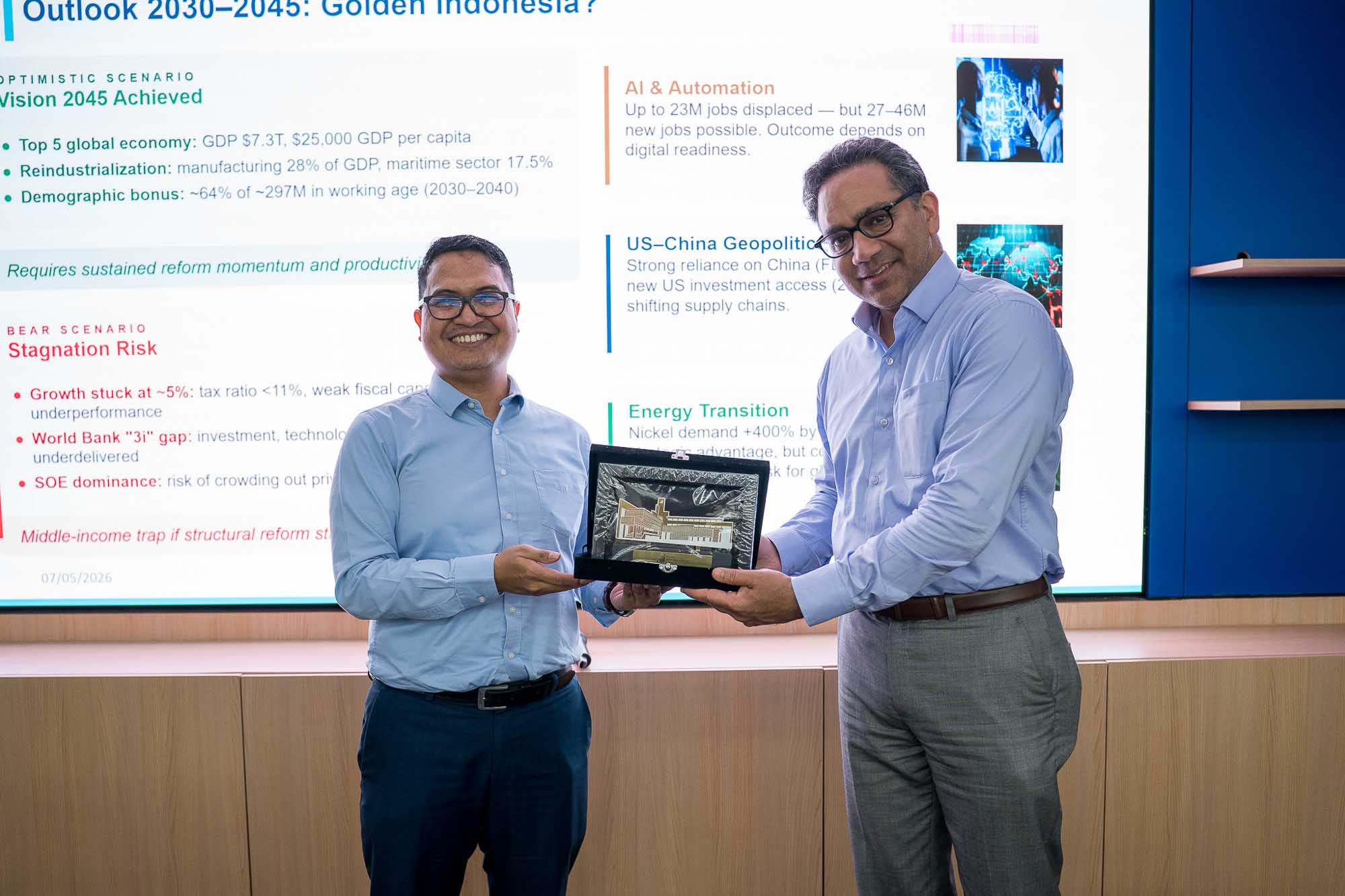
The lecture also turned to Indonesia’s bilateral economic relations with the United Arab Emirates, with particular attention to the Indonesia-UAE Comprehensive Economic Partnership Agreement (IUAE-CEPA), a thread of direct relevance to the Dubai-based delegation. Effective since September 2023, the agreement has eliminated tariffs on more than 90 percent of trade lines, accelerating bilateral trade from USD 3 billion in 2020 to USD 6.4 billion in 2025, with a target of USD 10 billion by 2027. Around 198 Indonesian firms now have a presence in Dubai, with emerging frontiers including renewable energy, the halal economy, digital trade, and food security.
The visit reaffirms UIII’s commitment to international academic exchange and to positioning the Faculty of Economics and Business as a space where global perspectives meet Indonesian context, preparing the next generation of scholars and practitioners to navigate Indonesia’s place in a rapidly changing global economy.