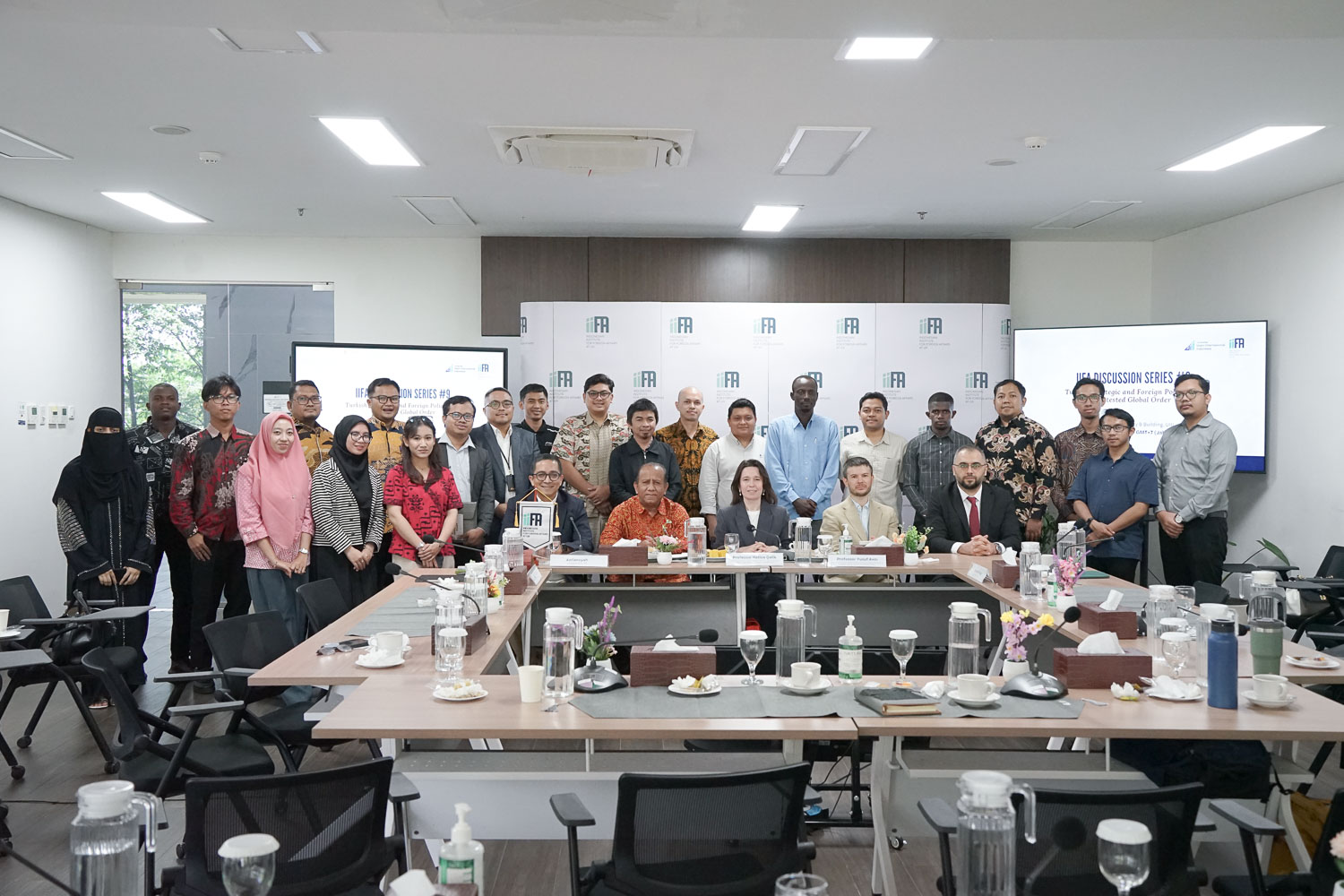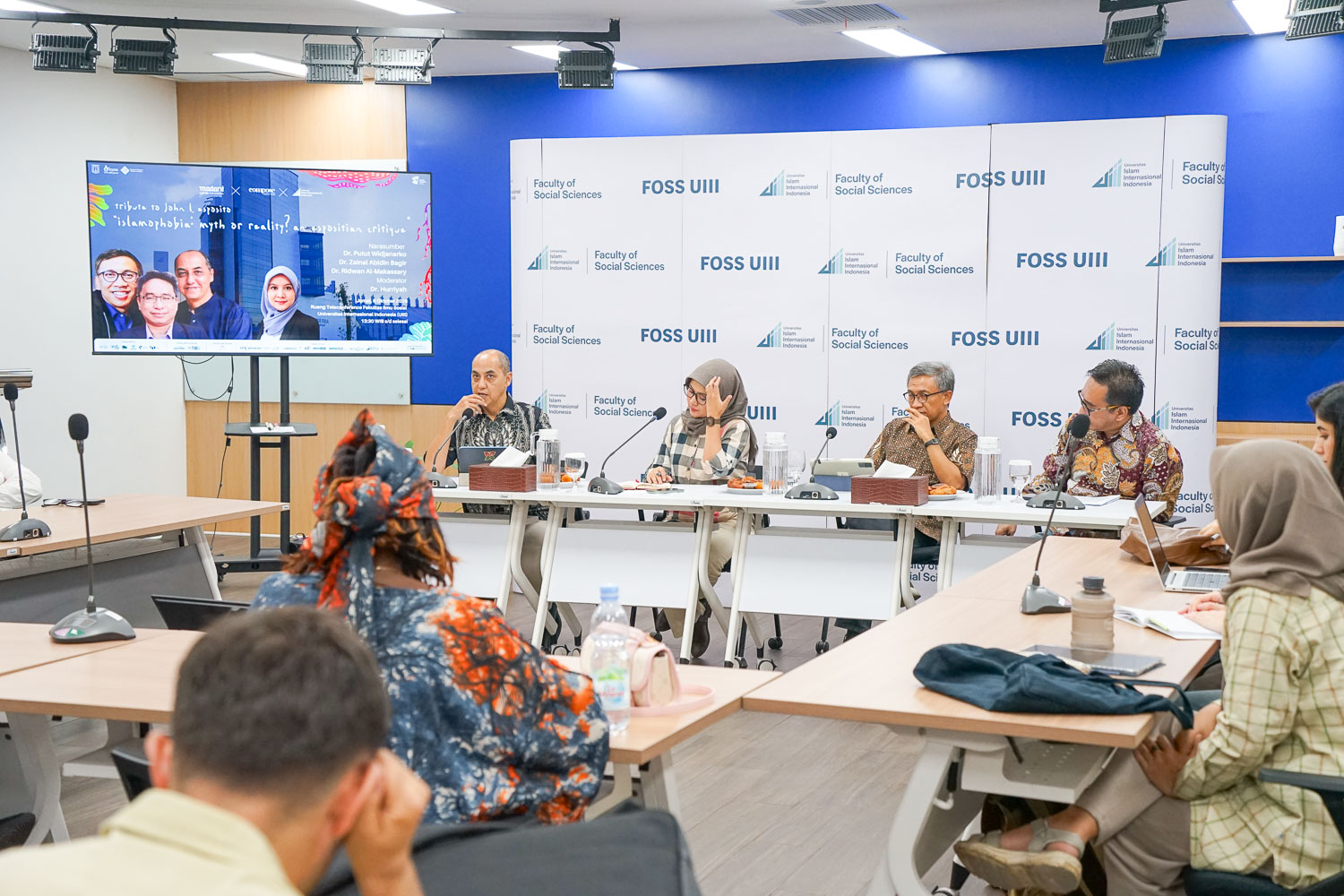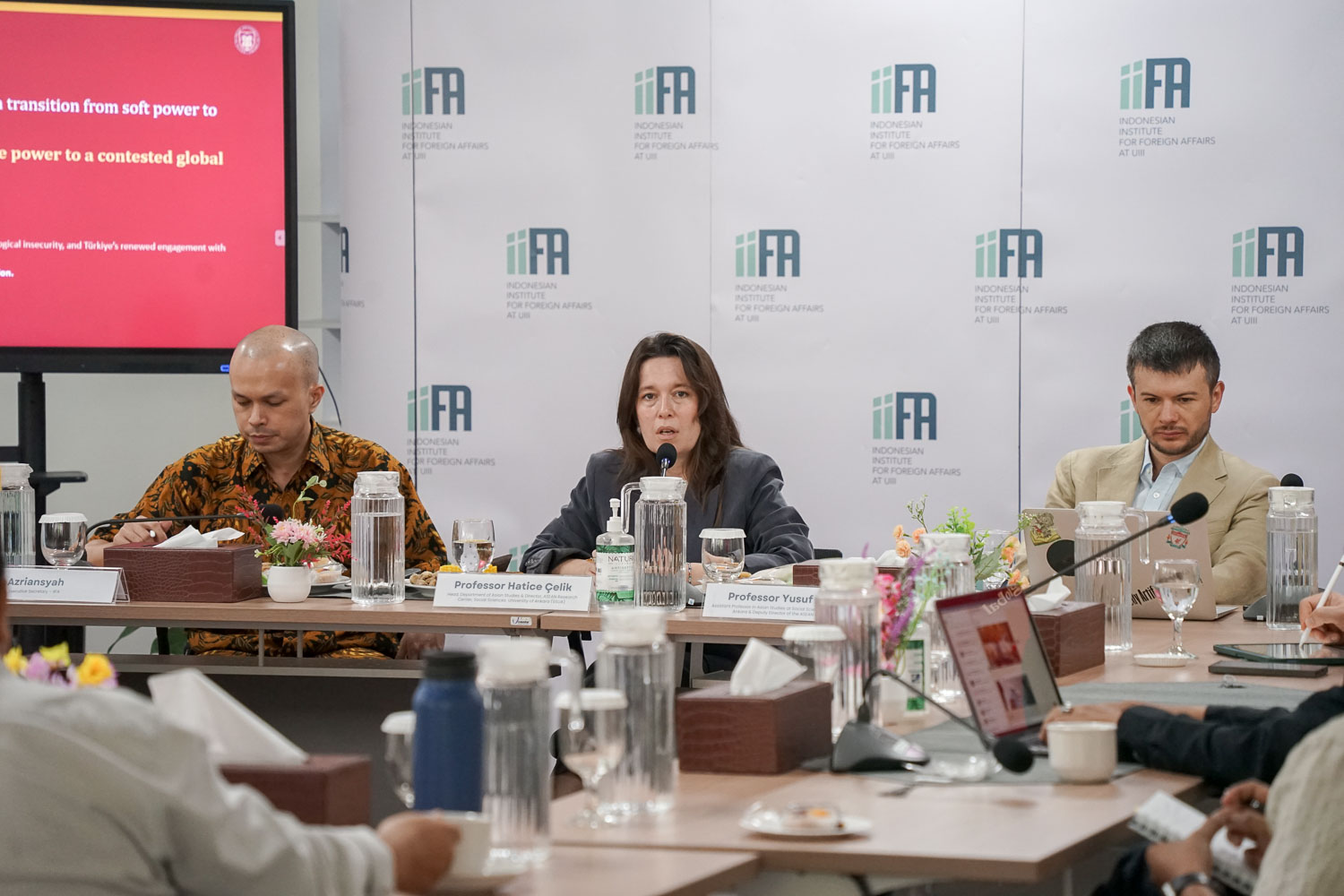
Depok, July 1, 2026 – The Faculty of Social Sciences (FOSS), Universitas Islam Internasional Indonesia (UIII), in collaboration with the Indonesian Institute for Foreign Affairs (IIFA), organized an international lecture on contemporary Turkish foreign policy, featuring Prof. Dr. Hatice Çelik and Prof. Dr. Yusuf Avcı. The event brought together academics, diplomats, students, and members of the public to discuss Türkiye’s strategic adaptation to an increasingly complex international order.
Representing the Embassy of the Republic of Türkiye, the opening remarks expressed appreciation to the leadership and academic community of FOSS UIII for hosting the event. The Embassy also thanked Prof. Yusuf Avcı and Prof. Hatice Çelik for visiting Indonesia and emphasized the importance of strengthening academic exchanges between Indonesia and Türkiye in promoting global peace and justice.
In her keynote presentation, Prof. Hatice Çelik argued that contemporary Turkish foreign policy cannot be understood without first examining the transformation of the international system. She described the concept of a “contested global order” as the key framework for understanding Türkiye’s foreign policy evolution.
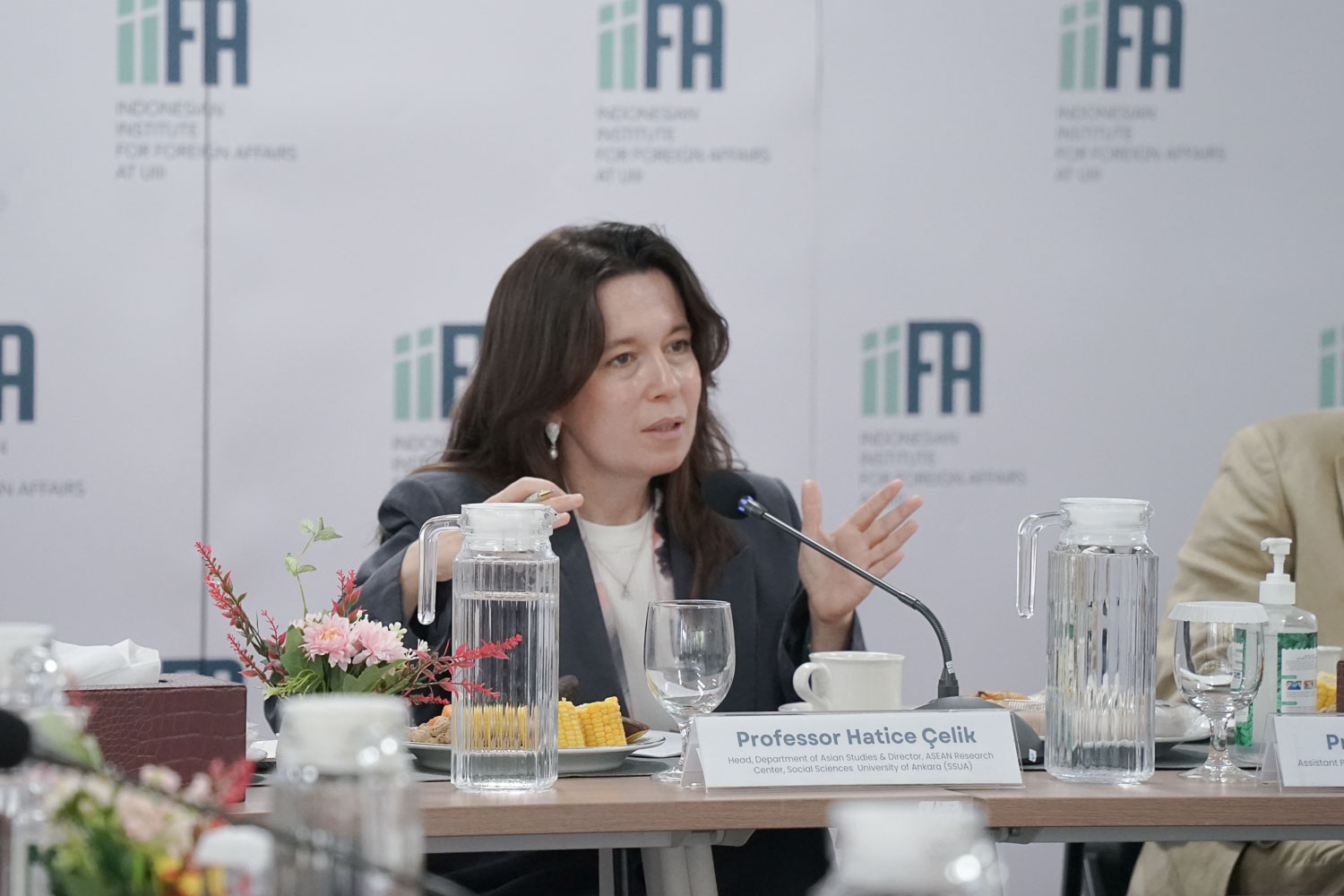
According to Prof. Çelik, the global order has become increasingly complex, marked by the return of great-power competition, the securitization of economic interdependence, the restructuring of global supply chains, the global energy transition, and regional conflicts whose impacts extend far beyond their immediate regions. Rather than representing a simple shift toward a more dangerous world, these developments reflect a more interconnected and uncertain international environment.
Against this backdrop, she explained that Türkiye’s foreign policy since 2015 should be viewed as a process of strategic adaptation, rather than a radical change in direction. Strategic autonomy, greater reliance on hard power, evolving geopolitical visions, and the search for a new international role are not separate developments, but interconnected dimensions of the same transformation.
Prof. Çelik also highlighted the growing importance of connectivity in international politics. While geography remains important, she argued that strategic influence today increasingly depends on a country’s ability to connect regions, markets, institutions, technologies, and global value chains. Situated at the crossroads of Europe, the Black Sea, and the Mediterranean, Türkiye has leveraged its geographic position to strengthen its role as a connector across multiple geopolitical spaces.
Addressing security issues, Prof. Çelik emphasized that hard power is an instrument, not the strategy itself. Türkiye’s expanding defense industry and military cooperation network, she explained, are designed to increase strategic autonomy by reducing external dependencies, broadening international partnerships, and strengthening institutional cooperation. She noted that Türkiye has evolved from being a recipient of military assistance into a provider of defense cooperation, military training, and institutional capacity building.
The lecture also examined Türkiye’s Asia Anew Initiative, which Prof. Çelik described as a strategy of diversification rather than substitution. Instead of replacing relations with Europe and NATO, the initiative seeks to expand Türkiye’s engagement with ASEAN, the Indo-Pacific, and Asian institutions while maintaining its existing partnerships with Western allies. This diversified approach, she argued, enables middle powers to navigate today’s geopolitical landscape through multiple partnerships rather than exclusive alliances.
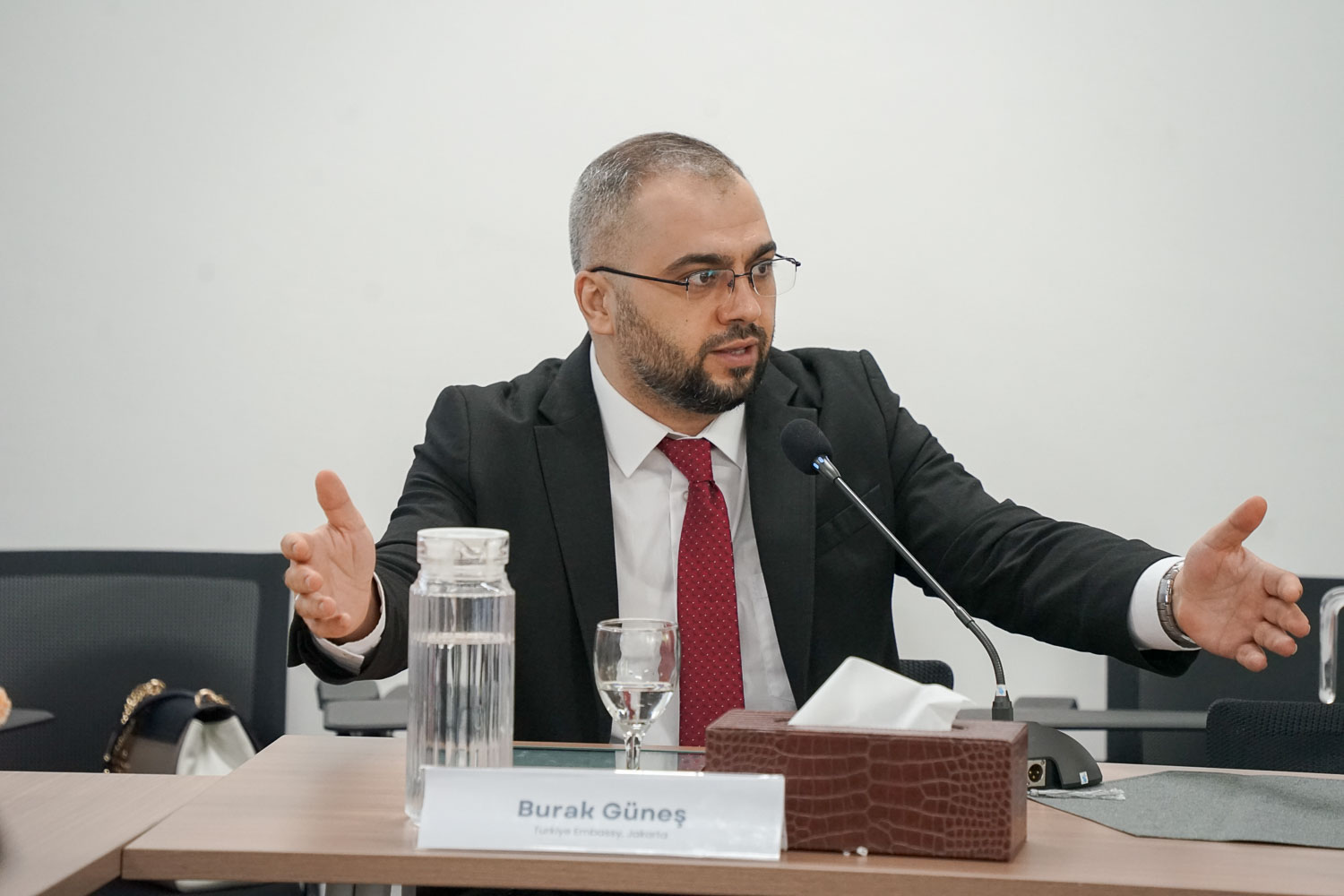
Complementing the discussion, Prof. Yusuf Avcı highlighted how traditional state-centric models are no longer sufficient to explain post-Cold War foreign policy. Whereas diplomacy was once viewed primarily as interactions between governments, today’s international relations increasingly involve universities, businesses, non-governmental organizations (NGOs), and citizens. This multi-track and multi-layered diplomacy, he argued, reflects an international order that has not collapsed, but has become increasingly contested and interconnected.
The discussion was moderated by Aziansyah, Executive Secretary of the Indonesian Institute for Foreign Affairs (IIFA), who guided an engaging exchange between the speakers and participants. The event concluded with an interactive question-and-answer session, during which participants enthusiastically raised questions on Türkiye’s perspectives regarding contemporary global security challenges, the evolving world order, and the country’s strategic responses to ongoing geopolitical developments.
The lecture was attended by Prof. Chaider S. Bamualim, Secretary of UIII, and Phillips J. Vermonte, Ph.D., Dean of the Faculty of Social Sciences. Participants also included faculty members from the Faculty of Islamic Studies and the Faculty of Education, students from various study programs across UIII, as well as members of the public. The diverse audience and lively discussion reflected the growing interest in understanding the dynamics of global governance and Türkiye’s evolving role in international affairs, while reaffirming UIII’s commitment to fostering international academic dialogue and cross-border scholarly collaboration.