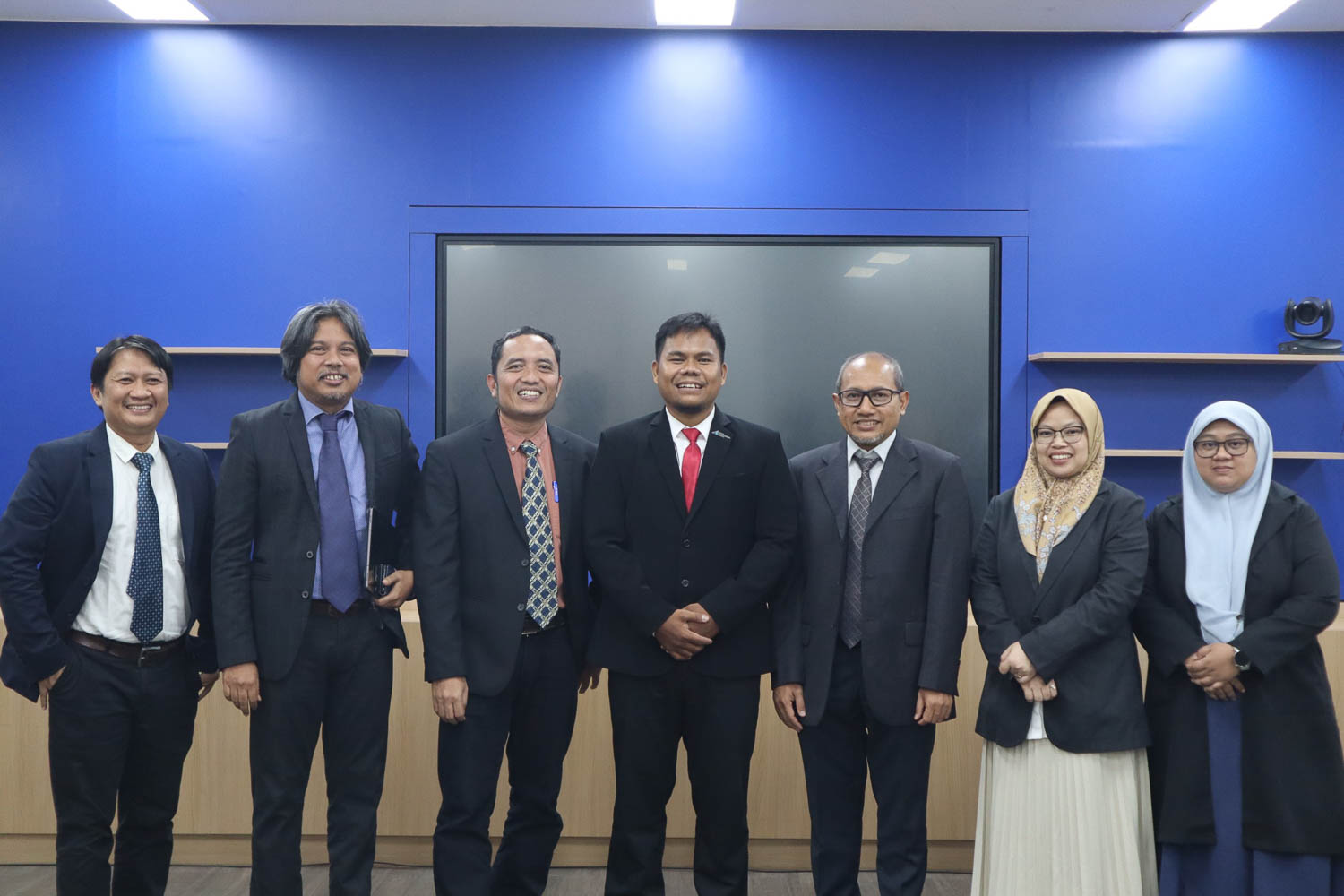
DEPOK, Indonesia — When Muhammad Fakhrul Arrazi entered the doctoral defense room at Universitas Islam Internasional Indonesia (UIII) on 23 June 2026, he brought with him more than a dissertation. He carried the aspirations of a teacher, the experiences of a madrasah educator, and a journey that reflects the very mission upon which UIII was founded.
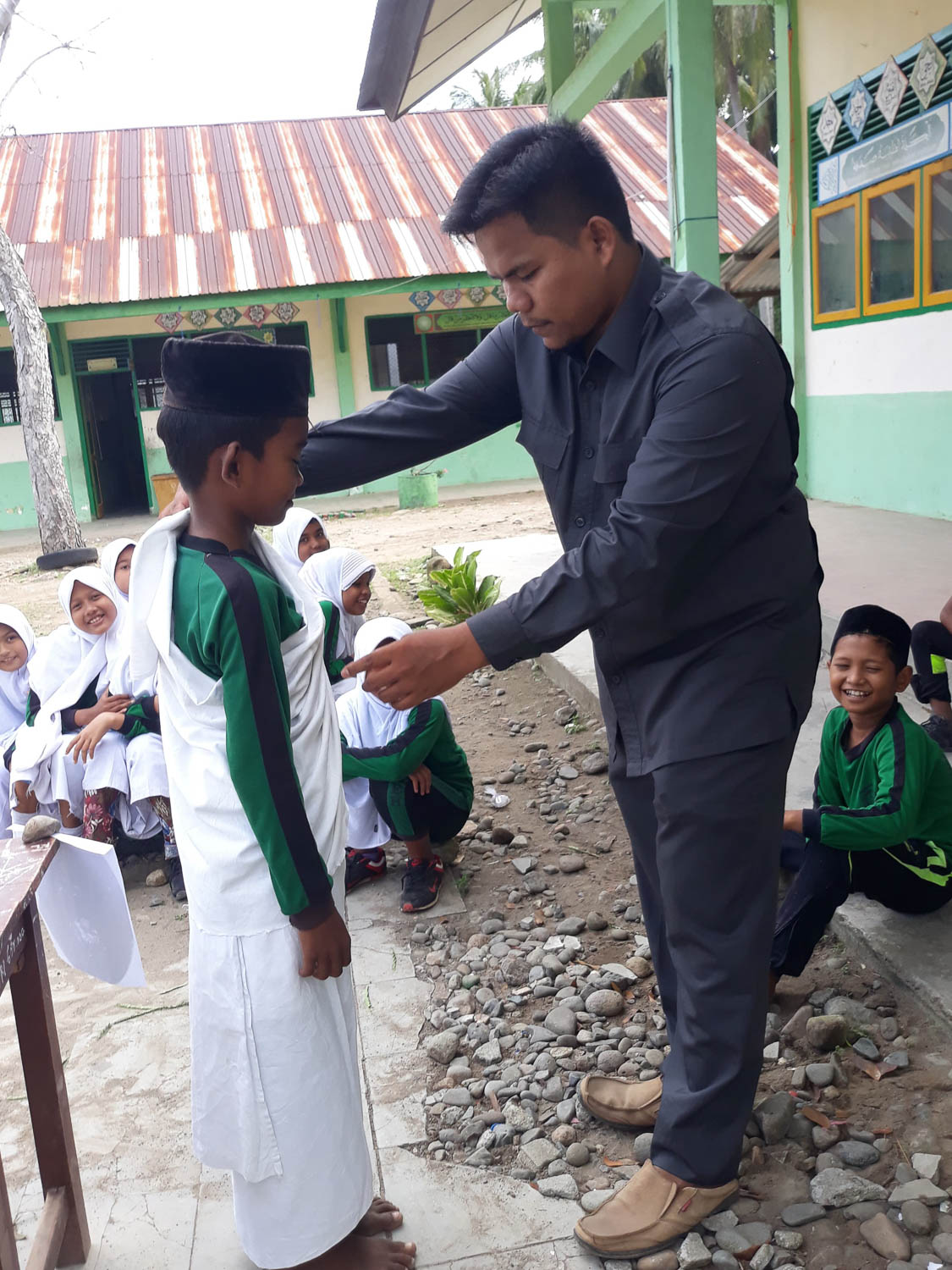
For years, Fakhrul has served as a teacher of Islamic jurisprudence (fiqh) at MIN 33 Bireuen, a public Islamic Elementary School in Aceh. While dedicating himself to educating young students, he also pursued a path of scholarly inquiry that would eventually take him across some of the Muslim world’s most prominent academic institutions. After completing his undergraduate studies at Al-Azhar University in Cairo and earning a master’s degree in Islamic Economics from the University of Malaya, he chose UIII as the next destination in his academic journey.
That journey reached an important milestone when he successfully defended his doctoral dissertation, titled “Making an Islamic Economy: A Study on Fatwas on Religious Authority, Fiqh Interpretation, and Contestation.”
The dissertation examines how fatwas, religious authority, and competing interpretations of Islamic law shape contemporary efforts to construct and legitimize Islamic economic systems. Situated at the intersection of Islamic studies, law, and economics, the research contributes to growing scholarly conversations on the role of religious knowledge in shaping public life and economic transformation in Muslim societies.
Supervised by Dr. Phil. Syafiq Hasyim and Prof. Dr. Syamsul Rijal, the study reflects UIII’s commitment to rigorous interdisciplinary scholarship that engages both Islamic intellectual traditions and contemporary global challenges.
Yet Fakhrul’s achievement represents more than academic excellence. It exemplifies a core vision of UIII: creating pathways through which talented individuals from diverse regions and professional backgrounds can participate in global scholarly conversations while remaining deeply connected to their communities.
From Local Service to Global Scholarship
One of the defining characteristics of UIII is its commitment to nurturing scholars whose intellectual pursuits are grounded in real-world experience. Many of its students arrive not only as academics, but also as educators, civil servants, religious leaders, development practitioners, and professionals committed to serving society.
Fakhrul’s story illustrates this model. Throughout his academic journey, he remained connected to the educational realities of Aceh. His experience as a teacher informed his scholarly perspective, while his advanced research expanded his capacity to contribute to intellectual and social development in his home region.
This connection between local engagement and global scholarship lies at the heart of UIII’s educational philosophy. The university seeks not merely to produce graduates with advanced degrees, but to cultivate knowledge leaders capable of bridging communities, institutions, and intellectual traditions.
A Meeting Point
Fakhrul’s academic trajectory—from Cairo to Kuala Lumpur and finally to Depok—also highlights UIII’s growing role within the global landscape of Islamic higher education.
As Indonesia’s international graduate university dedicated to Islamic studies and related disciplines, UIII was established to serve as a meeting point for scholars, ideas, and traditions from across the world. Students and faculty engage with diverse intellectual perspectives while addressing contemporary issues that transcend national boundaries.
In this environment, research is encouraged to move beyond disciplinary silos and engage broader questions facing Muslim societies today, including governance, law, economics, sustainability, education, and social transformation.
Fakhrul’s dissertation is one example of how UIII students contribute to these conversations through research that is academically rigorous, socially relevant, and globally informed.
Knowledge that Returns to Society
Perhaps the most significant aspect of Fakhrul’s journey is what comes next.
As a teacher who has attained the highest academic qualification, he represents a model of scholarship that does not end at graduation. Rather, it returns to society through teaching, mentorship, community engagement, and intellectual leadership.
His achievement demonstrates that world-class scholarship can emerge from every corner of Indonesia and that local educators can become contributors to international academic discourse without losing sight of the communities they serve.
For UIII, this is precisely the outcome envisioned by its founders: a university that empowers individuals to engage the world while remaining committed to the advancement of their societies.
From a classroom in Bireuen to a doctoral defense at an international university, Muhammad Fakhrul Arrazi’s journey is a testament to the transformative power of education. It is also a reminder that when local dedication meets global opportunity, knowledge becomes a force for meaningful change. []