November 23, 2026
By Achmad Jatnika
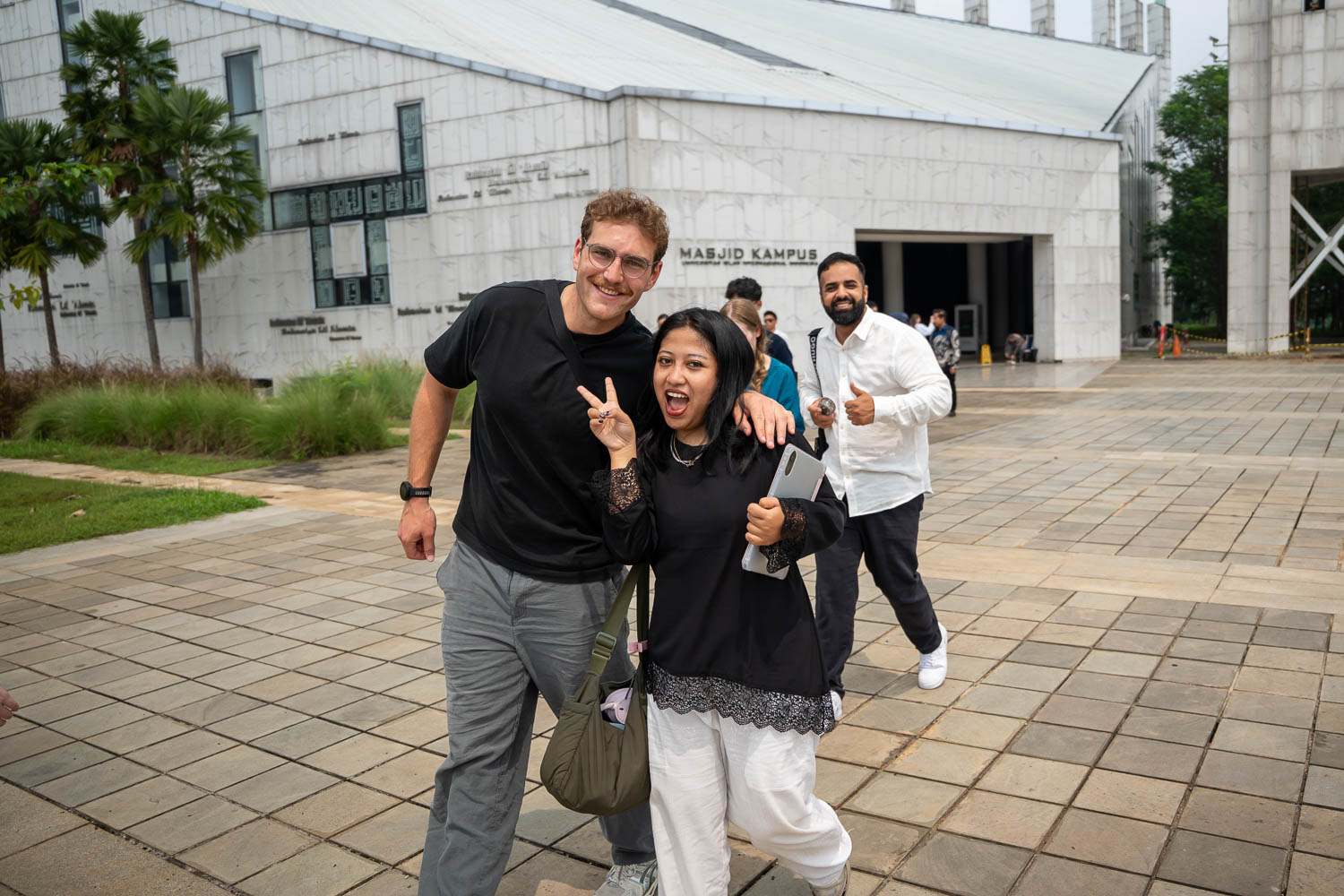
Depok – For a group of Australian university students, a study tour of Indonesia has turned into something far larger than a comparison of legal systems. After a lecture on the history of Islam in Indonesia on Thursday, November 19, 2026, the students described a country that defied their expectations: greener than imagined, deeply diverse, and home to a faith that spread through persuasion rather than force.
The students, from Deakin University in Melbourne and the University of Western Sydney, have spent their visit meeting judges, touring courts and attending lectures on how religion and law intersect in the world’s largest Muslim-majority country at Universitas Islam Internasional Indonesia (UIII).
For Elias, a visiting Deakin student, the lecture’s most striking idea was that Islam’s place in Indonesian law and cultural identity grew from changing values in society, not from conquest. He contrasted that with Australia’s own history, shaped by colonization. “It’s come through persuasion,” he said, rather than through force.
That theme of adaptability ran through several students’ reflections. Soja, who is studying law and commerce at Deakin, said she learned how the many religions already present in Indonesia helped shape the way Islam is practised there. Leon, from Sydney, pointed to the tradition of the Nine Saints, one of whom, he said, adjusted a religious practice out of respect for Hindu culture.
For the Muslim students in the group, the lessons were also personal. Soja said it was moving to learn that her faith can be so adaptable. Leon said the experience offered a new perspective on Islam that helped him grow and changed him as a person.
The legal side of the tour has been just as eye-opening. Sarah, a Deakin student, said the group visited the religious court, the Supreme Court and the district court, giving them a close look at how Indonesia’s system differs from Australia’s.
Australia has no religious court, she noted, so seeing Sharia law applied in practice was especially interesting as a Muslim. Elias was equally struck by the people behind the system, describing the many female judges and lawyers he met as having “incredible careers” and “brilliant legal minds,” and saying the experience reshaped his understanding of women’s roles in Islam in Indonesia.
Outside the lecture hall, Leon, who lives in Sydney, said he expected Indonesia to feel as busy as any big city, and was surprised by how green the country is. He was also taken aback by the sheer size of the university and the beauty of the mosque on its new campus.
As the tour continues, the students say they are leaving with gratitude and fresh perspective. “Thank you so much for having us,” Soja said, a sentiment echoed by all four.
