
Antalya, Türkiye — The nickel smelters of Morowali and the tin mines of Belitung have become test cases for a question now echoing through global climate talks: when the world rushes to build a clean-energy future, who actually captures the value?
Two lecturers from Universitas Islam Internasional Indonesia (UIII) — Rima Prama Artha, Ph.D. of the Faculty of Economics and Business, and Sirojuddin Arief, Ph.D. of the Faculty of Social Sciences — brought that question to the 31st United Nations Climate Change Conference (COP31) in Antalya, Türkiye, held from 10 to 12 November 2026. Both are members of KOMITMEN UIII, the university’s climate and economic policy research initiative.
Hosted by Türkiye from 9 to 20 November, COP31 gathers the 197 Parties to the UN Framework Convention on Climate Change and close to 100,000 participants. Under the slogan “From Consensus to Concrete Action,” the summit is framed as an implementation-focused meeting, with green industrialisation, the clean energy transition, and climate-resilient cities on its agenda.
A Panel, Three Continents, One Question
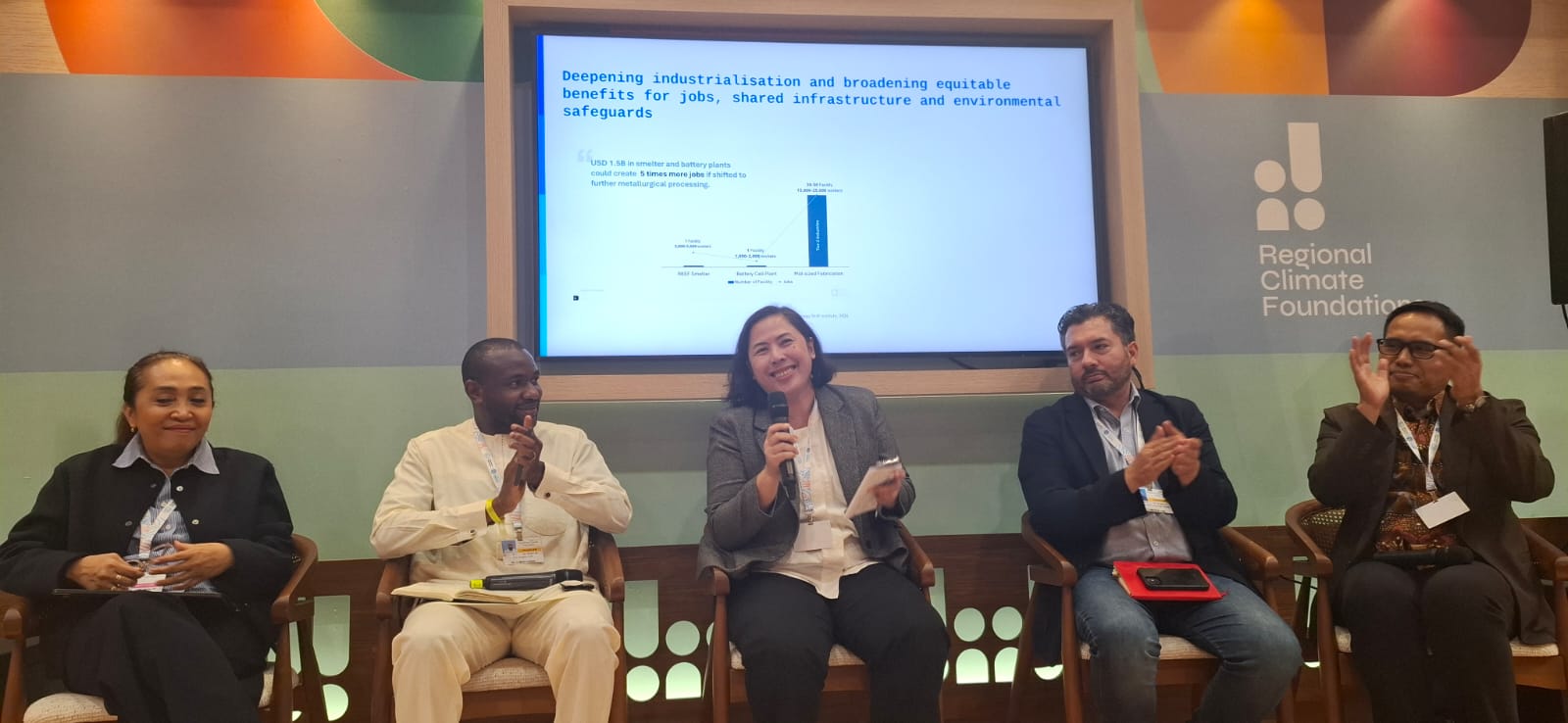
On Thursday, 12 November, Dr. Rima moderated the panel “Green Industrialisation and Critical Minerals Governance,” organised by the Center of Reform on Economics (CORE) Indonesia at the Regional Climate Foundations Pavilion in the Blue Zone. The one-hour session drew speakers from three continents: Mohammad Faisal, Executive Director of CORE Indonesia; Zira Quaghe, Deputy Head of Programmes at the African Climate Foundation; Jorge Villarreal of Iniciativa Climática de México; and Suzanty Sitorus, Executive Director of ViriyaENB.
What emerged was a portrait of three countries grappling with the same paradox. Faisal presented field findings from Morowali and Belitung, where Indonesia’s 2020 ban on raw nickel ore exports has drawn large investment — but where links to local businesses, local jobs, and returns to regional budgets remain limited. Quaghe described Africa’s patchwork of instruments across producing countries. Villarreal explained Mexico’s decision to bring lithium under state control. Sitorus tied the cases together, noting that many processing parks still run on coal.
Beyond the Panel
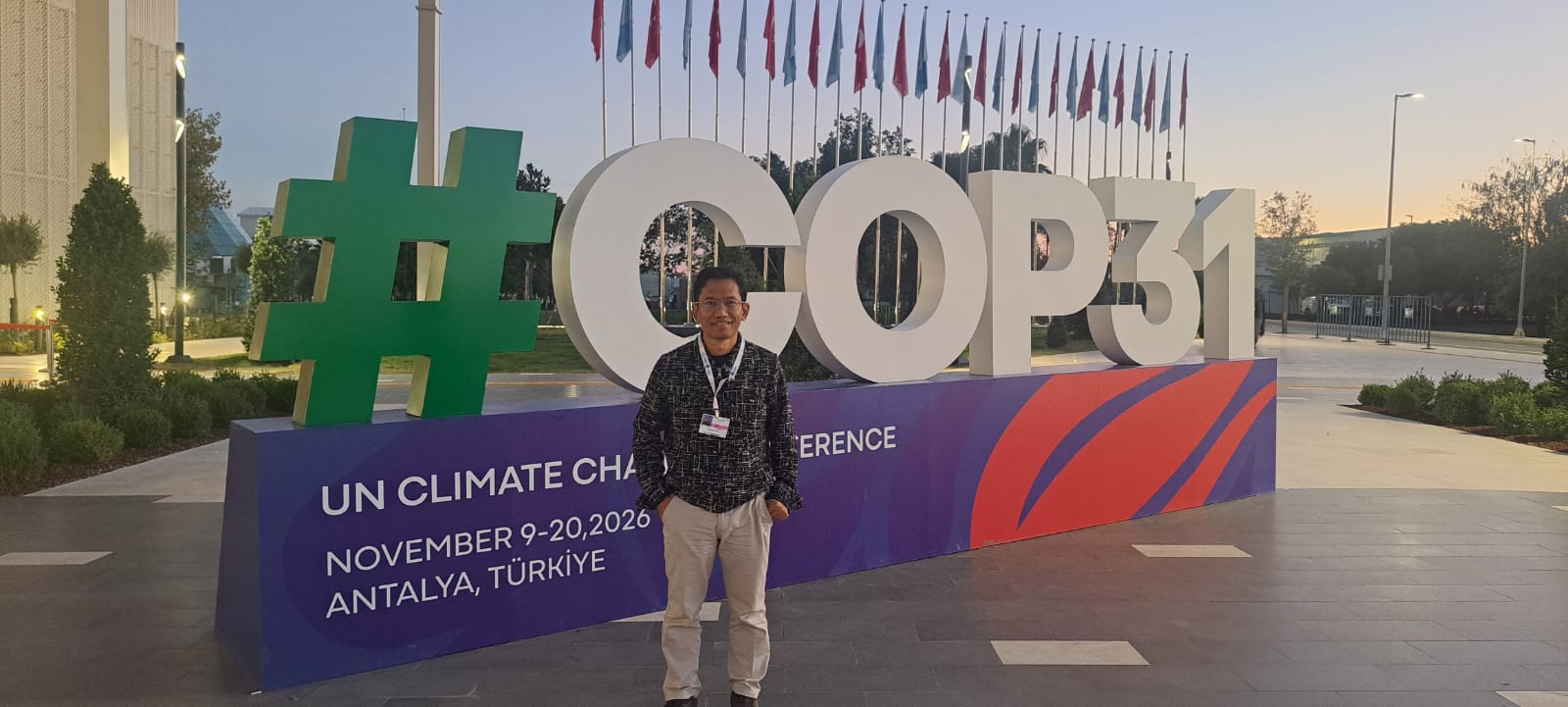
For UIII, the appearance in Antalya reflects a broader ambition: research that speaks to policy, at home and abroad. The themes discussed — critical minerals, green industrial policy, climate finance — sit at the heart of the KOMITMEN UIII Research Initiative, which unites researchers from FEB and FoSS.
Dr. Rima also attended sessions on Indonesia’s carbon market potential and on circular trade rules at the Finland Pavilion. Dr. Arief joined discussions on water and adaptation policy, including panels convened by UN Water and by SIWI and UNEP at the Water for Climate Pavilion. Both shared findings from the KOMITMEN initiative with fellow participants.
As COP31 seeks to turn commitments into concrete action, UIII’s presence in Antalya was a reminder that the most consequential climate questions are often about who benefits — and that Indonesian and Global South perspectives belong in that conversation. []