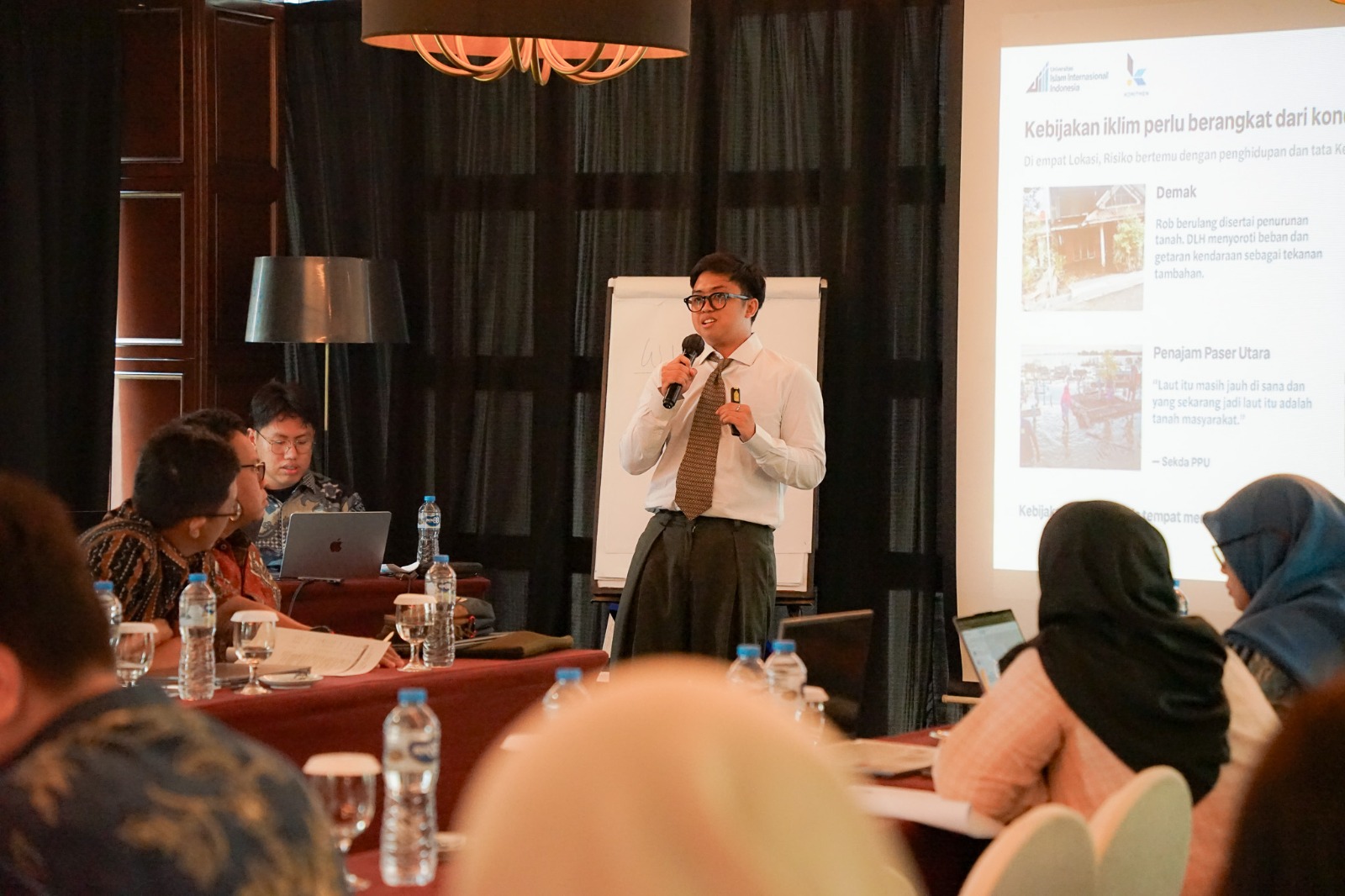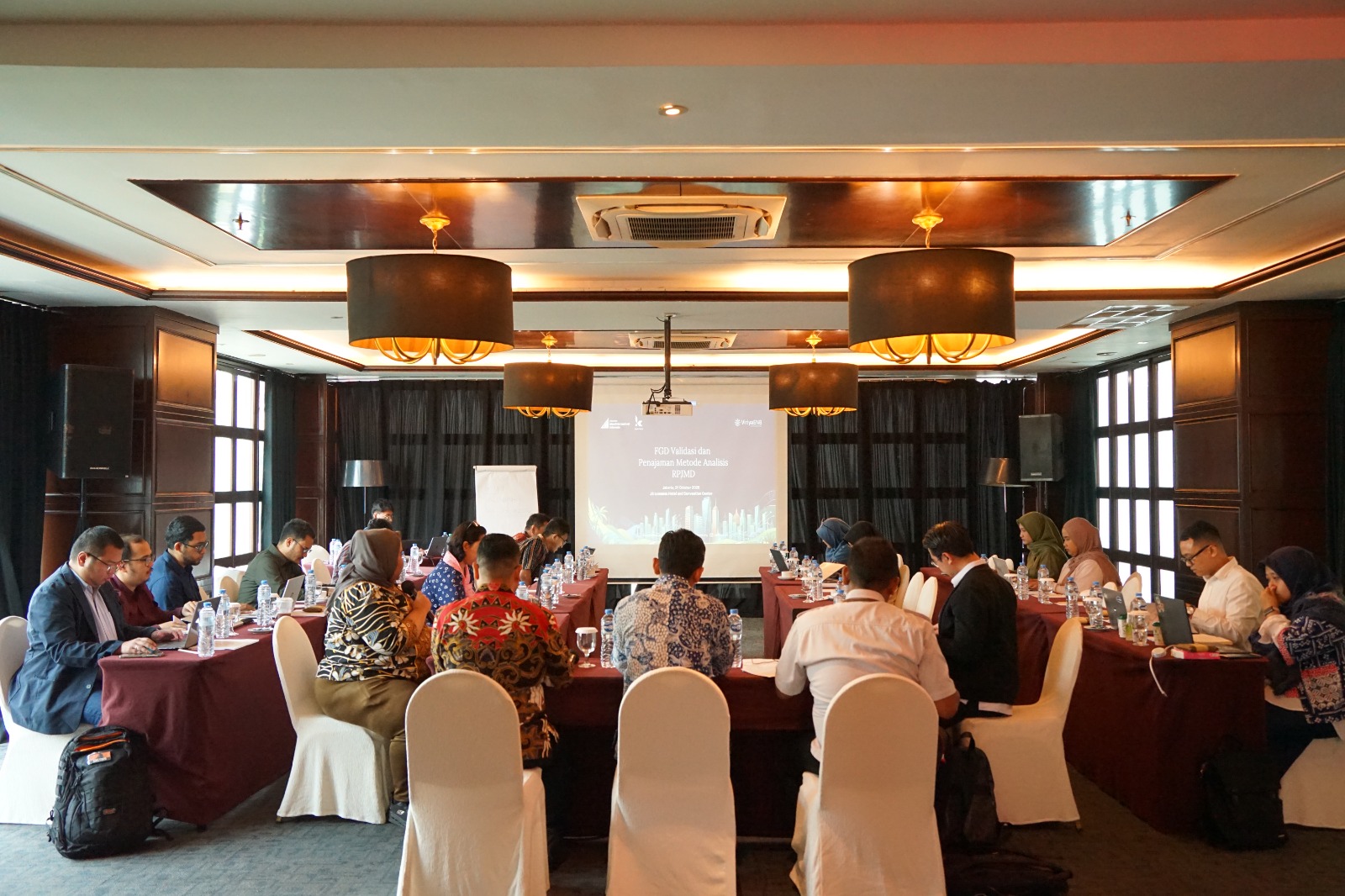
JAKARTA – The Indonesian International Islamic University (UIII), through its KOMITMEN Program, held a focus group discussion at the JS Luwansa Hotel, Jakarta, on Wednesday (21/10) to refine AI-assisted analysis of regional medium-term development plans (RPJMD). The forum gathered input on preliminary findings to support climate-responsive planning and the energy transition.
KOMITMEN, a research initiative of UIII’s Faculty of Economics and Business and Faculty of Social Sciences, examined how climate priorities translate into programs, measurable targets, and funding.
The event began with welcoming remarks by KOMITMEN Program Lead Teguh Yudo Wicaksono, Ph.D. The discussion then continued with Sirojuddin Arif, Ph.D., KOMITMEN’s Lead Political Scientist, outlining a research agenda attentive to regional needs, inclusive growth, and affected workers and industries. The forum also sought regional input on how the research could better reflect local planning priorities, financing needs, and differences in institutional responsibilities.
Building on this regional focus, Arief Fibriyanto, M.Si., a legal analyst at the Ministry of Home Affairs’ Directorate for the Synchronization of Regional Government Affairs I, outlined the alignment of national priorities with regional plans. Coordination and clear responsibilities were central to translating priorities into implementable programs.
Offering a provincial perspective, Rama Magrahana, M.T., Head of Strategic Planning and Development Funding at Jakarta’s Bappeda, described how technical assessments, public input, and the governor’s priorities inform Jakarta’s RPJMD, connecting long-term ambitions with basic services and environmental resilience.
The session on research findings and stakeholder feedback began with KOMITMEN researcher Muhammad Maulidan, M.A., outlining three approaches: topic modeling across 60 RPJMDs in seven regions, funding mapping in six East Kalimantan annual development plans (RKPD), and the SETARA framework covering 61 RPJMDs. AI outputs required researchers to check evidence and interpretations.
The adaptation-focused topic analysis found that flooding accounted for 20.8 percent and extreme weather for 18.5 percent of 2,592 diagnostic paragraphs. These findings describe planning content, rather than implementation or effectiveness.
Preliminary RKPD mapping identified IDR 464.26 billion in indicative allocations associated with adaptation and IDR 213.98 billion with mitigation across six East Kalimantan regions in 2023. Water and waste services accounted for much of the mapped funding. These were planned activity allocations, not realized expenditure or separately calculated climate-related costs.
Meanwhile, SETARA combined eight criteria and five AI assessors to examine policy directions in West Java, East Nusa Tenggara, and South Sumatra. Preliminary examples distinguished obstructive policies from cases where evidence had not been found.
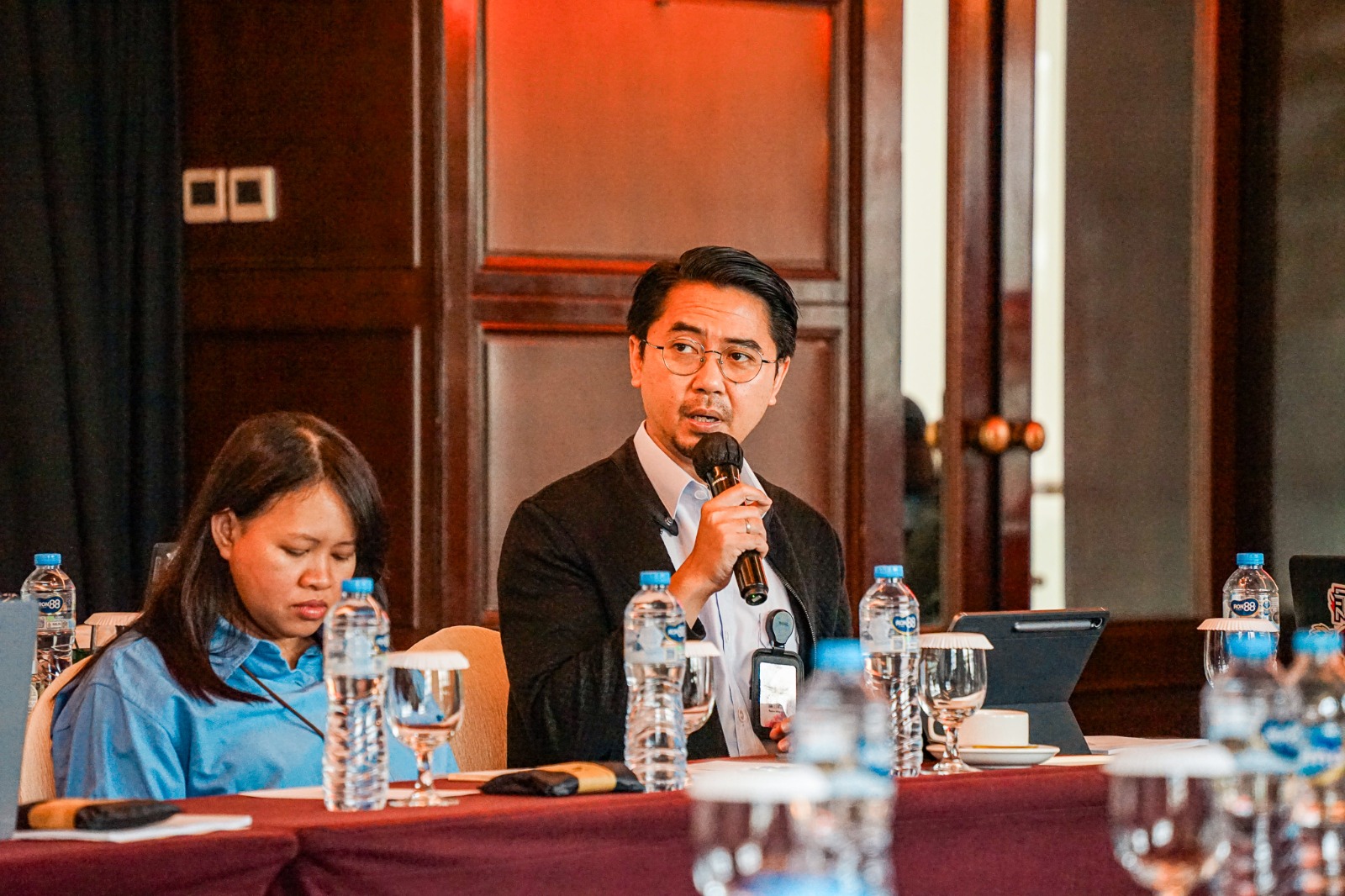
Addressing this distinction, KPPOD Executive Director Armand Suparman, M.Si., recommended clearer assessment categories, attention to regional responsibilities, and verification of incomplete evidence. Public participation and stronger planning-budget links could help turn issue mapping into practical policy guidance.
This concern also informed comments from Yulianto Adi Setyawan, S.T., a senior planner at Pekalongan Regency’s Bapperida. Forestry and coastal flooding illustrated how local problems may require provincial or central action. Recommendations included examining agency strategies, annual plans, and Bappenas’ AKSARA data alongside RPJMDs to inform coordination.
From Demak, Neny Hidayati, S.Pt., M.Ling., Head of Development Planning and Evaluation at the regency’s Bapperida, highlighted fiscal constraints and distinguished background references from measurable commitments. Supporting documents could clarify activities and spending, while regional comparisons could identify needs and collaboration opportunities.
To strengthen verification, Natanael Waraney Gerald Massie, S.E., MCIT, Non-Resident Principal Scientist at UIII’s AIEPA Lab, recommended displaying original pages and highlighted evidence alongside results. Further suggestions included model transparency, checks against government financial data, and human review of multiple AI assessments.
Together, the discussion connected national policy perspectives with regional experience, generating suggestions for translating climate priorities into locally relevant programs. Participants recommended complementing planning documents with quantitative and spatial data and detailed expenditure information.
Building on these insights, the research team proposed closer examination of regional responsibilities and expenditure categories to understand the relationship between policy intentions and planned actions. Further analysis would explore where climate priorities need clearer links to programs and funding, with findings intended to support regional planning and collaboration with development partners.