Depok – Universitas Islam Internasional Indonesia (UIII) established a language center to improve the language skills of its students, lecturers, and staff, starting with a program for dual-degree students of UIII. The UIII Language Center is led by Afifah Muharikah, PhD.
“The UIII Language Center aims to help students, lecturers, and staff communicate confidently in international academic languages, so they can take part in academic discussions at the international level in their own fields,” Dr. Afifah told the university’s Office of Media and Communications.
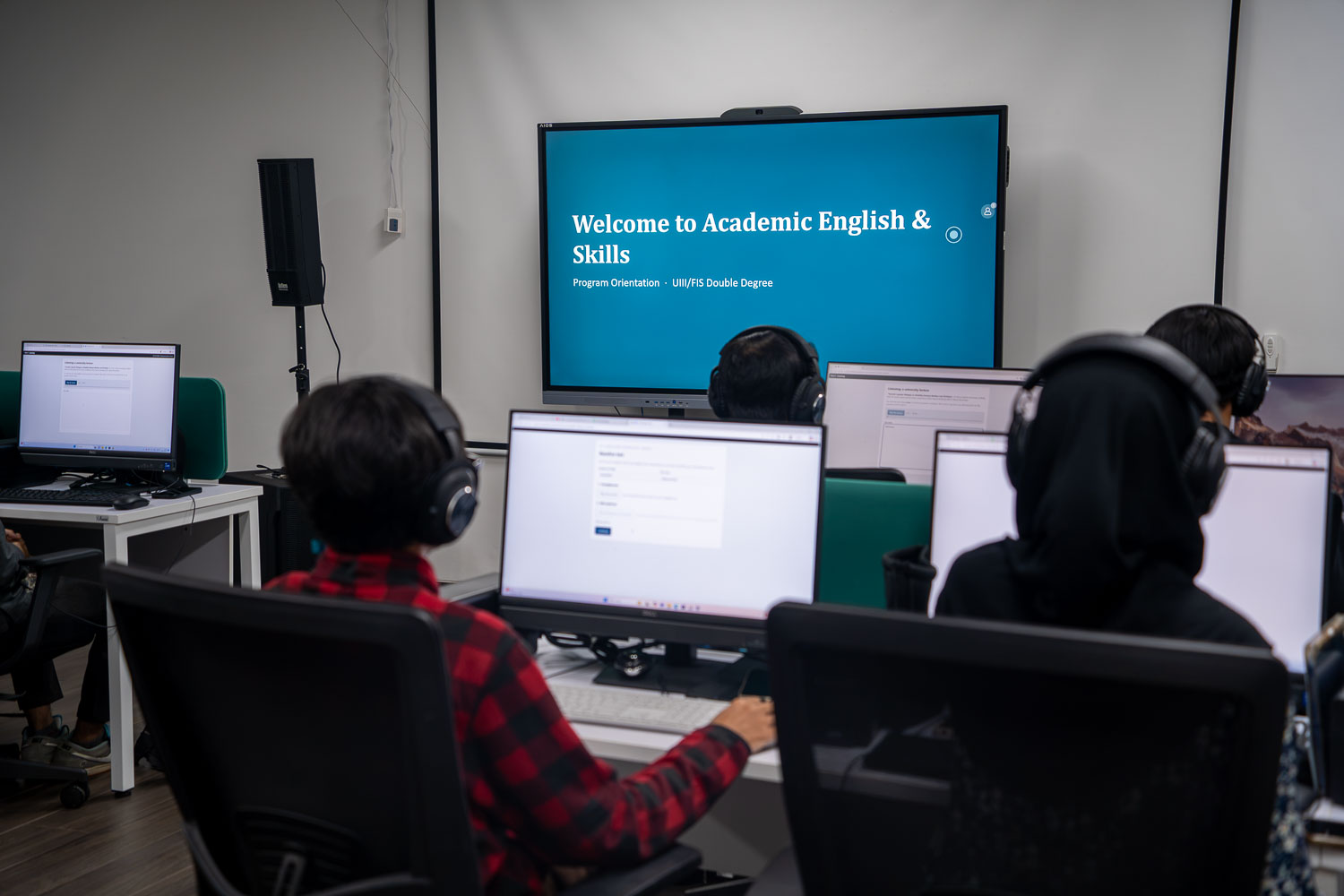
The center’s first program is English for Academic Purposes, designed for dual-degree students at the Faculty of Islamic Studies who will continue their studies at the University of Edinburgh and SOAS University of London next year. Six lecturers from all the UIII faculties will be involved as the teaching team.
Afifah said the center’s work would follow three principles drawn from the university’s vision, mission and values: multiliteracies, intercultural competence and inclusiveness.
Under the multiliteracies approach, learning materials will be drawn from UIII’s research fields, including Islamic studies, social sciences, economics and education, and from a range of texts, from academic articles to data and digital media. The materials will be adapted to learners’ levels and needs.
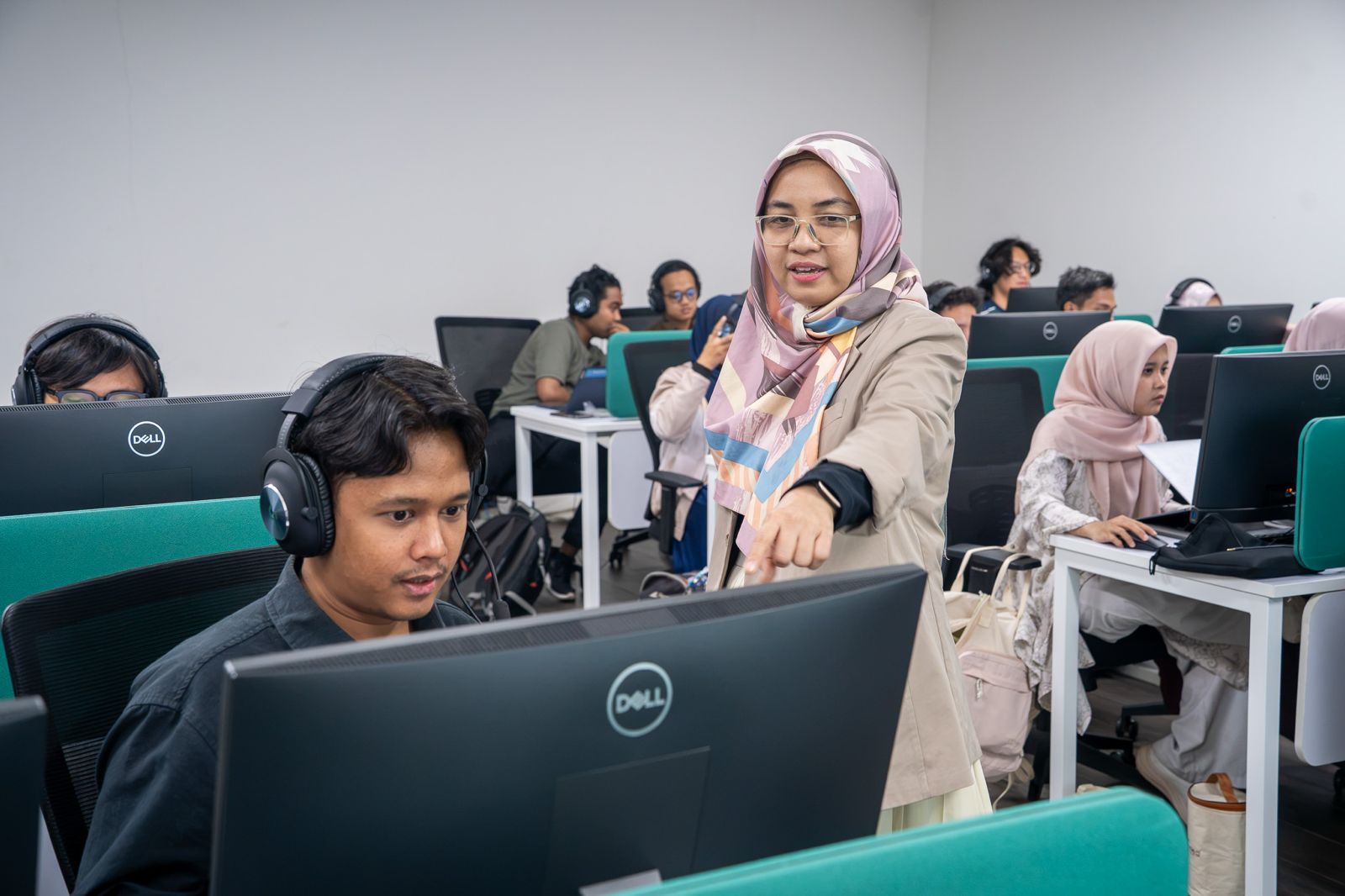
Soon to be a complete foreign language lab
While English is the focus for now, the center hopes to add other languages, such as Arabic and French, in stages.
One early step involves Bahasa Indonesia bagi Penutur Asing (BIPA), a program that teaches Indonesian to foreign students. The program has so far been run by UIII’s International Office, and UIII’s international students and alumni have taken it. Afifah said the center was in discussions with the office about gradually taking part in the service.
“For international students, learning Indonesian is also a way into Indonesian Islamic culture, which UIII’s mission seeks to promote as part of world civilization,” she said.
In the longer term, the center plans to offer general and tailored language classes, proficiency testing and test preparation in several languages, as well as editing, proofreading and translation services.
Widening access
Although the center’s current program is limited to dual-degree students, Dr. Afifah said it was expected to eventually serve the wider UIII community, including students, lecturers and staff, and later the general public. She noted that English is UIII’s main language of instruction, making academic language support relevant to all students.
The center is also responding to demand it had not anticipated. Several lecturers have told the center that master’s and doctoral students need help writing their theses in English and Arabic, and the center is considering options such as a writing clinic.
To guide its expansion, the center is preparing a feasibility study and comparing its plans with those of language centers at other universities. More lecturers and language professionals will be brought in once the study is complete and new programs open.
“We would rather build carefully and serve each group well than open everything at once,” Afifah said.
She described the center as part of how UIII carries out its vision and mission under the Rector’s leadership, noting that language runs through graduate teaching, research and the promotion of Indonesian Islamic culture abroad.
Her hope, she said, is that anyone who comes to the center, whether student, lecturer, staff member or, later, a member of the public, “leaves more confident using another language in their studies, work, and daily life, without losing who they are.”