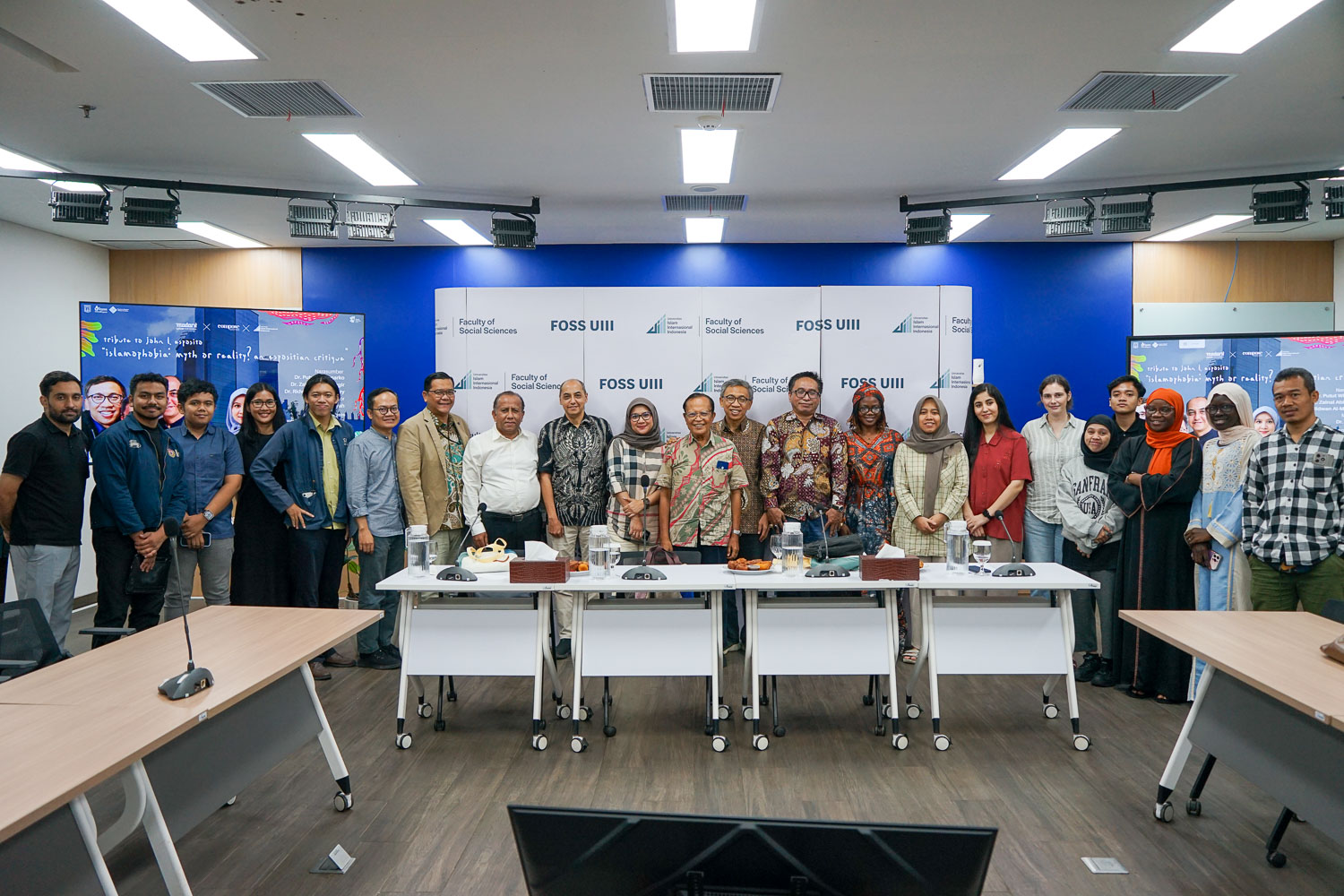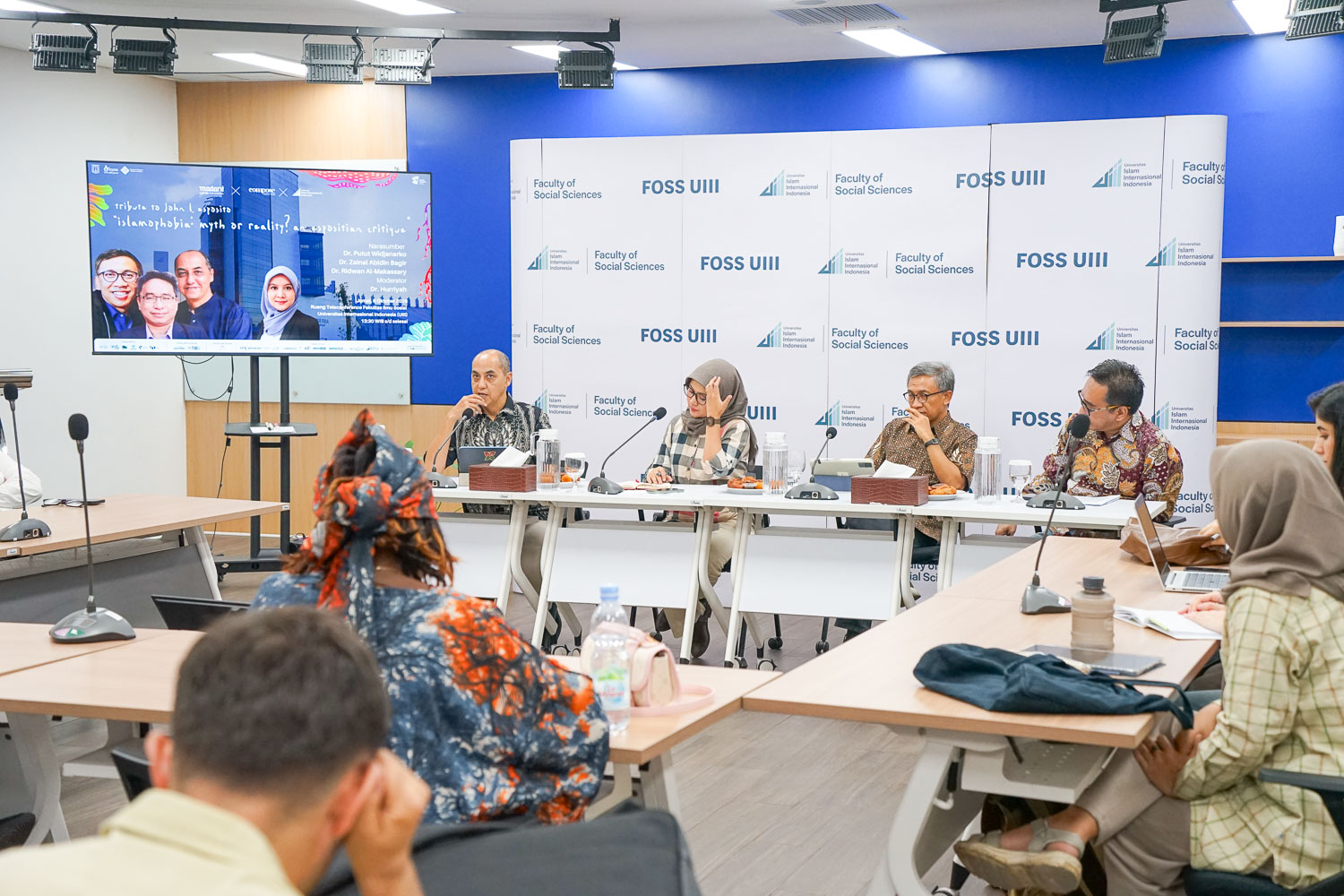
Depok – The room was small, a teleconference space in Faculty B at Universitas Islam Internasional Indonesia, and the crowd was modest, barely thirty people on an early Friday afternoon. But the question on the screen behind the speakers was anything but modest.
“Islamophobia: Myth or Reality? An Espositian Critique.”
It was a title borrowed from the man himself. John L. Esposito, the Georgetown scholar who spent five decades insisting that Islam was not a threat, died in July at 86. On this afternoon, three Indonesian academics and a room of colleagues gathered to ask whether the question he spent his life answering is still the right one to ask.
The answer, it turned out, was complicated.
A Scholar Who Crossed Borders
To understand why a seminar in Depok would devote an afternoon to an American professor, you have to understand what Esposito was, and what he meant to Indonesia.
Born in 1940, Esposito built his career at Georgetown University, where he was Distinguished University Professor Emeritus of Religion, International Affairs, and Islamic Studies. He founded the Prince Alwaleed Bin Talal Center for Muslim-Christian Understanding in 1993 and later launched The Bridge Initiative, a research project devoted to countering Islamophobia. He led both the Middle East Studies Association and the American Academy of Religion. He wrote or edited more than fifty books, among them Islam: The Straight Path, Who Speaks for Islam? (with Dalia Mogahed), and the book that gave Friday’s seminar its title, The Islamic Threat: Myth or Reality?
That book was a direct rebuttal of Samuel Huntington’s “Clash of Civilizations” thesis, and it made Esposito a polarizing figure in the West. But in Indonesia, it made him something else entirely.
“Islam Is Not a Threat”
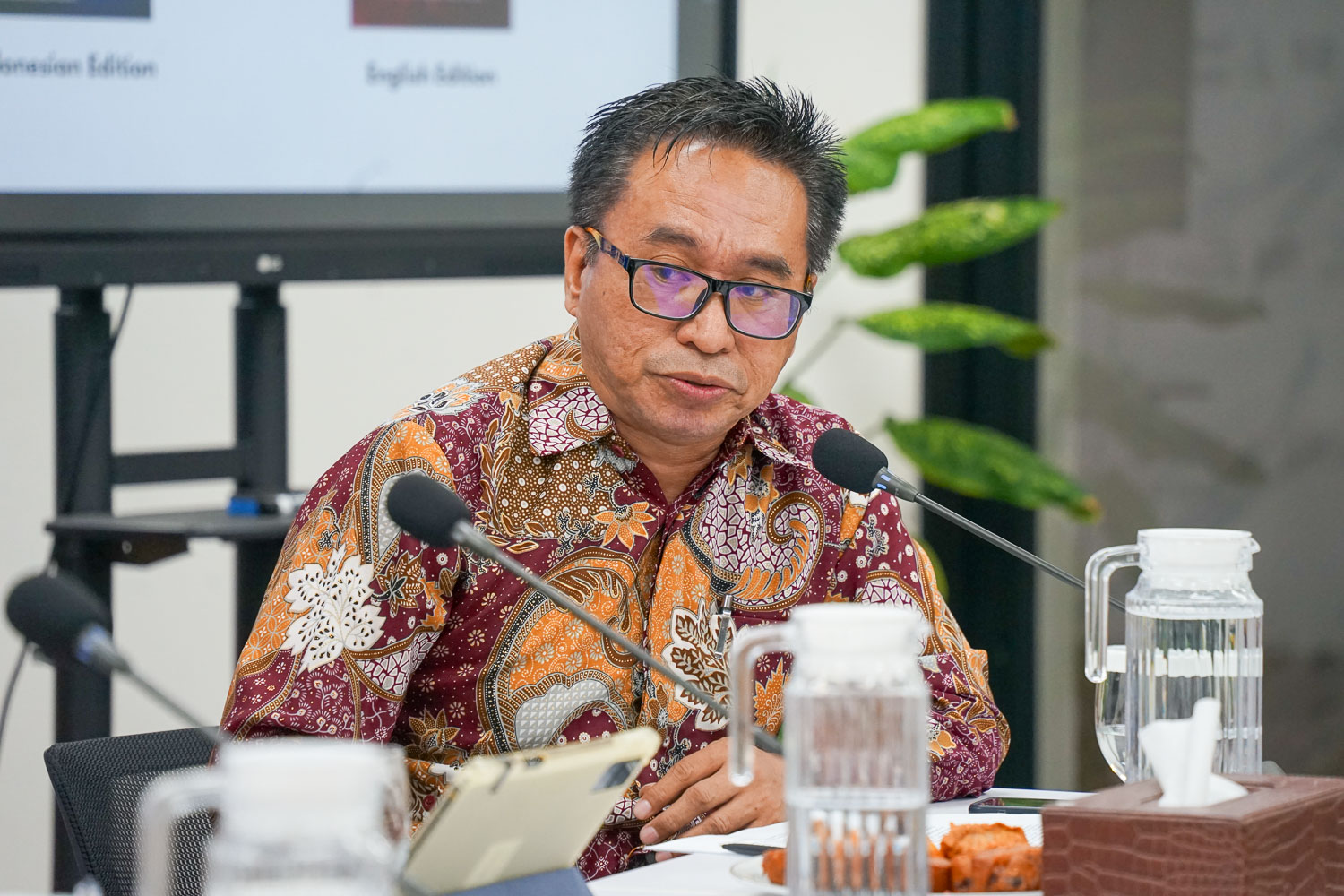
Dr. Ridwan Al-Makassary of UIII opened the panel with the core of Esposito’s intellectual project.
“Esposito provided the biggest critique to Huntington,” he said. “He wanted to build bridges. His message was clear: Islam is not a threat.”
It was a simple sentence, but one that carried decades of argument behind it. Esposito spent his career pushing back against the post-Cold War narrative that cast Islam as the West’s next great enemy, a narrative that, after 9/11, hardened into conventional wisdom. His response was to insist on complexity: that “Islam” and “the West” were not monolithic blocs, and that the threat was largely a construction.
The Question of Power
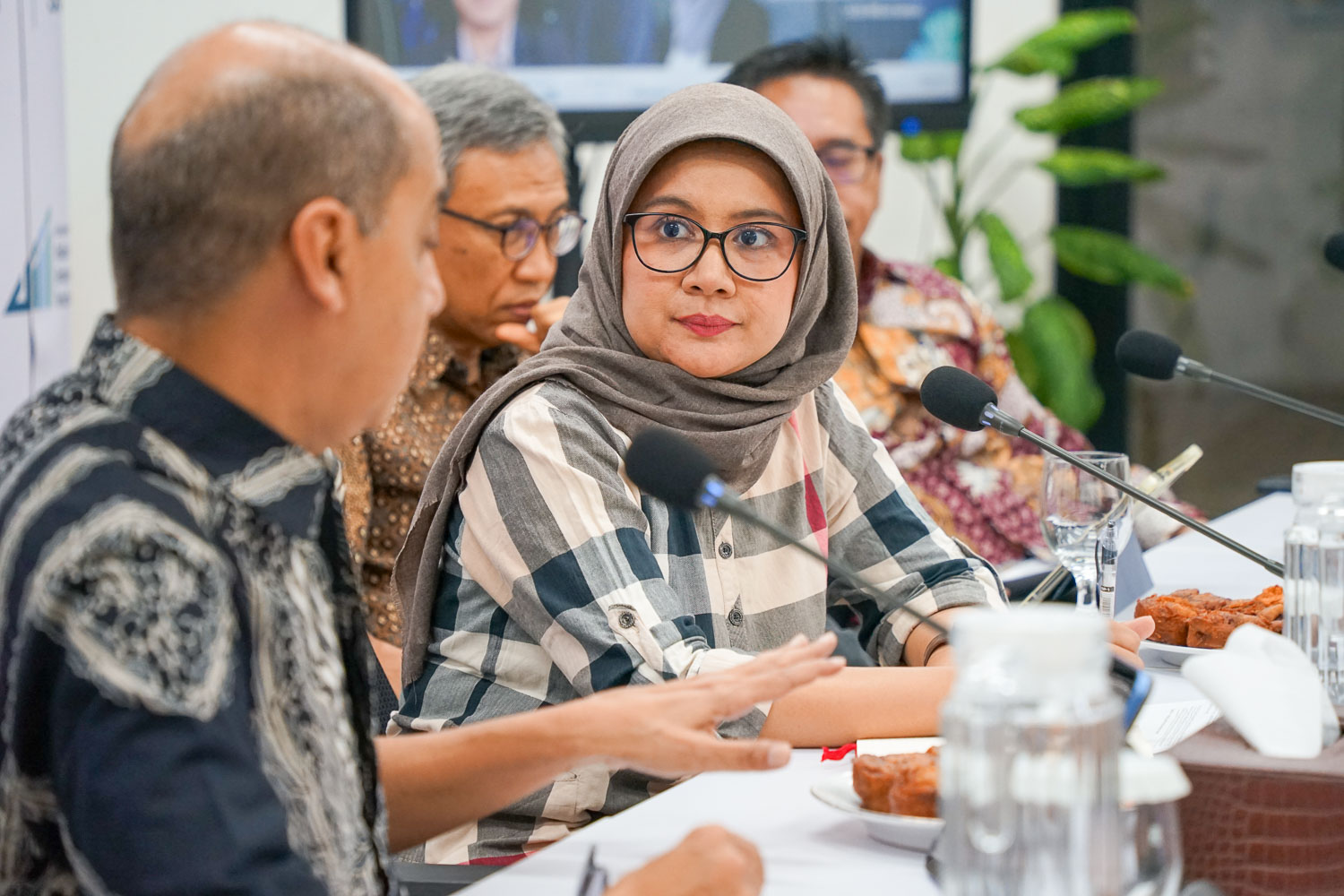
But if Esposito built bridges, Dr. Hurriyah of Universitas Indonesia wanted to know who controlled the traffic.
Serving as moderator, she opened the discussion with a question that hung over the room for the rest of the afternoon.
“Esposito encouraged mutual understanding between Islam and the West,” she said. “But how about equal power? How do you see the limits of Esposito’s approach when prejudice is embedded in Western countries like the US and Europe?”
It was a gentle but pointed intervention. Dialogue, after all, assumes two parties meeting as equals. Understanding between civilizations is one thing; redistributing the power to define them is another. The question lingered, not as a dismissal of Esposito, but as a measure of how much work remains.
Bringing Esposito to Indonesia
If Esposito reached Indonesian readers at all, it was largely because of one publisher.
Dr. Putut Widjanarko, now of Universitas Paramadina but formerly vice president of Mizan, explained how the Bandung-based publishing house became Esposito’s primary conduit to Indonesia. Mizan had translated several of his books into Bahasa Indonesia, part of a broader mission to bring serious works on global Islam, academic and public-intellectual alike, to an Indonesian audience. The same impulse led them to publish Karen Armstrong and others.
“We were keenly interested in bringing varied views of Islam, by Muslims and non-Muslims alike, to Indonesian readers,” Widjanarko said. He recalled the context that made the work urgent: a time “when Islam was largely misinterpreted in the West.”
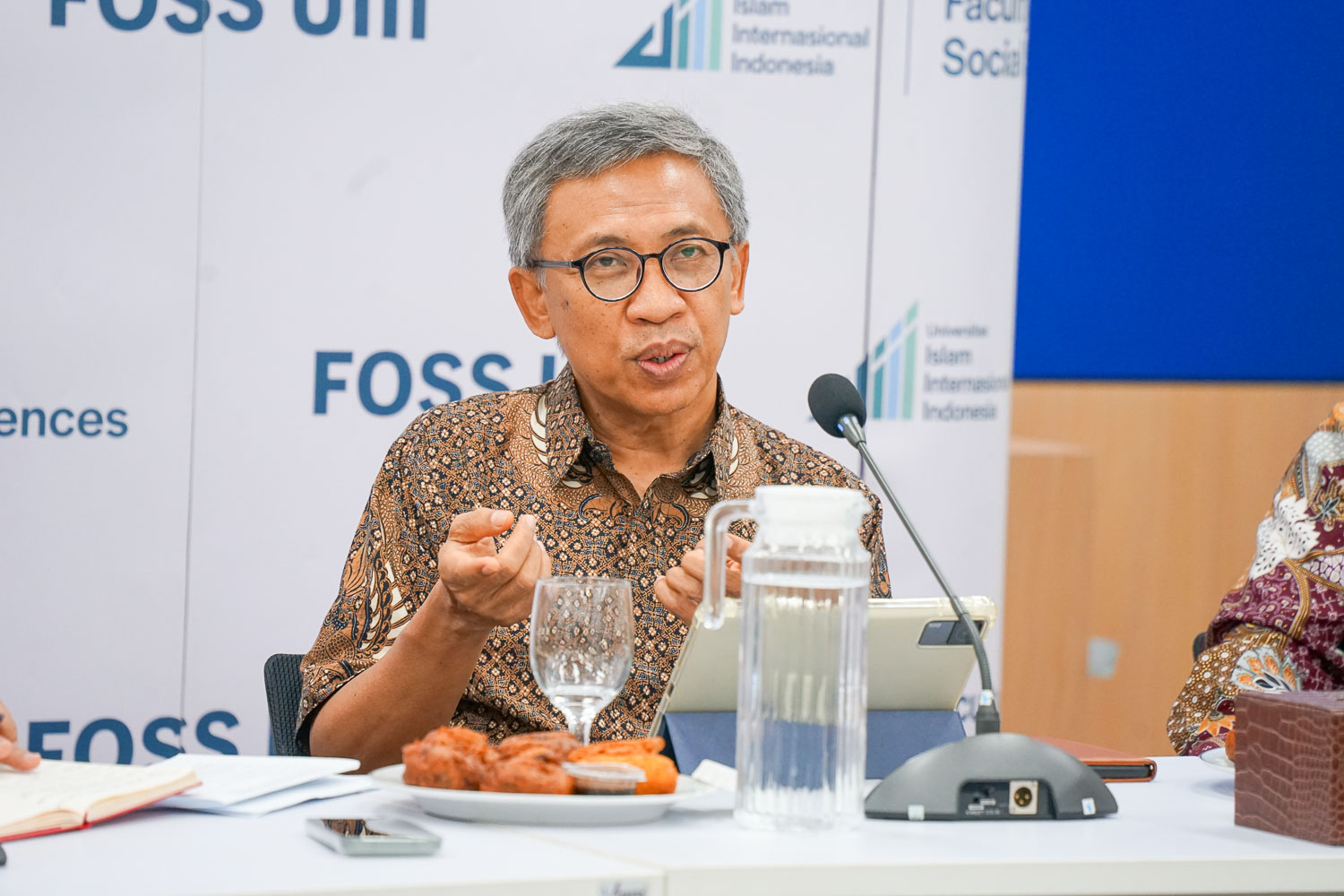
The audience offered its own testimony. Dr. Syafi’i Anwar, a veteran Indonesian Islamic intellectual, rose to recall meeting Esposito in Jakarta in the early 1990s, when Anwar and colleagues were launching Ummat magazine. Esposito, he said, offered strong support.
“Esposito is not only a scholar but a public intellectual,” Anwar told the room.
He noted that Mizan released Esposito’s Masa Depan Islam (The Future of Islam) in 2011, the very book Widjanarko published, and that Esposito held a particular admiration for Indonesian Islam, especially the thought of Nurcholish Madjid and Abdurrahman Wahid (Gus Dur), two icons of moderate Islam and interfaith engagement.
For Esposito, Indonesia was not a footnote. It was a model, a living demonstration that the bridge he advocated globally could actually be built.
A Question That May Be Outdated
Then came the moment that reframed the afternoon.
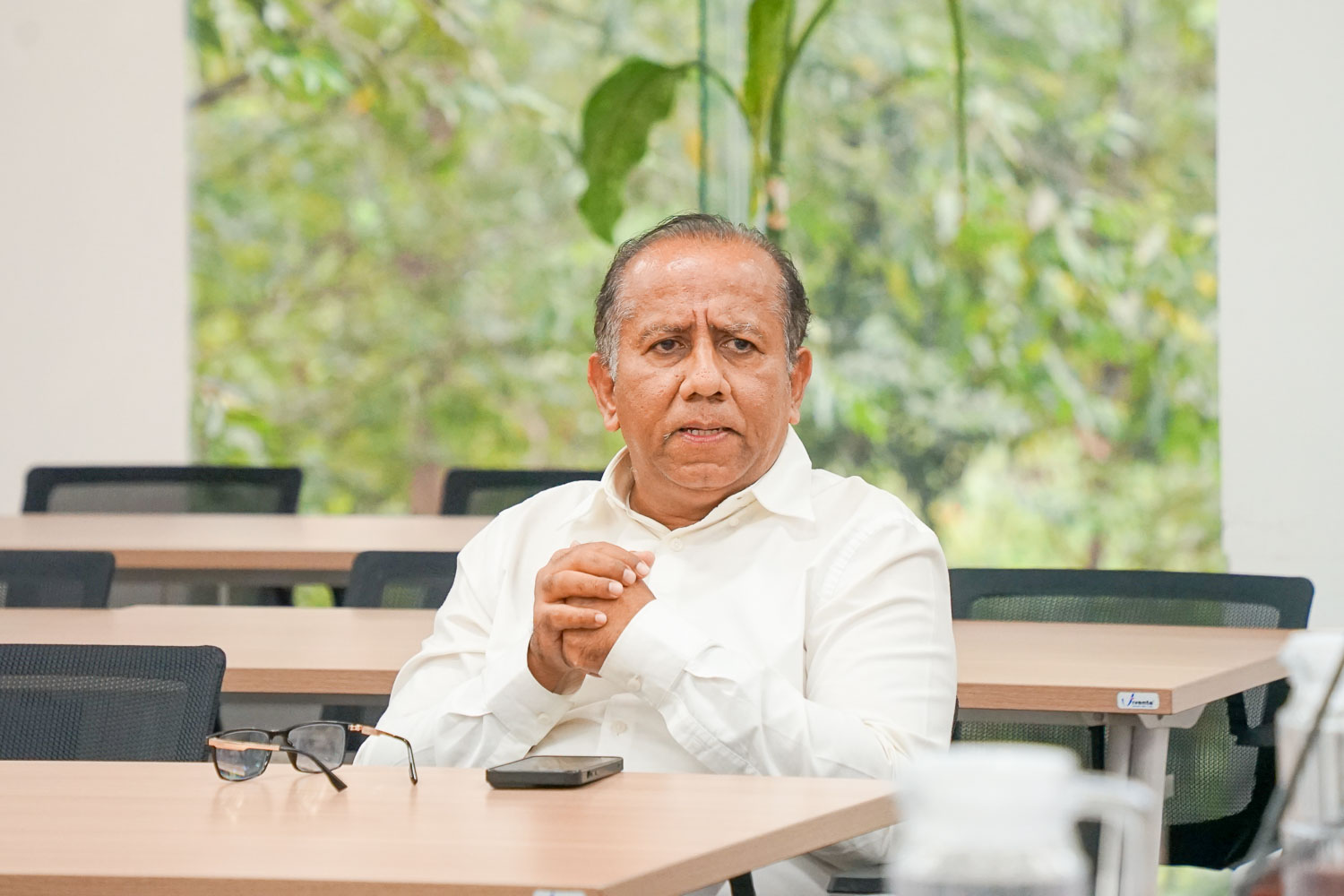
Dr. Chaider Bamualim, the UIII University Secretary, offered a reflection that gently turned the seminar’s title on its head.
“Why is the title of the seminar still asking whether Islamophobia is myth or reality?” he asked. “When in fact thousands of cases of Islamophobia have happened in front of our eyes.”
He called it “a really serious phenomenon in the Western world,” pointing to rampant Islamophobia in many parts of the world, and urged the room toward action.
“We have to consider doing research and providing scholarly works on Islamophobia seriously,” he said.
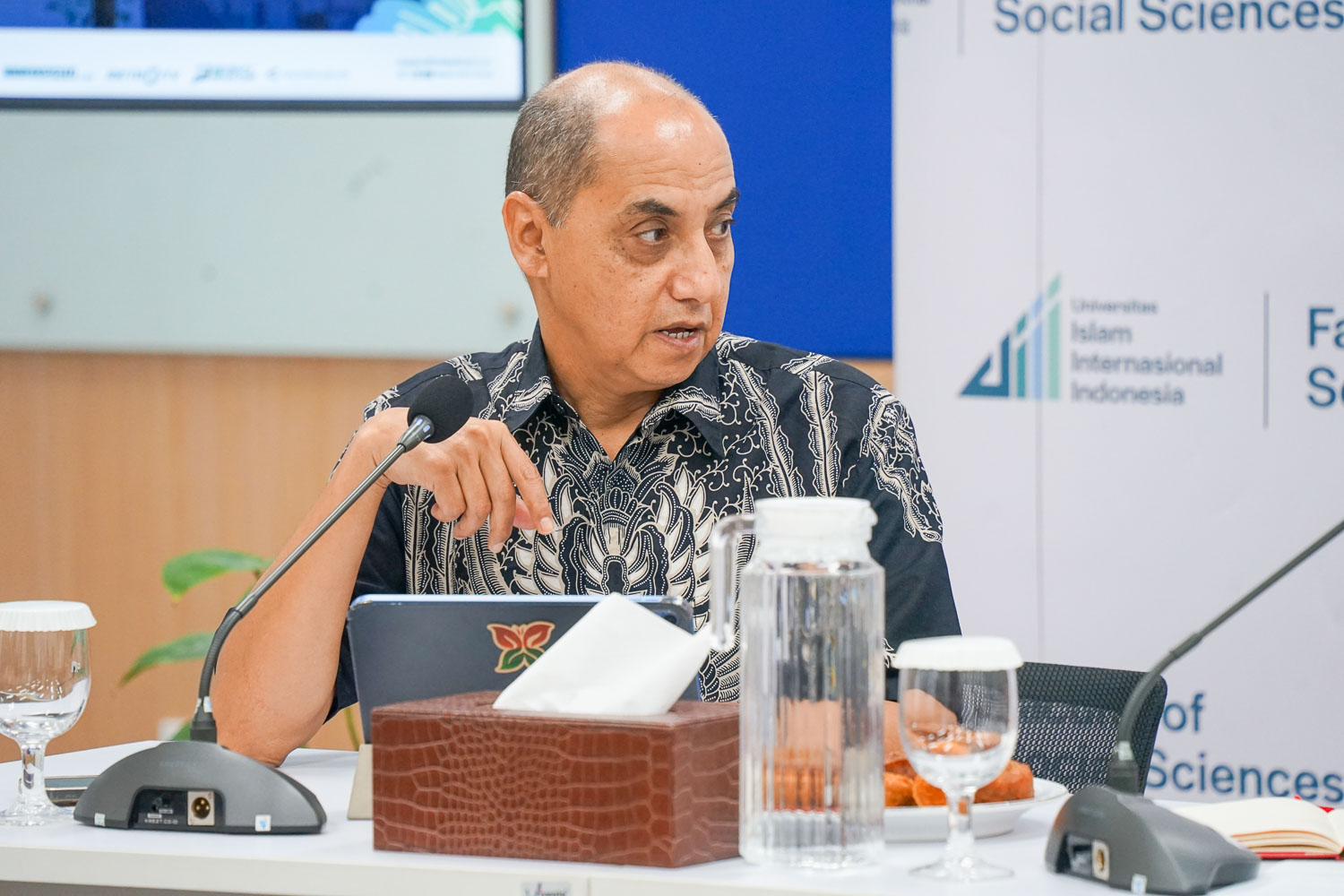
A Warning About Words
Dr. Zainal Abidin Bagir of Universitas Gadjah Mada answered with a caution of his own.
“Be careful using the term Islamophobia,” he said. “Esposito did that, but we have to be precise, otherwise we will use the term unproductively.”
He drew a parallel to another contested term: “Just like the term anti-Semitism, used to label any criticism toward Israel.”
Bagir was not denying the reality of anti-Muslim prejudice. “The problem is real,” he said. “But we need to address the issues properly.”
His point was about precision. Broad terms can obscure more than they reveal, and scholarly rigor demands distinguishing hatred of Muslims from legitimate criticism of ideas, and from political disagreement dressed up as bigotry. It was a warning that echoed Esposito’s own caution about monolithic categories, even as it complicated the seminar’s title.
Three Answers to One Question
By the end of the afternoon, the room had arrived at three distinct positions, and the tension between them was the real substance of the event.
Bamualim argued that the question itself might be outdated: the reality is overwhelming, and scholarship must catch up. Bagir argued that the problem is real but the vocabulary requires discipline, or it loses its power. Hurriyah asked whether dialogue can ever be enough when power remains unequal.
None of them dismissed Esposito. All of them were, in different ways, extending his work.
A Scholar Greatly Missed
What emerged most clearly from the seminar was a sense of loss.
Indonesian scholars spoke of Esposito not as a distant Western academic but as a friend, one who came to Jakarta in the 1990s, who supported independent Muslim media, whose books arrived in translation through Mizan, and who championed Indonesian thinkers like Madjid and Gus Dur on the world stage. Following his death, even the Indonesian Council of Ulama (MUI) issued a tribute, a recognition rarely extended to Western scholars.
In an era when so much of the discourse about Islam is written from the outside in, Esposito wrote from a different place: with courage, with empathy, and with a willingness to be unpopular in his own country for the sake of getting the story right. That is why Indonesian scholars miss him, not merely for what he wrote, but for how he stood.
The seminar’s title asked whether Islamophobia is myth or reality. Esposito spent his life answering that it was both: a myth in its claim that Islam itself is a threat, and a reality in the prejudice it produces. The work of holding both truths together, precisely, carefully, courageously, is the work he left behind. []