September 25, 2026
By Raihan Riffa Nadhifa
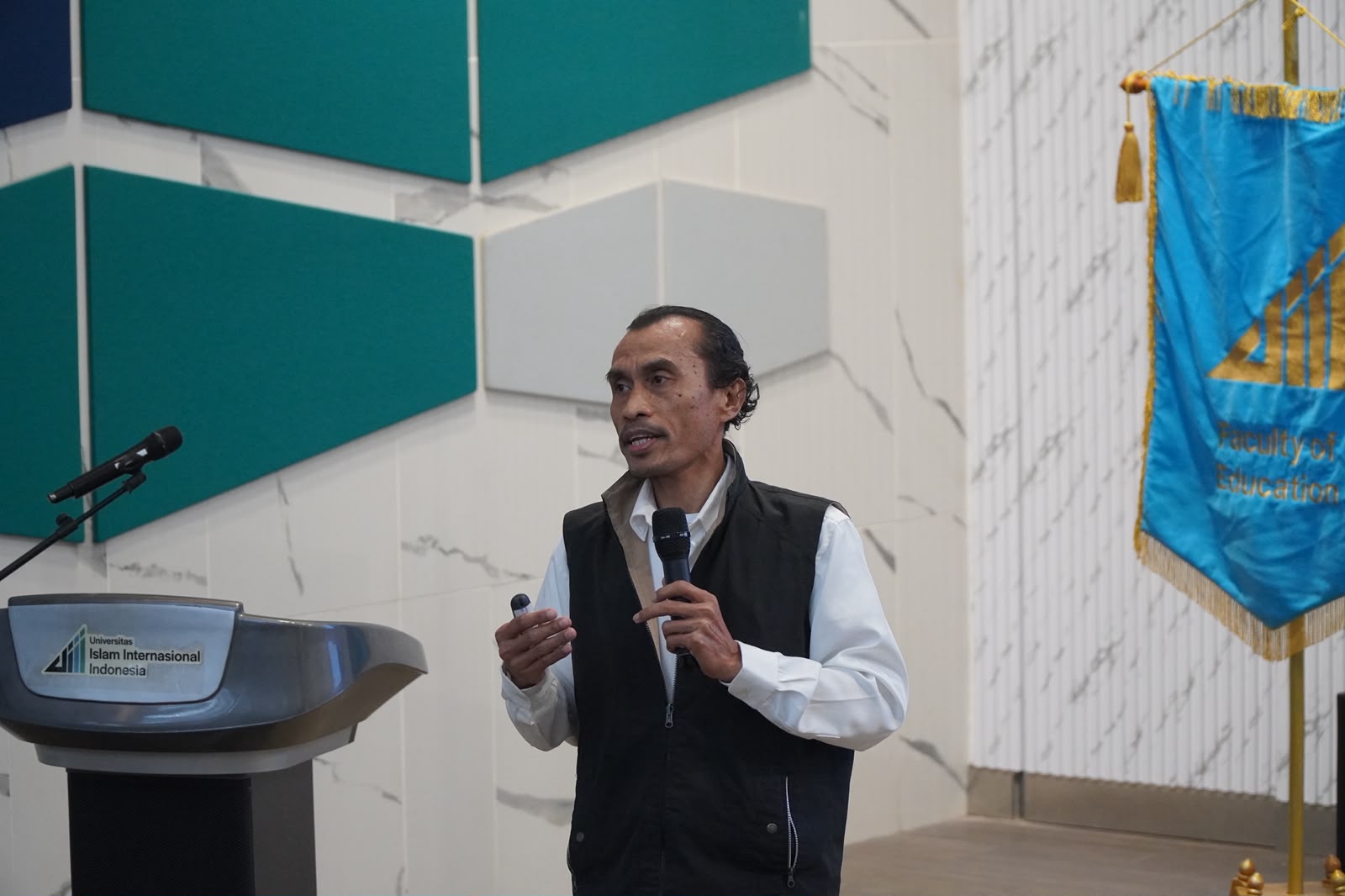
Depok — The Faculty of Education at Universitas Islam Internasional Indonesia (UIII) hosted a Lunchtalk Session featuring Dr. Hayadin, S.Ag., M.Pd., Researcher at the National Research and Innovation Agency (BRIN). The session, titled “Who Teaches Students Islam?”, explored how students develop their religious understanding and how various actors contribute to shaping religious authority in Indonesian schools.
Held in a hybrid format at the Theater, Faculty A Building, UIII, the session brought together participants attending both onsite and online. The discussion focused on a fundamental question in Islamic education: who actually shapes students’ understanding of Islam? In his presentation, Dr. Hayadin emphasized that students do not learn Islam from a single source. Their religious understanding develops through interactions with various actors, including teachers, families, religious communities, schools, and their surrounding social environments.
Drawing from his research on Islamic Religious Education (IRE) in Indonesian schools, Dr. Hayadin discussed the role of teachers as interpreters of religious knowledge. Teachers do not simply deliver curriculum content; they translate religious concepts and educational objectives into practices that are meaningful within their own social contexts. He further explained that Islamic education involves multiple forms of authority, where the state contributes through curriculum, educational policies, and civic values, while religious communities contribute through traditions, interpretations, and religious practices. These different forms of authority interact and influence how students understand and experience Islam.
The discussion also examined the tendency to associate students’ misconduct solely with the quality of religious education provided in schools. Dr. Hayadin highlighted that students’ religious formation is influenced by multiple environments and cannot be attributed to a single educational actor. One example discussed was how teachers connect civic values with religious understanding, where concepts such as national identity, citizenship, and love for the country can be interpreted through religious perspectives, including moral responsibility and prophetic examples.
Reflecting on the discussion, Dr. Hayadin encouraged students and academics to further explore religious education through research. “There are many actors involved in religious education, and each actor has different forms of capital and legitimacy. How these actors interact and compete over legitimacy becomes an interesting area of research,” he said. He added that continued research on this issue could provide deeper insights into how religious education is practiced and developed in Indonesia. “The more research we conduct about this issue, the more explanations we can find about how religious education is practiced in schools and in Indonesian society,” he said.
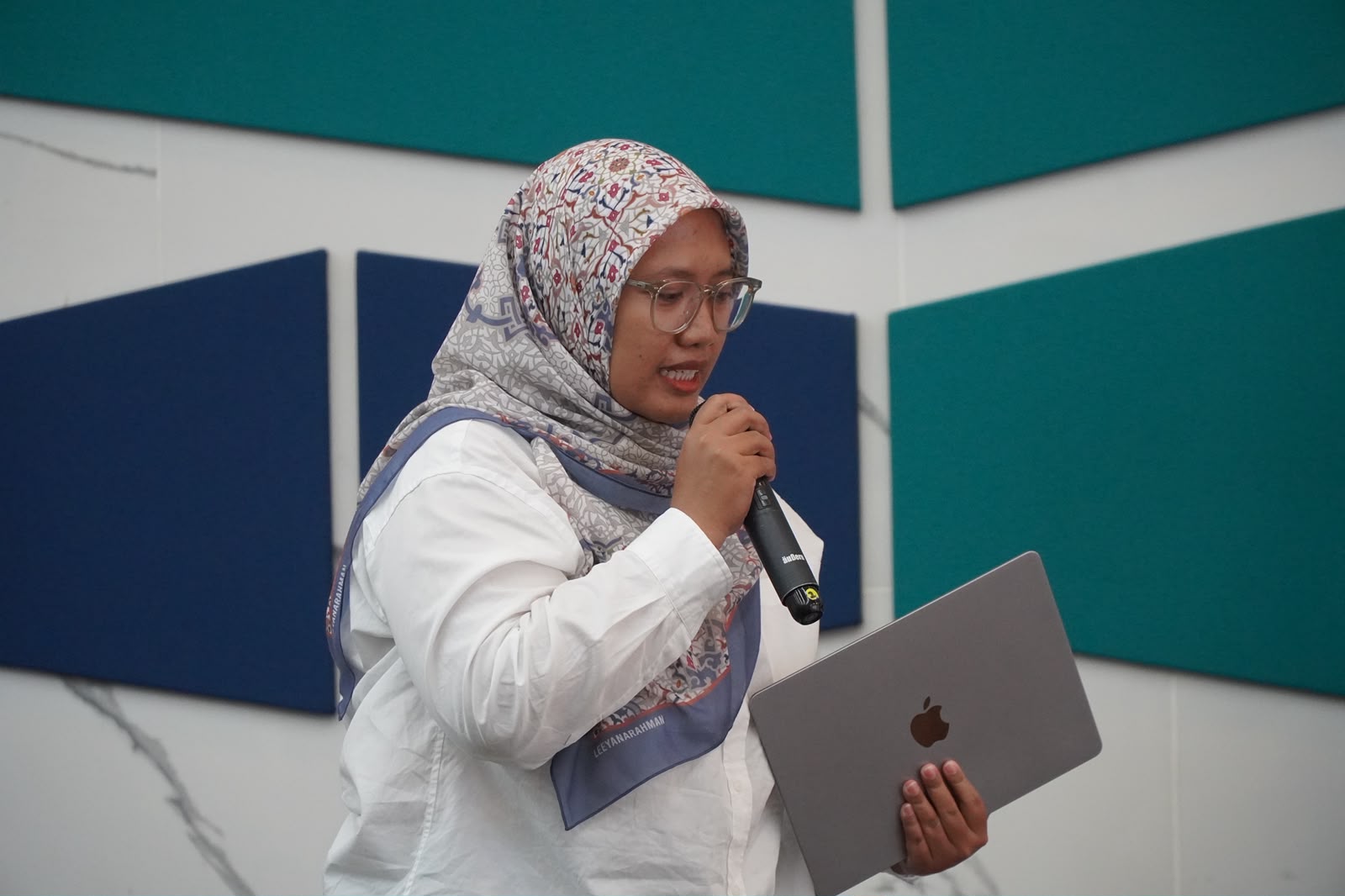
The hybrid session also encouraged active participation from attendees, with participants from both onsite and online sessions raising questions related to teachers’ responsibilities, religious authority, and the challenges of Islamic education in contemporary Indonesia. Through the Lunchtalk Session, UIII provided a space for academic discussion on religious education and the various actors involved in shaping students’ Islamic understanding.