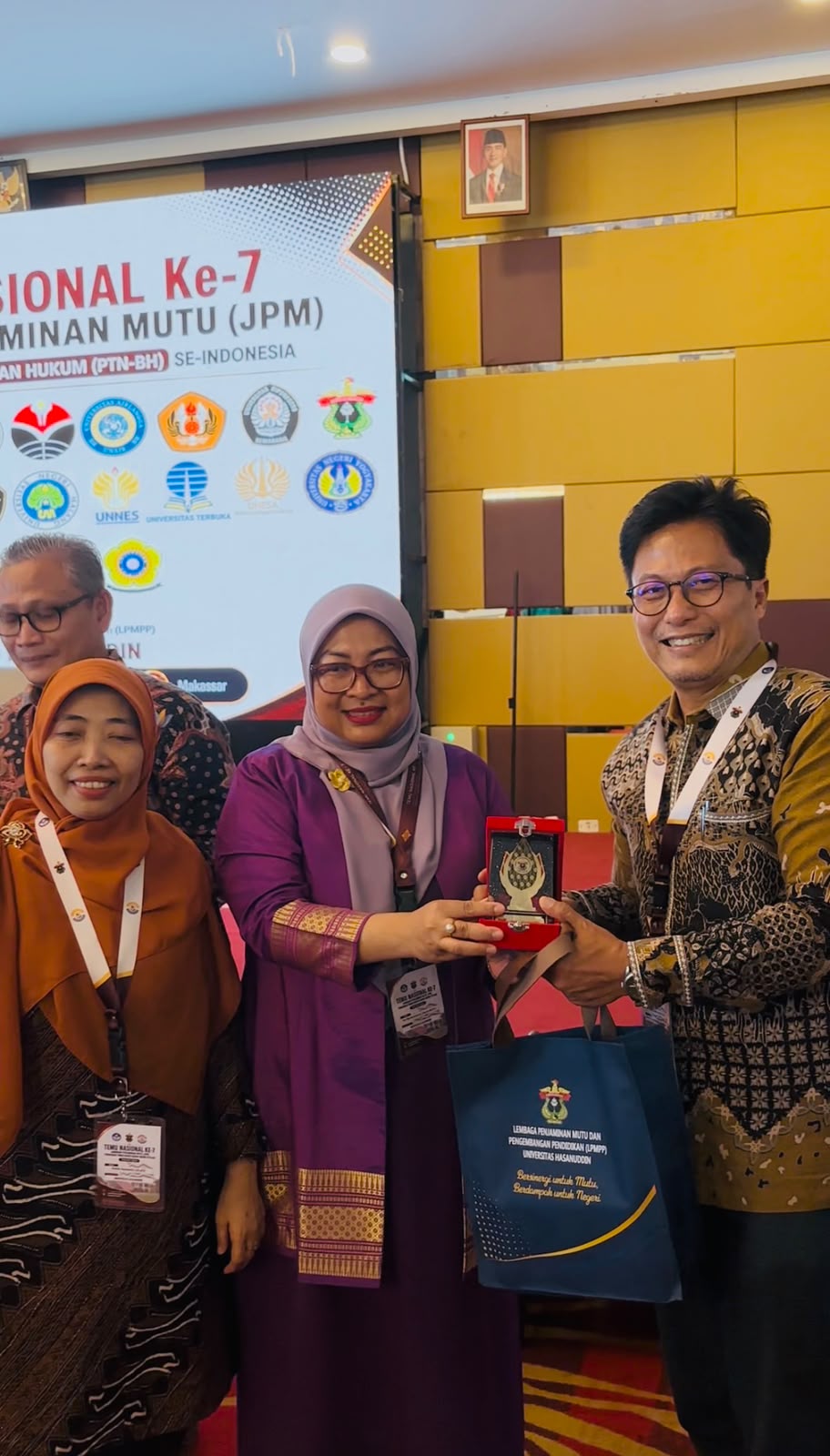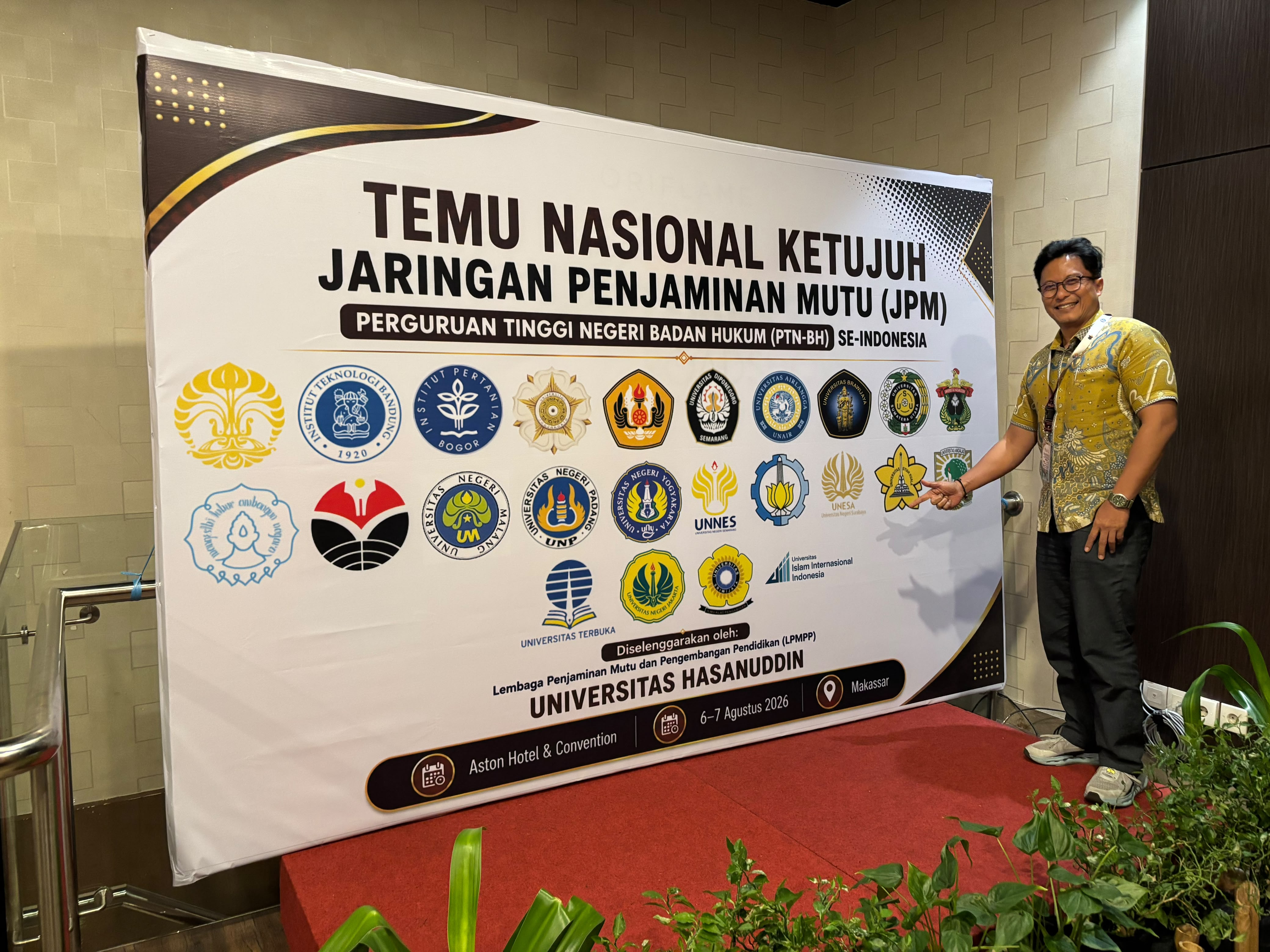
Makassar — Universitas Islam Internasional Indonesia (UIII) took part in the 7th National Meeting of the Quality Assurance Network (Jaringan Penjaminan Mutu/JPM) of State Universities with Legal Entity Status (PTN-BH), held on August 6–7, 2026, at Aston Makassar Hotel & Convention Center. Hosted by Universitas Hasanuddin (Unhas), the forum brought together quality assurance leaders from PTN-BH institutions across Indonesia to discuss changes in higher education quality assurance and accreditation policy.
UIII was represented by R. Alpha Amirrachman, M.Phil., Ph.D., Head of the Quality Assurance Center. The university’s participation reflects its effort to strengthen internal quality assurance, institutional accountability, and readiness for the evolving national accreditation framework.
The two-day meeting focused on the implementation of Ministerial Regulation of Higher Education, Science, and Technology (Permendiktisaintek) No. 10 of 2026, which amends Permendiktisaintek No. 39 of 2025 on Higher Education Quality Assurance, as well as BAN-PT Regulation No. 35 of 2025 concerning the latest Institutional Accreditation Instrument, known as IAPT 4.1.
On the first day, participants learned from the experiences of Universitas Negeri Jakarta (UNJ) and Universitas Negeri Yogyakarta (UNY) in preparing institutional accreditation submissions. Dr. Ir. Fatah Nurdin, M.M. and the UNJ team highlighted the challenges of managing accreditation during a period of regulatory transition. Their experience demonstrated the importance of monitoring accreditation status, regulatory updates, SAPTO 2.0 processes, and institutional data before an accreditation deadline approaches.
Prof. Dr. Lia Yuliana, S.Pd., M.Pd. and the UNY team presented an operational perspective on preparing the Self-Evaluation Report, the Higher Education Performance Report, supporting evidence, and institutional data for submission through SAPTO 2.0. UNY’s approach emphasized leadership involvement, a cross-unit accreditation task force, clear assignment of persons in charge for each accreditation criterion, and management of digital evidence.
A major theme throughout the meeting was that accreditation should no longer be treated primarily as a documentation exercise. Under the new framework, universities are expected to demonstrate that quality assurance systems are functioning consistently and producing measurable improvement.
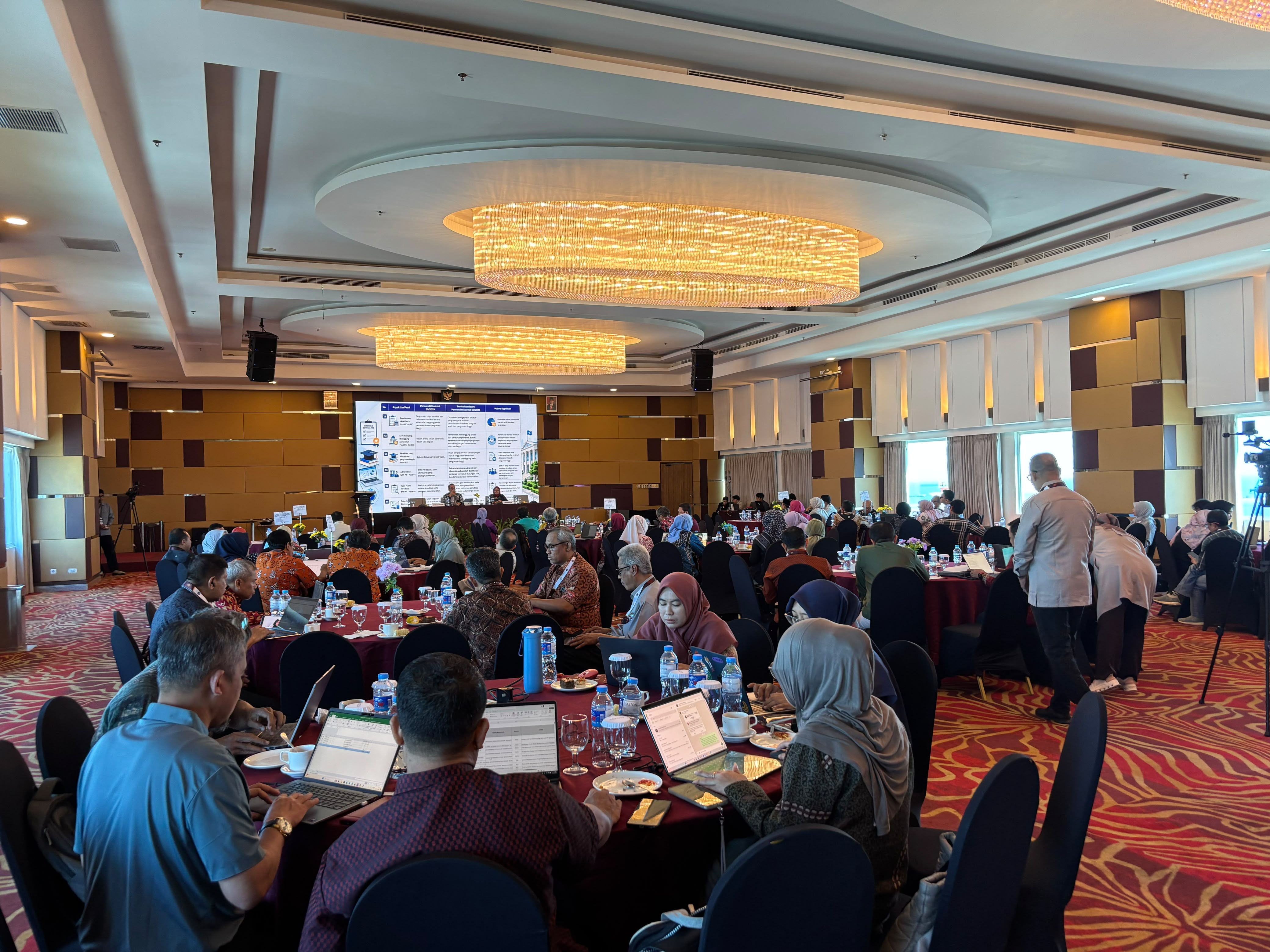
This message was reinforced during the second day by Prof. Dr. Mukhamad Najib, S.TP., M.M., Director of Institutional Affairs at the Directorate General of Higher Education, who explained the policy direction of Permendiktisaintek No. 10 of 2026. He stressed a shift from compliance toward continuous improvement and impact. The regulation consolidates reform agendas, including flexibility in learning, stronger accreditation mechanisms, strengthened roles for BAN-PT and independent accreditation agencies, and recognition of international accreditation.
For university quality assurance offices, the implication is substantial. Greater flexibility in academic delivery must be accompanied by stronger internal monitoring, updated quality assurance documents, effective implementation of the PPEPP cycle—standard setting, implementation, evaluation, control, and improvement—and evidence that institutional policies lead to better educational outcomes.
Prof. Dr. Ir. Ari Purbayanto, M.Sc., Director of the Executive Board of BAN-PT, further explained the logic of IAPT 4.1 and the accreditation requirements for PTN-BH institutions. The new framework centers on four areas: quality culture, relevance of the three pillars of higher education, accountability, and mission differentiation.
For PTN-BH institutions seeking “Excellent” accreditation status, the standards are demanding. Indicators discussed during the forum included the effectiveness of the Internal Quality Assurance System, the proportion of study programs with Excellent accreditation, the percentage of permanent faculty members holding doctoral qualifications and senior academic ranks, external financial audit results, research and community engagement outputs, and evidence that an institution’s differentiated mission is implemented and externally recognized.
For UIII, the discussion on mission differentiation is particularly relevant. The new accreditation framework requires universities not only to articulate a distinctive mission, but also to show how that mission is translated into strategic plans, academic programs, research, community engagement, resource allocation, performance indicators, institutional evaluation, and demonstrable impact.
Following the meeting, UIII’s Quality Assurance Center will continue reviewing the university’s readiness against IAPT 4.1, strengthening documentation of the Internal Quality Assurance System and the PPEPP cycle, improving the integration of institutional data with PDDikti and SAPTO 2.0, and mapping evidence across academic and non-academic units.
The Makassar meeting also underscored the value of collaboration among PTN-BH universities. By sharing practices, challenges, and institutional strategies, quality assurance units can move beyond accreditation as a periodic administrative requirement and develop a stronger culture of evidence-based, continuous institutional improvement.
For UIII, participation in the forum was not only about understanding new regulations. It was also an opportunity to benchmark institutional practices, strengthen professional networks, and ensure that quality assurance remains connected to the university’s mission, academic development, accountability, and long-term impact.