December 9, 2025
By Prof. Jamhari Makruf, Ph.D *)
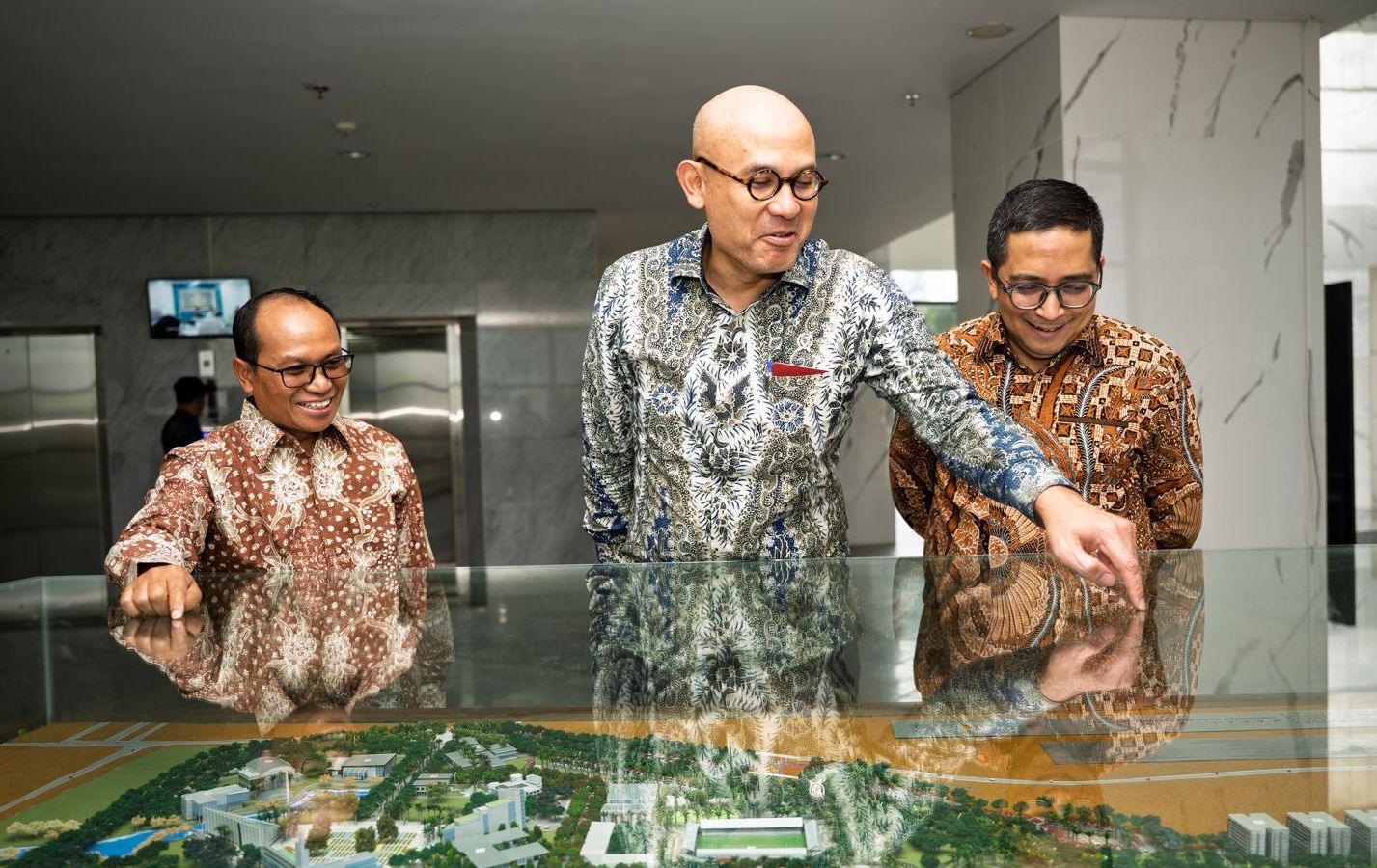
Not long ago, the Ministry of Foreign Affairs organized the 7th World Indonesianist Congress (WIC) at our campus, Universitas Islam Internasional Indonesia (UIII). The timing carried symbolic weight: the 7th WIC coincided with the 75th anniversary of the 1955 Asian-African Conference (AAC), a landmark in diplomacy that shaped the political identity of the Global South in the 20th century.
Since 2019, WIC has been held annually in collaboration with universities; first at Universitas Gadjah Mada, Yogyakarta with the theme Indonesia’s Vision 2045, followed in 2024 by Universitas Indonesia with the theme “Towards a Stable, Prosperous, and Advanced Indonesia.” This year, WIC at UIII drew inspiration from the AAC to highlight one major issue: strengthening solidarity within the Global South.
What and Who Are Indonesianists?
WIC is not merely an annual seminar. It is a forum that brings together Indonesianists, scholars, researchers, diplomats, journalists, businesspeople, and policy analysts, united by one common thread: they make Indonesia the focus of their intellectual attention.
Some conduct long-term research in Java, Papua, Kalimantan, or Aceh; others study the relationship between Islam and the state, customary law, Indonesian democracy, political economy, or cultural diversity.
There are also those drawn to Indonesia through professional experience, diplomacy, development projects, or even as exchange students in small towns. Despite their varied backgrounds, they share one identity: they understand Indonesia not only from textbooks, but through lived experience.
The purpose of WIC is therefore both strategic and dual. First, to honor and maintain relationships with Indonesianists whose contributions have introduced Indonesia to the world academically. Second, to learn from Indonesia as seen through the eyes of outsiders. Their perspectives are invaluable, for outsiders often notice things that escape our daily observation.
Here, the proverb “the elephant in one’s eye is unseen, yet the ant across the sea is visible” regains its relevance. To understand ourselves clearly, we sometimes need a mirror from outside, a perspective shaped not by emotional closeness, but by intellectual distance. WIC provides that reflective space.
The Legacy of Bandung 1955
This year’s WIC deliberately revived the spirit of the 1955 Bandung Asian-African Conference, a global diplomatic event not only historic for Indonesia, but foundational for the political consciousness of nations now known as the Global South.
Its core message was simple yet firm: anti-colonialism, national sovereignty, solidarity, and the right to self-determination. From Bandung emerged the Non-Aligned Movement, offering newly independent states a political option to resist submission to superpower blocs.
The AAC also left a long emotional legacy: Palestine attended as a nation not yet independent, and to this day its fate remains part of the moral and diplomatic responsibility inherited from Bandung.
Is the spirit of Bandung still relevant? Indonesianists at WIC agreed: not only relevant, but increasingly urgent. The world is shifting into an era of rising economic protectionism, renewed wars and proxy conflicts, great-power competition over technology, politics, and finance, while climate change generates long-term uncertainty.
The Global South sits at the very center of this turbulence. These nations may lack the power to set global agendas, yet they are the ones most affected by the decisions of major powers. Here, the legacy of Bandung 1955 finds its new stage.
Trump’s Tariffs & the Climate Dilemma
One of the most debated sessions at WIC concerned the trade wars initiated by President Donald Trump. For major powers, tariffs are merely tools to pressure rivals. But for developing countries, the effects are domino-like.
When tariffs on certain commodities rise, export prices climb, products lose competitiveness, demand falls, industries are disrupted, and global supply chains falter.
Foreign investors, who usually make long-term decisions, hold back; not because they distrust Indonesia or the Global South, but because global economic uncertainty makes investment calculations increasingly risky.
The Global South Dilemma
The challenge grows heavier when the issue intersects with climate change. Developing countries face a painful paradox: they are asked to reduce emissions, yet their economic growth still relies on the exploitation of natural resources. Halting extraction means slowing economic growth, narrowing employment opportunities, and delaying public welfare. But continuing resource-based development accelerates ecological destruction, worsens the climate crisis, and ultimately harms the people all the same.
This is why the Global South does not reject saving the planet, only seeks a realistic transition, so that the path toward becoming developed nations is not blocked by regulations designed from the perspective of countries that advanced earlier.
Here lies the essence of Global South solidarity. This movement is not anti-West, not ideological rivalry, not bloc politics. It is the voice of nations with shared circumstances, standing together so that development is not dictated unilaterally by the agenda of major powers. For the Global South, economic growth and environmental protection are not mutually exclusive choices, but two imperatives that must be reconciled fairly.
Learning from Friends
One of the most fascinating aspects of the World Indonesianist Congress (WIC) is meeting, year after year, people who have fallen in love with Indonesia. A phenomenal example is Professor Tim Lindsey, Professor of Law at the University of Melbourne. He first encountered Indonesia not through international journals, but through his experience as an exchange student living in Purwokerto. His Indonesian is fluent, down to colloquial expressions like “lo” and “gue.”
Tim later founded the Center for Indonesian Law, Islam and Society (CILIS), which connects Australian and Indonesian academics through research, seminars, training, and scholarly exchanges. His list of works on Indonesia is extensive: “Indonesia: Law and Society,” “Islam, Law and the State in Southeast Asia” (three volumes), “Strangers Next Door: Indonesia and Australia in the Asian Century,” and many more.
This is the strength of Indonesianists: they introduce Indonesia to the world without being asked. One landmark book that “changed how the world views Indonesia” is Clifford Geertz’s Religion of Java. Its popularity was such that many came to believe Javanese society consisted only of three types: Santri, Priyayi, and Abangan.
When I was pursuing my doctorate in Australia, a friend asked me, “Jam, are you Javanese?” I replied, “Yes.” The next question followed: “Then… are you Santri, Priyayi, or Abangan?” I was momentarily confused. My father came from a farming family who loved wayang, while my maternal grandfather was a village modin educated in a pesantren. Those two worlds met within me. I did not know which box to choose.
That is the power of Indonesianists: they help the world understand Indonesia, even if Indonesia is far more complex than what is written in books.
Warning Signs: Indonesianists Are Aging
A crucial signal from the 7th WIC is that many Indonesianists are now elderly, with very few younger ones. Fewer people abroad are learning Indonesian as a foreign language. Academic interest in Indonesia appears to be declining.
This raises a big question: has Indonesia lost its appeal? The answer is not necessarily. Rather, we have yet to build an ecosystem of internationalization that makes the world eager to study in Indonesia. WIC is not merely a forum of appreciation, it is an engine of intellectual diplomacy. Indonesia needs friends abroad, not only for academic ties but also for diplomacy, economics, politics, and national image.
And the best friends are those who understand Indonesia not from the internet, but from lived experience. Perhaps it is true that the world will come to know Indonesia not through campaigns, billboards, or even news, but through the story of someone who once lived here and fell in love. Indonesia has long been accompanied by friends of this kind. The task before us is to keep them from slipping quietly into the pages of history.
*) Rector, Universitas Islam Internasional Indonesia
Original Indonesian version published here: Disway.id https://disway.id/read/914845/world-indonesianist-congress-belajar- on Tuesday, December 2, 2025
Universitas Islam Internasional Indonesia