February 24, 2026
By Dadi Darmadi
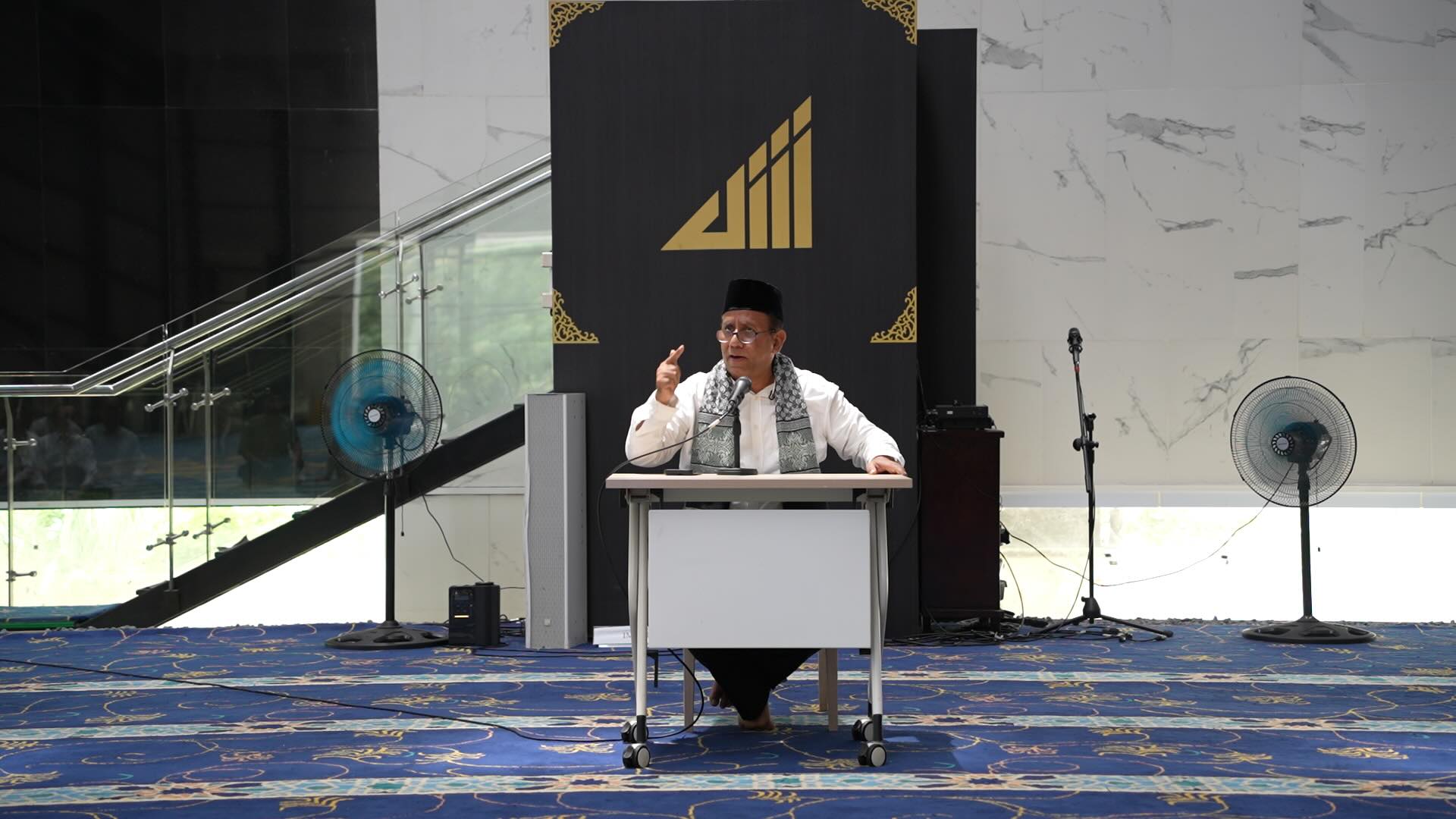
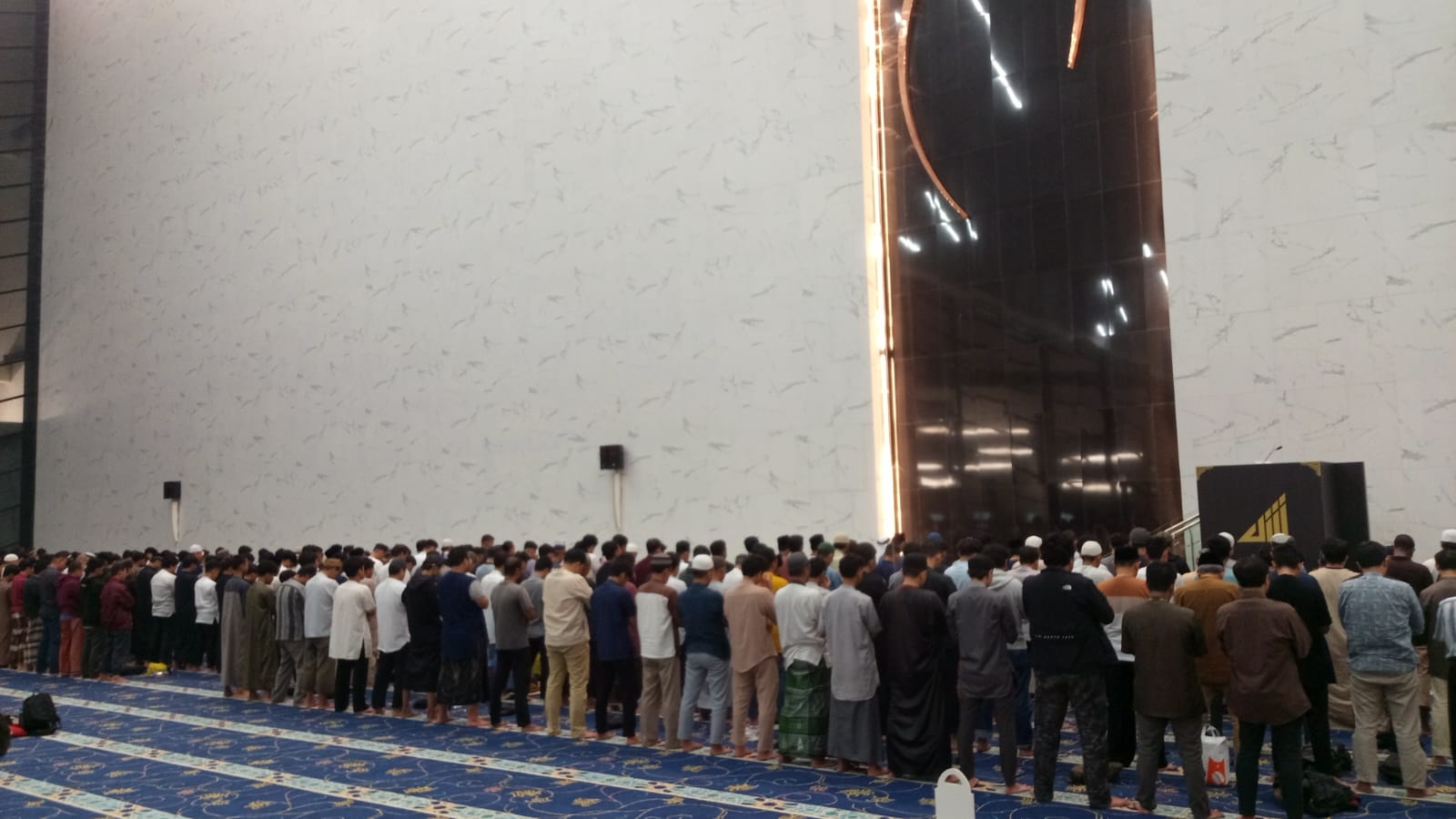
DEPOK, Indonesia — The Rahmatan Lil ‘Alamin Mosque at Universitas Islam Internasional Indonesia (UIII) marked the beginning of its Ramadan lecture series with a profound study session on Tuesday, February 23rd, 2026. The event, titled “Ramadan sebagai Ruang Transformasi Spiritual dan Sosial” (Ramadan as a Space for Spiritual and Social Transformation), drew faculty, staff, and students shortly after the Zuhr prayer.
The inaugural lecture of the “Kajian Zuhur Ramadan” series was delivered by Dr. Chaider S. Bamualim, M.A. , the University Secretary who is also the supervisor and overseer of the mosque’s management (DKM). Dr. Bamualim structured his talk around the ultimate goal of fasting: the attainment of taqwa, or God-consciousness.
The Foundation of Fasting and the Meaning of Taqwa
Opening his remarks, Dr. Bamualim grounded the discussion in the primary source of Islamic law, quoting QS Al-Baqarah (2):183: “Yā ayyuhal-lażīna āmanū kutiba ‘alaikumuṣ-ṣiyāmu kamā kutiba ‘alal-lażīna min qablikum la‘allakum tattaqūn.” (“O you who have believed, decreed upon you is fasting as it was decreed upon those before you that you may become righteous [attain taqwa]”).
He explained that this verse serves as the strongest foundation for the obligation of fasting, clearly stating its divine purpose. “The verse does not merely command us to hunger and thirst,” Dr. Bamualim explained. “It directs us toward a higher objective: taqwa. But what is taqwa?”
The speaker elaborated that linguistically and theologically, taqwa stems from the root word wiqayah, meaning to protect. “In essence, taqwa is the consciousness that compels a person to protect themselves from God’s punishment and anger,” he said. “It is an internal shield that guards the soul from transgression. And it is a dangerous state indeed for a human being to live without this sense of awe and fear of Allah SWT. A person without taqwa feels no restraint; they are adrift without a moral compass.”
Taqwa as Social Ethics
Dr. Bamualim then broadened the discussion by introducing the perspective of the renowned modernist Islamic philosopher, Fazlur Rahman. He noted that Rahman’s interpretation of taqwa extends far beyond personal ritual compliance.
“Fazlur Rahman reminds us that taqwa is not just about meticulous performance of rituals, praying, fasting, and abstaining from the forbidden on a personal level,” Dr. Bamualim stated. “According to him, taqwa is a deep-seated consciousness that must manifest as social ethics. It is spiritual maturity, “kematangan spiritual,” that becomes visible and tangible in social reality.”
He elaborated that this form of taqwa translates into honesty in the marketplace, integrity in the classroom, compassion for the poor, and a commitment to justice in all aspects of life. “Ramadan trains us to develop this shield,” he concluded. “But the true measure of our fasting is whether that shield remains with us after Ramadan, protecting not just ourselves, but actively contributing to a more ethical and just society, a true manifestation of Rahmatan Lil ‘Alamin.”
The event was the first in a series of planned Ramadan activities at the university mosque. Ustadz Rivaldy Sandika Putro, the organizer of the event, expressed his hope that the Kajian Zuhur would continue to provide a meaningful space for spiritual growth and communal reflection throughout the holy month.[]

Universitas Islam Internasional Indonesia