January 6, 2026
By Supriyono
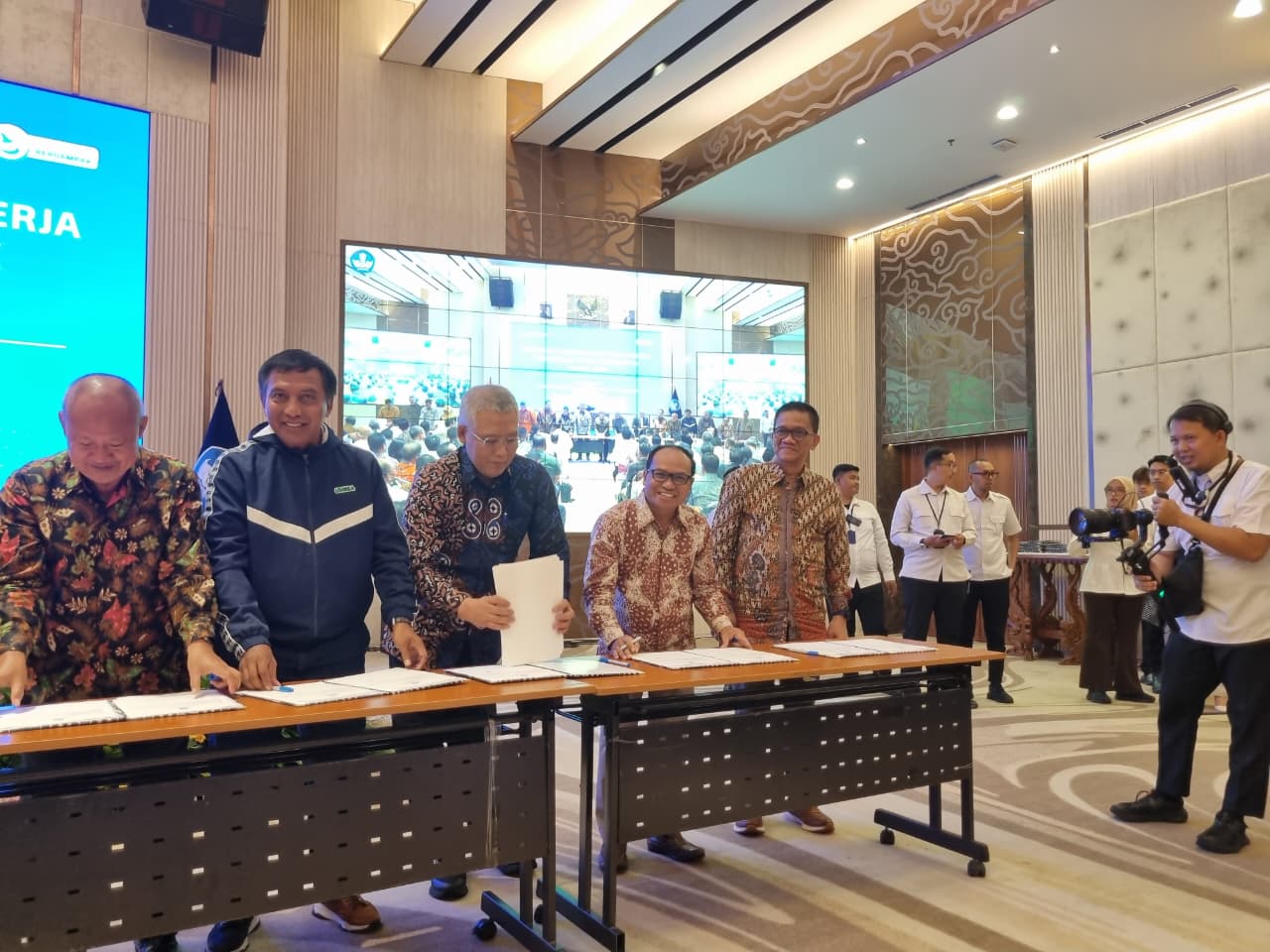
As an autonomous Public University with Legal Entity (PTN-BH), Universitas Islam Internasional Indonesia (UIII) officially signed a Performance Agreement (Perjanjian Kinerja) with the Ministry of Higher Education, Science, and Technology on January 5, 2026, marking a strategic commitment to strengthening accountable governance, academic excellence, and global competitiveness.
UIII Rector Prof. Jamhari Makruf and Minister of Higher Education, Science, and Technology Prof. Brian Yuliarto signed the agreement which sets measurable targets that will guide UIII’s institutional development while ensuring transparency and results-oriented management.
The agreement reflects a shared understanding of higher education as the backbone of national development. “Universities play a critical role in preparing high-quality human resources and advancing innovation through leading-edge research. In this context, the progress of a nation is closely tied to the quality, relevance, and global standing of its higher education institutions,” said Prof. Jamhari.
Through this agreement, UIII commits to achieving performance outcomes across five strategic pillars: talent development, research and innovation, societal contribution, integrity-based governance, and participatory academic life.
These pillars reflect both national higher education priorities and UIII’s distinct mandate as an international postgraduate university, part of National Strategic Project which carries a diplomatic mission.
In the area of talent development, UIII will continue to strengthen its postgraduate focus, maintaining a student body composed entirely of master’s and doctoral candidates. The university also aims to sustain a strong international profile, with international students comprising 45 percent of total enrollment. Graduate outcomes are another key priority, with a target of 80 percent of graduates entering employment, further study, or entrepreneurship within one year of graduation.
The agreement further highlights UIII’s commitment to research excellence and global collaboration. Targets include maintaining and expanding internationally reputable publications, increasing the proportion of top-tier and Q1 journal outputs, and gradually scaling up international research partnerships. Collaboration with industry, startups, and external institutions is also expected to grow, reinforcing the relevance and impact of UIII’s research ecosystem.
UIII’s societal contribution forms another central dimension of the agreement. The university is expected to deepen its engagement with the Sustainable Development Goals (SDGs), particularly in the areas of quality education, poverty reduction, and global partnerships. While still a young institution, UIII is laying the groundwork for future participation in international university rankings, including the QS World University Rankings and THE Impact Rankings.
On the governance side, the Performance Agreement highlights efforts to strengthen financial sustainability and institutional integrity. UIII targets an increase in non-tuition revenue, gradual growth of its endowment fund, and more strategic allocation of resources. Greater investment in research, faculty development, and laboratory facilities is expected to enhance academic capacity and long-term resilience.
As the supervising authority, the Ministry of Higher Education, Science, and Technology will monitor and evaluate UIII’s performance throughout the year. Evaluation outcomes may inform institutional recognition, policy support, or corrective measures to ensure optimal achievement of agreed targets.
Beyond its scope, the 2026 Performance Agreement also serves as a foundation for UIII’s medium-term performance roadmap for 2026–2030. It reflects the university’s broader aspiration to emerge as a globally respected center for advanced Islamic studies, interdisciplinary research, and international academic exchange, contributing not only to Indonesia’s higher education system but also to global knowledge production.


Universitas Islam Internasional Indonesia