January 6, 2026
By Dadi Darmadi
JAKARTA, DISWAY.ID – Arnold van Gennep, a French anthropologist, was the pioneering figure to introduce the term rites de passage: rituals performed to mark transitional phases in human life, encompassing social, political, and psychological dimensions.
Van Gennep’s research affirmed that every society, regardless of location, possesses traditions of rites de passage.
These transitions occur at moments such as birth, entry into adulthood, marriage, specific stages of pregnancy, and death, along with various other pivotal life events.
Such transitional periods frequently evoke anxiety, apprehension, uncertainty, a mingling of joy and sorrow, and even feelings of alienation and marginalization due to an ambiguous future.
Consequently, transition rituals are conducted as a form of spiritual support to navigate the “new world,” an uncertain situation that often stirs inner turmoil.
If we interpret the turn of the year as a “transitional phase” prompted by the passage of time, then the celebration of the year’s end and beginning aligns closely with the concept of rites de passage introduced by Arnold van Gennep.
The New Year becomes a moment of transition, a turning point where individuals, both personally and collectively, leave the past behind and prepare to embrace the future.
Diverse traditions, from communal prayers and introspection to public festivities, serve to alleviate the anxiety and uncertainty accompanying this change.
Through these rituals, communities nurture the hope that the coming year will bring goodness, prosperity, and a more harmonious existence.
The New Year celebration also functions to reinforce social bonds and strengthen collective solidarity, rendering it not merely an occasion for festivity but a significant spiritual and social institution.
Traditions of Celebrating the New Year
Rites de passage for the year’s end and beginning are celebrated through various unique traditions across the Indonesian Archipelago.
Each region possesses distinct customs for welcoming the transition, ranging from religious ceremonies and communal prayers to public festivals.
These traditions serve not only as symbols of renewed hope but also as a means to fortify fraternal bonds and preserve social harmony.
Within the traditions of the Yogyakarta and Surakarta Royal Palaces, the observance of the Javanese New Year, falling on 1 Suro, which coincides with 1 Muharram in the Islamic Hijri calendar, is commemorated with sacred, meaningful ritual sequences.
In Yogyakarta, the celebration commences with the Jamasan Pusaka ritual, the cleansing of royal heirlooms by royal courtiers. This act symbolizes personal purification and spiritual renewal.
Subsequently, the royal family and retainers undertake a pilgrimage to ancestral graves at Imogiri, expressing reverence and seeking blessings.
Another distinctive tradition is Labuhan, a ceremonial offering of sesaji (ritual items) at sacred sites such as Parangkusumo Beach, Mount Merapi, and Mount Lawu. In the South Coast Labuhan, offerings are presented to Nyai Roro Kidul, the mystical guardian spirit of the southern sea.
This procession is understood as an endeavor to maintain harmony between humanity, nature, and spiritual forces. On the night of 1 Suro, the royal family and community observe the Mubeng Beteng tradition, silently circumambulating the Yogyakarta Palace walls, typically following communal prayers at the mosque.
In Surakarta, the 1 Suro celebration is marked by the Kirab Kebo Bule. This sacred albino water buffalo is paraded around the palace grounds.
The community holds that touching the kebo bule, or even collecting its dung, brings blessings. The dung is often taken home to be mixed with fertilizer, believed to enhance soil fertility.
The Chinese community in Indonesia likewise celebrates the Lunar New Year (Imlek) with characteristic traditions such as distributing angpao (red envelopes) and performing lion dances (barongsai). The barongsai is regarded as a symbol of fortune, strength, and wisdom.
The lion figure embodies hopes for courage and good luck in the coming year.
New Year celebrations, whether observed solemnly through prayer or joyously with music and fireworks, are fundamentally occasions for togetherness.
Citing Émile Durkheim, collective effervescence, or shared effervescence, constitutes a vital prerequisite for the emergence of social solidarity. Without experiences of collective joy, solidarity struggles to take root.
The New Year serves as a reminder that time moves perpetually forward.
It acts like a bell marking a lap in a long-distance race, inviting us to pause briefly and reflect: on accomplishments made, promises kept, and aspects requiring improvement.
Therefore, the New Year celebration can be understood as a cultural theatre that reinforces social order and solidarity.
It is thus unsurprising that the 2026 New Year’s celebration was advised to forgo fireworks as a gesture of solidarity with the people of Sumatra afflicted by disaster, much like the 2005 celebration became an act of empathy for the victims of the Aceh tsunami.
Most importantly, New Year celebrations foster a shared conviction that the future remains open and worthy of pursuit.
George Bernard Shaw once remarked, “The optimist invents the aeroplane, the pessimist invents the parachute.” Both optimism and pessimism give rise to innovation. While humanity cannot guarantee outcomes, it can always continue to create. Happy New Year.
*)
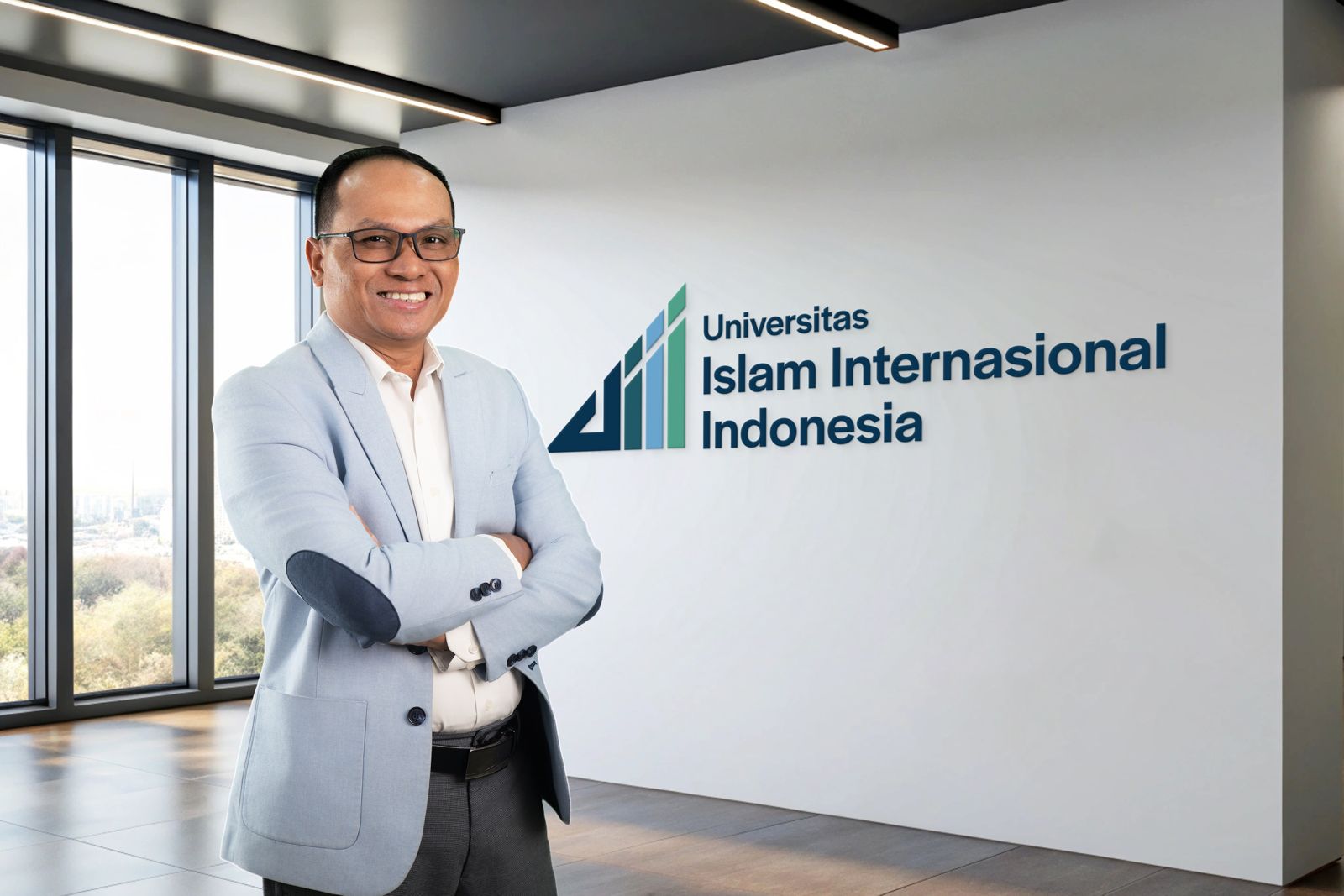
Rector of Universitas Islam Internasional Indonesia (UIII)
This article was previously published here: https://disway.id/read/920830/rites-de-passage-akhir-dan-awal-tahun-baru/45
Universitas Islam Internasional Indonesia