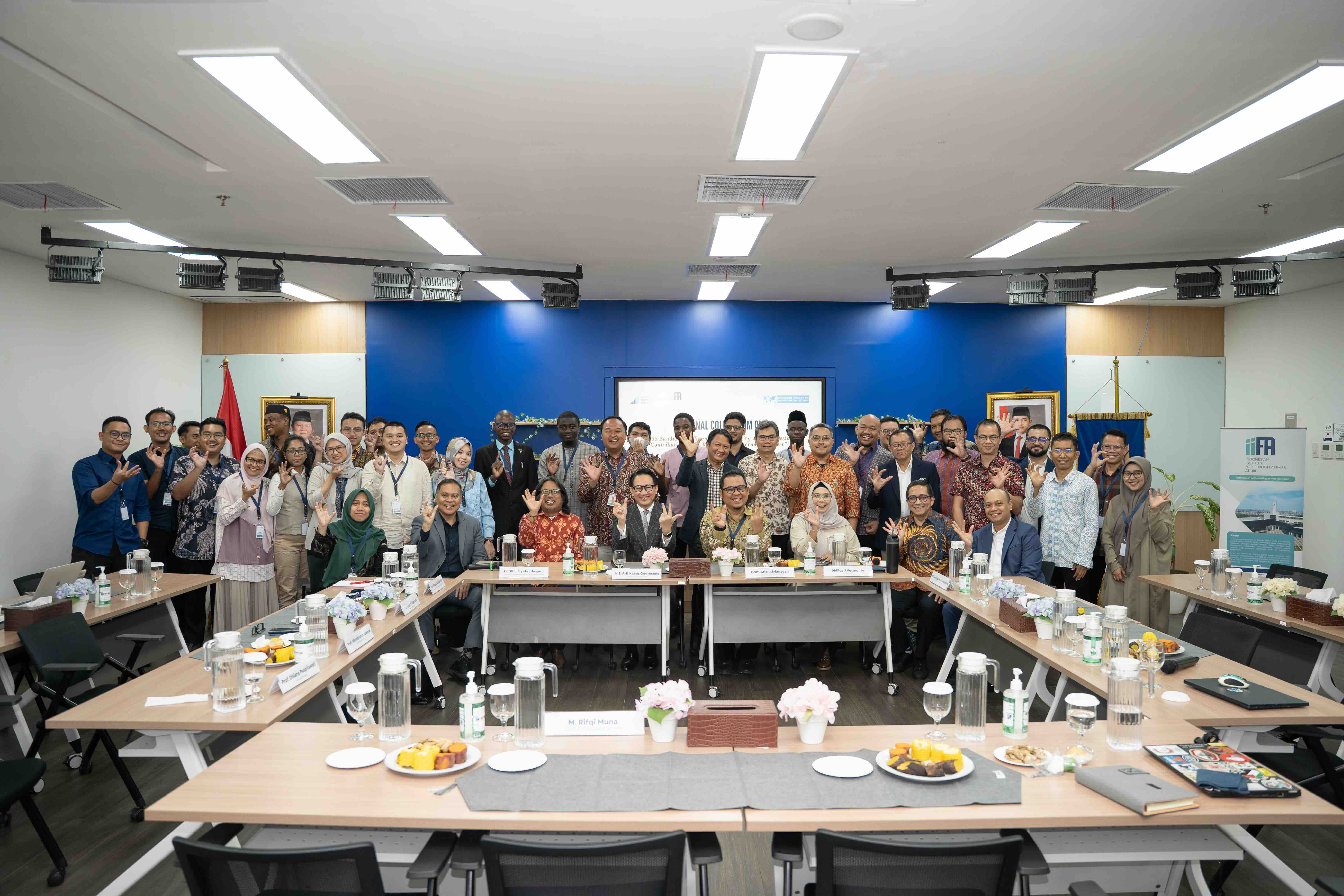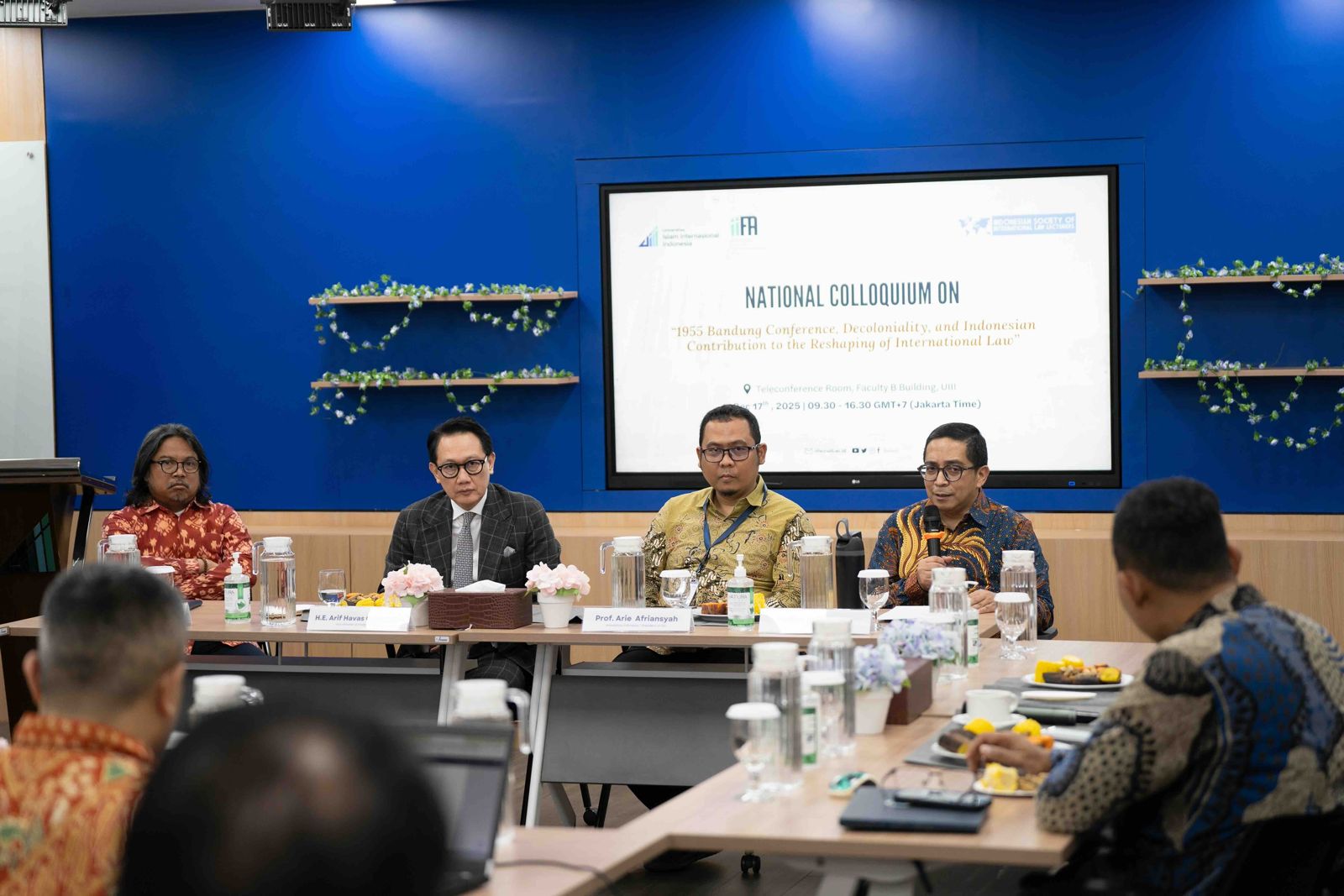
Universitas Islam Internasional Indonesia (UIII) through the Indonesian Institute for Foreign Affairs (IIFA) at the Faculty of Social Sciences, in collaboration with the Indonesian Society of International Law Lecturers (ISILL), held a National Colloquium titled “1955 Bandung Conference, Decoloniality, and Indonesian Contribution to the Reshaping of International Law” on Wednesday, 17 December 2025. The event brought together scholars, policymakers, and diplomats to revisit the enduring legacy of the 1955 Asian–African Conference and its profound implications for international law and global order.
Opening the colloquium, Dean of the Faculty of Social Sciences UIII, Philips J. Vermonte, Ph.D., welcomed participants to what he described as UIII’s “humble and growing campus,” expressing hope that the discussions would be intellectually enriching. He underlined that the Bandung Conference remains insufficiently appreciated, particularly regarding its long-term consequences for international law.
According to the Dean, the 1955 gathering of newly independent states fundamentally altered how countries organized their relations and inspired decolonization movements worldwide. “What happened in Bandung became a template for many countries in the process of decolonization and reshaped the way international relations and international law developed,” he noted.
The colloquium was part of a broader series commemorating the spirit of Bandung, following earlier international conferences and ahead of another regional discussion in collaboration with partners in Singapore. Dean Vermonte emphasized that UIII consistently invites policymakers to such forums, reflecting its role as a policy-oriented academic institution closely connected to ministries and state institutions.
Director of the Center for International Law at IIFA UIII, Zezen Zaenal Mutaqin, S.J.D., framed the colloquium as an effort to reclaim Indonesia’s intellectual ownership of the Bandung legacy. He stressed that despite Bandung’s status as a cornerstone of Third World contributions to international legal thought, Indonesian scholars have often been absent from major global academic debates on the topic.
“If we do not actively reclaim these narratives, the legacy of Bandung risks becoming an object of study for others, rather than a living framework shaped by Indonesian scholarship,” he said. Dr. Zezen expressed hope that the dialogue would lead to scholarly publications, policy recommendations, and renewed approaches to teaching and practicing international law from decolonial perspectives.
Vice-Rector for Academic Affairs at UIII, Assoc. Prof. Syafiq Hasyim also addressed participants, conveying greetings from UIII Rector Prof. Jamhari, who was unable to attend due to ministerial duties. He spoke about UIII as a newly established state university with a strong international mission, emphasizing its commitment to offering alternative perspectives in global scholarship. With more than 500 students from around 50 countries—predominantly from the Global South—UIII positions itself as a hub for rethinking dominant paradigms in social sciences, religion, and international studies.
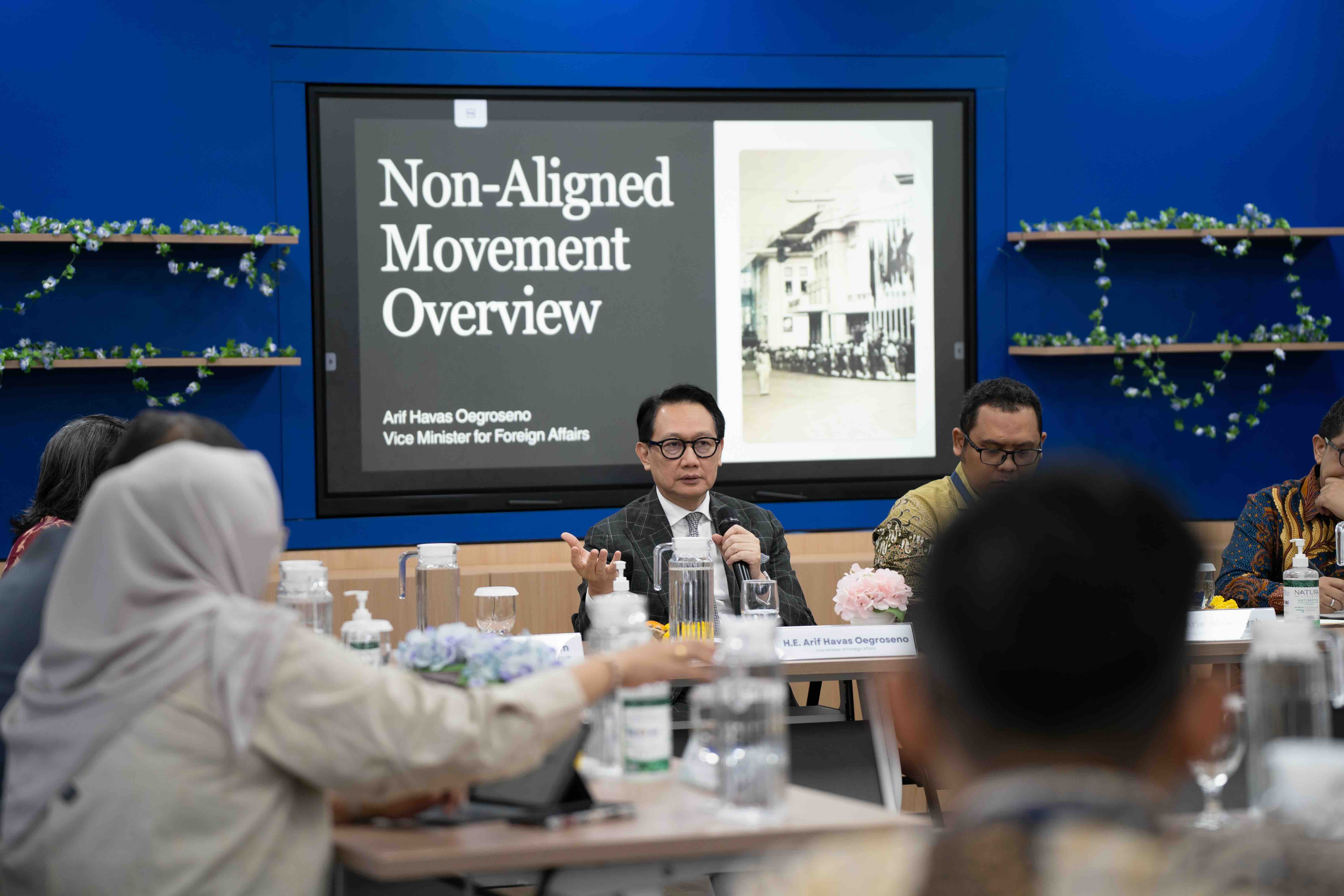
The Colloquium continued with a keynote address delivered by H.E. Arif Havas Oegroseno, Vice Minister of Foreign Affairs of the Republic of Indonesia. His presence highlighted the close link between academic reflection and diplomatic practice in understanding Bandung’s relevance to contemporary global diplomacy and international law.
The colloquium also featured prominent speakers, including Prof. Hikmahanto Juwana (Universitas Indonesia), Prof. Iman Prihandono (Universitas Airlangga), H.E. Ambassador L. Amrih Jinangkung (Ministry of Foreign Affairs), Prof. Dhiana Puspitawati (Universitas Brawijaya), and Prof. Arie Afriansyah (Universitas Indonesia and President of the Indonesian Society of International Law Lecturers).
Through this national colloquium, UIII reaffirmed its commitment to advancing critical, decolonial perspectives on international law and to positioning Indonesia not only as a historical actor of Bandung 1955, but also as an active intellectual contributor shaping global legal and political discourse today.