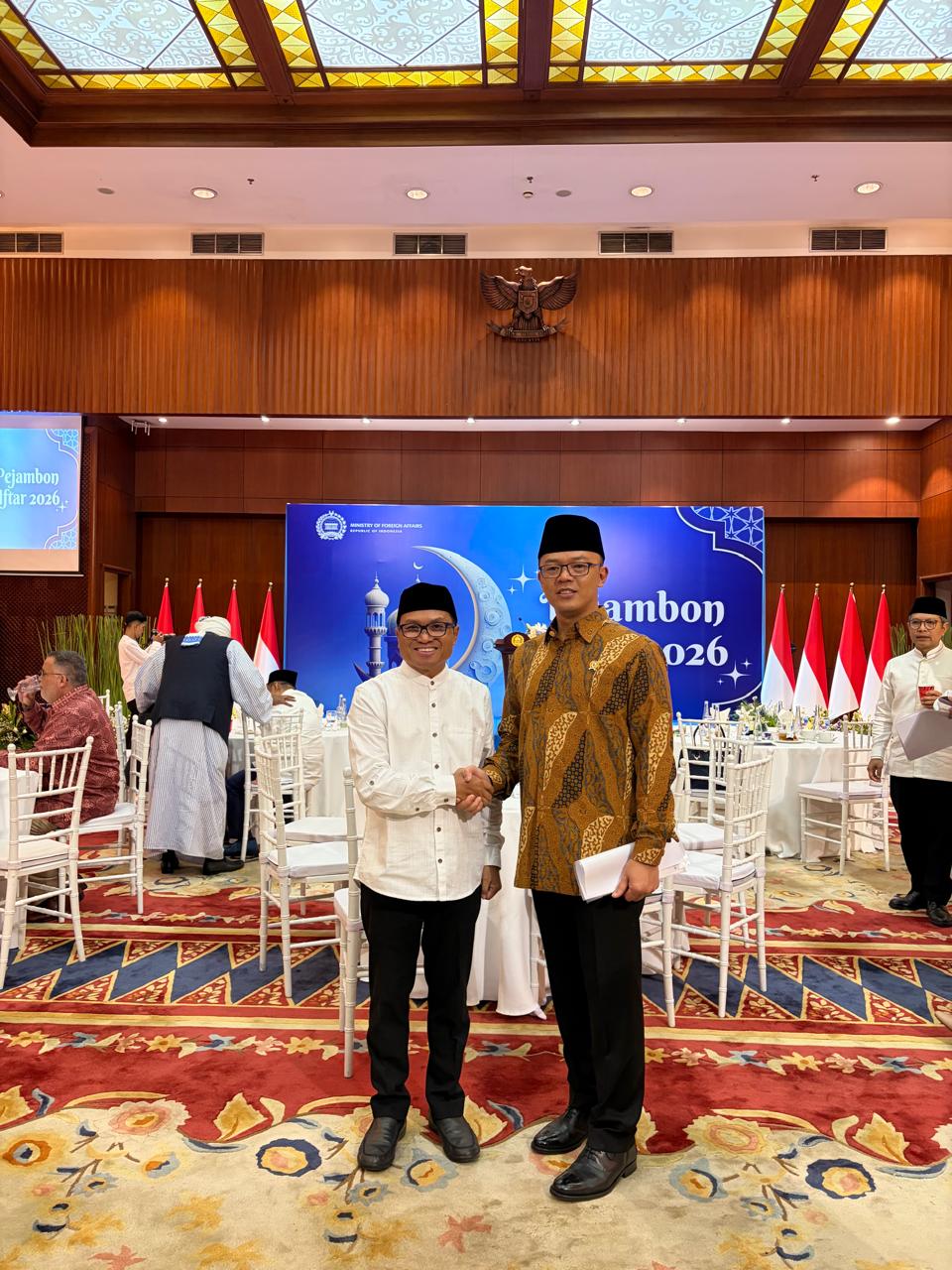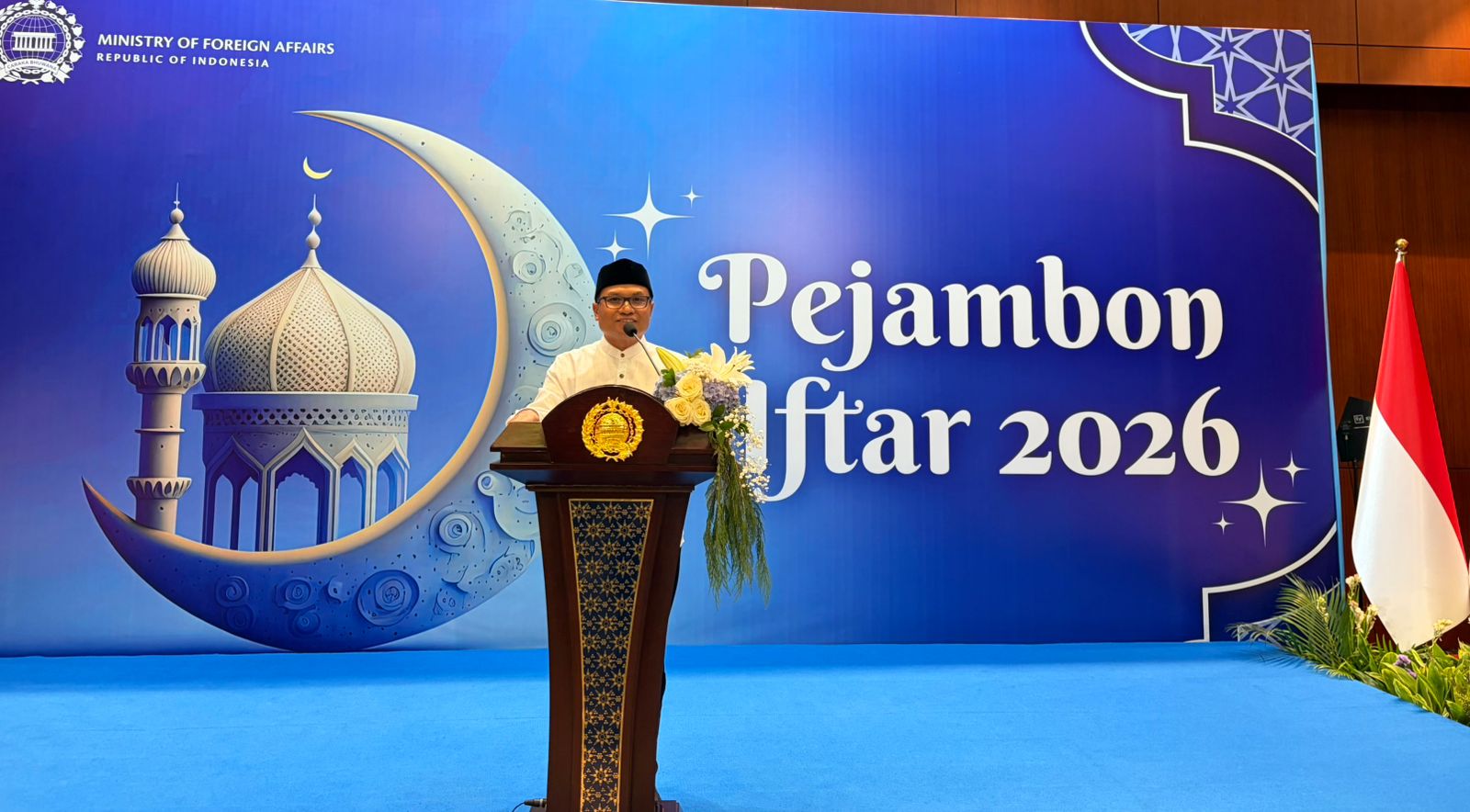
Jakarta, March 13, 2026 – Prof. Jamhari Makruf, PhD, Rector of Universitas Islam Internasional Indonesia (UIII), delivered a thought-provoking Ramadan lecture at the prestigious Pejambon Iftar 2026, organized by the Indonesian Ministry of Foreign Affairs. The event, held at the Nusantara Room of the Ministry’s Main Building on Jalan Taman Pejambon No. 3, Central Jakarta, brought together foreign ambassadors, senior ministry officials, and representatives from international organizations under the theme “Promoting Collaboration and Solidarity for Peace and Shared Prosperity.”
Minister of Foreign Affairs of the Republic of Indonesia, Sugiono, in his remarks, expressed his appreciation and welcomed all the guests in attendance, including ambassadors of friendly nations and representatives of international organizations. He emphasized that the Pejambon Iftar, held annually during Ramadan, is an important part of the Ministry of Foreign Affairs’ efforts to strengthen friendly relations and dialogue between nations. “This moment of togetherness not only strengthens our bonds of friendship but also reflects Indonesia’s commitment to continue building bridges of understanding and cooperation with the international community,” stated Minister Sugiono in his address.
In his address, Professor Jamhari explored the multifaceted significance of Ramadan fasting, emphasizing its spiritual, social, and cultural dimensions. Speaking to a distinguished audience that included His Excellency Minister of Foreign Affairs Sugiono, ambassadors from both Muslim and non-Muslim countries, and ministry officials, the Rector framed fasting as far more than mere abstinence from food and drink.
“Observing the fast of Ramadan is an act that extends far beyond abstaining from food and drink from dawn till dusk,” Professor Jamhari stated. “It is a practice that transcends the purely ritual and flows into the very fabric of our social and cultural lives. In Muslim societies around the world, fasting has evolved into a profound collective tradition, serving simultaneously as a sacred duty to God and as vibrant engagement with a shared cultural heritage.”
The Rector elaborated on the concept of Imsak, self-restraint and discipline, as a core lesson of Ramadan, with relevance extending into economic, social, and political spheres. “This principle teaches us a vital truth: that true strength lies not merely in exercising our abilities, but in the wisdom to pause and reflect on the impact of our actions on others, especially the less fortunate. This inner control is the very seed of empathy.”
Professor Jamhari also highlighted how Ramadan fosters social cohesion and solidarity across cultures, from communal iftars in Middle Eastern mosques to festive traditions in Turkey and Morocco. He particularly celebrated Indonesia’s rich diversity of Ramadan customs, including Aceh’s Meugang feasts, Java’s Dugderan processions, and the nationwide tradition of buka bersama (communal iftars) that unite colleagues, friends, and families.
The Rector noted with appreciation how Jakarta’s iftar traditions have “gone global,” with embassies of both Muslim and other nations hosting meals for their Muslim friends. He humorously referenced the Prophet Muhammad’s teaching that those who provide food for breaking fast share in the spiritual reward, thanking Minister Sugiono for hosting the evening’s gathering.
Introducing his university’s mission, Professor Jamhari explained that IIIU is distinguished not only by academic excellence but by its commitment to Islam Wasatiyyah, a balanced, moderate, and inclusive approach to Islamic thought. With strong support from President Prabowo, the institution serves as a strategic bridge for intercultural dialogue and Indonesian diplomacy. Notably, the university community comprises approximately 500 postgraduate students from 55 countries, reflecting its international reach and commitment to nurturing future leaders for global peace.
Minister Sugiono, who serves on IIIU’s Board of Trustees, was acknowledged for his steadfast support of the university’s growth and initiatives.
Concluding his lecture, Professor Jamhari reminded the audience of fasting’s deeper moral purpose, quoting the Prophet’s teaching: “If one does not abandon falsehood and evil deeds, and refrain from speaking badly about others, God has no need for his fasting.” He expressed hope that this year’s Ramadan would be a true source of spiritual growth, compassion, and closeness to both God and fellow human beings.
The Pejambon Iftar 2026, an annual tradition at the Ministry of Foreign Affairs, continues to serve as a platform for fostering international friendship and understanding during the holy month of Ramadan. The event was coordinated by the Ministry’s Directorate General of Public Diplomacy, led by Director General Heru Subolo, with Wasikhu Sunani Ali Asrori serving as contact person. []