January 14, 2026
By Dadi Darmadi
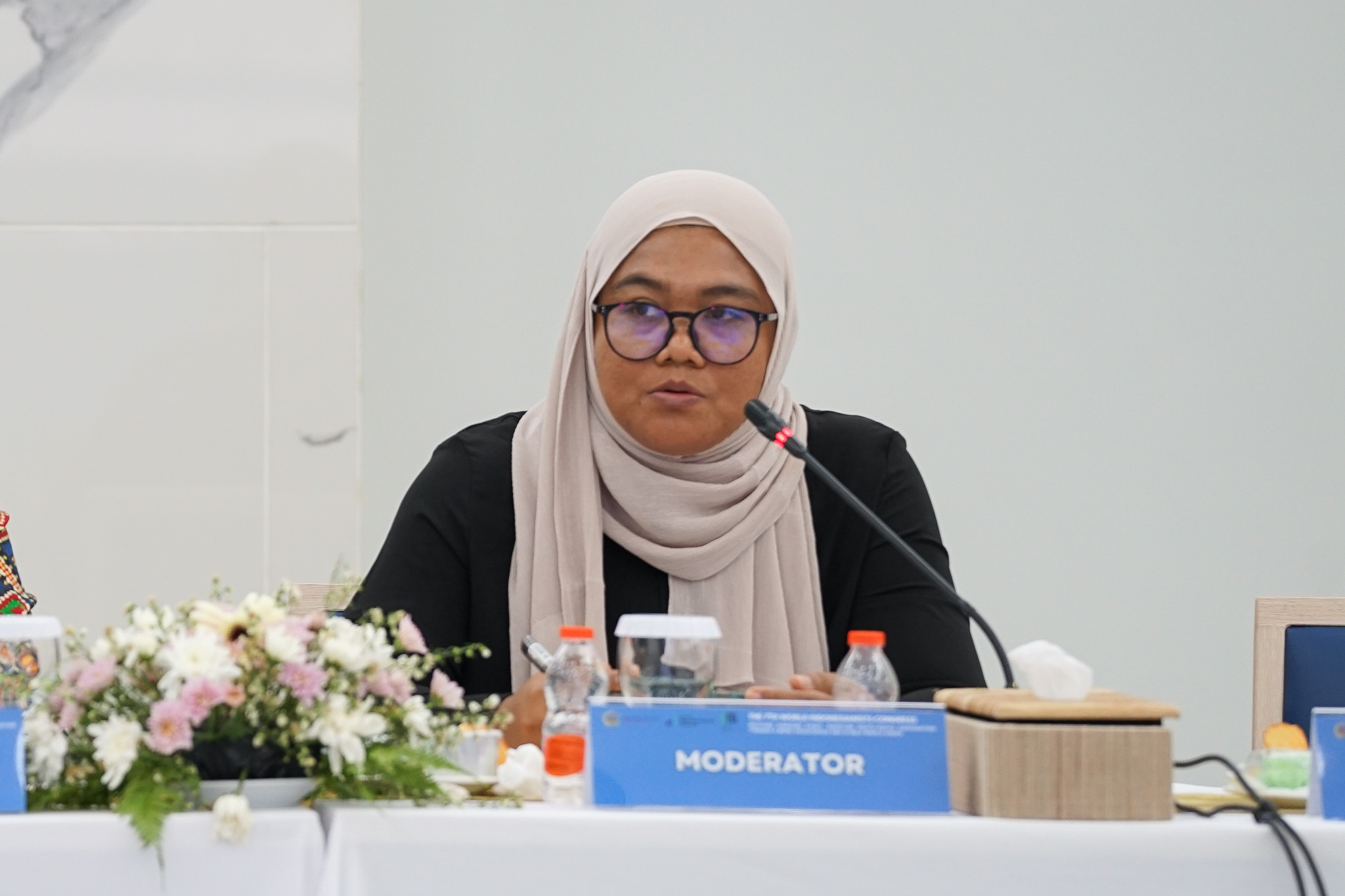
Depok – In the vibrant academic landscape of Universitas Islam Internasional Indonesia (UIII), a dynamic, newly established graduate institution in Depok, West Java, dedicated to creating innovative research on Islam and Muslim societies, Dr. Nia Deliana emerges as a compelling voice reshaping our understanding of the Indian Ocean’s historical interconnections.
As a lecturer in the Faculty of Social Sciences, she specializes in pre-colonial international relations, maritime heritage, identity politics, and South-South dynamics. Her work challenges Eurocentric histories, highlighting indigenous agency in the vibrant networks that once linked South India, the Malay Archipelago, and beyond, perfectly aligning with UIII’s mission to advance innovative scholarship on Muslim societies, foster global intellectual exchange, and contribute to practical knowledge in a modern, interconnected context.
Born in Aceh, a province with deep maritime roots and a history of resilience, Deliana’s personal experiences profoundly inform her scholarship. The 2004 Indian Ocean tsunami devastated her homeland, leading her to engage in humanitarian work with organizations like Bumi Sehat Bali and the Aceh Cultural Institute under the late Human Rights Minister Hasballah M. Saad. These efforts sparked her interest in human rights, cultural exchanges, and vulnerability in maritime communities. She balances family life with her intellectual pursuits, often dedicating her work to themes of connection amid division.
Scholarly Journey
Deliana’s academic path led her to earn a Ph.D. from the International Islamic University of Malaysia (IIUM), where her dissertation explored historical foreign relations between South Indians (particularly from South India and Coromandel coast regions) and Indonesia, focusing on Sumatra and Malay World. Drawing from classical Malay texts, archival sources, and process-tracing, she uncovered dynamic pre-colonial interactions. Before joining UIII, she taught global Muslim civilization and Indonesia’s historical relations in Malaysia and Turkiye, even co-founding the Aceh-Turkey Cultural Centre. She has co-authored works like Indians in Indonesia: After Sweat and Blood Thus we Belong, published recently by Brill, 2025.
At UIII’s Faculty of Social Sciences, Deliana teaches courses on international relations theory, qualitative methods, gender and politics, and Indian Ocean relations. She supervises graduate theses on topics ranging from maritime security, gender identity politics to digital social movement. Her ongoing research examines pre-nation-state diplomacy across the Indian Ocean, emphasizing mandala-like structures of power, shared norms, and fluid alliances.
Her New Book
Her landmark achievement came with the 2025 publication of The Ocean Remembers: Indians and the Tides of Empire (Strategic Information and Research Development Centre, SIRD). This book traces the socio-political history of “Kelings,” South Indian merchant communities who were pivotal in the Indian Ocean’s Muslim economic network long before European arrival. In this new book, she explores how the term “Keling” evolved from a respected identifier to a racial slur under colonial influences, reclaiming a forgotten global legacy of trade, culture, and agency.
In a deeply personal dedication amid the slow recovery from devastating floods and landslides that struck Aceh and Sumatra in late 2025, destroying homes and affecting countless families, Deliana wrote:
“I dedicate this book to all of us who are witnessing our beloved states, are increasingly divided through borders, ideology and identity, and digital pseudo-knowledge; to all of us who forget that once our international history was more of connection and universal value…10 years in the making, I hope this book will be able to bring us, the people of colour, of different religions, of diverse identities, closer than ever before.”
Strong Academic Contributions
Her 2025 academic contributions also extended internationally. In March, she spoke at a workshop in Odisha, India, on maritime heritage and blue economy futures, analyzing India-Indonesia soft power through over 52 classical Malay sources. In May, at the 3rd International Conference on “Kalinga and Southeast Asia: The Civilisation Connect,” she highlighted the living heritage of ancient Kalinga in Southeast Asia via references to “Kling” in historical texts. She also served as a discussant on human rights in maritime Southeast Asia, exploring geopolitical peace in the Indian and Malay Peninsulas.
Deliana’s articles further illuminate these themes: “The Mandala, Agency and Norms in Indonesia-India Global Affairs” (E-International Relations, 2024); “South Indians and the Power Politics of Natural Resources” on tin trade conflicts in the 1650s; and “The Global South Contest for Soft Power and Influence” (2025), examining how nations like India and Indonesia leverage historical narratives. Other works include a journal paper on Ottoman and Indonesia and the Rohingya crisis during the pandemic.
In an era of Indo-Pacific strategies, rising Global South leadership, and challenges like maritime security and refugee policies, Deliana’s scholarship reminds us that oceans have historically connected civilizations through shared values and mobility. At UIII, a forward-looking institution poised to become a global hub for groundbreaking research on Islam, Muslim societies, and intercultural dialogue, emerging scholars like Dr. Nia Deliana exemplify its ambitious vision, bridging past and present to foster a more inclusive and harmonious world. []
Universitas Islam Internasional Indonesia