December 16, 2025
By Prof. Jamhari Makruf, Ph.D *)
This assumption may be mistaken, but it is striking how limited the knowledge of Muslim societies about other Muslim countries remains.
Generally, Indonesians know the names of Muslim countries, their leaders, and their flags. Yet when questions delve deeper, the answers are far fewer than one might expect. If Azerbaijan is mentioned, for example, not many can describe its society, explain its political system, its historical ties to Turkey, or its predominantly Shiʿa religious character. I am also convinced that many Muslims in Indonesia know little about the Maldives, aside from those who have vacationed there, despite it being a fully Muslim nation where Islamic law is implemented.
Conversely, Muslim societies worldwide know little about other Muslim communities. When visiting universities in Muslim-majority countries, one finds only a few people with an in-depth understanding of Indonesia. They know Indonesia has a large Muslim population and notice the significant number of Indonesian pilgrims during hajj and umrah in Mecca and Medina. “We are impressed by Indonesian pilgrims who are always neat, obedient, and dressed in distinctive, colorful attire,” is a common remark. Beyond this, few are aware that Indonesians predominantly follow the Shafiʿi school, that the country is home to the world’s two largest Islamic organizations—Muhammadiyah and Nahdlatul Ulama—or that it has unique Islamic educational traditions like pesantren, surau, and meunasah. It seems the Muslim world often remains bound merely by emotional religious ties.
Religious Solidarity
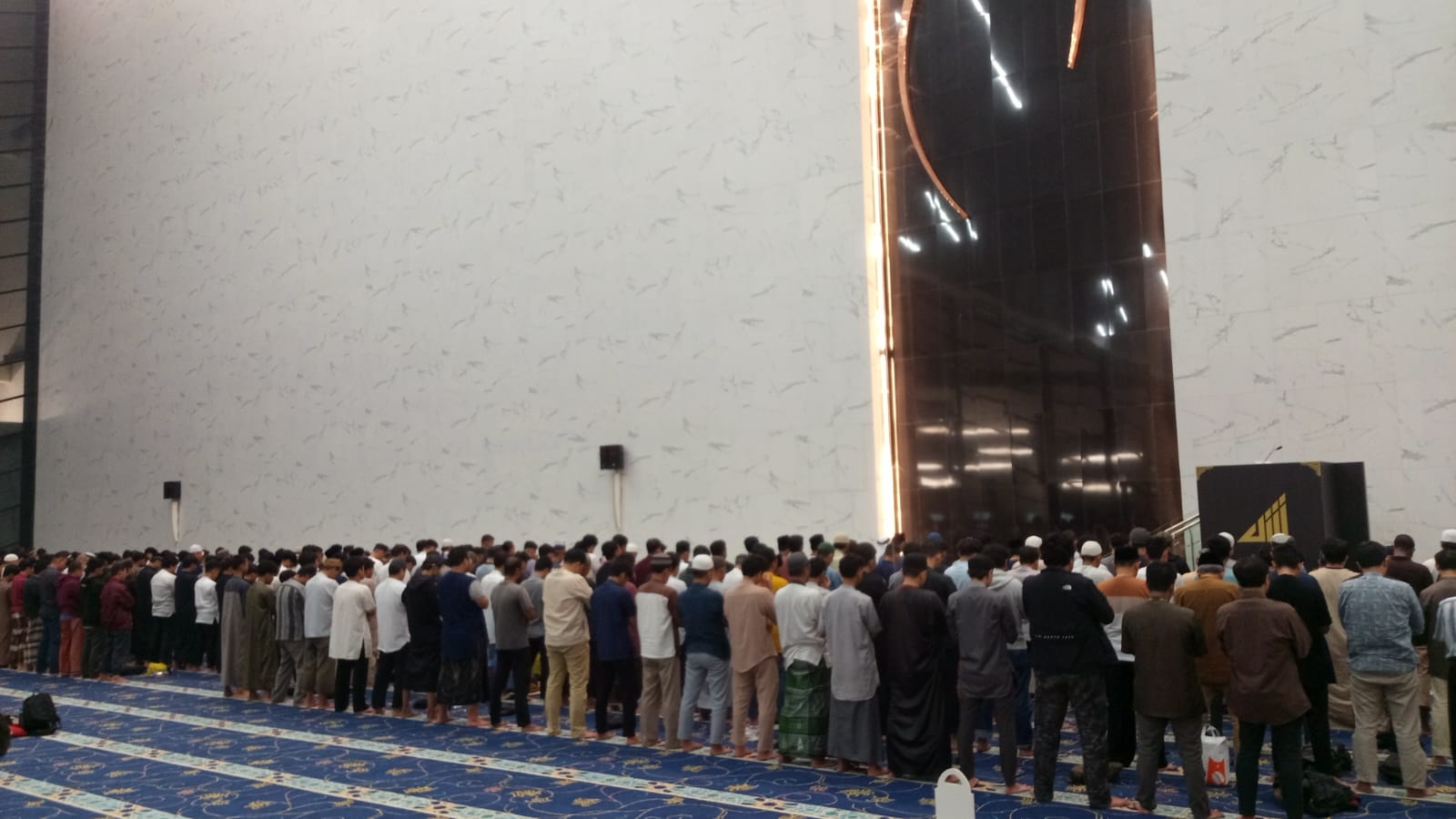
Muslim societies actually possess strong capital for mutual understanding, connected by powerful religious bonds. This solidarity is evident in the quick emotional closeness that forms when Muslims meet anywhere. Moreover, Islamic rituals—prayer, fasting, pilgrimage, and almsgiving—create vast spaces of encounter. Mosques unite believers daily through congregational prayer. The hajj brings together millions of Muslims annually, which Ali Shariati called an “Islamic Congress.” Zakat fosters care and altruism among fellow believers.
But why does this closeness sometimes feel distant? One answer may lie in the tendency to magnify differences in religious understanding. Variances in interpretation or ritual practice can push communities apart. Separate mosques are built due to differing worship styles, and intellectual associations form around divergent viewpoints. A similar dynamic appears to hinder cooperation among Islamic universities globally. In religious studies, sustained collaboration is rare.
In a discussion with intellectuals in Tehran, we proposed shifting academic cooperation in the Muslim world away from the dominance of religious studies toward collaboration in science and technology. Collaboration grounded in religious studies often proves short-lived, as discussions drift toward differences and tension. In contrast, cooperation in technology, industry, and science holds greater potential for generating shared strength. Iran excels in high technology and medicine; Pakistan has advanced nuclear capabilities; Gulf countries lead in petroleum technology. Cooperation in these areas is far less likely to generate tension than religious collaboration, which can easily expose differences.
Area Studies
Area Studies gained prominence particularly in the United States and Europe during the Cold War. The establishment of such programs was driven by geopolitical interests, designed to study rival and allied regions to formulate foreign policy. How do Area Studies differ from Orientalism? While similar, they are not identical. Orientalism developed in the 19th century through Western capitalism and modernism, essentially a Western way of viewing the non-Western world. Edward Said described it as “a Western style of domination, restructuring, and authority over the Orient.” It grew alongside colonialism.
Area Studies developed in the 20th century, particularly in the U.S., under the context of the Cold War. Its interests were more political and economic, aimed at winning global competition. Since the U.S. constitutionally separates religion and state, the religious dimension was not a primary focus. Historically, Orientalism was a European project; Area Studies was an American one.
Does Indonesia, then, need to establish Area Studies to understand other societies? Both frameworks emerged from an unequal world—Orientalism from European colonialism, Area Studies from U.S. global dominance. For Indonesia, the purpose would be different: not domination, but understanding. Farish Noor, a Malaysian intellectual teaching at UIII, has suggested renewing the Area Studies paradigm—not for colonial or hegemonic interests, but for our own needs.
A New Paradigm for Area Studies
“Near yet far, far yet near”—this aptly describes relations among Muslim countries. Religiously, they are close; prayers for each other’s welfare flow without borders. Academically, however, they remain distant. When conflicts arise in Iran, Afghanistan, or between Pakistan and India, few Indonesian scholars can offer in-depth analysis. Talk shows or reports on these regions typically feature individuals who have lived there, rather than scholars who have studied them systematically. The same is true in reverse: few Middle Eastern scholars deeply understand Indonesia’s politics, economy, or society.
Area Studies are necessary to build comprehensive knowledge among Muslim countries. The proverb “to know is to love” underscores the importance of mutual study, through which genuine cooperation can emerge. Research by the Faculty of Economics and Business at UIII shows that trade among Muslim countries remains very limited. Efforts to maximize solidarity still rely largely on religion, which is sometimes constrained by doctrinal differences.
Educational cooperation through Area Studies can become a foundation for strengthening collaboration. In Indonesia, Area Studies focusing on Muslim regions remain scarce. To date, only three universities—Universitas Indonesia, Universitas Gadjah Mada, and UIN Sunan Kalijaga—have established Middle Eastern studies programs. Most focus on language and culture, with few delving into broader strategic aspects.
The state should support universities in developing Area Studies programs, especially for strategic regions connected to Indonesia, to expand the country’s global role. In the U.S. and Europe, major corporations are strong patrons of Area Studies. Indonesia, too, has globally oriented industries capable of supporting such academic development. []
*) Rektor Universitas Islam Internasional Indonesia
This article was previously published on Disway.id, and can be accessed at: https://disway.id/read/916458/mendorong-area-studies-di-indonesia-jalan-menjadi-bangsa-besar/45
Universitas Islam Internasional Indonesia