February 6, 2026
By Dadi Darmadi
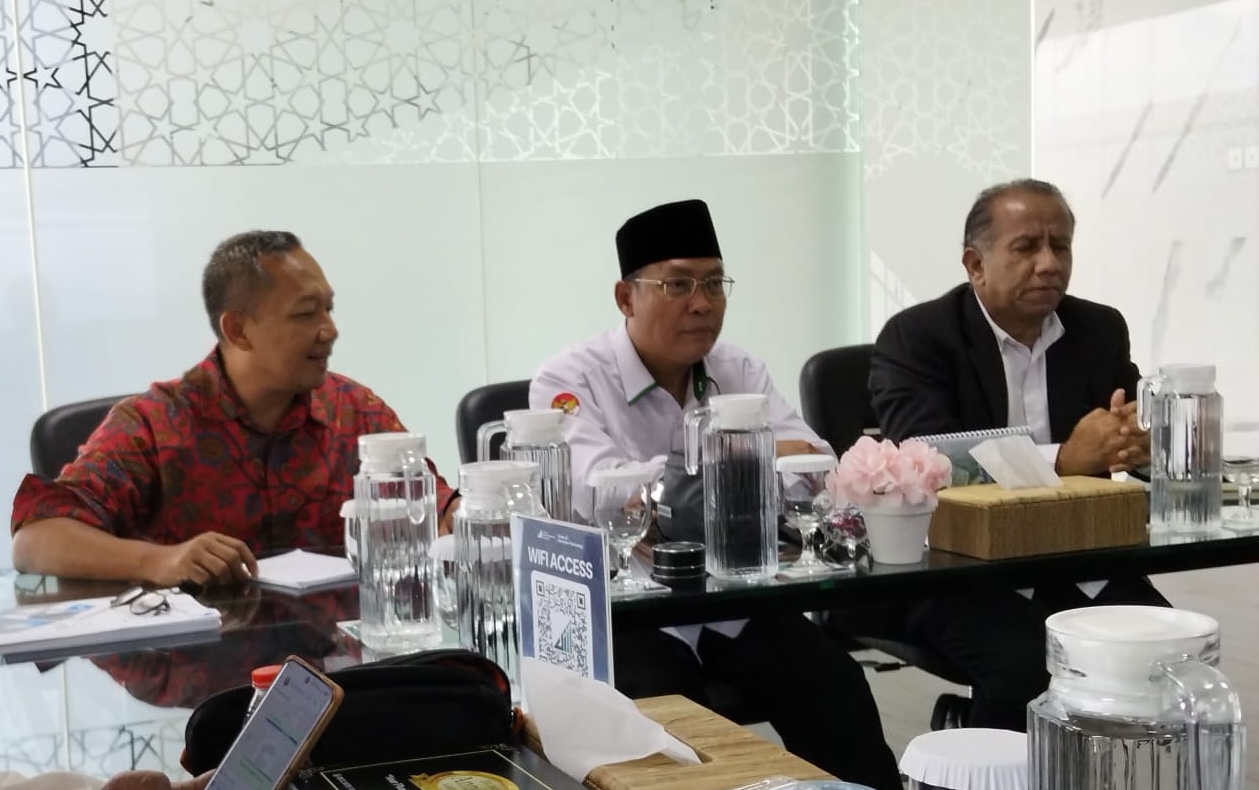
Depok — The Ministry of Religious Affairs (MoRA) of the Republic of Indonesia reaffirmed its strong institutional commitment to Universitas Islam Internasional Indonesia (UIII) during a special consultation meeting held at the UIII campus on Tuesday, 3 February 2026.
Speaking at the meeting, Dr. Nur Arifin, M.Pd., Head of MoRA’s Bureau of Organization and Governance (Ortala), emphasized that UIII holds a strategic position as a National Strategic Project (Proyek Strategis Nasional/PSN) designated by the government. He stated that UIII requires consistent and comprehensive institutional support to ensure its long-term sustainability and global impact.
“UIII is not an ordinary higher education institution. It is a National Strategic Project entrusted with a clear mandate by the Government of Indonesia to develop into a top-tier global hub for Islamic studies, serving not only Indonesia but also the international academic community,” said Nur Arifin.
In his welcoming remarks, Dr. Chaider S. Bamualim, the University Secretary, expressed appreciation for MoRA’s ongoing commitment to support UIII through policy alignment, organizational facilitation, and bureaucratic reform. He noted, “As a National Strategic Project, UIII deserves the government’s full support. Strengthening this institution means strengthening Indonesia’s role in shaping global Islamic scholarship.”
Dr. Nur Arifin highlighted that institutional strengthening for UIII is aligned with MoRA’s wider bureaucratic reform agenda, which prioritizes integrity, accountability, and service excellence. In this context, UIII functions both as a strategic responsibility and as a model institution within MoRA’s organizational framework.
He explained that UIII’s PSN status reflects the government’s recognition of the university’s role in advancing Indonesia’s intellectual diplomacy and contributing to global conversations on Islam, religion, and society. To fulfill this mandate, he added, UIII must be supported by strong governance structures, effective organizational design, and a professional bureaucratic ecosystem within the Ministry of Religious Affairs.
“The success of UIII depends not only on academic excellence, but also on the strength and adaptability of its institutional governance. This includes clarity of organizational roles, effective coordination, and shared commitment across ministry units,” he said.
According to Hatta Auliya, SE, Head of the Division of Administration at the Bureau of Organization, Personnel and Law Affairs—and convenor of the meeting—UIII’s vision to become a world-class destination for Islamic studies and the Muslim world requires a mindset that transcends routine administration. He emphasized the importance of leadership by example, innovation, and a reform-oriented culture among the civil servants supporting UIII.
“UIII carries a global mission. People from many parts of the world are expected to come here to study Islam in its diverse, dynamic, and contemporary expressions. That is why the institutional ecosystem supporting UIII must be forward-looking and internationally oriented,” added Nur Arifin.
For the Bureau of Organization, Personnel and Law (OKH), the consultation meeting served as a strategic forum to align institutional perspectives between MoRA and UIII, ensuring that governance frameworks, organizational policies, and reform initiatives remain responsive to UIII’s status as a national priority project. []
Universitas Islam Internasional Indonesia