February 3, 2026
By Prof. Jamhari Makruf, Ph.D*)
JAKARTA — Why study Islam in Indonesia? What can one learn from an archipelagic nation far from the historical centers of Islam? These questions are not new.
Decades ago, the late Australian historian Anthony Reid raised similar questions in his essay The Making of an Islamic Political Discourse in Southeast Asia.
He wondered why Islam in Indonesia and Southeast Asia is rarely treated as a major subject in global universities, particularly in the West.
Yet Indonesia is the country with the largest Muslim population in the world.
Still, in the eyes of international Islamic studies centers, Indonesian Islam appears “peripheral”: not Egypt, not Turkey, not Iran.
Indeed, there are academic projects about Indonesia, such as the Indonesia Project at Cornell University and the Australian National University, but their focus tends to be economics, nationalism, or modernization, not Islam.
Reid identified two main reasons why Indonesian Islam has been sidelined in global scholarship. First, geopolitics. The Western world pays enormous attention to the Middle East and North Africa because of oil, conflict, and their strategic relationship with Israel.
Southeast Asia, by contrast, is relatively calm; there are few geopolitical interests that make it “attractive” to the West.
Second, civilizational history. During the classical golden age of Islam, the centers of knowledge and power were in the Arab world, Persia, Egypt, North Africa, and Andalusia.
The currents of Islamic scholarship stopped in India, they did not yet reach Southeast Asia.
Thus, when Islam arrived in the Nusantara through trade networks in the 13th century, it arrived during a period of decline, not at the height of civilization.
Look: Al-Khawarizmi, father of algebra, was born in Khiva; Imam Bukhari died in Bukhara; Ibn Sina was buried in Persia; Imam Shafi‘i in Cairo.
All hailed from regions that once served as the heartlands of science and religion.
Meanwhile, in the Nusantara, Islamic kingdoms such as Samudra Pasai, Demak, and Mataram grew with strong local characteristics but did not produce globally recognized scholars.
Figures like Nuruddin Ar-Raniri, Hamzah Fansuri, Abdul Samad al-Palimbani, Syaikh Arsyad al-Banjari, and Nawawi al-Bantani played major roles in the region, yet internationally they are often regarded simply as continuators of Middle Eastern discourse.
Only later did figures such as Buya Hamka, Nurcholish Madjid, Abdurrahman Wahid, and Quraish Shihab begin attracting attention in global academic circles.
Another issue, according to Reid, is language. Southeast Asia does not use Arabic as an academic lingua franca. As a result, the works of Nusantara scholars rarely penetrate global Islamic intellectual spaces.
Why Study Islam in Indonesia?
Indonesia is known abroad largely because of its demographics.
The largest mosques, the biggest Hajj contingents, Muslim fashion, madrasahs, and the grandest Eid celebrations, all are found here.
But what is more compelling than numbers is the character of Indonesian Islam.
Historian Azyumardi Azra described it as: “Islam in Indonesia is Islam without violence.”
It arrived not through the sword but through trade and cultural dialogue. This explains the diverse expressions of Islam across the archipelago.
In Yogyakarta and Solo, the Prophet’s Birthday (Maulid) is marked by the gunungan, a giant cone of rice, a Javanese tradition Islamized.
Here, Islam adapts to local customs rather than rejecting them. In Madura, the gunungan is made from agricultural produce; in Aceh, the Maulid is celebrated with communal feasts at mosques.
These are clear signs of Islamic indigenization—when universal teachings encounter local languages and cultures.
Islam Wasathiyah: A Deeply Rooted Middle Path
From this history emerged what is now known as Islam Wasathiyah—a moderate Islam that seeks harmony, not confrontation.
Azra, in many of his writings, sees Islam Wasathiyah as the future of Indonesian Islam: inclusive, just, balanced, and nonviolent.
Its hallmarks: deliberation, ethical conduct, and respect for differences.
Indonesia’s multiethnic and multireligious society demands a generous approach to religious life.
Borrowing Clifford Geertz’s words, Indonesia’s social life is a “mosaic of meaning” that cannot be forced into uniformity.
Thus, wasathiyah is not merely a theological stance but a social strategy for living with diversity.
Even our democratic experience is built on the same awareness: difference is not a threat but a given.
While many Muslim-majority nations struggle to maintain democracy, Indonesia shows that Islam and democracy can coexist.
Women, Education, and the Integration of Knowledge
Islam Wasathiyah is also reflected in the respect given to women.
Indonesian women pursue higher education, serve as lecturers, judges, officials, and even as foreign ministers.
Take Retno Marsudi, who pioneered scholarships for Afghan women after the Taliban banned them from schooling, an example of Wasathiyah diplomacy on the global stage.
In education, Indonesia is similarly unique: there is no rigid separation between religious knowledge and secular sciences.
The old tradition that exalted religious sciences over worldly sciences has gradually shifted.
Led by thinkers such as Harun Nasution, Azyumardi Azra, and the new generation of UIN scholars, the preferred paradigm is not the “Islamization of knowledge” but the integration of knowledge.
While Muslim thinkers like Ismail Raji al-Faruqi emphasized the Islamization of science, Indonesian academics argue that all knowledge originates from God; what is needed is not separation but a unified purpose: knowledge as a means to human well‑being.
Here, the value of tauhid is expressed not only in ritual but in scientific reasoning, a concept aligned with Syed Naquib al-Attas’s idea of adab al-‘ilm, that knowledge should lead to wisdom, not mere intelligence.
A New Laboratory of the Islamic World
With its long experience managing diversity, Indonesia has become a global socio‑religious laboratory.
Anthropologists such as Robert Hefner and Mark Woodward describe Indonesia as civil Islam, a civic, cultured, progressive expression of the faith.
Major organizations like Nahdlatul Ulama and Muhammadiyah serve as social foundations for Islam Wasathiyah.
They built thousands of schools, universities, hospitals, and social institutions, giving rise to an Islam open to modernity without losing its spirituality.
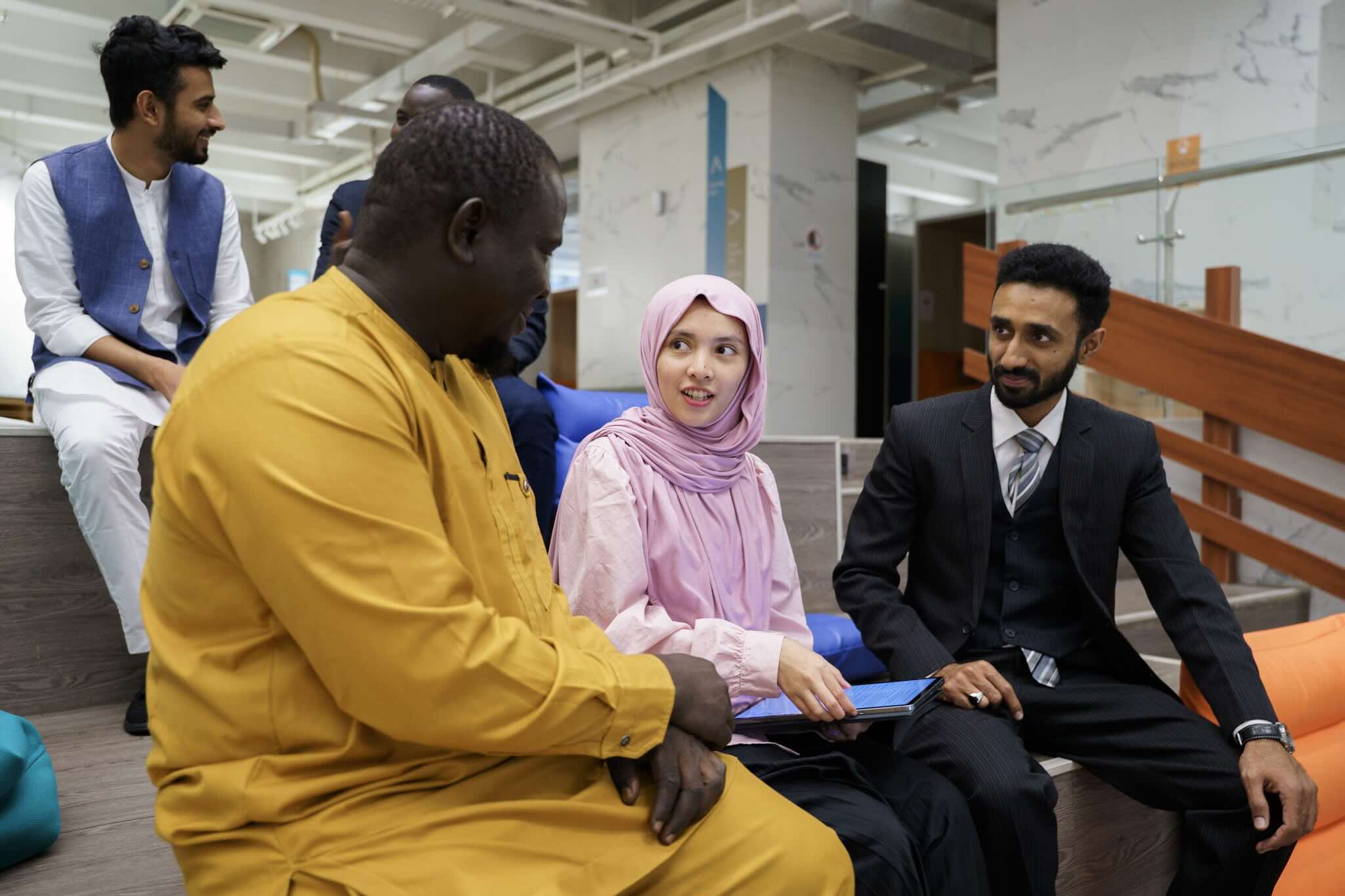
This is the model now developed by Universitas Islam Internasional Indonesia (UIII): a place for anyone to study Indonesian Islam.
For students from Asia, Africa, the Middle East, and even Europe, UIII offers something rarely found elsewhere, Islam that is calming and culturally engaged.
UIII has become a home for Islam Wasathiyah: an Islam that does not reject modernity, does not fear science, and is not allergic to differences.
A New Qiblah from the East
Indonesia may have arrived late in the timeline of Islamic civilization, but it brings a different gift, the wisdom of living together.
As Seyyed Hossein Nasr said, civilization is not measured by technology alone but by the ability to balance intellect and heart.
If developed consistently, Indonesian Islam Wasathiyah could become a new direction or qiblah for the Islamic world.
UIII is one gateway to that aspiration: spreading knowledge and cultivating wisdom.
For a world increasingly divided, what is needed is no longer great power but moral example and spiritual balance, two qualities long nurtured in the soil of Indonesia.
*) Rector, Indonesian International Islamic University (UIII)
The original version of this article was previously published at:
https://disway.id/read/912393/indonesia-rumah-baru-islam-dunia-cerita-dari-kampus-uiii
Universitas Islam Internasional Indonesia