April 7, 2026
By Prof. Jamhari Makruf, Ph.D*)
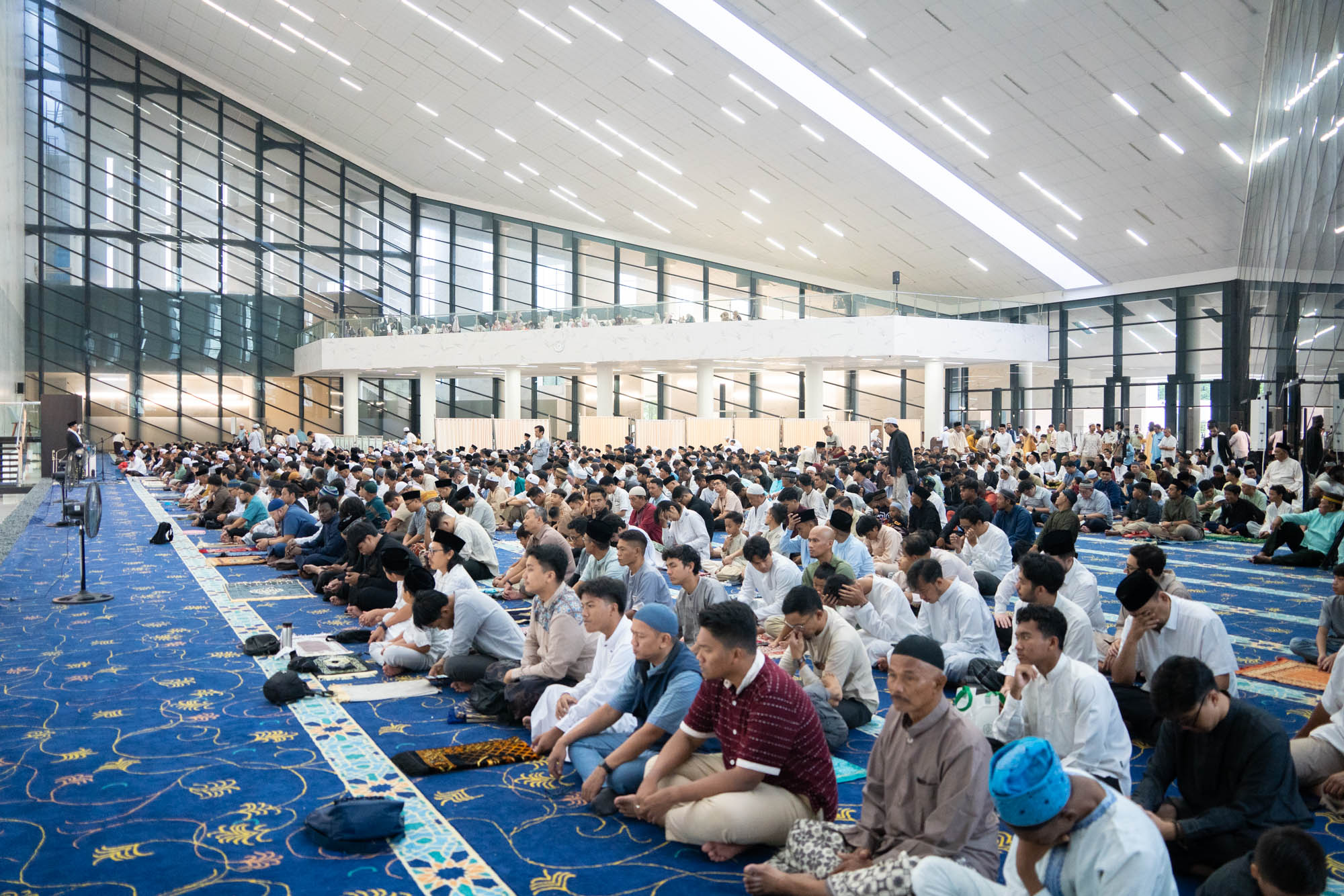
Jakarta — As time goes by, I increasingly feel that memories of Idul Fitri are slowly fading. It no longer feels as joyful as it did in childhood, when the holiday was truly special: new clothes bought only once a year, traditional dishes prepared together as a family, visits from relatives with small gifts of cash, all‑night wayang kulit performances, night markets, and crowded local tourist attractions. Idul Fitri was not just a religious holiday; it was a social event eagerly awaited throughout the year.
Changing Memories of Lebaran
I still remember how my family prepared madumongso, a sweet delicacy made from fermented sticky rice cooked with coconut milk and palm sugar. The process was long and required patience: black glutinous rice was cooked, mixed with yeast, left to ferment into tape, then cooked again until it turned reddish. Stirring the mixture was no easy task; if it wasn’t done evenly, the madumongso would harden and become difficult to eat, sometimes even needing to be chopped with a wooden mallet. In addition, various traditional snacks such as chicken feet, telinga gajah (“elephant ears”), and tai kucing (“cat droppings”), named for their shapes, were also prepared days in advance.
This tradition of cooking together is now gradually disappearing. Many families prefer to buy ready‑made food. High social mobility has scattered family members across different cities, making it difficult to gather and cook together as in the past. Slowly, Idul Fitri has lost some of the strong sense of togetherness that once defined it.
Changes are also evident in the tradition of sungkeman. After the Idul Fitri prayer at a mosque or open field, people would typically visit older relatives. Homes were open to guests, and greetings and requests for forgiveness were delivered face to face, with respect and warmth.
Today, in the digital era, this tradition has undergone a major transformation. Idul Fitri greetings no longer need to be conveyed in person. Written messages, voice notes, or videos can be sent in seconds. Many people simply copy and paste the same message to multiple recipients. It is practical and efficient, but often lacks a personal touch.
Replies tend to follow the same pattern. Messages received are answered with identical templates. Communication becomes faster, but also feels colder. Still, technology opens the possibility for broader connections without limits of time and distance. People can stay in touch even when far apart.
My child, who is growing up in Jakarta, often asks, “What should I say during sungkeman?” This question arises because he observes different responses from older generations. Some reply briefly; others respond at length with prayers and advice. There is no fixed formula for sungkeman. Everyone expresses it according to their own understanding and intention.
Some see sungkeman as a social tradition meant to strengthen family bonds. The word lebaran is sometimes interpreted as “finished,” the end of conflicts or unresolved issues. By asking for and granting forgiveness, everything is considered settled. Others emphasize the religious dimension, viewing Idul Fitri as a spiritual moment marking the completion of Ramadan.
Idul Fitri greetings themselves vary. In the Arab world, expressions such as “Eid Mubarak, taqabbalallahu minna wa minkum” emphasize the hope that one’s worship will be accepted by God. In Indonesia, phrases like “Minal ‘aidin wal faizin”, accompanied by “mohon maaf lahir dan batin” (lit. forgive my physical and emotional wrongdoings), have become popular. Although their origins are not entirely clear, these expressions have become part of Indonesia’s Idul Fitri culture.
Ultimately, whatever is said during Idul Fitri carries positive meaning. Whether as a spiritual prayer or a social expression, it reflects how the holiday serves as a meeting point between religion and culture.
The Social and Cultural Meaning of Idul Fitri
Idul Fitri has not only a religious dimension but also a powerful social one. It becomes a space where people from different backgrounds come together, where social boundaries seem to dissolve in an atmosphere of shared celebration. Traditions of visiting, sharing food, and renewing relationships make Idul Fitri a unique moment of social cohesion.
In Indonesia, this social dimension is particularly evident. Lebaran is not merely a family celebration, but also a wider opportunity for social reconciliation. Tensions and conflicts that may have accumulated throughout the year are softened through the tradition of mutual forgiveness, allowing social relationships to be renewed in a warmer spirit.
This phenomenon shows that religion functions not only as a belief system but also as a social mechanism that strengthens solidarity. Idul Fitri becomes a moment when spiritual values, such as sincerity, empathy, and compassion—are translated into tangible social practices.
Amid diversity, Idul Fitri serves as a point of convergence. All groups celebrate it together. Riyaya functions as a social mechanism that erases divisions and strengthens a sense of togetherness. For Geertz, the power of Idul Fitri lies in its ability to unite a diverse society. It is not only a religious event but also a social one that reinforces collective identity.
In Indonesia’s plural context, this meaning is increasingly relevant. Idul Fitri reminds us that differences are not reasons for division, but strengths that complement one another.
Times may change the form of the celebration, but its core meaning remains the same. Idul Fitri is about returning, returning to purity, returning to good relationships with others, and returning to fundamental human values.
In a world that is increasingly fast‑paced and individualistic, Idul Fitri invites us to pause, look back, and repair relationships that may have been damaged. It teaches us that true happiness lies not in luxury, but in the warmth of human connection.
Happy Idul Fitri. Minal ‘Aidin wal Faizin. May we forgive one another for all shortcomings, seen and unseen.
*)
Rector, Universitas Islam Internasional Indonesia (UIII), Depok, West Java
This article has been previously published here:
https://disway.id/read/938905/idul-fitri-di-persimpangan-zaman/15
Universitas Islam Internasional Indonesia