December 30, 2025
By Prof. Jamhari Makruf, Ph.D *)
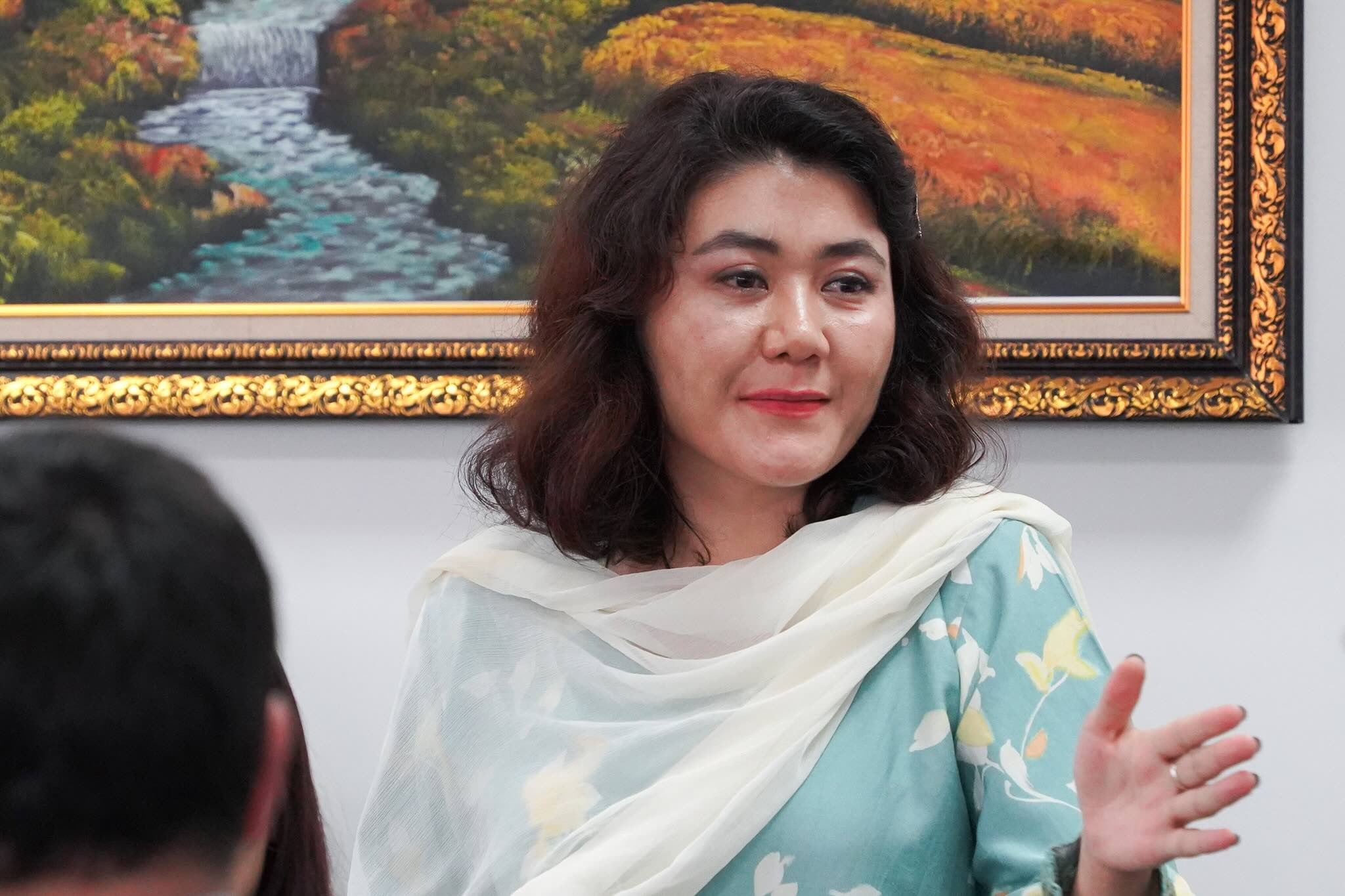
“My journey to Indonesia is not just a physical movement from one country to another. It is a story shaped by loss, fear, resilience and hope,” ~ Sadia Abbassy.
Her name is Sadia. She was once the owner of an information technology company in Kabul, working under contracts with the Afghan government. Her life was modest yet dignified. She could work, earn her own income, and support fellow Afghans.
All of that collapsed when the Taliban returned to power. Sadia was no longer allowed to work. The IT company she had painstakingly built was forced to shut down. The Taliban prohibited women from working, let alone leading a business.
Sadness and despair filled her days. Afghanistan no longer offered women the space to live with dignity. In that moment of uncertainty, Sadia came across an announcement about a scholarship opportunity in Indonesia. Without hesitation, she applied. She hoped to study abroad for several years, simply to reignite her passion for life while waiting for political change in her homeland.
Upon arriving in Indonesia and beginning her studies, Sadia often struggled to hold back tears when speaking about the plight of Afghan women. “My heart broke,” she said, “seeing the little girls who once went to school with cheerful faces now confined to their homes, only able to gaze at the world through their windows.” Her voice trembled, her eyes glistening with suppressed tears.
Another story comes from Adila Haidari. She was a woman with a stable career, a harmonious family life, and a supportive social circle. Leaving Afghanistan was an agonizing decision for her. Despite the challenges her country faced, Adila admired the resilience of its people. That made her hesitate to leave.
But in the end, Adila chose to pursue her studies abroad with one hope: that one day she could return to Afghanistan and help rebuild her nation. “Today, I stand in a place I once thought I would never reach,” she said, wiping away tears. Although far from their homeland, Afghanistan remains close to their hearts.
Now, Sadia and Adila are striving to complete their education in a foreign land. They carry high hopes that one day Afghan girls will return to school and achieve their dreams.
Both believe education is essential, a path to sustaining hope for a peaceful, secure, and prosperous Afghanistan. Their passion is a small flame in the darkness, a reminder that hope never truly dies as long as the courage to dream endures.
Scholarships and the Long Road to Indonesia
This scholarship program is facilitated by the Indonesian Agency for International Development (Indonesian AID–LDKPI), also known as The Indonesian AID, in collaboration with the Indonesian Embassy in Kabul and the Aga Khan Foundation in Afghanistan. Additionally, there are scholarship opportunities specifically for Afghan women provided by the governments of the Netherlands and Norway. This initiative not only provides access to education but also creates a space of hope for Afghan women who have been stripped of their basic rights to study and work.
The program specifically selects women with strong determination, mental resilience, and academic qualifications to pursue master’s degrees in Indonesia.
The selection process is rigorous and demanding. In addition to online interviews and academic verification, candidates must secure family consent and approval from Taliban authorities.
In 2022, after enduring this lengthy process, five Afghan women finally departed for Jakarta. But their journey was far from ordinary. Limited flights from Kabul complicated their travel plans. For those living near Kabul, flights to Dubai were still available before continuing on to Indonesia.
Meanwhile, participants from the Iranian border region had to travel overland to Tehran, then fly to Dubai, and finally arrive in Jakarta, a journey that was both physically and emotionally exhausting.
Another equally strict requirement was the obligation to be accompanied by a male mahram (guardian) throughout the journey until arrival in Indonesia. These mahrams returned to Afghanistan a few days later, after ensuring the safe arrival of their female relatives at their respective campuses.
This arduous journey shows that scholarships are not merely academic assistance, they are a tangible form of humanitarian diplomacy, opening doors to education amid restrictive political conditions.
Afghanistan’s Strategic Position
Afghanistan is a highly strategic country, not only geographically, but also historically, culturally, and geopolitically. It sits at a crucial crossroads of West Asia, Central Asia, and South Asia, sharing borders with Iran, China, several Central Asian nations, and Pakistan.
This position has made Afghanistan a meeting point for people, ideas, cultures, and trade for centuries. In both classical and modern history, the region was a vital part of the Silk Road connecting Asia and Europe. Whoever controls Afghanistan holds significant influence over trade routes, regional stability, and strategic interests.
In addition to its strategic location, Afghanistan possesses vast natural resources. Lithium, iron, copper, and other critical minerals lie deep within its soil, resources highly valued in today’s global economy, particularly in technology and energy industries.
Yet, here lies Afghanistan’s irony: these riches and its strategic position have not brought prosperity. Instead, they have turned the country into an arena for power struggles among major global and regional actors. Throughout modern history, Afghanistan has repeatedly become a battlefield for geopolitical conflicts driven by external interests in security and economics.
Afghanistan’s vulnerability is further compounded by protracted ethnic divisions. The country is home to around 20 ethnic groups, with the four largest, Pashtun, Tajik, Hazara, and Uzbek, each holding distinct histories, identities, and political affiliations.
Scholars such as Olivier Roy and Rasul Bakhsh Rais argue that ethnic and sectarian fragmentation, combined with complex religious politics, has created a fragile socio-political structure. This fragility invites foreign intervention and complicates efforts toward national unity. Afghanistan is not only a victim of internal strife but also a stark example of how global geopolitics plays out in nations located at strategic crossroads.
Why Does Indonesia Help Afghanistan?
An Afghan doctoral student at the International Relations Program of the Universitas Islam Internasional Indonesia (UIII) is researching why Indonesia provides aid, including educational scholarships, to Afghanistan. This question is compelling because the two nations share neither geographical proximity nor direct ethnic ties.
The emotional bond between Indonesia and Afghanistan is rooted in Islamic solidarity. Both countries belong to the global Muslim community. In the past, this solidarity even inspired some Indonesian Muslims to travel to Afghanistan to fight against the Soviet Union.
The International Crisis Group (ICG) notes that several members of Jemaah Islamiyah in Southeast Asia were former Afghan combatants. Moreover, Afghan intellectual thought has influenced Indonesian discourse. Jamaluddin Al-Afghani, a leading figure in Pan-Islamism, remains widely studied. Together with his student Muhammad Abduh, he founded the Al-Urwatul Wutsqa movement, advocating for Muslim unity.
Indonesia’s commitment also rests on constitutional and moral foundations. The preamble to the 1945 Constitution declares that independence is the right of all nations and that colonialism must be abolished because it contradicts humanity and justice. Afghanistan’s participation in the 1955 Asian-African Conference in Bandung further strengthened historical ties. For these reasons, Indonesia feels a moral obligation to support Afghanistan’s pursuit of self-determination.
Indonesia’s foreign policy principle of being “independent and active” guides its actions, avoiding alignment with any power bloc while actively promoting peace. As Eastern wisdom says: “A thousand friends are too few, one enemy is too many.” Indonesia’s concern for Afghanistan reflects this philosophy.
Jusuf Kalla’s Satire
Former Vice President Jusuf Kalla once recounted his meeting with Taliban officials. He asked about the theological basis for banning women from attending school. Their answer: “It is an order from the supreme leader.”
Mr. Kalla then posed a sharp question: “If you believe female patients must be treated by female doctors, how can women become doctors if they are prohibited from attending school?” The question went unanswered.
There is no verse in the Quran or Hadith that forbids women from seeking knowledge. At the World Seminar on Women and Education in Pakistan in early 2025, scholars from various Islamic schools of thought agreed: Islam does not prohibit women from attending school. The ban stems more from local culture and elite political interests than from religious doctrine.
What Afghan women face today is a regression of civilization. History shows that progress is marked by open access to knowledge for all, including women.
In Islamic tradition, we remember Fatimah Al-Fihri, founder of Al-Qarrawiyyin University in Morocco, the oldest university in the world, according to UNESCO.
May the Afghan women studying in Indonesia today become the new Fatimah Al-Fihri—building a future of knowledge, courage, and hope.
*) Prof. Jamhari Makruf, Ph.D Rector of Universitas Islam Internasional Indonesia (UIII)
This article was previously published in Bahasa Indonesia on Disway: https://disway.id/read/919210/perempuan-pemberani-afghanistan/105#
Universitas Islam Internasional Indonesia