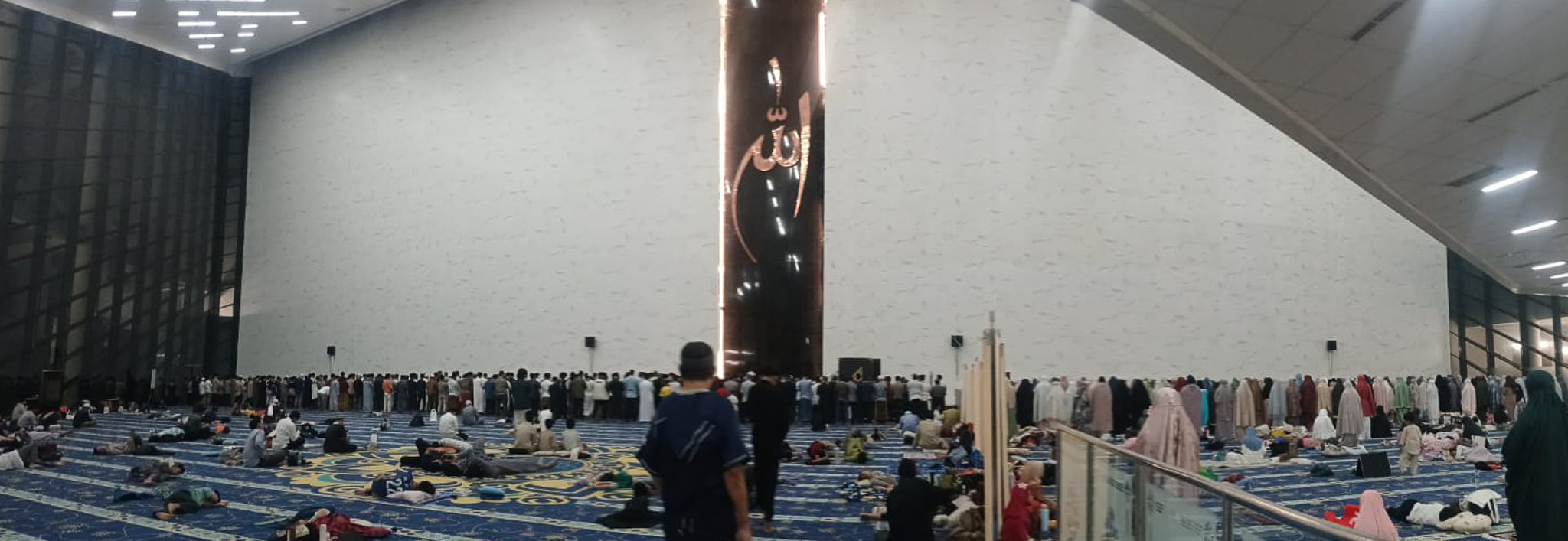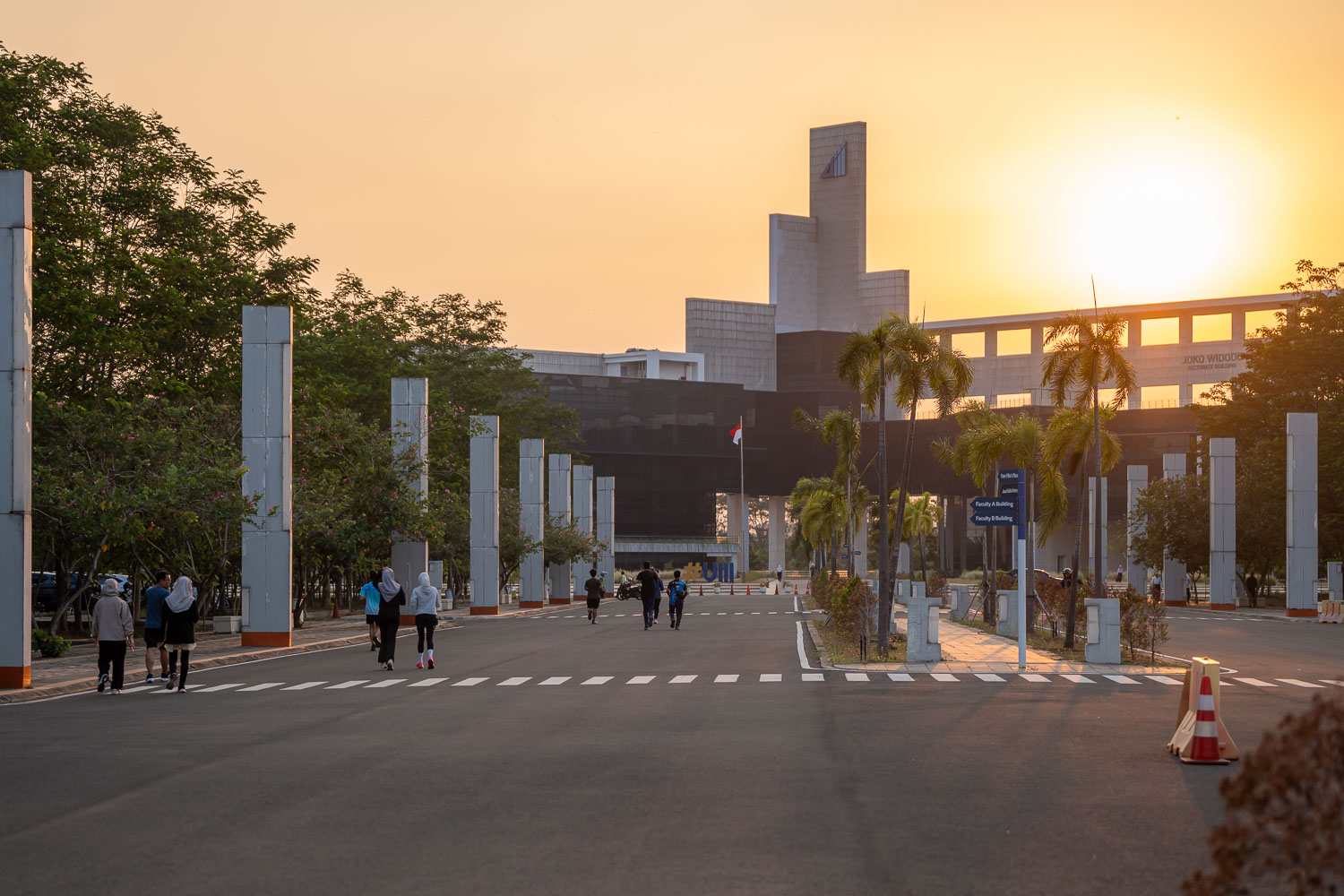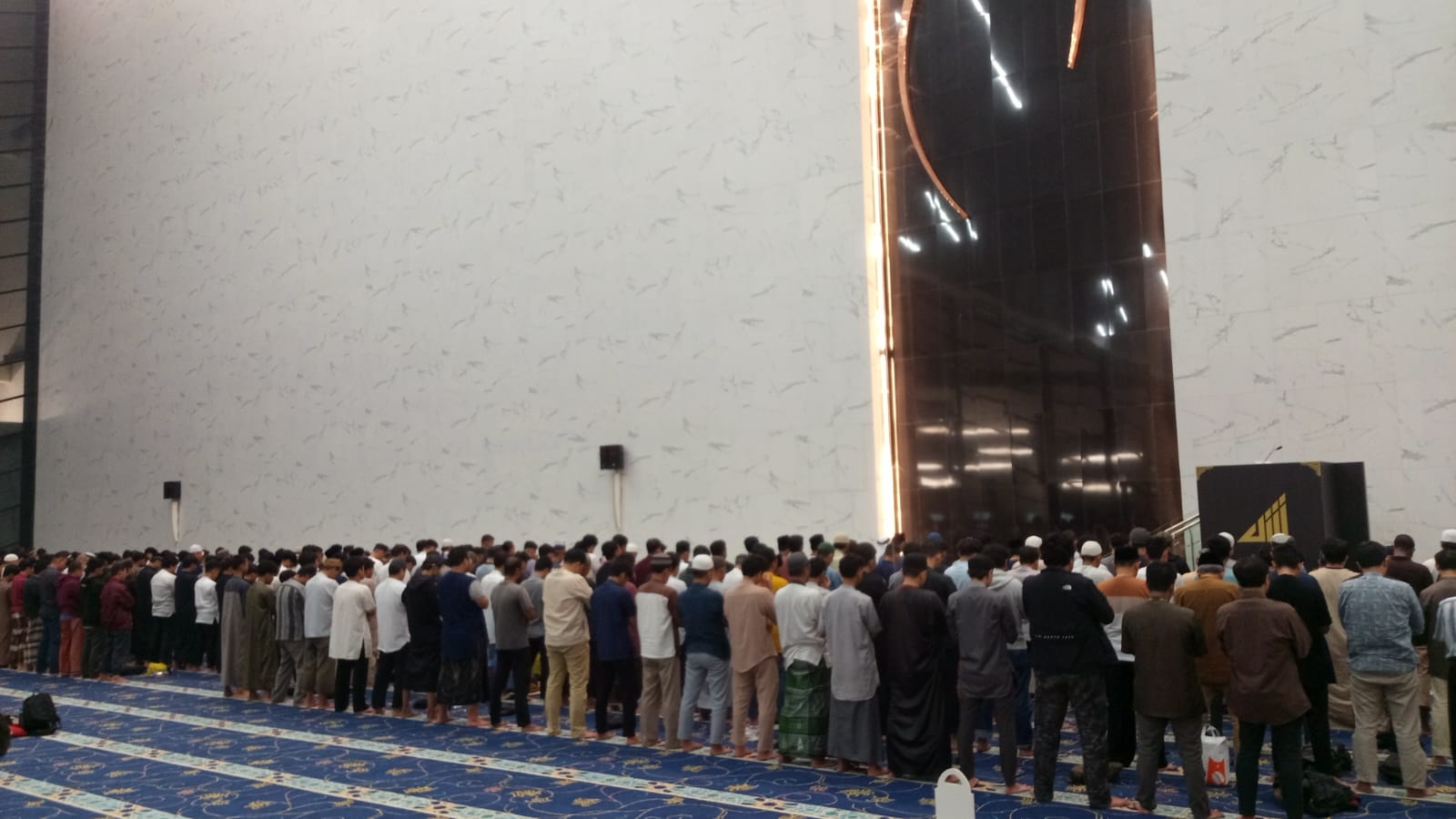
From March 10 to March 19, Masjid Rahmatan Lil ‘Alamin, Universitas Islam Internasional Indonesia, became something more than a physical structure. It evolved into a meeting point of faith, exhaustion, generosity, and quiet resilience. As the last ten nights of Ramadan unfolded, time itself seemed to soften. Evenings slipped into long nights, and nights stretched quietly toward dawn, carrying a shared sense that something meaningful was taking shape within those walls.
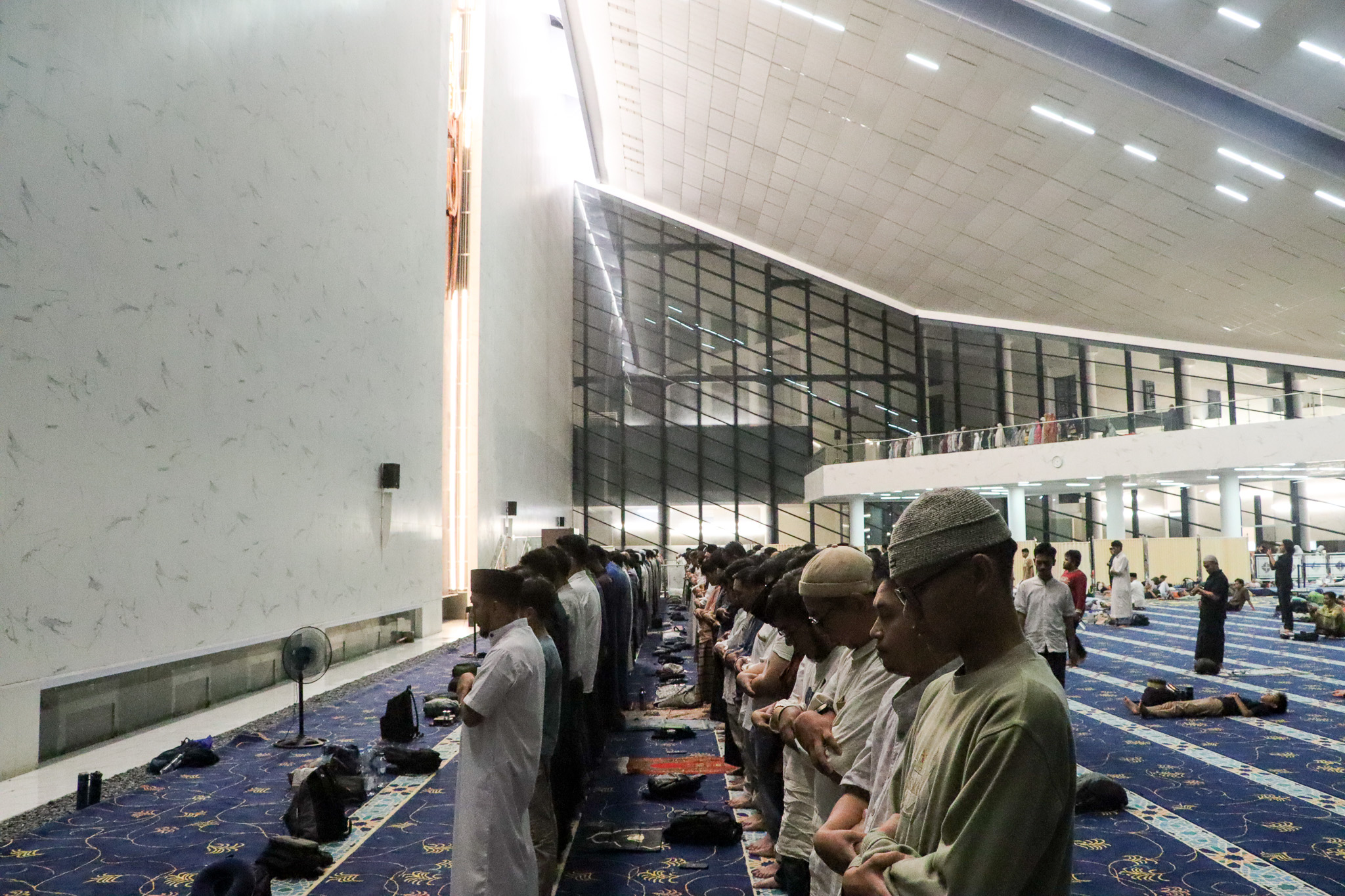
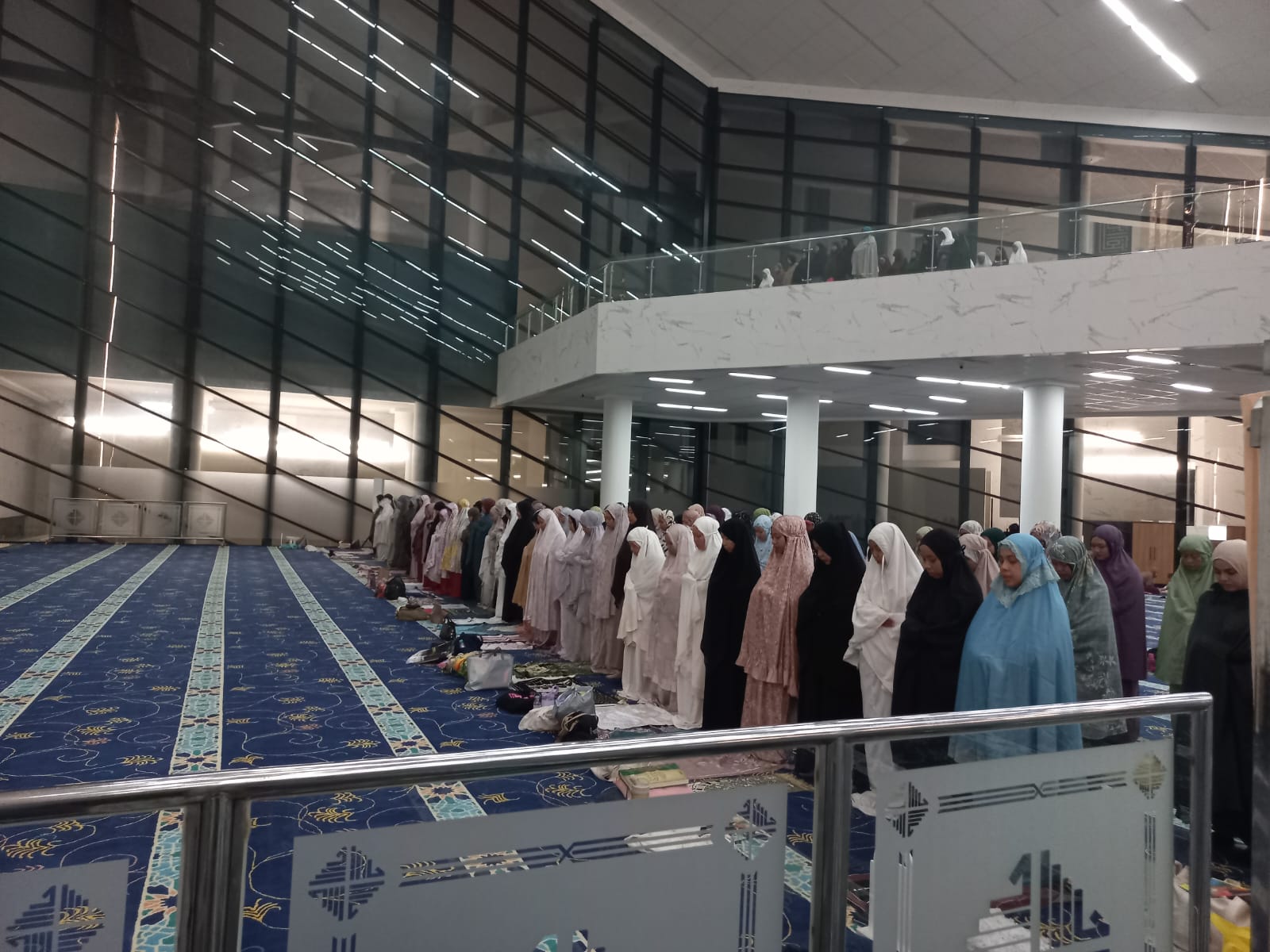
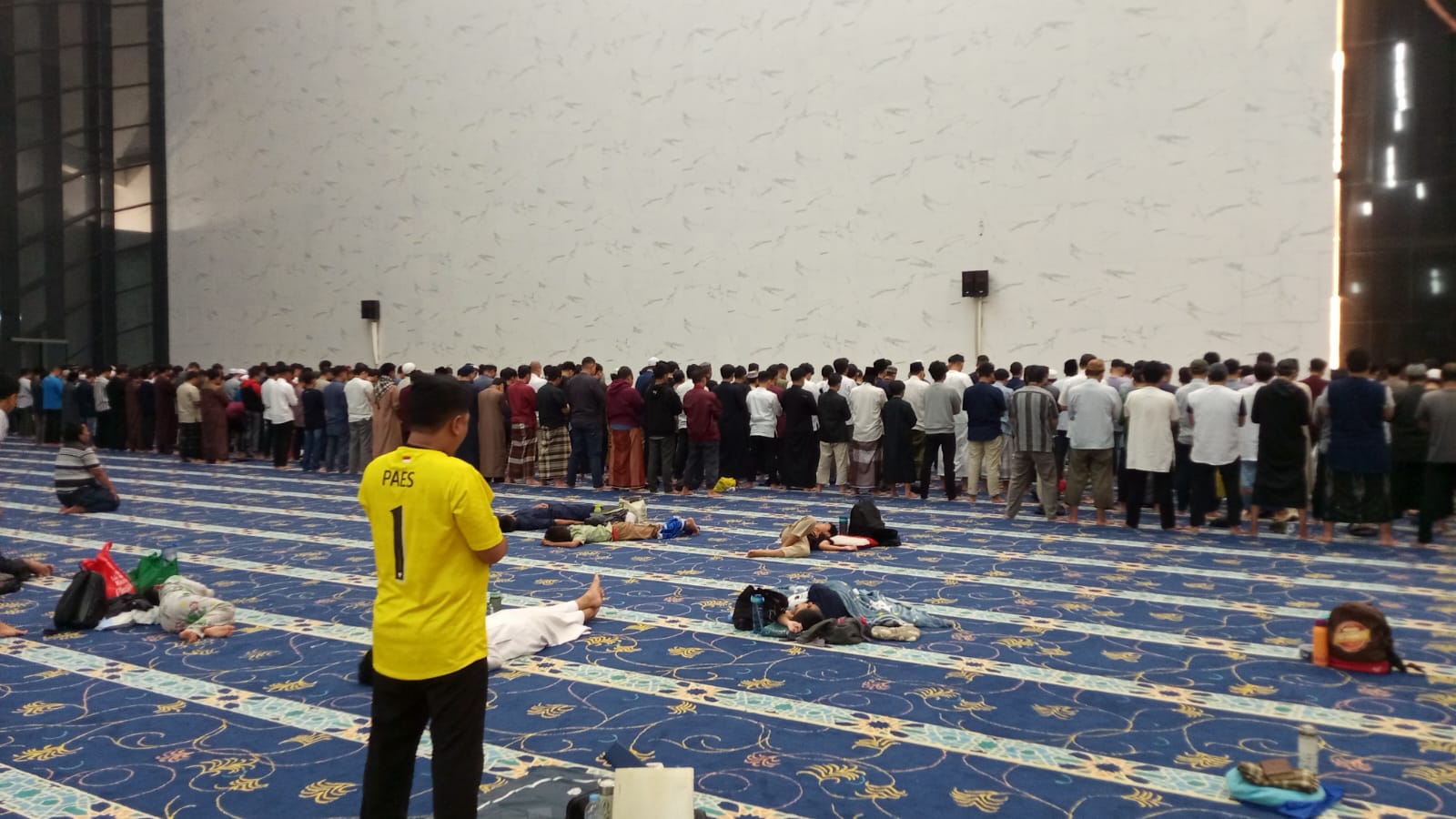
What stood out was not only the number of people who came, but the depth of their presence. On several peak nights, especially the 25th, 27th, and 29th, the mosque filled beyond expectation. Hundreds gathered for i‘tikaf — an Islamic spiritual retreat where a person secludes themselves in a mosque (or a designated spot at home) for a specific time — and the night prayers extended into long, tightly packed rows. At times, there were up to five full rows, standing shoulder to shoulder. The atmosphere held both stillness and intensity, as if everyone present understood that these were not ordinary nights.
The Effort Behind the Experience
Behind this powerful atmosphere was a continuous effort to keep everything running smoothly. Organizing an i‘tikaf of this scale required coordination, awareness, and the ability to respond quickly when situations changed. One of the most important steps was implementing a daily registration system. It may have seemed simple, but it played a crucial role in ensuring that every decision, especially regarding sahur preparation, was based on clear and reliable data.
The resources used each night were a trust from donors, and that trust required careful management. Every portion of food prepared carried a sense of responsibility. It was not only about meeting needs, but about honoring what had been entrusted.
Even with preparation, there were moments when the number of participants exceeded expectations. On one of the busiest nights, supplies began to run low, including water. In the early hours before dawn, when most people were resting or focused on prayer, some stepped out to find solutions. They searched for suppliers and did whatever was necessary to ensure that the gathering could continue without interruption.
Quiet Sacrifices, Shared Meaning
Some sacrifices remained unseen. Meals were delayed until everyone else had been served. Rest was set aside night after night. There was constant movement between tasks, ensuring that food was distributed, spaces remained organized, and every participant could stay focused on their purpose.
What made this even more striking was the scale of the gathering compared to the number of people managing it. At its peak, especially on the nights of the 25th, 27th, and 29th, the mosque welcomed around 500 to 600 participants. Yet everything was sustained by only a small number of volunteers. It is a reminder that meaningful collective experiences often depend on the willingness of a few to carry a greater share of responsibility.
At the same time, the enthusiasm from the wider community was truly remarkable. People came in large numbers, not out of obligation, but out of a genuine desire to be part of something meaningful. The momentum grew even stronger after the gathering was shared on @depok24jam Instagram account, drawing wider attention and bringing in even more participants. Night after night, the mosque continued to fill, creating a sense of unity that extended beyond the building itself.
Looking Ahead
As these nights came to an end, what remained was more than fatigue. There was a sense of fulfillment, shaped by both the beauty and the challenges of the experience. There was also a clear realization that gatherings like this grow stronger when more people take part, not only as participants, but as contributors.
Looking ahead, there is hope for broader involvement and greater support, so that the experience can continue to improve. With more hands and more resources, the ability to serve can expand, ensuring that every participant is cared for with the same attention and dignity.
To all who came and filled the mosque with presence, sincerity, and spirit, thank you. Your enthusiasm and commitment gave life to these nights and made them truly meaningful. To those who worked tirelessly to ensure everything ran as it should, your dedication did not go unnoticed.
These nights belonged to all of us.
And with that, we look forward to welcoming you again in the i‘tikaf of the years to come.