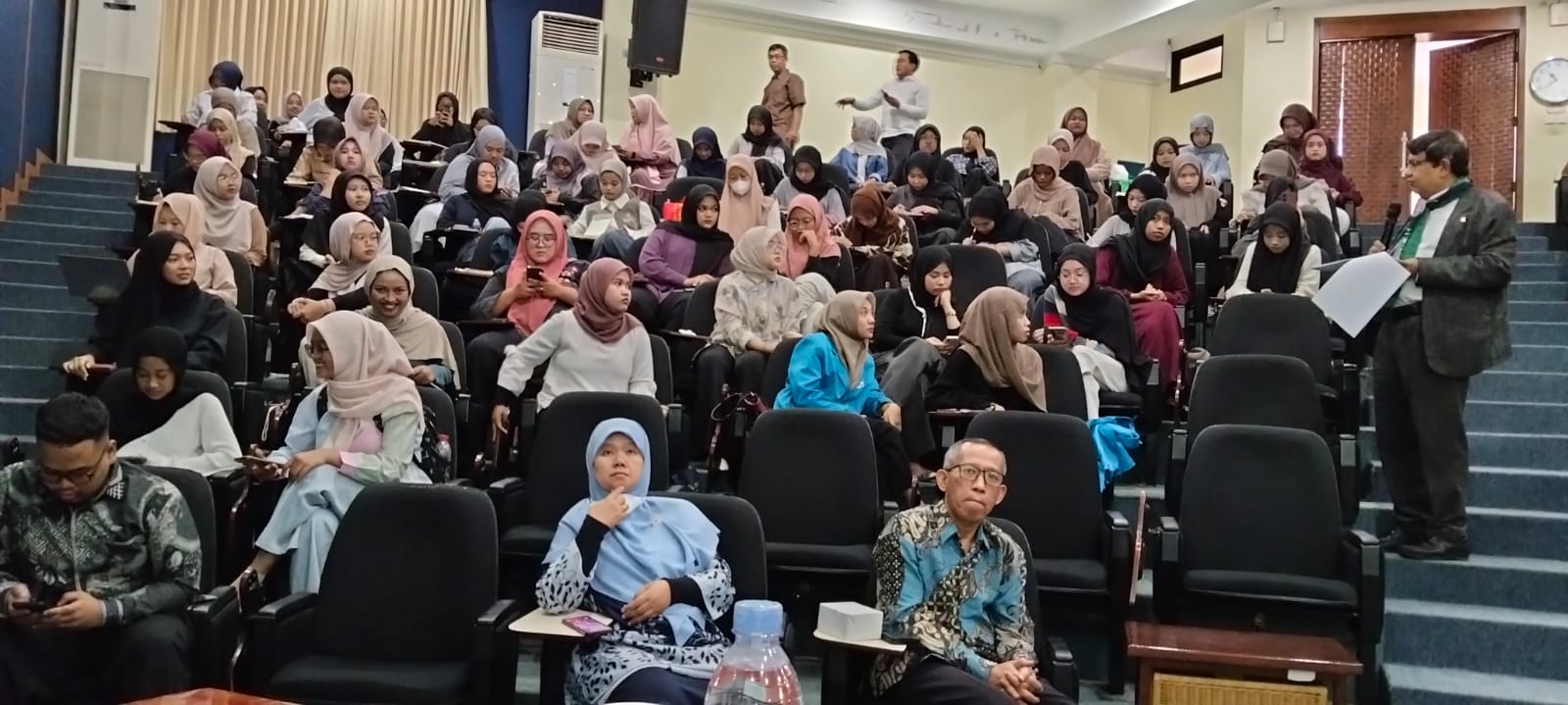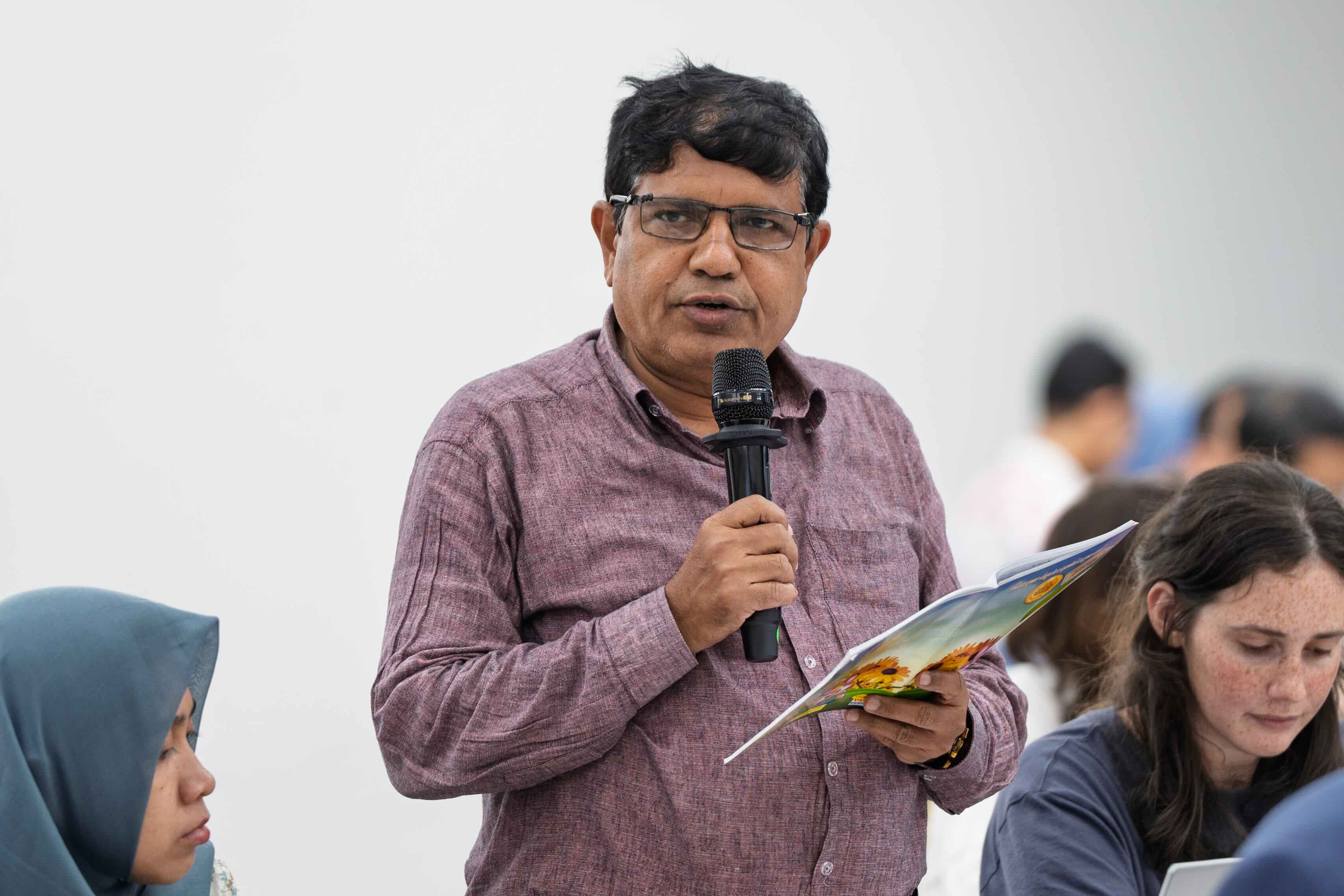
Depok, Indonesia — 5 December 2025 – On a humid afternoon in Cikeas, Bogor, seventy-five Indonesian university students gathered beneath the canopy of a cabin resort for the Eco-Youth Camp. Their notebooks lay open, their faces intent. Into this circle stepped Prof. Ananta Kumar Giri, a sociologist and philosopher from India, who delivered a brief yet stirring ten-minute reflection on the role of religion in environmental action—part of PPIM UIN Jakarta’s REACT program. His message was simple but urgent: ecological responsibility, he reminded them, “is not merely a matter of science or policy, but of spirit.”
For two months this fall, Giri has been a visiting fellow under the COMPOSE Fellowship at the Faculty of Social Sciences, Universitas Islam Internasional Indonesia (UIII). His appointment, ending December 17, has made him a vivid presence in Indonesia’s academic landscape, where he has delivered a remarkable succession of lectures, joined seminars and workshops, and engaged in dialogues that blur the boundaries between philosophy, religion, ecology, and social science.
A Scholar in Motion
Giri—who retired in March 2025 from the Madras Institute of Development Studies in Chennai and now serves as Founding Honorary Executive Trustee of the Vishwaneedam Center for Asian Blossoming—has long insisted that scholarship must be transformative. His works, including Knowledge and Human Liberation and Creative Social Research, call for inquiry that not only interprets the world but also seeks to renew it.
Indonesia has become one of his most receptive intellectual homes. This is his sixth visit since first coming in 2004 to join an international seminar at Perkici, Salatiga, on the “moral critique of development,” where he launched the Indonesian translation of A Moral Critique of Development, co-edited with Dutch anthropologist Philip Quarles van Ufford. This deep-rooted connection helps explain why Indonesian audiences so readily embrace his approach: a sociology that is ethical, dialogical, and spiritually alert.
In late November, for example, he spoke for two hours to students of anthropology of religion at UIN Jakarta’s Faculty of Ushuluddin. Guiding them through the challenges of qualitative methods, he reminded them that “research is not just about data; it is about cultivating responsibility.” His voice remained soft, almost meditative, as he threaded together themes of ecology, ethics, and dialogue. “Our task,” he concluded, “is not only to learn but to live together—across traditions, across nations, across the planet.”
Resonance Across Campuses
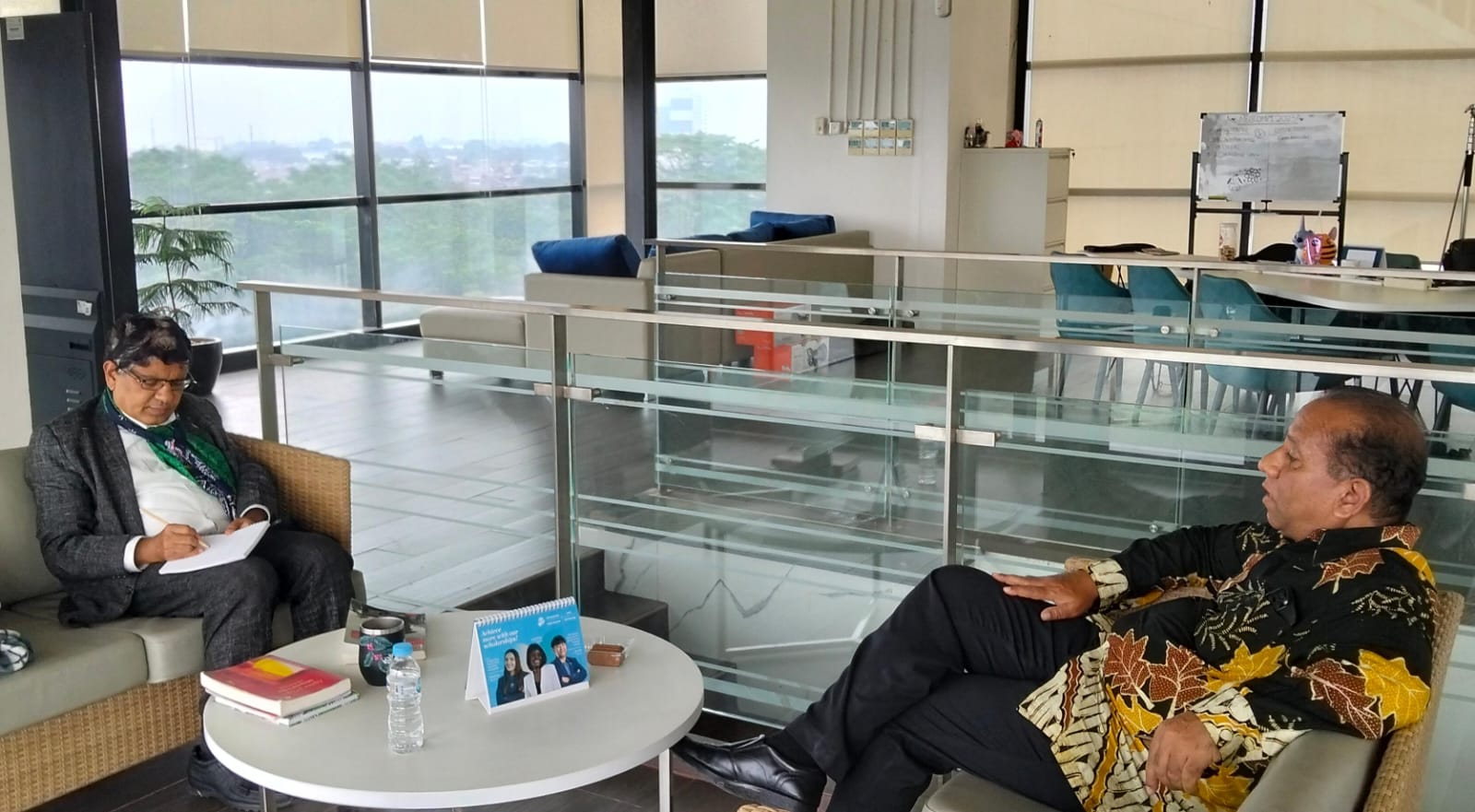
Across several provinces, Giri’s lectures have inspired a broad range of audiences. In Bandung, at Universitas Pendidikan Indonesia, he delivered two lectures—one on Contemporary Critiques of Political Economy and another on Corporate Spiritual Responsibility—that a senior lecturer later described as “provocative but deeply needed.” In Semarang, where he participated in a two-day training on citizenship education and spoke at UIN Walisongo and Wahid Hasyim University, he outlined new pathways of transformative citizenship and trans-civilizational dialogue. At UNISNU Jepara, where he addressed students on Trans-religious Dialogues and Harmony, one participant confessed, “Listening to him made me realize that faith is not only personal but planetary.”
The scale of his engagements has been striking. In just seven weeks, he traveled from Yogyakarta and Bandung to Salatiga, Demak, Jepara, Semarang, Surabaya, Ciputat, and Depok, delivering lectures on topics ranging from anthropology and theology to ecological ethics and integral development. During his time at UIII, he served as discussant on Muslim politics at the STREAMS Student Conference, offered a luncheon talk on “Learning the Art of Wholeness” at the Faculty of Education, and presented his COMPOSE Fellow lecture on Pluriversal Politics and Rethinking the World Order. Along the way, he joined the 7th World Indonesianist Congress, contributed to a sustainable development conference in Salatiga, and accompanied interfaith groups on field visits to Islamic boarding schools in Demak.
His engagements extended beyond Indonesia as well. In mid-December, he will travel to Malaysia to lecture on Decolonizing Knowledge and the Sarvodaya of Ideas at Universiti Kebangsaan Malaysia; speak on Climate Care Movement and Transformative Faith at Universiti Putra Malaysia; meet with civil society groups; and visit Hizmet schools in Kuala Lumpur. These encounters, he said, helped further explore “an ecology of hope” that binds South and Southeast Asia.
A Lasting Impact
Though his fellowship is brief, the conversations he has sparked are expected to resonate long after his departure. His emphasis on ecoism over egoism has found particular relevance in a country grappling with deforestation, biodiversity loss, forest fires, and the pressures of rapid development. For many students, his presence has been less about mastering theory and more about cultivating courage—the courage to imagine new futures, to pursue scholarship that is ethically grounded, and to build bridges across cultures and traditions.
Indonesia’s religious and cultural pluralism—its interplay of Islamic, Hindu, Buddhist, Christian, and indigenous worlds—has provided Giri with what he calls a “living laboratory” for dialogical civilization. Here, he has been able to test a vision in which traditions meet not to compete but to mutually transform.
For Giri, the fellowship at UIII may be temporary. But the intellectual threads he has woven—between India and Indonesia, between social science and spirituality, between ecological care and moral courage—are likely to endure far beyond this season. His travels, lectures, and conversations across the archipelago have left a distinct imprint: a call to learn not only with the mind but also with the heart, and to imagine scholarship as an act of shared responsibility for our fragile planet. []