December 1, 2025
By Prof. Jamhari Makruf, Ph.D.

JAKARTA, DISWAY.ID — This journey took place several years ago. We went to Egypt to establish cooperation with Al-Azhar University—a name so grand, so influential, and so frequently mentioned in the religious textbooks of Indonesian children.
During that visit, the then-Indonesian Ambassador to Egypt, A.M. Fachir, shared a concern that has never left my mind. “Every time we go to Al-Azhar, our guests always ask for one thing,” he said. “More scholarships.”
The problem is, Al-Azhar is no ordinary university. It has been sustained by productive waqf (endowments) since the Fatimid era—vast lands, mostly in central Cairo, are leased for business, and the proceeds are returned to education. From this source, scholarships flow to the entire Islamic world. And Indonesia? We are the largest recipient of these scholarships. In fact, Sheikh Al-Azhar Ahmad Al-Tayeb himself stated directly: approximately 13,000 Indonesian students are studying with Al-Azhar scholarships.
“This is like begging with a golden bowl,” Ambassador Fachir lamented at the time. Indonesia, the largest economy in Southeast Asia, is asking for help from a country whose economy often needs assistance itself.
A Widespread Pattern
This phenomenon is not exclusive to Egypt. Scholarships also come from rich countries such as Saudi Arabia, Qatar and the United Arab Emirates. Sudan, Libya, Yemen, and Morocco also provide some kind of scholarships for foreign students. The irony is that some of these countries are in economic and political situations far more fragile than Indonesia’s.
Take Sudan and Libya, for example, which are repeatedly torn by conflict. Every time a crisis erupts, hundreds of Indonesian students have to be evacuated home in a hurry. In 2023, another wave of evacuations from Sudan occurred. Those students eventually dispersed and continued their education at Islamic universities within Indonesia.
The 10th and 12th Vice President, Jusuf Kalla—a figure who was most persistent in fighting for the establishment of the Universitas Islam Internasional Indonesia (UIII)—once concluded it simply: “It is time for Indonesia not only to receive scholarships but to give scholarships.” A “diplomacy of giving.” A more noble form of diplomacy, as the Arabic proverb goes.
Education as an Instrument of Diplomacy
The world has proven it: scholarships are a subtle yet powerful tool of diplomacy. America has the Fulbright program. Australia has the Australia Awards. The UK has Chevening. The European Union has Erasmus. Japan has the Monbukagakusho (MEXT) scholarships.
They all use the same pattern: provide scholarships → build networks → foster successful alumni → enhance the country’s image → economic and political cooperation follows.
I myself—a graduate of the Pabelan Islamic Boarding School (Pesantren) in Magelang—never imagined I could complete my Master’s and PhD at the Australian National University on a scholarship from the Australian government. The impact was so significant, not just for me, but also for Indonesia-Australia relations.
Some time ago, while attending a Gala Dinner for Australia Awards alumni, I heard a surprising figure: 24,000 Indonesian students are studying in Australia. “How many are on scholarship?” I asked. “Very few,” replied a staff member from the Australian Embassy. “Not even 100.” The meaning is clear: Scholarships are just the “reputation igniter.” The others follow because of the quality of the education. And the total number of Indonesian alumni who have studied in Australia? Over 200,000. From ministers to businesspeople, from academics to artists—all become an invaluable diplomatic network.
Why Must Indonesia Be Bold in Giving Scholarships?
There are at least three strategic reasons why Indonesia needs to transition from a scholarship recipient to a scholarship provider.
First, educational reputation. The two largest ranking institutions—QS World University Rankings and Times Higher Education (THE)—affirm that the proportion of international students is a key indicator of a university’s quality. QS assigns a specific 5–10% weight for the international student ratio, while THE includes it in the ‘international outlook’ indicator alongside cross-border research collaboration. This means: once a campus has more international students, its reputation rises, its appeal increases, and ultimately, Indonesia itself is elevated on the global academic map. This is what countries like Singapore and Malaysia have done over the last two decades, propelling their universities to the top tiers in Asia.
Second, the economic resilience of education. The OECD’s 2022 “Education at a Glance” report stated that international students globally pay 2–4 times more than domestic students. It’s no wonder that many world-class universities—from Australia to Canada—consider foreign students a vital pillar of their institution’s financial health.
Third, soft power and global influence. This is the most crucial reason. When other countries provide scholarships to our students, it is their values, perspectives, and political stances that are subtly disseminated. When we provide scholarships, it is Indonesia’s face—moderate, tolerant, and democratic—that is introduced to the world.
The Third Pillar: Concrete Steps for Indonesia
Shifting to a “diplomacy of giving” requires more than just intention; it demands concrete and strategic steps.
First, service and bureaucracy must be swift and modern. If Australia can process student visas in a matter of days, Indonesia should not make people wait for weeks just for a stamp. Our bureaucracy must operate with the logic of global competition, not the logic of a village administration office.
Second, international standards must be adequate. Curricula must be compatible with global standards, lecturers must have international experience, and the language of instruction must be fluid. Foreign students come not only to learn the material but also to experience a progressive and inclusive academic atmosphere.
Third, Indonesia needs an internationally friendly living environment: accessible health insurance for foreigners, safe housing, and international schools for students who bring their families. Foreign students are not just pursuing studies; they are living their lives.
Fourth, educational promotion must be systematic. Australia, Japan, the UK, and the European Union have dedicated institutions tasked with advertising their education to the entire world. Indonesia does not yet have a promotional machine of that scale. Yet, our social capital is extraordinary: a warm society, low cost of living, cuisine that makes people stay, world-class tourism, and a reputation as the most peaceful Muslim-majority country.
Indonesia has long been called a living laboratory—for religion, culture, democracy, and even the creative economy. Only one question remains: when will we have the courage to position ourselves as the living laboratory for the world?
The “Diplomacy of Giving” in Action
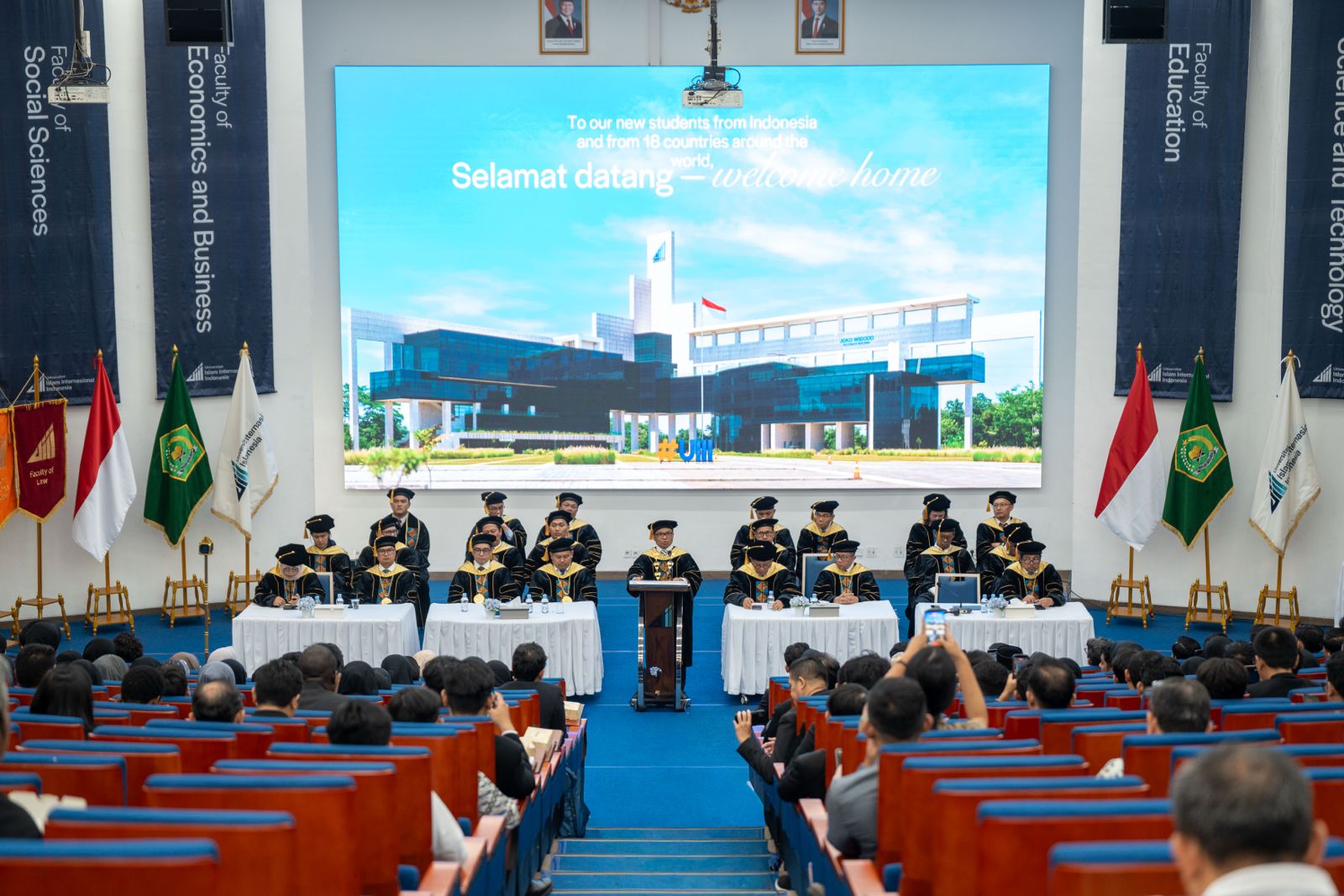
This is where the Indonesian International Islamic University (UIII) plays its role. Established through a 2016 Presidential Regulation, this Indonesia-based international Islamic university is located in Depok on a 142-hectare campus with postmodern architecture, surrounded by two natural lakes.
Its three main missions are:
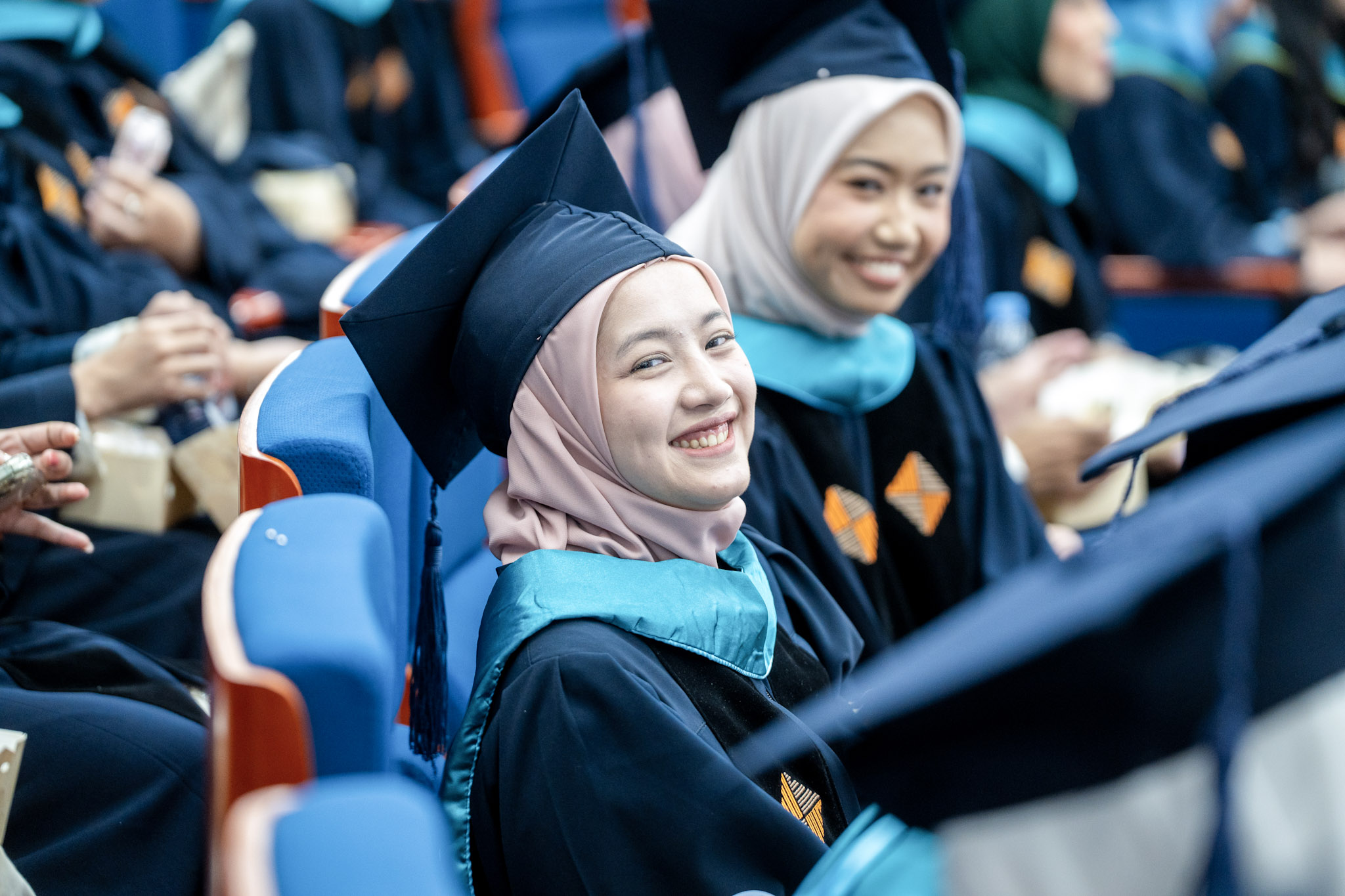
UIII is already moving in that direction. Half of its student body comes from 40 different countries. There are special programs for Afghan women. There are Palestinian students. And every year, international alumni return to their home countries carrying the experience of Indonesian Islam—an Islam that respects diversity, is anti-violence, and is friendly with democracy.
This is the most tangible form of the “diplomacy of giving”: Indonesia gives, it does not ask. Indonesia invites, it does not beg. Indonesia offers a friendly Islam, not a frightening one.
Indonesia is often called the world’s largest Muslim-majority democracy. However, this potential has remained “quiet” for too long, failing to emerge as a source of global inspiration. If educational diplomacy is implemented seriously—with UIII as its main engine—Indonesia can stand tall as a new reference point for the Islamic world, a reference point that is in harmony with culture, nurtures harmony, and grows within democracy.
Conclusion: The Cheapest and Most Dignified Ticket
Education multiplies friends. Friends expand networks. Networks create opportunities. And opportunities bring prosperity.
That is the essence of the “diplomacy of giving.” A diplomacy that is not only smart but also elegant. It is time for Indonesia to move up to the next level on the global stage.
And education is the cheapest, most powerful, and most dignified ticket to get there. []
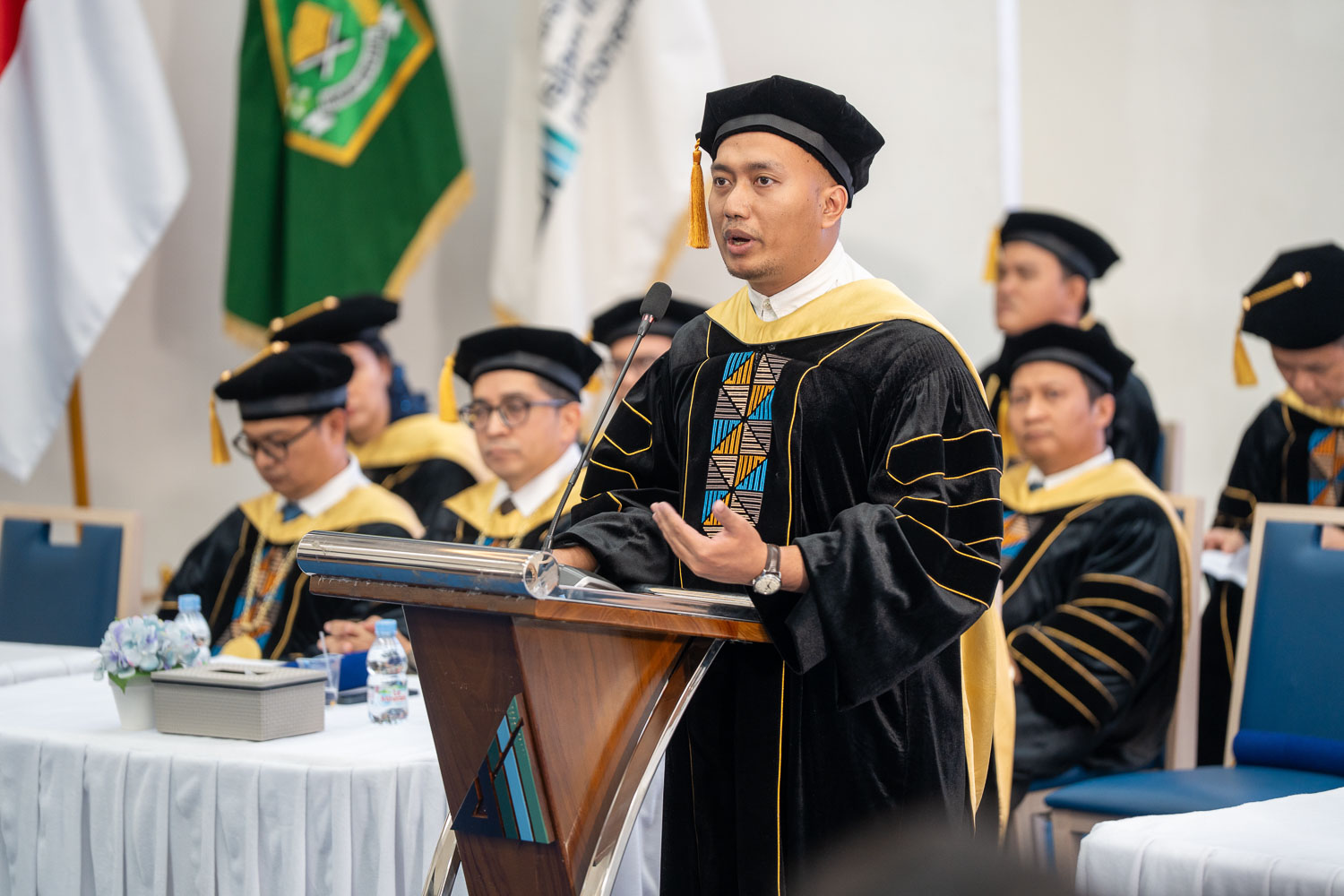
Prof Jamhari Makruf, Ph.D. is the Rector of the Indonesian International Islamic University (UIII).
——–
This story was originally published by Disway.id
https://disway.id/read/913582/diplomasi-tangan-di-atas-menguatkan-peran-global-indonesia