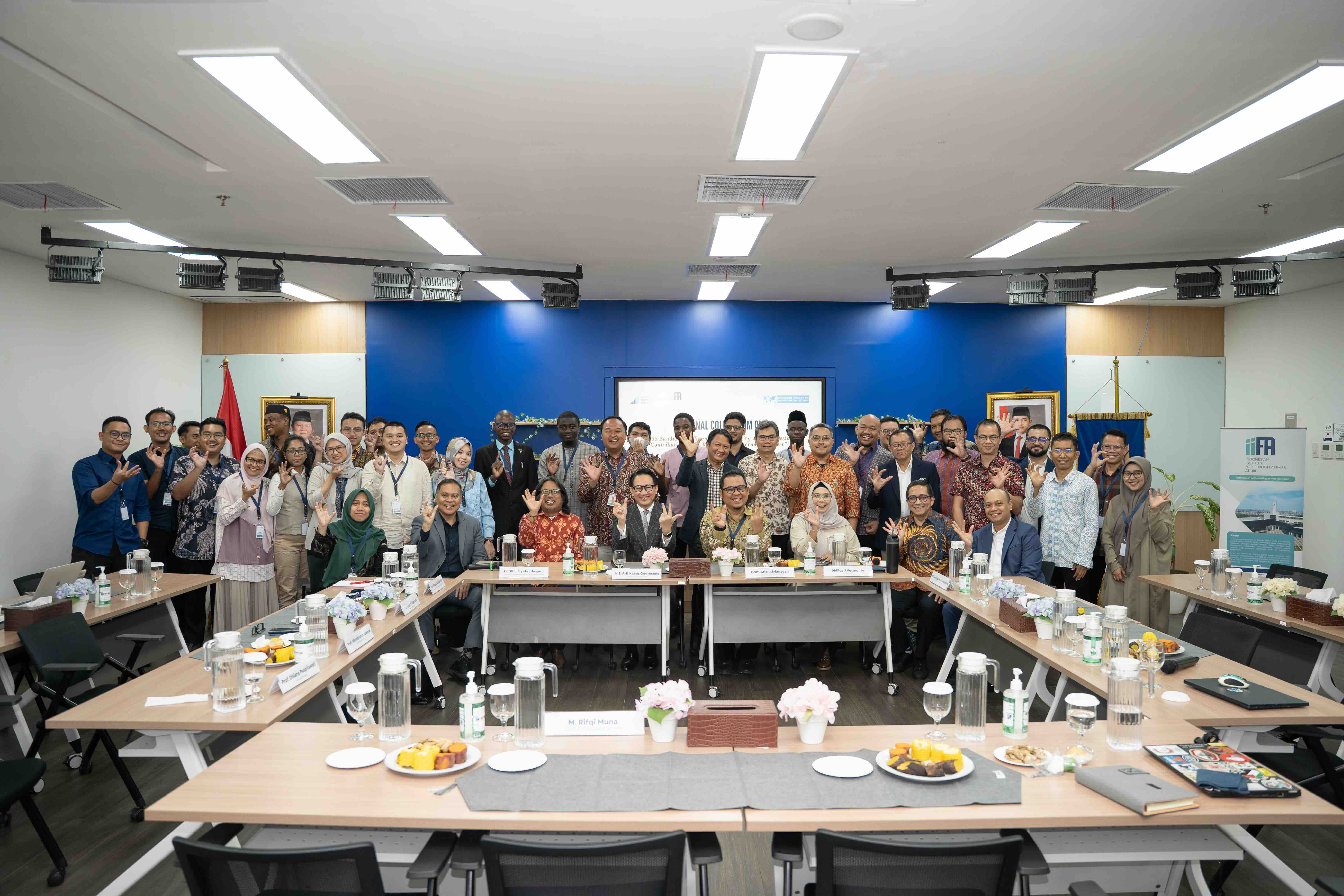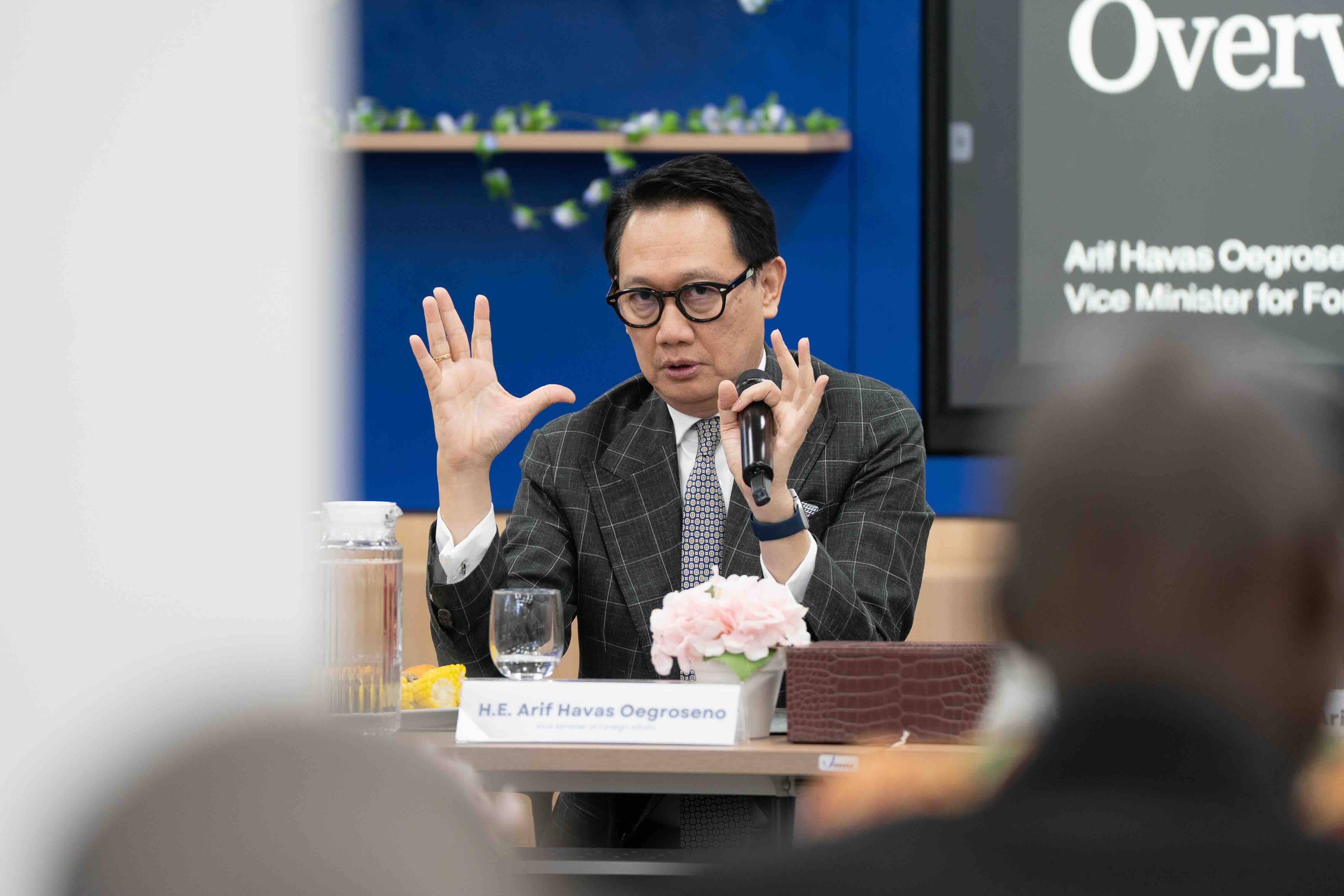
In his keynote address at the National Colloquium on “1955 Bandung Conference, Decoloniality, and Indonesian Contribution to the Reshaping of International Law” at Universitas Islam Internasional Indonesia (UIII), Vice Minister of Foreign Affairs H.E. Arif Havas Oegroseno offered a timely and sharply contextualized reflection on one question that continues to haunt global debates: is non-alignment still relevant?
Rather than treating non-alignment as a Cold War relic, the Vice Minister reframed it as a living strategy—one rooted not in neutrality, but in ‘strategic autonomy’. Drawing a clear distinction between neutrality under international humanitarian law and Indonesia’s long-standing principle of an “independent and active” foreign policy, he argued that non-alignment has never meant sitting on the fence. On the contrary, it is about retaining the freedom to decide, to take principled positions grounded in international law, without being structurally dependent on any major power.
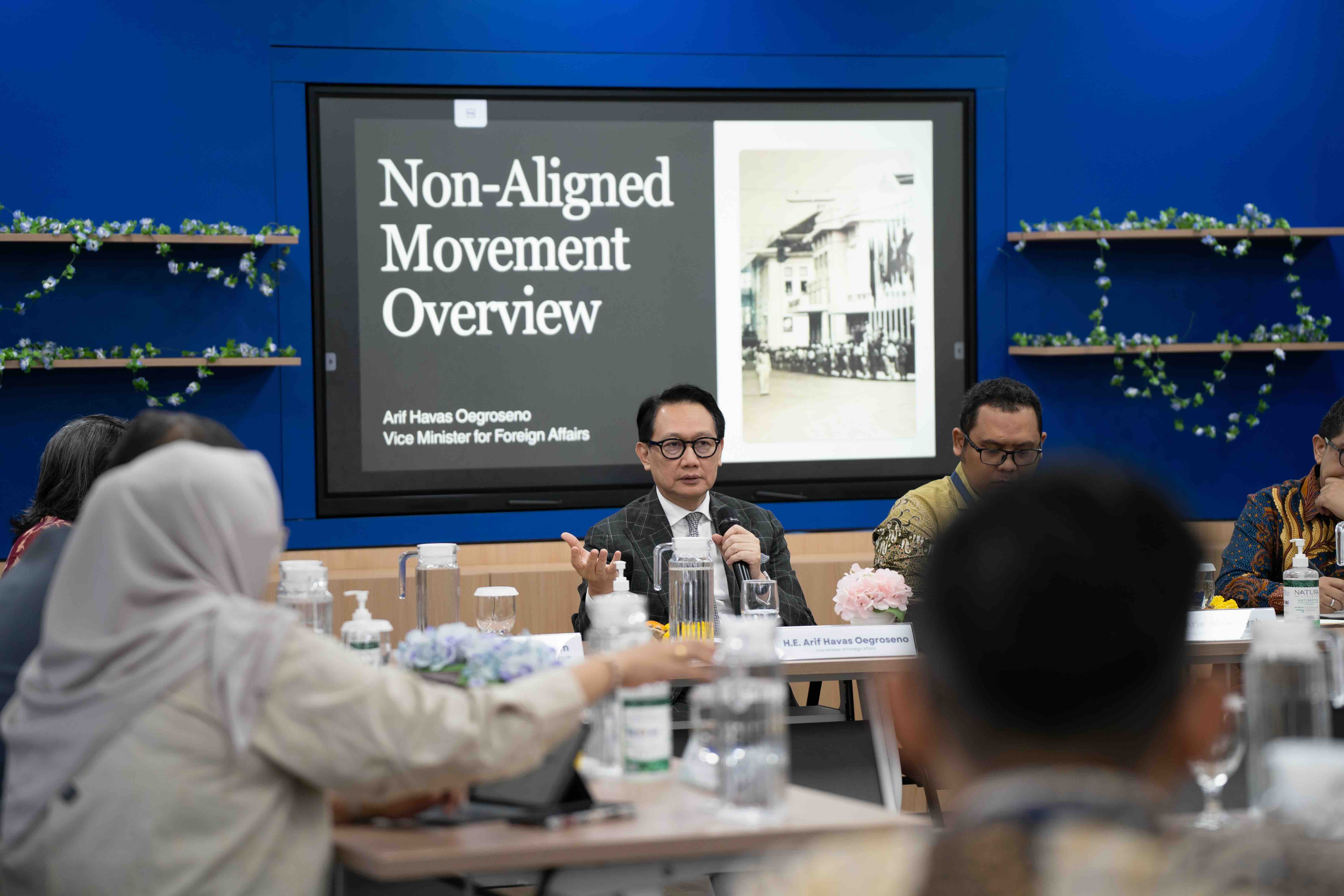 His reflections resonated strongly with the original spirit of the 1955 Bandung Conference. Non-alignment, he said, was born not out of weakness but out of historical necessity—shaped by decolonization and the pressure on newly independent states to choose sides during the Cold War. Bandung provided an alternative: a collective assertion of agency by countries that refused to be reduced to objects of great-power rivalry.
Vice Minister Arif also reminded that today’s geopolitical landscape is, in many ways, more complex—and more dangerous—than that of the post–Second World War era. Unlike the past, when ideological choices were clearly defined, contemporary power competition no longer sells ideology. China practices state-driven capitalism, Russia relies on military and energy power, and the United States weaponizes market access, finance, and technology. The result is a world where trade, payment systems, supply chains, digital platforms, and even cultural production have become instruments of geopolitical leverage.
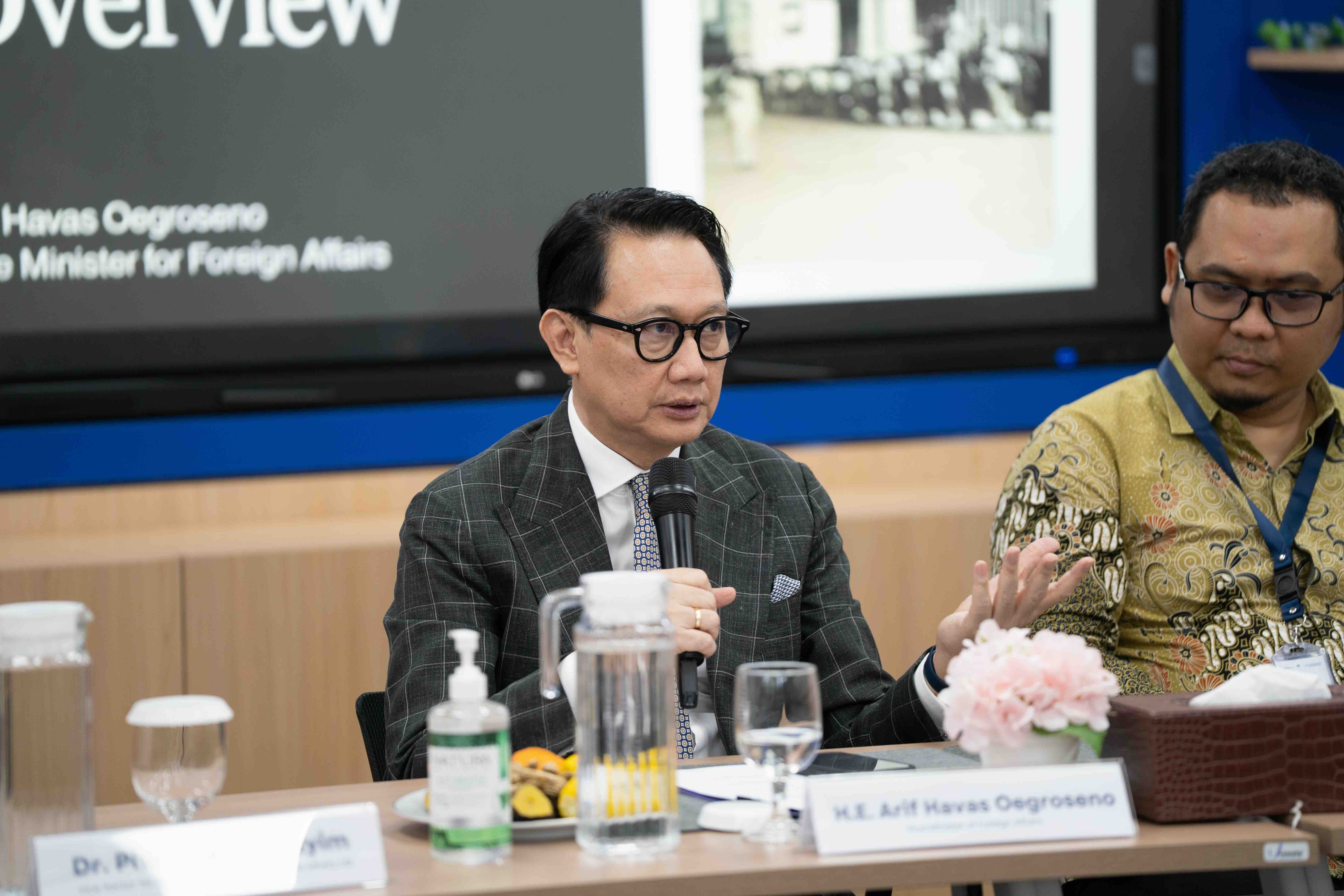 In this context, Vice Minister Arif argued, non-alignment is not only relevant—it is essential. Developing countries now face pressure not only from states but also from powerful non-state actors, from global tech platforms to multinational corporations that shape daily life yet escape meaningful regulation. His example of unequal royalty systems in global streaming platforms illustrated how economic injustice today operates beyond the reach of traditional diplomacy, requiring collective action from the Global South.
In closing, the Vice Minister returned to the central question of relevance. Non-alignment today, he argued, must be issue-based, pragmatic, and forward-looking. It must focus on preserving policy space, diversifying trade, reforming global payment systems, and strengthening South–South cooperation. Just as in 1955, the Global South cannot afford to wait for great powers to set the agenda.
His keynote was more than a historical reflection; it was a call to reclaim Bandung not as nostalgia, but as strategy. In a fragmented world marked by weaponized interdependence, non-alignment—reimagined through strategic autonomy and legal sovereignty—may well be one of the most realistic paths forward.